


Digital Human Avatar Market Size 2025-2029
The digital human avatar market size is forecast to increase by USD 27.43 billion at a CAGR of 43.9% between 2024 and 2029.
- The market is experiencing significant growth, driven by the revolutionary advancements in Artificial Intelligence (AI) and conversational capabilities. These technological breakthroughs enable digital human avatars to interact more naturally and effectively with users, creating new opportunities for businesses across various industries. Furthermore, the proliferation of specialized, industry-specific digital human avatars caters to unique customer needs and enhances brand engagement. However, the market faces challenges in the form of high development and integration costs and complexity.
- Companies must navigate these obstacles to capitalize on the market's potential and provide innovative, personalized customer experiences. By focusing on cost-effective solutions and streamlined integration processes, businesses can successfully implement digital human avatars and gain a competitive edge in their respective markets. Advancements in 3D modeling and the use of Unreal Engine are enhancing the realism and interactivity of Metaverse experiences.
What will be the Size of the Digital Human Avatar Market during the forecast period?
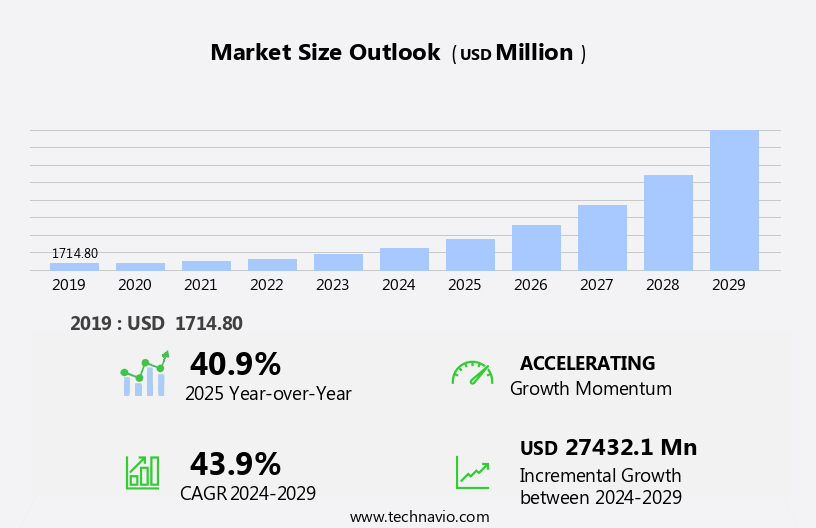
Explore in-depth regional segment analysis with market size data - historical 2019-2023 and forecasts 2025-2029 - in the full report.
Request Free Sample
The market is experiencing significant advancements in various areas, including data annotation services, real-time interaction, and multi-user avatar systems. Avatars are increasingly becoming more customizable, with options for facial rigging, realistic eye rendering, and human-computer interaction. Advanced animation pipelines incorporate machine learning models, 3D model optimization, and performance capture editing for digital character animation. Realistic hair rendering, neural network training, and texture mapping techniques further enhance the visual appeal of avatars. Audio processing pipelines enable voice cloning technology, adding another layer to the avatar development pipeline.
Avatar behavior design and environmental interaction are also crucial aspects, with physics-based simulation and clothing simulation systems ensuring a more engaging experience. Virtual production workflows incorporate real-time interaction, enabling seamless collaboration among team members. Overall, the digital human platform continues to evolve, integrating advanced technologies to deliver increasingly lifelike avatars for human-computer interaction. Investments in the market are on the rise, with developments in the medical sector showcasing digital twins, blockchain, artificial intelligence (AI), and machine learning (ML) for healthcare providers.
How is this Digital Human Avatar Industry segmented?
The digital human avatar industry research report provides comprehensive data (region-wise segment analysis), with forecasts and estimates in "USD million" for the period 2025-2029, as well as historical data from 2019-2023 for the following segments.
- Product
- Virtual assistants
- Virtual influencers
- Others
- Technology
- AI-based
- 3D modeling and animation
- Motion capture
- Emotion recognition
- Type
- Text-based
- Voice-based
- Gesture-based
- Application
- Customer service
- Entertainment and media
- Healthcare
- Education and training
- Others
- Geography
- North America
- US
- Canada
- Europe
- France
- Germany
- UK
- APAC
- China
- India
- Japan
- South Korea
- South America
- Brazil
- Rest of World (ROW)
- North America
By Product Insights
The Virtual assistants segment is estimated to witness significant growth during the forecast period. The market is experiencing significant growth as advanced technologies such as virtual reality integration, performance capture systems, emotional AI, and multi-lingual voice support converge. These technologies enable the creation of realistic avatars with humanoid appearances and emotionally responsive capabilities, driving personalized, efficient, and engaging interactions. The market is witnessing increasing adoption across various industries, including healthcare, banking, retail, education, and corporate communication, where avatars serve as virtual receptionists, customer service agents, training facilitators, and patient engagement tools. In addition, avatars are being used in gaming, education, and entertainment industries for engaging experiences.
Real-time rendering, data privacy measures, 3D facial modeling, and gesture recognition systems are essential features that enhance the user experience. Moreover, deep learning models, behavioral cloning algorithms, and liveness detection systems ensure realistic avatar behavior and interaction. Personalized avatar design, AI-powered animation, and natural language processing further enrich the user experience. Virtual human interaction, synthetic voice generation, remote avatar operation, game engine implementation, computer vision algorithms, and high-fidelity modeling are also key components of the market.
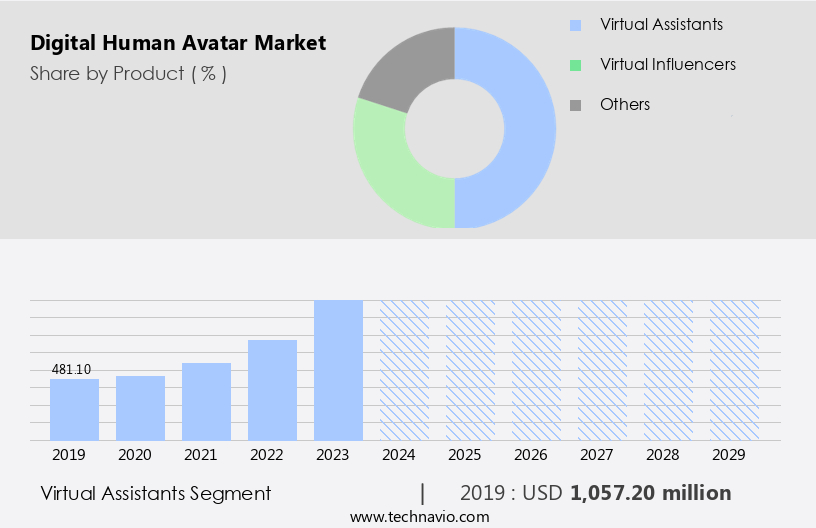
The Virtual assistants segment was valued at USD 1.06 billion in 2019 and showed a gradual increase during the forecast period.
The Digital Human Avatar Market is rapidly expanding as industries embrace virtual characters for entertainment, gaming, and enterprise applications. Advanced 3D scanning techniques capture highly detailed facial and body data, enabling lifelike avatars. A streamlined virtual production workflow integrates tools like avatar expression control and animation control systems for seamless character performance. Creative teams leverage virtual character design and facial rigging software to deliver natural, emotive digital humans. Features such as text-to-speech synthesis and clothing simulation system enhance realism. Users enjoy rich avatar customization options, supported by a gesture recognition system and a performance capture system for dynamic interaction.
Regional Analysis
North America is estimated to contribute 41% to the growth of the global market during the forecast period. Technavio's analysts have elaborately explained the regional trends and drivers that shape the market during the forecast period.
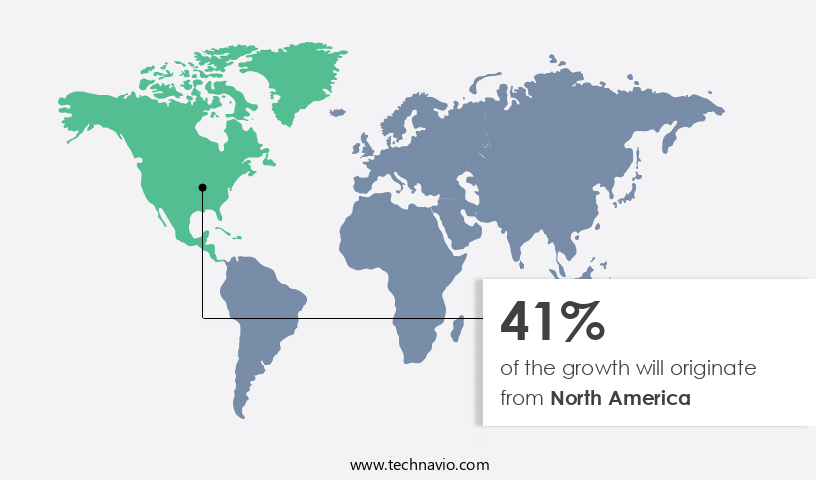
The market is experiencing significant growth in North America, particularly in the United States, where technological innovation, venture capital investment, and enterprise adoption are at the forefront. This leadership is driven by the region's robust technology ecosystem, which brings together hardware manufacturers, cloud computing giants, and leading artificial intelligence research laboratories. NVIDIA, a semiconductor industry leader, plays a crucial role by providing the necessary graphics processing units (GPUs) for both AI model training and real-time avatar rendering. Advancements in virtual reality integration, performance capture systems, emotional AI, multi-lingual voice support, motion capture technology, and cloud-based avatar hosting are transforming the industry.
Real-time rendering, data privacy measures, 3D facial modeling, humanoid robotics integration, and realistic avatar creation are becoming increasingly sophisticated. Augmented reality overlays, digital twin technology, deep learning models, gesture recognition systems, avatar customization tools, and behavioral cloning algorithms are also gaining traction. Realistic skin rendering, interactive avatar control, speech synthesis technology, body language simulation, virtual human interaction, synthetic voice generation, remote avatar operation, game engine implementation, computer vision algorithms, personalized avatar design, and AI-powered animation are all advancing at a rapid pace. Facial expression mapping, avatar animation software, high-fidelity modeling, avatar rigging techniques, natural language processing, and other emerging technologies are further enhancing the digital human avatar experience.
The market's evolution is marked by the integration of various technologies, including performance capture systems, emotional AI, motion capture technology, and computer vision algorithms. These advancements are enabling more realistic and interactive avatars, leading to increased adoption in various industries, such as gaming, education, healthcare, and customer service. In this dynamic landscape, data privacy measures and liveness detection systems are becoming increasingly important to ensure secure and authentic avatar interactions. The market is also witnessing the integration of humanoid robotics and the development of digital twins, which offer new opportunities for remote operation and real-time monitoring. The market is poised for continued growth, driven by technological advancements, venture capital investment, and enterprise adoption.
The integration of various technologies, such as AI, VR, AR, and robotics, is transforming the way we interact with digital entities and is set to redefine the future of human-computer interaction.
Market Dynamics
Our researchers analyzed the data with 2024 as the base year, along with the key drivers, trends, and challenges. A holistic analysis of drivers will help companies refine their marketing strategies to gain a competitive advantage.
What are the Digital Human Avatar market drivers leading to the rise in the adoption of Industry?
- The significant advancements in artificial intelligence and conversational capabilities represent the primary catalyst fueling market growth in this sector. The market is experiencing significant growth due to advancements in artificial intelligence, specifically generative AI and large language models (LLMs). These technologies have revolutionized the digital human's value proposition, transforming it from a visually engaging but limited animated character to an intelligent, autonomous, and adaptive entity. Previously, avatars relied on pre-programmed decision trees and scripted dialogues, limiting their interactions to a finite set of predictable queries.
- These features allow for engaging and synchronized virtual human interactions, making them increasingly indistinguishable from real humans. Additionally, remote avatar operation and synthetic voice generation are essential components of the market, providing flexibility and convenience for users. Game engine implementation and computer vision algorithms further improve the avatars' functionality and realism. Overall, the market's growth is driven by the relentless pursuit of more realistic and intelligent virtual human interactions.
What are the Digital Human Avatar market trends shaping the Industry?
- The use of specialized, industry-specific digital human avatars is gaining popularity as the next market trend. This advancement in technology is expected to revolutionize various industries by providing highly realistic and efficient virtual representatives. The market is witnessing a notable transition from generic, standard avatars to industry-specific, highly specialized ones. As enterprises progressively recognize the potential of digital humans beyond basic conversational abilities, there is a growing emphasis on avatars that possess deep domain expertise and can execute intricate, industry-relevant tasks. This shift is observable across various sectors. Natural language processing is integrated to enhance the avatar's ability to understand and respond to complex queries.
- These advancements signify a strategic evolution for enterprises, transforming digital humans from novel customer interfaces to integral members of the digital workforce. The market is expected to continue this trajectory, with specialized avatars offering significant value additions in terms of productivity, customer engagement, and operational efficiency. Avatar design is becoming increasingly personalized, with AI-powered animation and facial expression mapping enabling more natural and synchronized interactions. Avatar animation software is being refined to create high-fidelity models and employ advanced avatar rigging techniques.
How does Digital Human Avatar market face challenges during its growth?
- The high development and integration costs, coupled with complexity, pose a significant challenge to the growth of the industry. The market is experiencing notable advancements, with virtual reality integration, performance capture systems, emotional AI, multi-lingual voice support, motion capture technology, and 3D facial modeling becoming increasingly prevalent. However, the adoption of these advanced avatars is not without challenges. The development, customization, and integration of digital humans into enterprise systems require substantial resources and complexity.
- Moreover, real-time rendering, cloud-based avatar hosting, and data privacy measures are essential considerations to ensure a seamless user experience and maintain security. By addressing these challenges, businesses can unlock the potential of digital human avatars to enhance customer engagement, streamline internal processes, and create engaging virtual environments. However, the integration of sophisticated LLMs has shattered these limitations, enabling digital humans with genuine reasoning, contextual understanding, and unscripted conversation.
Exclusive Customer Landscape
The digital human avatar market forecasting report includes the adoption lifecycle of the market, covering from the innovator's stage to the laggard's stage. It focuses on adoption rates in different regions based on penetration. Furthermore, the digital human avatar market report also includes key purchase criteria and drivers of price sensitivity to help companies evaluate and develop their market growth analysis strategies.
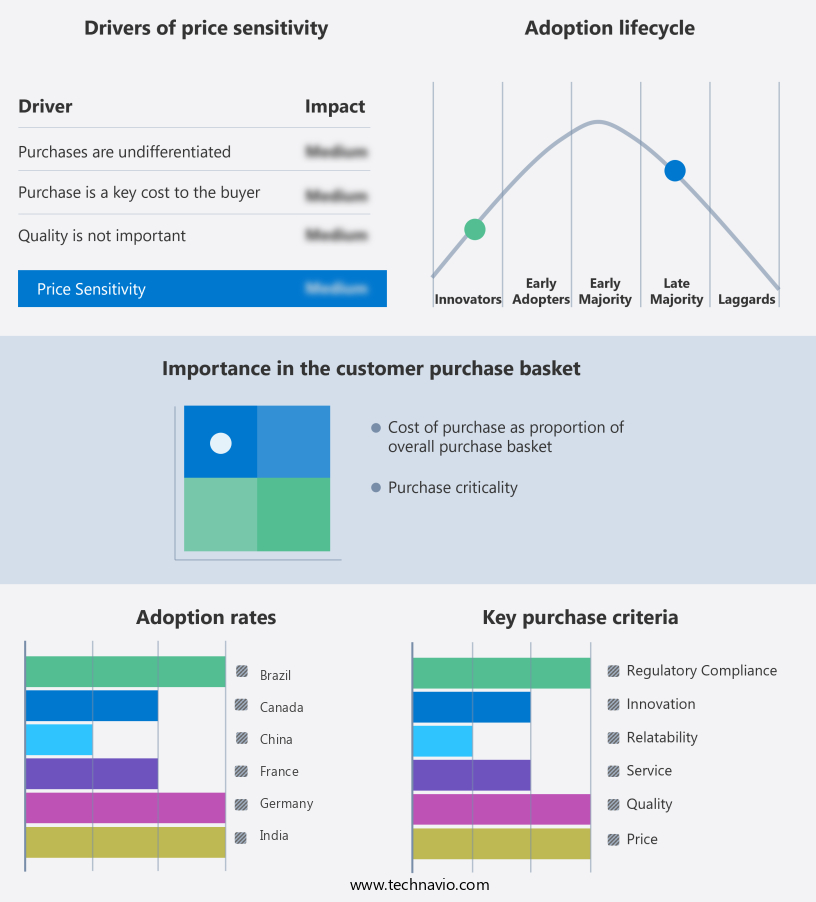
Customer Landscape
Key Companies & Market Insights
Companies are implementing various strategies, such as strategic alliances, digital human avatar market forecast, partnerships, mergers and acquisitions, geographical expansion, and product/service launches, to enhance their presence in the industry.
Amazon Web Services Inc. - The company specializes in creating digital human avatars utilizing advanced AI technologies such as Amazon Polly for speech synthesis and Amazon Rekognition for facial analysis.
The industry research and growth report includes detailed analyses of the competitive landscape of the market and information about key companies, including:
- Amazon Web Services Inc.
- DeepBrain AI
- Didimo
- Epic Games Inc.
- FACEGOOD Co.,Ltd.
- Google LLC
- Hour One AI
- Magic Leap Inc.
- Meta Platforms Inc.
- Microsoft Corp.
- Pinscreen
- Ready Player Me
- Reallusion Inc.
- Samsung Electronics Co. Ltd.
- Soul Machines
- Synthesia
- UneeQ
- Unity Technologies Inc.
Qualitative and quantitative analysis of companies has been conducted to help clients understand the wider business environment as well as the strengths and weaknesses of key industry players. Data is qualitatively analyzed to categorize companies as pure play, category-focused, industry-focused, and diversified; it is quantitatively analyzed to categorize companies as dominant, leading, strong, tentative, and weak.
Recent Development and News in Digital Human Avatar Market
- In January 2024, Meta Platforms, Inc. (Facebook's parent company) announced the launch of "Metaverse Avatars," allowing users to create and customize digital human representations for use in virtual environments, marking a significant step forward in the market (Meta Platforms, 2024).
- In March 2024, Microsoft Corporation and Altus Digital Enterprises entered into a strategic partnership to integrate Altus' digital human avatars into Microsoft Teams, enabling more realistic and engaging virtual meetings (Microsoft, 2024).
- In April 2025, SoftBank Investment Advisers led a USD 50 million Series C funding round for GenesisAI, a leading digital human avatar company, to accelerate the development of their AI-powered avatars and expand their market reach (GenesisAI, 2025).
- In May 2025, the European Union's European Committee for Standardization published the EN 16175 standard for digital human avatars, setting guidelines for interoperability, accessibility, and data protection, paving the way for a more regulated and integrated market (European Committee for Standardization, 2025).
Research Analyst Overview
The market continues to evolve, with innovative technologies and applications emerging in various sectors. Personalized avatar design is at the forefront, allowing users to create realistic and expressive virtual representations of themselves. AI-powered animation and facial expression mapping bring avatars to life, while avatar animation software enables seamless movement and interaction. High-fidelity modeling and avatar rigging techniques ensure lifelike visuals, and natural language processing facilitates realistic dialogue. Performance capture systems and emotional AI integration enhance avatar expressiveness, while multi-lingual voice support broadens accessibility. Motion capture technology and real-time rendering enable realistic movements and responses.
Cloud-based avatar hosting and data privacy measures ensure secure and accessible avatar creation and deployment. Augmented reality overlays and digital twin technology offer new applications, while deep learning models and gesture recognition systems improve avatar intelligence. Synthetic voice generation and behavioral cloning algorithms add to the engaging experience. Realistic skin rendering and body language simulation further enhance the human-like qualities of digital avatars. Virtual human interaction and remote avatar operation enable new possibilities for communication and collaboration. Game engine implementation and computer vision algorithms expand the potential use cases, making digital human avatars a dynamic and evolving market.
Moreover, the integration of realistic skin rendering, interactive avatar control, speech synthesis technology, body language simulation, and virtual human interaction further enhances the market's potential. Initial creation of an avatar may be simplified by platforms, but deploying an effective, intelligent, and secure digital human that aligns with a brand identity and specific use case is a resource-intensive process. Customization costs extend beyond a software license, encompassing significant investments in appearance, personality, and knowledge base alignment.
Dive into Technavio's robust research methodology, blending expert interviews, extensive data synthesis, and validated models for unparalleled Digital Human Avatar Market insights. See full methodology.
|
Market Scope |
|
|
Report Coverage |
Details |
|
Page number |
258 |
|
Base year |
2024 |
|
Historic period |
2019-2023 |
|
Forecast period |
2025-2029 |
|
Growth momentum & CAGR |
Accelerate at a CAGR of 43.9% |
|
Market growth 2025-2029 |
USD 27.43 billion |
|
Market structure |
Fragmented |
|
YoY growth 2024-2025(%) |
40.9 |
|
Key countries |
US, Germany, China, UK, Canada, Japan, Brazil, France, South Korea, and India |
|
Competitive landscape |
Leading Companies, Market Positioning of Companies, Competitive Strategies, and Industry Risks |
What are the Key Data Covered in this Digital Human Avatar Market Research and Growth Report?
- CAGR of the Digital Human Avatar industry during the forecast period
- Detailed information on factors that will drive the growth and forecasting between 2025 and 2029
- Precise estimation of the size of the market and its contribution of the industry in focus to the parent market
- Accurate predictions about upcoming growth and trends and changes in consumer behaviour
- Growth of the market across North America, Europe, APAC, South America, and Middle East and Africa
- Thorough analysis of the market's competitive landscape and detailed information about companies
- Comprehensive analysis of factors that will challenge the digital human avatar market growth of industry companies
We can help! Our analysts can customize this digital human avatar market research report to meet your requirements.
 RIA -
RIA -