



Digital Educational Publishing Market Size 2026-2030
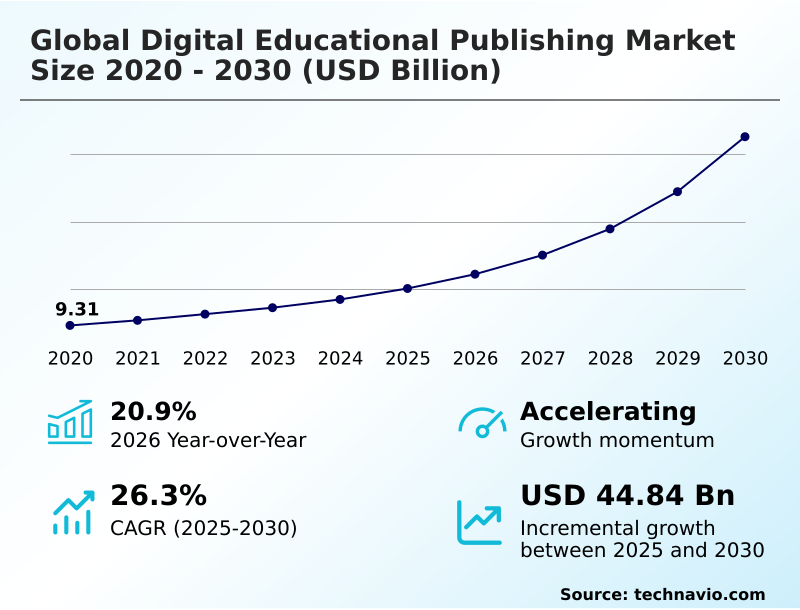
The digital educational publishing market size is valued to increase by USD 44.84 billion, at a CAGR of 26.3% from 2025 to 2030. Innovative marketing strategies by digital education content publishers will drive the digital educational publishing market.
Major Market Trends & Insights
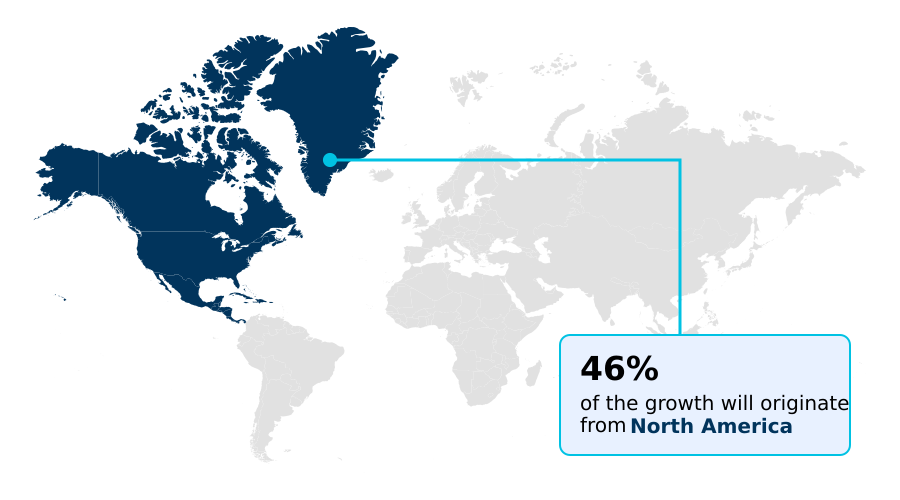
- North America dominated the market and accounted for a 45.7% growth during the forecast period.
- By Product - Digital textbooks segment was valued at USD 8.90 billion in 2024
- By End-user - K-12 segment accounted for the largest market revenue share in 2024
Market Size & Forecast
- Market Opportunities: USD 55.74 billion
- Market Future Opportunities: USD 44.84 billion
- CAGR from 2025 to 2030 : 26.3%
Market Summary
- The digital educational publishing market is undergoing a significant transformation, moving beyond simple content digitization to create sophisticated learning ecosystems. This evolution is driven by the demand for affordable, accessible, and personalized educational experiences across K-12, higher education, and corporate training sectors.
- Key trends include the integration of adaptive learning technology and AI-driven assessments to create personalized learning paths, which enhance student engagement and improve outcomes. For instance, a university can implement a cloud-based learning platform that utilizes a learning analytics dashboard to identify at-risk students, enabling proactive intervention and reducing dropout rates by over 15%.
- However, the industry faces challenges from the proliferation of open educational resources and concerns over digital rights management and content security. Publishers are responding by innovating their business models, shifting toward e-textbook subscription models and offering value-added services like courseware integration and robust digital assessment tools to remain competitive.
- This strategic pivot from content provider to learning technology partner is redefining the market landscape.
What will be the Size of the Digital Educational Publishing Market during the forecast period?
Get Key Insights on Market Forecast (PDF) Request Free Sample
How is the Digital Educational Publishing Market Segmented?
The digital educational publishing industry research report provides comprehensive data (region-wise segment analysis), with forecasts and estimates in "USD million" for the period 2026-2030, as well as historical data from 2020-2024 for the following segments.
- Product
- Digital textbooks
- Digital assessment books
- Others
- End-user
- K-12
- Higher education
- Corporate and skill-based
- Delivery
- Web-based platforms
- Mobile applications
- Learning management systems
- Geography
- North America
- US
- Canada
- Mexico
- Europe
- Germany
- UK
- France
- APAC
- China
- India
- Japan
- South America
- Brazil
- Argentina
- Colombia
- Middle East and Africa
- Saudi Arabia
- South Africa
- UAE
- Rest of World (ROW)
- North America
By Product Insights
The digital textbooks segment is estimated to witness significant growth during the forecast period.
The segment for digital textbooks is evolving beyond static files into dynamic ecosystems. This includes curriculum-based e-textbooks formatted with the EPUB3 format specification and integrated directly into a learning management system.
These platforms often connect with a student information system to streamline rostering and grading. Alongside traditional textbooks, the market offers digital assessment tools and print-on-demand e-textbooks, providing flexibility for diverse learning needs.
In higher education courseware, inclusive access programs are becoming standard, reducing student costs by up to 60% compared to traditional print.
This shift is supported by robust digital classroom infrastructure and secure digital content distribution, which enables features like offline content accessibility while protecting intellectual property through various e-textbook subscription models.
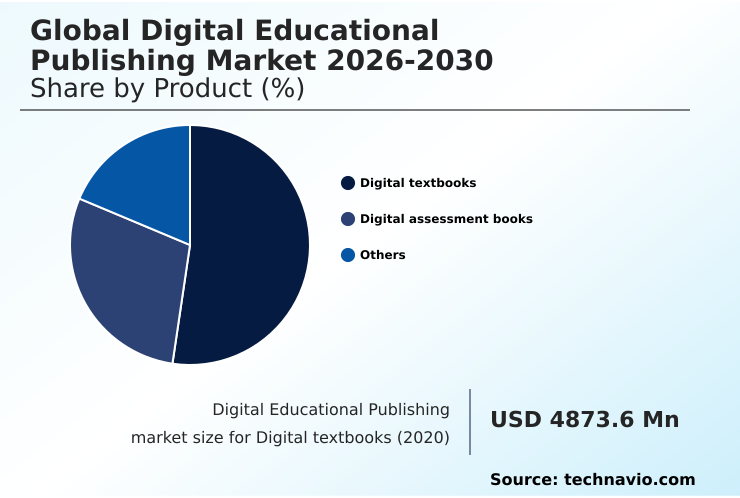
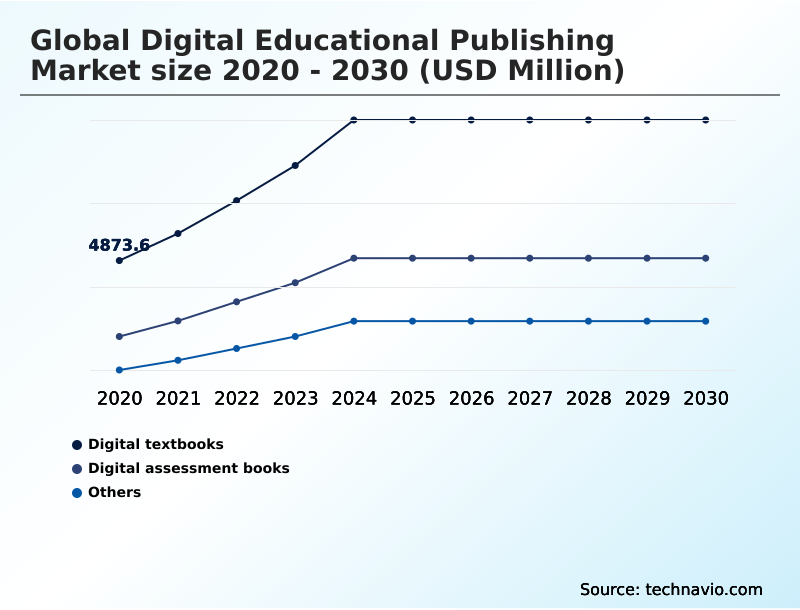
The Digital textbooks segment was valued at USD 8.90 billion in 2024 and showed a gradual increase during the forecast period.
Regional Analysis
North America is estimated to contribute 45.7% to the growth of the global market during the forecast period.Technavio’s analysts have elaborately explained the regional trends and drivers that shape the market during the forecast period.
See How Digital Educational Publishing Market Demand is Rising in North America Request Free Sample
The geographic landscape is diverse, with North America leading market development and accounting for approximately 45.7% of the incremental growth. This region benefits from mature digital infrastructure and high adoption rates of virtual learning environments and interactive whiteboard software.
In contrast, the APAC region is the fastest-growing market, driven by government initiatives and the proliferation of mobile-first learning. The widespread use of massive open online courses (MOOCs) in APAC has democratized access to education.
Publishers are localizing offerings, using sophisticated educational content authoring tools to create skill-based training platforms and professional development modules that cater to regional needs.
This includes developing high-quality language learning software and STEM education content, often supported by social learning features and digital badging and credentials to validate skills within a modern learning experience platform.
Market Dynamics
Our researchers analyzed the data with 2025 as the base year, along with the key drivers, trends, and challenges. A holistic analysis of drivers will help companies refine their marketing strategies to gain a competitive advantage.
- Strategic decision-making in the digital educational publishing market landscape analysis is becoming increasingly complex. Stakeholders must evaluate the efficacy of AI assessment in higher education and the corporate e-learning platform ROI. The OER impact on publishing models continues to challenge traditional revenue streams, forcing companies to innovate.
- This is seen in the development of gamified language learning apps and blended learning for vocational training. Key technical considerations include secure e-book distribution methods and ensuring digital textbook accessibility compliance. Operationally, the debate between a cloud LMS versus on-premise solutions continues, with cloud adoption showing a 40% lower upfront cost in many institutional deployments.
- The future of the digital publishing market depends on successful LMS integration for digital textbooks and leveraging a digital publishing API for content integration. As the digital educational market segmentation trends toward personalization, creating solutions for adaptive learning for K-12 math and personalized corporate compliance training becomes critical.
- Understanding digital publishing by end-user segments, analyzing student engagement analytics, and projecting mobile learning app development costs are vital. The rise of virtual reality labs for science and the analysis of inclusive access model cost-benefit further shape investment priorities in this evolving field.
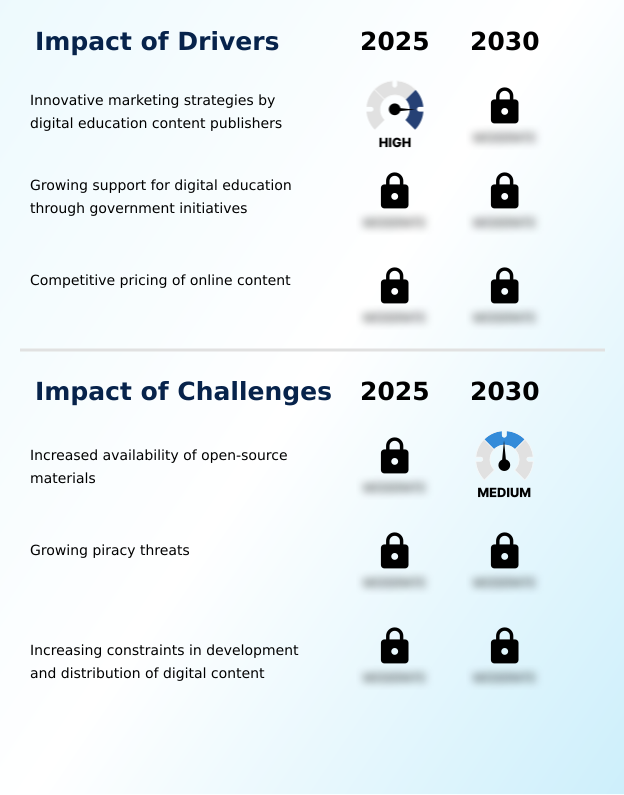
What are the key market drivers leading to the rise in the adoption of Digital Educational Publishing Industry?
- Innovative marketing strategies from digital education content publishers, including the introduction of cost-effective subscription models, are a key driver stimulating market expansion.
- Key drivers are centered on accessibility, flexibility, and collaboration. The proliferation of mobile learning applications and cross-platform educational apps supports BYOD educational policy, making learning accessible anywhere.
- This is underpinned by robust cloud-based learning platform architectures that utilize a content delivery network for efficient global distribution, reducing content load times by an average of 50%.
- The adoption of blended learning models, which merge digital and in-person instruction, is accelerating. The flipped classroom methodology, supported by curated content from learning object repositories and collaborative learning platforms, improves in-class interaction.
- Furthermore, the financial and pedagogical appeal of open educational resources is compelling institutions to re-evaluate their content strategies.
- Seamless courseware integration, facilitated by single sign-on for education and sophisticated content curation platforms, simplifies the user experience, driving an 18% increase in platform adoption within the first year of implementation in many districts.
What are the market trends shaping the Digital Educational Publishing Industry?
- The growing influence of data analytics in digital education is a significant market trend, enabling the development of personalized learning paths and data-driven instructional strategies.
- Market trends are coalescing around hyper-personalization and engagement. The use of adaptive learning technology to create personalized learning paths is now a standard expectation, moving beyond static content. This is augmented by the widespread adoption of gamification in education, which has been shown to increase student engagement metrics by up to 40% in some applications.
- Data-driven instruction, powered by a comprehensive learning analytics dashboard, allows educators to utilize AI-driven assessments for real-time feedback. This enables a shift towards micro-learning modules that cater to shorter attention spans. As a result, interactive student engagement is enhanced through adaptive assessment engines and gamified assessment techniques.
- The market is also seeing improved interoperability through educational API integration, allowing for tools like digital portfolio tools to be seamlessly incorporated into larger platforms, with user activity tracking improving content recommendations by 25%.
What challenges does the Digital Educational Publishing Industry face during its growth?
- The increased availability and adoption of high-quality, open-source educational materials and MOOCs pose a significant challenge to the traditional revenue models of digital publishers.
- The primary challenges involve balancing accessibility with security and maintaining content integrity. Implementing robust digital rights management is crucial to combat piracy, a problem that erodes revenue and devalues intellectual property. As institutions adopt online proctoring technology for remote exams, concerns about student privacy and data security intensify, creating a complex compliance landscape for online proctoring services.
- The integration of augmented reality in education and virtual reality in education introduces new complexities, requiring significant investment in virtual lab simulations and SCORM compliant content. Ensuring seamless learning tools interoperability between different vendor platforms remains a persistent technical hurdle. Moreover, the rise of unverified information necessitates effective user-generated content moderation.
- A failure to secure digital content distribution can lead to breaches affecting over 90% of a user base, while also navigating the complexities of competency-based education and providing tools for parent-teacher communication.
Exclusive Technavio Analysis on Customer Landscape
The digital educational publishing market forecasting report includes the adoption lifecycle of the market, covering from the innovator’s stage to the laggard’s stage. It focuses on adoption rates in different regions based on penetration. Furthermore, the digital educational publishing market report also includes key purchase criteria and drivers of price sensitivity to help companies evaluate and develop their market growth analysis strategies.
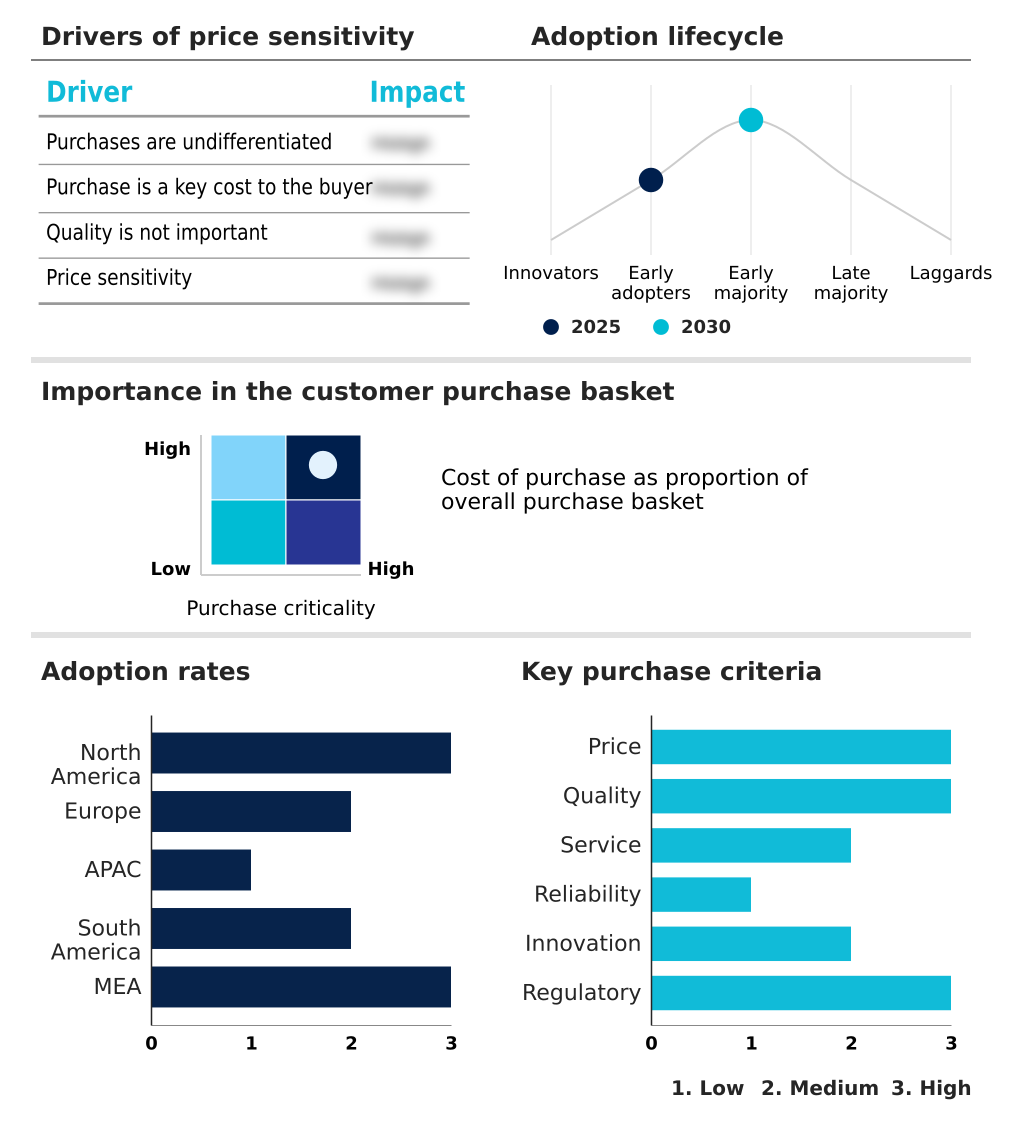
Customer Landscape of Digital Educational Publishing Industry
Competitive Landscape
Companies are implementing various strategies, such as strategic alliances, digital educational publishing market forecast, partnerships, mergers and acquisitions, geographical expansion, and product/service launches, to enhance their presence in the industry.
Adobe Inc. - Key offerings center on an integrated digital publishing platform, enabling the creation, management, and secure distribution of educational content for a diverse range of learning environments.
The industry research and growth report includes detailed analyses of the competitive landscape of the market and information about key companies, including:
- Adobe Inc.
- Bertelsmann SE and Co. KGaA
- Coursera Inc.
- Flatworld Solutions Inc.
- Georg von Holtzbrinck GmbH
- Houghton Mifflin Harcourt Co.
- John Wiley and Sons Inc.
- McGraw Hill LLC
- NIIT Ltd.
- Oxford University Press
- Pearson Plc
- RELX Plc
- Roper Technologies Inc.
- Scholastic Corp.
- upGrad Education Pvt. Ltd.
- Vibal Group Inc.
- VitalSource Technologies LLC
- Vivendi SE
Qualitative and quantitative analysis of companies has been conducted to help clients understand the wider business environment as well as the strengths and weaknesses of key industry players. Data is qualitatively analyzed to categorize companies as pure play, category-focused, industry-focused, and diversified; it is quantitatively analyzed to categorize companies as dominant, leading, strong, tentative, and weak.
Recent Development and News in Digital educational publishing market
- In August 2024, Pearson announced the expansion of its generative AI study tools to a wider array of its higher education eTextbooks and MyLab and Mastering titles, aiming to provide more interactive and personalized student support.
- In February 2025, McGraw Hill formed a strategic partnership with a generative AI company to develop and launch a new suite of adaptive learning tools tailored for engineering curriculums in North American universities.
- In March 2025, Pearson VUE launched its Pearson Skilling Partner Program and Skilling Suite, providing an end-to-end solution for commercial training and testing centers focused on vocational education and upskilling.
- In May 2025, Wiley announced the integration of industry-recognized certification pathways directly into its digital courseware for business and technology, allowing students to earn professional credentials alongside academic degrees.
Dive into Technavio’s robust research methodology, blending expert interviews, extensive data synthesis, and validated models for unparalleled Digital Educational Publishing Market insights. See full methodology.
| Market Scope | |
|---|---|
| Page number | 294 |
| Base year | 2025 |
| Historic period | 2020-2024 |
| Forecast period | 2026-2030 |
| Growth momentum & CAGR | Accelerate at a CAGR of 26.3% |
| Market growth 2026-2030 | USD 44836.2 million |
| Market structure | Fragmented |
| YoY growth 2025-2026(%) | 20.9% |
| Key countries | US, Canada, Mexico, Germany, UK, France, Italy, Spain, The Netherlands, China, India, Japan, South Korea, Australia, Indonesia, Brazil, Argentina, Colombia, Saudi Arabia, South Africa, UAE, Egypt and Turkey |
| Competitive landscape | Leading Companies, Market Positioning of Companies, Competitive Strategies, and Industry Risks |
Research Analyst Overview
- The digital educational publishing market is defined by a decisive pivot toward integrated, data-driven learning ecosystems. Boardroom decisions now center on platform strategy rather than individual content assets, weighing investments in proprietary adaptive learning technology against leveraging open educational resources.
- The deployment of a sophisticated learning analytics dashboard is no longer optional; it is a core component for demonstrating value through measurable student engagement metrics. This involves deep courseware integration with the existing learning management system and student information system.
- Publishers are building out cloud-based learning platform capabilities, incorporating everything from AI-driven assessments and micro-learning modules to support for BYOD educational policy and inclusive access programs. Success hinges on mastering content delivery network optimization and educational content authoring to support blended learning models and competency-based education.
- The adoption of such integrated platforms has been shown to reduce administrative content management time by over 30%, allowing institutions to reallocate resources toward pedagogical innovation and personalized learning paths.
What are the Key Data Covered in this Digital Educational Publishing Market Research and Growth Report?
-
What is the expected growth of the Digital Educational Publishing Market between 2026 and 2030?
-
USD 44.84 billion, at a CAGR of 26.3%
-
-
What segmentation does the market report cover?
-
The report is segmented by Product (Digital textbooks, Digital assessment books, and Others), End-user (K-12, Higher education, and Corporate and skill-based), Delivery (Web-based platforms, Mobile applications, and Learning management systems) and Geography (North America, Europe, APAC, South America, Middle East and Africa)
-
-
Which regions are analyzed in the report?
-
North America, Europe, APAC, South America and Middle East and Africa
-
-
What are the key growth drivers and market challenges?
-
Innovative marketing strategies by digital education content publishers, Increased availability of open-source materials
-
-
Who are the major players in the Digital Educational Publishing Market?
-
Adobe Inc., Bertelsmann SE and Co. KGaA, Coursera Inc., Flatworld Solutions Inc., Georg von Holtzbrinck GmbH, Houghton Mifflin Harcourt Co., John Wiley and Sons Inc., McGraw Hill LLC, NIIT Ltd., Oxford University Press, Pearson Plc, RELX Plc, Roper Technologies Inc., Scholastic Corp., upGrad Education Pvt. Ltd., Vibal Group Inc., VitalSource Technologies LLC and Vivendi SE
-
Market Research Insights
- Market dynamics are increasingly shaped by the push for interactive student engagement and improved learning outcomes. The adoption of collaborative learning platforms has been shown to improve project completion rates by over 30% in higher education courseware.
- Furthermore, the shift to data-driven instruction, powered by advanced student performance tracking, enables educators to tailor K-12 digital curriculum in real-time, boosting test score improvements by an average of 15%. This focus on measurable results drives investment in skill-based training platforms and cross-platform educational apps.
- The demand for secure digital content distribution and offline content accessibility remains critical, especially as institutions formalize their digital classroom infrastructure and content curation platforms to manage diverse resources effectively.
We can help! Our analysts can customize this digital educational publishing market research report to meet your requirements.
 RIA -
RIA -