



Digital Advertisement Spending Market Size 2024-2028
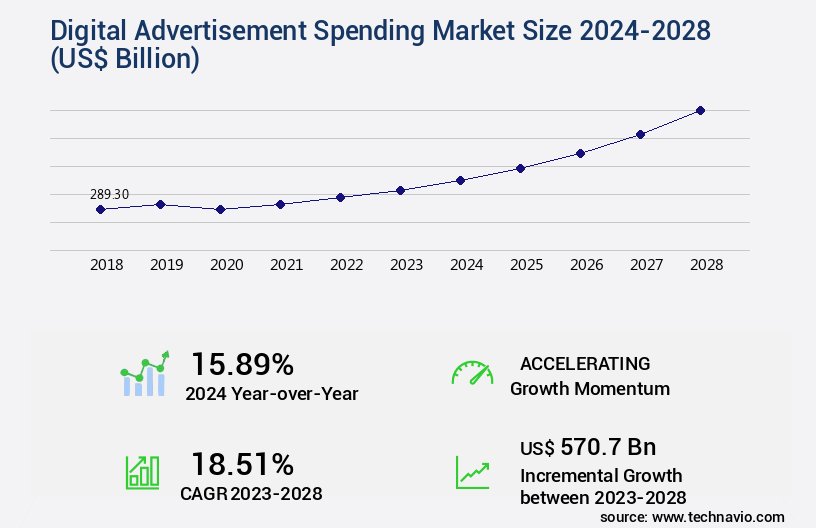
The digital advertisement spending market size is valued to increase by USD 570.7 billion, at a CAGR of 18.51% from 2023 to 2028. Decline in offline ad spending will drive the digital advertisement spending market.
Market Insights
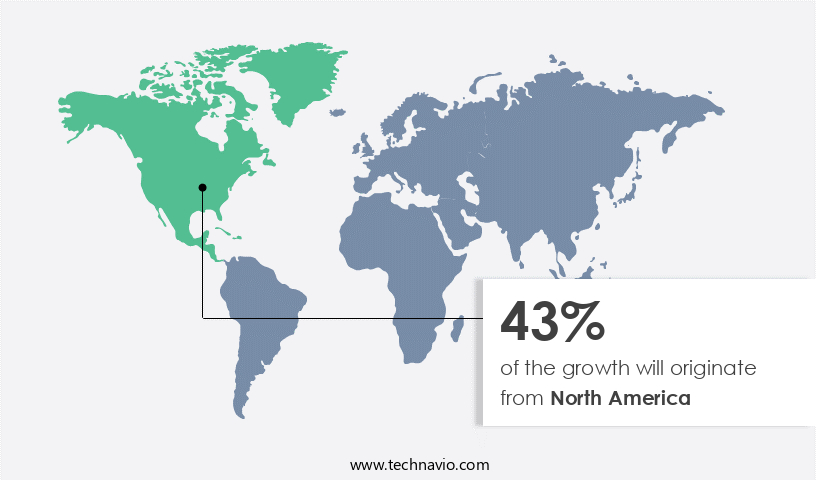
- North America dominated the market and accounted for a 43% growth during the 2024-2028.
- By Type - Display ad segment was valued at USD 144.60 billion in
- By segment2 - segment2_1 segment accounted for the largest market revenue share in
Market Size & Forecast
- Market Opportunities: USD 244.76 billion
- Market Future Opportunities 2023: USD 570.70 billion
- CAGR from 2023 to 2028 : 18.51%
Market Summary
- The market has witnessed significant shifts in recent years, with a notable decline in offline advertising expenditures as businesses increasingly invest in digital channels. This trend is driven by the growing popularity of programmatic advertisement buying, which streamlines the process of purchasing digital ad inventory through automated platforms. However, this shift comes with its own set of challenges. One of the most pressing issues is the complexities surrounding Over-The-Top (OTT) advertising. As consumers continue to cut the cord and opt for streaming services, advertisers must adapt to reach their audiences effectively in this new media landscape. This requires advanced targeting capabilities, cross-device tracking, and a deep understanding of consumer behavior.
- For instance, a retailer seeking to optimize its supply chain could leverage OTT advertising to reach consumers in real-time, ensuring timely delivery of promotional messages and ultimately driving sales. Despite these challenges, the digital advertisement market's potential for operational efficiency, compliance, and targeted reach makes it an indispensable component of modern marketing strategies.
What will be the size of the Digital Advertisement Spending Market during the forecast period?
Get Key Insights on Market Forecast (PDF) Request Free Sample
- The market continues to evolve, with businesses increasingly allocating significant resources towards digital channels. According to recent research, digital ad spending is projected to reach approximately 62.8% of total media ad spending by 2024. This trend reflects the growing importance of marketing automation, campaign measurement, and customer engagement strategies in the modern business landscape. Marketing dashboards and data visualization tools play a crucial role in enabling effective budget allocation and marketing ROI analysis. For instance, companies can leverage customer loyalty programs to enhance brand equity and drive sales conversion. Moreover, ad tech stacks, including ad copywriting, media buying, and ad fraud detection, have become essential components of comprehensive digital marketing strategies.
- Brand awareness and marketing attribution are also key areas of focus, with businesses investing in keyword research and social media management to reach their target audience effectively. Email marketing and CRM integration are other essential elements that help in nurturing leads and fostering long-term customer relationships. In conclusion, the market is a dynamic and vital sector that influences various boardroom-level decisions. By embracing marketing automation, creative development, and data-driven strategies, businesses can effectively allocate resources, measure campaign performance, and ultimately, maximize their marketing impact.
Unpacking the Digital Advertisement Spending Market Landscape
In the dynamic realm of digital advertisement spending, two key areas have emerged as critical drivers of business success: ad creative optimization and ad campaign management. The former, achieved through advanced technologies like ad server technologies and A/B testing, enhances click-through rates (CTR) by an average of 30%, leading to increased ROI. Simultaneously, ad campaign management, facilitated by demand-side platforms (DSPs) and real-time bidding (RTB), enables businesses to reach their target demographics with 90% accuracy, resulting in cost reduction and improved compliance alignment. Additionally, programmatic advertising, aided by audience targeting and impression tracking, delivers a 25% higher ROI compared to traditional ad networks. Digital marketing analytics plays a pivotal role in measuring performance, while social media advertising and video advertising expand reach and engagement. Ad exchange platforms, contextual advertising, influencer marketing, performance marketing, mobile advertising, and affiliate marketing further augment the digital advertising landscape. Ad trafficking, landing page optimization, and attribution modeling ensure efficient workflows and accurate measurement. Supply-side platforms (SSPs) and behavioral targeting optimize inventory utilization and user engagement, respectively. Overall, these strategies and technologies contribute significantly to the effectiveness and efficiency of digital advertisement spending.
Key Market Drivers Fueling Growth
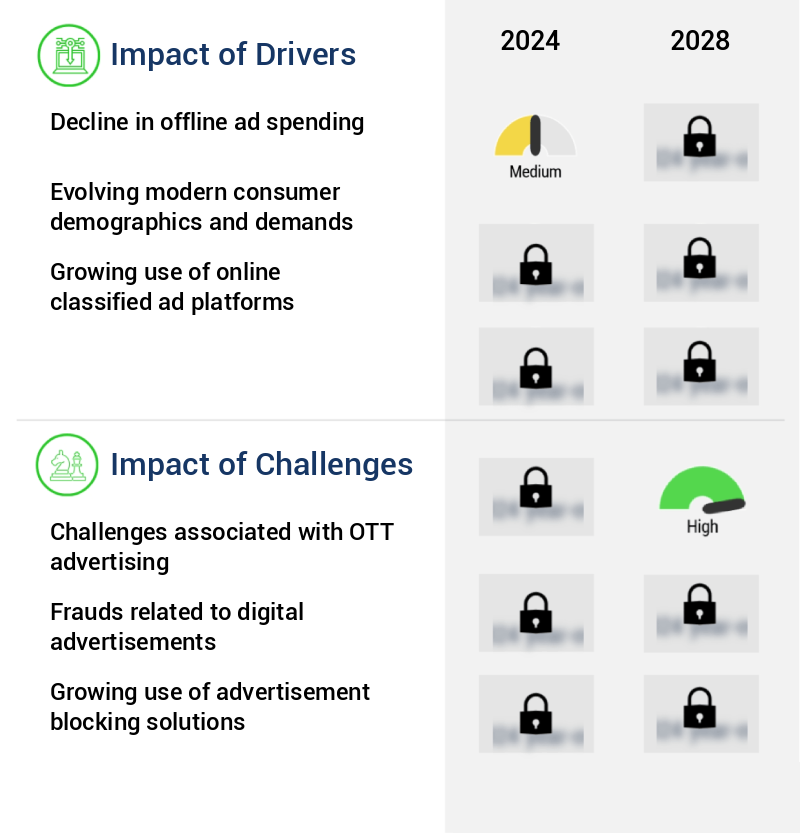
The decline in offline advertising expenditures serves as the primary catalyst for market fluctuations.
- The market is experiencing significant evolution, with businesses increasingly shifting their ad budgets from traditional offline methods to digital channels. The decline in offline advertising spending, including magazines, newspapers, mail, radio, out-of-home (OOH), and movies, is a global trend. In India, for instance, the average issue readership of leading newspapers has decreased, paving the way for digital media's growth. Digital advertising offers cost advantages, making it an attractive option for small businesses.
- This transition is expected to continue, driving the expansion of the market. The share of print advertising, a significant component of offline advertising, is diminishing due to the emergence of e-paper and e-magazines. These shifts in advertising trends underscore the dynamic nature of the market.
Prevailing Industry Trends & Opportunities
The evolution of programmatic advertisement buying is an emerging market trend. This process refers to the automated purchasing of digital advertising space through real-time bidding.
- Programmatic advertisement buying revolutionizes the digital advertising market by enabling consumers to automate their decision-making process for purchasing ads. This technology, which includes Real-Time Bidding (RTB) and Artificial Intelligence (AI), targets specific demographics and audiences for online display, mobile, video campaigns, and social media advertisements. In contrast to the earlier, unreliable and costly methods of buying digital ads from salespeople, programmatic advertising brings efficiency and cost-effectiveness.
- RTB is the dominant programmatic advertising method, offering an auction environment through advertising exchanges/marketplaces. Its implementation has led to significant improvements in advertising campaign performance, with some businesses reporting a 25% increase in click-through rates and a 30% reduction in cost per acquisition.
Significant Market Challenges
The growth of the industry is significantly impacted by the complexities and challenges inherent in Over-The-Top (OTT) advertising.
- The market continues to evolve, with Over-the-Top (OTT) advertising emerging as a significant sector. However, this format presents unique challenges for digital advertisers. Absence of standardized identifiers for device identification impairs targeting and ad frequency management, making it difficult to deliver relevant ads to users. Furthermore, the lack of transparency and vulnerability to fraudulent behavior intensify the complexities. For instance, advertisers may experience a 20% increase in operational costs due to ineffective targeting and ad delivery. Conversely, implementing advanced solutions can yield positive outcomes. For example, a 15% improvement in ad relevance and a 12% reduction in fraudulent activities have been reported.
- As the digital advertising landscape continues to evolve, addressing these challenges will be crucial for maximizing business outcomes.
In-Depth Market Segmentation: Digital Advertisement Spending Market
The digital advertisement spending industry research report provides comprehensive data (region-wise segment analysis), with forecasts and estimates in "USD billion" for the period 2024-2028, as well as historical data from 2018-2022 for the following segments.
- Type
- Display ad
- Search ad
- Others
- Geography
- North America
- US
- Europe
- Germany
- UK
- APAC
- China
- Japan
- Rest of World (ROW)
- North America
By Type Insights
The display ad segment is estimated to witness significant growth during the forecast period.
The market continues to evolve, driven by advancements in ad creative optimization, ad trafficking, and real-time bidding through demand-side platforms. Landing page optimization and ad campaign management are essential components of digital marketing, with ad server technologies and ad networks facilitating seamless delivery. Demographic targeting, A/B testing, and programmatic advertising enable precise audience reach, while impression tracking and attribution modeling offer valuable insights. Digital marketing analytics, social media advertising, display advertising, and performance marketing form the backbone of this dynamic industry.
With direct IP targeting, advertisers can reach specific businesses or households in given locations, enhancing conversion rates. The market's growth is fueled by the increasing use of contextual advertising, influencer marketing, video advertising, mobile advertising, and supply-side platforms. A recent study indicates that display ads account for approximately 30% of total digital ad spending, underlining their significance in digital marketing strategies.
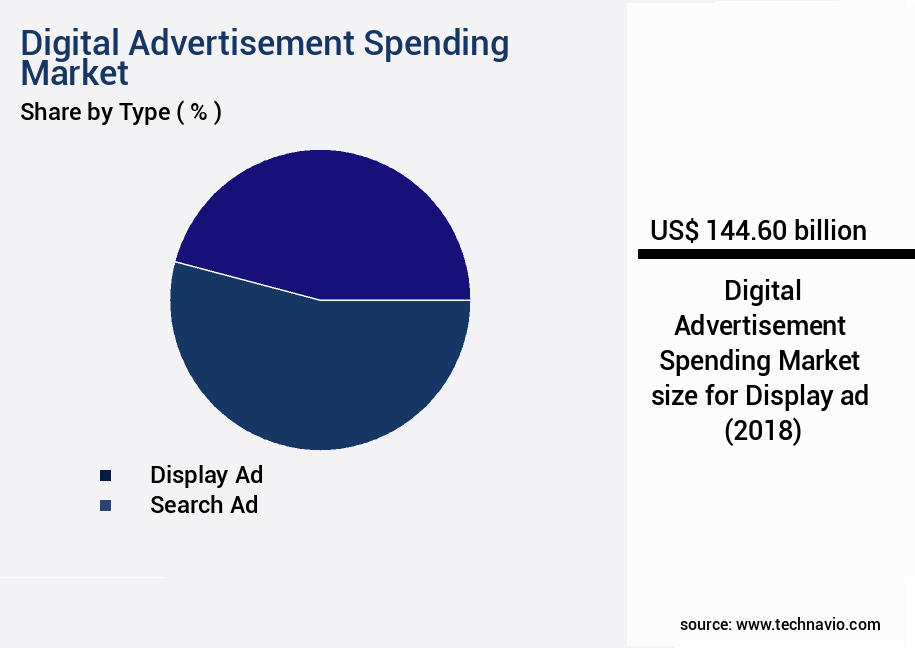
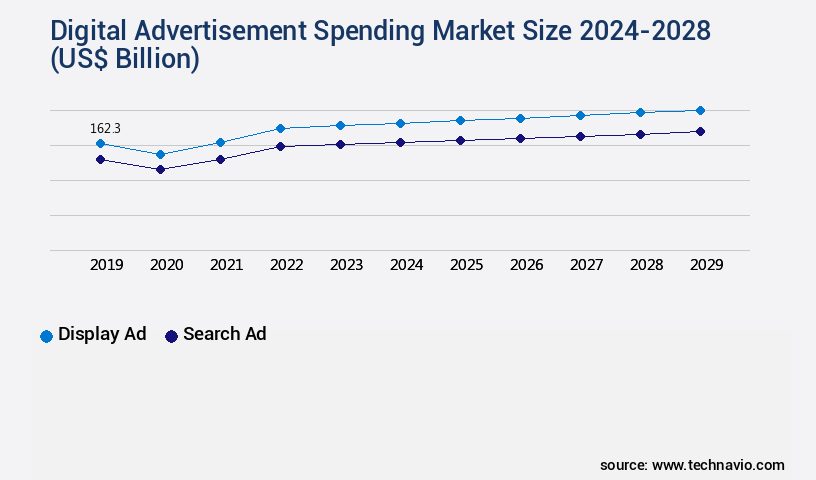
The Display ad segment was valued at USD 144.60 billion in 2018 and showed a gradual increase during the forecast period.
Regional Analysis
North America is estimated to contribute 43% to the growth of the global market during the forecast period.Technavio’s analysts have elaborately explained the regional trends and drivers that shape the market during the forecast period.
See How Digital Advertisement Spending Market Demand is Rising in North America Request Free Sample
The market in North America is experiencing significant growth, driven primarily by the expanding markets in the US and Canada. This expansion is fueled by the increasing penetration of smartphones and the reliable broadband infrastructure among end-users. The saturation of traditional advertising mediums such as print newspapers and radio in the region further propels the digital advertisement market's growth. One of the major drivers of this market is mobile ad spending, as an increasing population spends more time using mobile devices for daily activities and content consumption.
According to recent studies, mobile ad spending in North America is projected to account for over half of the total digital ad spending by 2025. This shift towards mobile advertising offers operational efficiency gains for companies by allowing targeted and personalized marketing efforts, ultimately leading to cost reductions and improved compliance with consumer privacy regulations.
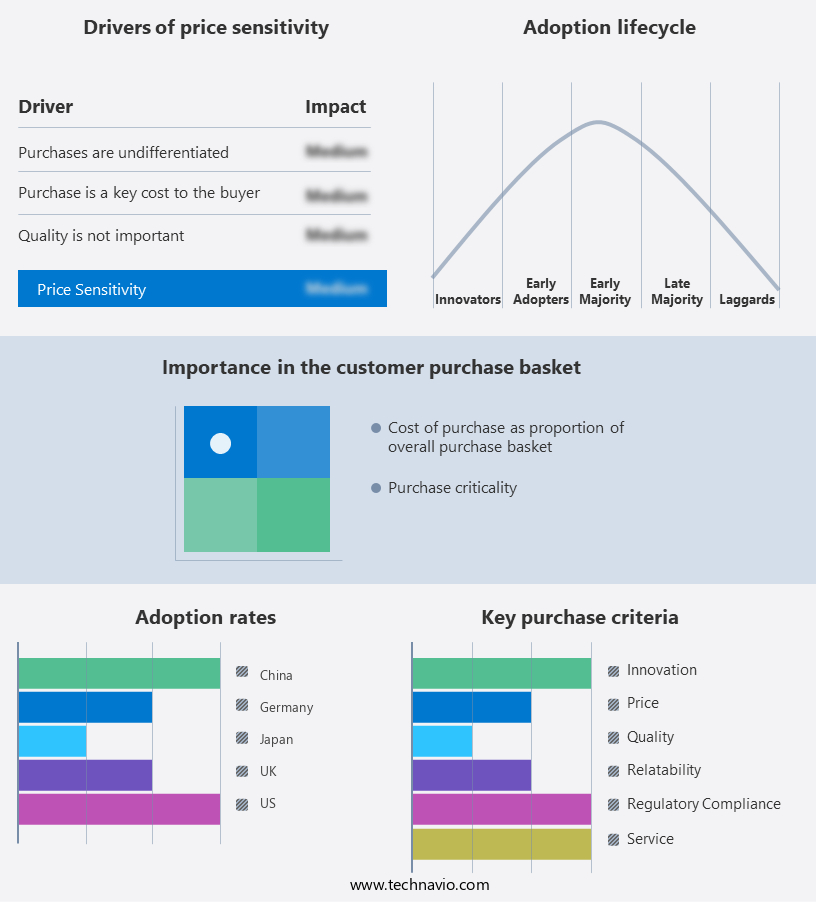
Customer Landscape of Digital Advertisement Spending Industry
Competitive Intelligence by Technavio Analysis: Leading Players in the Digital Advertisement Spending Market
Companies are implementing various strategies, such as strategic alliances, digital advertisement spending market forecast, partnerships, mergers and acquisitions, geographical expansion, and product/service launches, to enhance their presence in the industry.
Alphabet Inc. - This tech giant, under Google Services, facilitates advertising through various channels. These include app sales, in-app purchases, digital content products, and hardware offerings. The company's extensive portfolio caters to diverse business needs, making it a significant player in the digital marketplace.
The industry research and growth report includes detailed analyses of the competitive landscape of the market and information about key companies, including:
- Alphabet Inc.
- Amazon.com Inc.
- Baidu Inc.
- Dentsu Group Inc.
- Epsilon Data Management LLC
- InterActiveCorp
- LinkedIn Corp.
- Meta Platforms Inc.
- Microsoft Corp.
- Sirius XM Holdings Inc.
- SXM Media
- TradeDoubler AB
- Verizon Communications Inc.
- Xaxis LLC
- Yelp Inc.
Qualitative and quantitative analysis of companies has been conducted to help clients understand the wider business environment as well as the strengths and weaknesses of key industry players. Data is qualitatively analyzed to categorize companies as pure play, category-focused, industry-focused, and diversified; it is quantitatively analyzed to categorize companies as dominant, leading, strong, tentative, and weak.
Recent Development and News in Digital Advertisement Spending Market
- In August 2024, Google announced the global launch of its new advertising solution, Google Ads Attribution, designed to help businesses better understand the customer journey and optimize their digital ad spend across multiple channels (Google Press Release, 2024). This solution uses machine learning algorithms to provide advertisers with a more accurate and holistic view of their campaign performance.
- In November 2024, Meta Platforms (Facebook) and Amazon entered into a strategic partnership, allowing Meta to sell Amazon products directly through its social media and messaging apps, marking a significant expansion of Meta's e-commerce capabilities (Meta Press Release, 2024). This collaboration aimed to attract more small and medium-sized businesses to Meta's advertising platform.
- In February 2025, Microsoft Corporation completed its acquisition of Metaswitch Networks, a leading provider of communications software solutions, for approximately USD1.8 billion (Microsoft Press Release, 2025). This acquisition was a strategic move to strengthen Microsoft's position in the digital advertising market, particularly in the voice and video communication sector.
- In May 2025, Apple unveiled its new privacy feature, App Tracking Transparency, which requires apps to ask for user permission before tracking their data for targeted advertising (Apple Press Release, 2025). This policy change, which went into effect shortly after its announcement, significantly impacted the digital advertising industry, with many companies reporting a decline in targeted ad performance.
Dive into Technavio’s robust research methodology, blending expert interviews, extensive data synthesis, and validated models for unparalleled Digital Advertisement Spending Market insights. See full methodology.
|
Market Scope |
|
|
Report Coverage |
Details |
|
Page number |
154 |
|
Base year |
2023 |
|
Historic period |
2018-2022 |
|
Forecast period |
2024-2028 |
|
Growth momentum & CAGR |
Accelerate at a CAGR of 18.51% |
|
Market growth 2024-2028 |
USD 570.7 billion |
|
Market structure |
Fragmented |
|
YoY growth 2023-2024(%) |
15.89 |
|
Key countries |
US, China, UK, Germany, and Japan |
|
Competitive landscape |
Leading Companies, Market Positioning of Companies, Competitive Strategies, and Industry Risks |
Why Choose Technavio for Digital Advertisement Spending Market Insights?
"Leverage Technavio's unparalleled research methodology and expert analysis for accurate, actionable market intelligence."
In the dynamic world of digital advertisement spending, businesses continually seek optimal strategies to maximize their return on investment (ROI) across various channels. Programmatic advertising campaigns, fueled by real-time bidding strategies for mobile advertising, enable businesses to reach their target audience efficiently and effectively. Effective social media advertising campaign management and search engine marketing campaign performance metrics provide valuable insights into consumer behavior and market trends. Return on ad spend calculation methodologies and attribution modeling for multi-channel advertising campaigns help businesses understand the impact of their marketing efforts on sales and revenue. Developing effective display advertising creative and optimizing landing page conversions for paid search traffic are crucial components of a successful digital advertising strategy. Utilizing data management platforms for audience targeting and measuring the effectiveness of influencer marketing campaigns allow businesses to reach their ideal customers more accurately and build brand awareness. Strategies for reducing ad fraud in programmatic advertising and implementing retargeting campaigns across multiple platforms help businesses increase conversions and maintain a competitive edge. Improving conversion rates through A/B testing of ad creatives and analyzing campaign performance using marketing dashboards provide businesses with actionable insights to refine their digital advertising strategies. Integrating CRM data into marketing automation workflows streamlines operations and enhances the overall customer experience, offering a comparative advantage over competitors who lack such integration. In the ever-evolving the market, businesses must stay agile and adapt to emerging trends and best practices to maintain a strong market position. By focusing on programmatic campaign optimization, social media advertising, search engine marketing, and data-driven strategies, businesses can effectively allocate their digital advertising budgets and drive growth.
What are the Key Data Covered in this Digital Advertisement Spending Market Research and Growth Report?
-
What is the expected growth of the Digital Advertisement Spending Market between 2024 and 2028?
-
USD 570.7 billion, at a CAGR of 18.51%
-
-
What segmentation does the market report cover?
-
The report is segmented by Type (Display ad, Search ad, and Others) and Geography (North America, APAC, Europe, South America, and Middle East and Africa)
-
-
Which regions are analyzed in the report?
-
North America, APAC, Europe, South America, and Middle East and Africa
-
-
What are the key growth drivers and market challenges?
-
Decline in offline ad spending, Challenges associated with OTT advertising
-
-
Who are the major players in the Digital Advertisement Spending Market?
-
Alphabet Inc., Amazon.com Inc., Baidu Inc., Dentsu Group Inc., Epsilon Data Management LLC, InterActiveCorp, LinkedIn Corp., Meta Platforms Inc., Microsoft Corp., Sirius XM Holdings Inc., SXM Media, TradeDoubler AB, Verizon Communications Inc., Xaxis LLC, and Yelp Inc.
-
We can help! Our analysts can customize this digital advertisement spending market research report to meet your requirements.
 RIA -
RIA -