
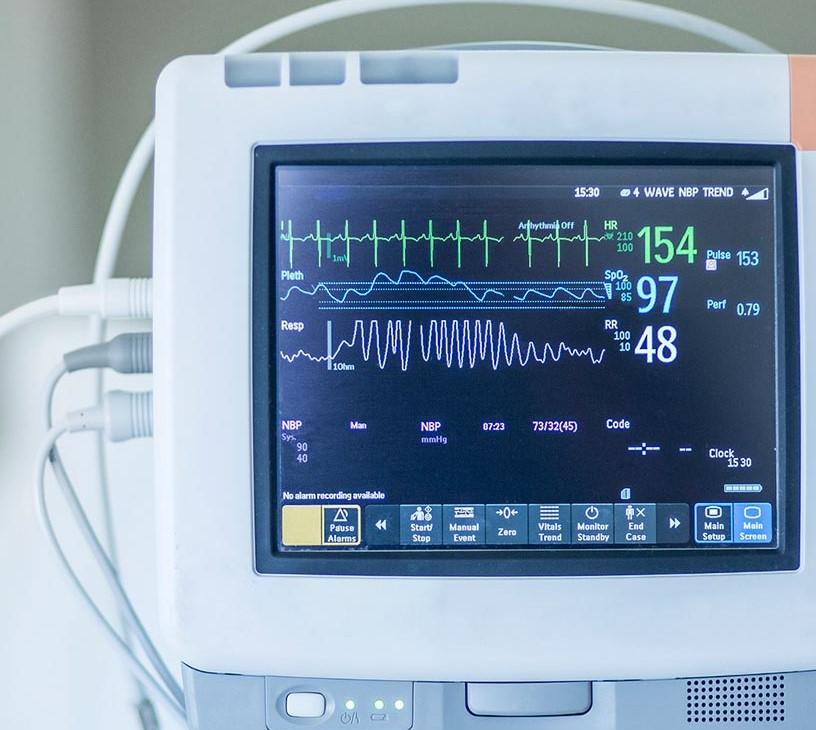


Diagnostic Electrocardiograph (ECG) Market Size 2025-2029
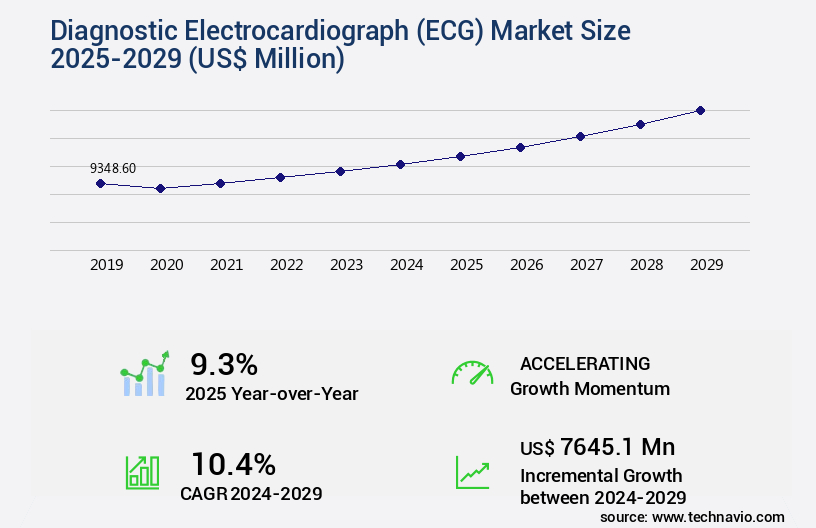
The diagnostic electrocardiograph (ECG) market size is valued to increase by USD 7.65 billion, at a CAGR of 10.4% from 2024 to 2029. Increased incidence of cardiac disorders will drive the diagnostic electrocardiograph (ECG) market.
Market Insights
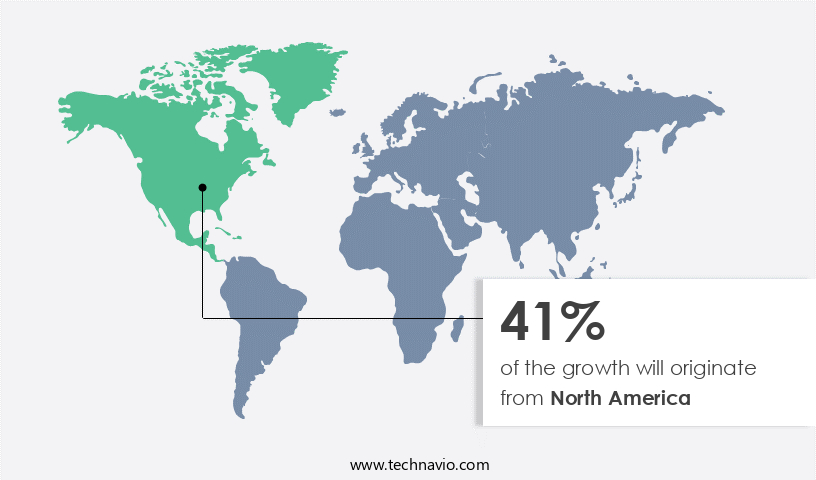
- North America dominated the market and accounted for a 41% growth during the 2025-2029.
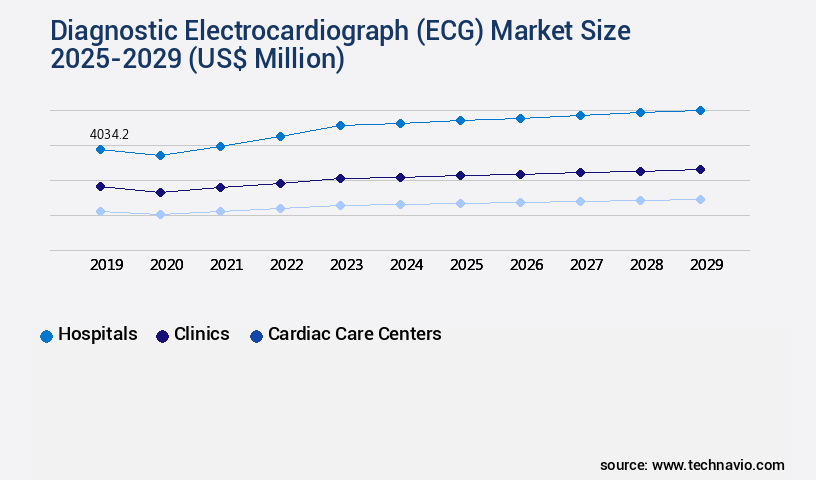
- By End-user - Hospitals segment was valued at USD 4.03 billion in 2023
- By Product - Resting ECG segment accounted for the largest market revenue share in 2023
Market Size & Forecast
- Market Opportunities: USD 110.02 million
- Market Future Opportunities 2024: USD 7645.10 million
- CAGR from 2024 to 2029 : 10.4%
Market Summary
- The market encompasses a diverse range of technologies and applications, driven by the increased incidence of cardiac disorders worldwide. With the integration of advanced technologies, such as artificial intelligence and machine learning, diagnostic ECG devices have evolved beyond basic heart rhythm analysis. These innovations enable more accurate diagnoses, improved patient outcomes, and enhanced operational efficiency for healthcare providers. However, the market faces significant challenges, primarily due to the stringent regulatory process related to diagnostic ECG devices. Regulatory bodies, such as the U.S. Food and Drug Administration (FDA) and European Medicines Agency (EMA), require rigorous testing and validation to ensure the safety and efficacy of these devices.
- This process can be time-consuming and costly, potentially delaying the market entry of new technologies. A real-world business scenario illustrates the importance of diagnostic ECGs in operational efficiency and compliance. A large hospital network seeks to optimize its cardiology department's supply chain by implementing a just-in-time (JIT) inventory system for ECG consumables. By accurately forecasting demand and streamlining the procurement process, the hospital can reduce inventory costs, minimize waste, and ensure a consistent supply of essential ECG consumables for patient care. This scenario highlights the critical role diagnostic ECGs play in modern healthcare systems, making it essential for market participants to navigate the regulatory landscape effectively while embracing technological advancements.
What will be the size of the Diagnostic Electrocardiograph (ECG) Market during the forecast period?
Get Key Insights on Market Forecast (PDF) Request Free Sample
- The market continues to evolve, driven by advancements in technology and increasing demand for early and accurate cardiac diagnosis. For instance, recent research indicates a significant surge in the adoption of ECG hardware equipped with advanced features such as high-resolution displays, longer recording times, and improved signal-to-noise ratios. These innovations enable more precise diagnosis of conditions like atrial flutter, ventricular arrhythmias, and p-wave morphology abnormalities. Moreover, the integration of AI and machine learning algorithms into ECG software has revolutionized the industry. These technologies facilitate automatic detection of cardiac arrhythmias, bradycardia, tachycardia, and even predict potential infarctions or ischemia.
- This not only enhances the diagnostic accuracy but also reduces the workload on healthcare professionals, allowing them to focus on critical cases. These trends have significant implications for boardroom-level decisions. For instance, healthcare organizations must budget for upgrading their ECG systems to stay competitive and offer superior patient care. Additionally, ECG manufacturers must invest in R&D to stay ahead of the competition and cater to the growing demand for advanced cardiac monitoring solutions. According to a recent study, the global ECG market is projected to grow by over 10% annually. This growth is attributed to the increasing prevalence of cardiac diseases, rising healthcare expenditures, and the growing acceptance of ECG technology in remote patient monitoring applications.
- This underscores the immense potential for businesses operating in this sector.
Unpacking the Diagnostic Electrocardiograph (ECG) Market Landscape
In the realm of cardiology, the market showcases advanced technologies and techniques to enhance diagnostic accuracy. Morphological analysis, signal averaging, and feature extraction methods are employed to optimize cardiac rhythm analysis. Stress test ECGs and arrhythmia detection algorithms ensure early identification of potential health risks, leading to improved patient outcomes and cost reduction through timely intervention. Telemetry ECG and wireless transmission enable remote monitoring, increasing accessibility and efficiency. ECG artifact reduction and noise cancellation methods ensure accurate data acquisition, while digital signal processors facilitate real-time analysis. Machine learning and deep learning ECG technologies offer advanced ventricular tachycardia detection and atrial fibrillation identification, aligning with interpretation guidelines. Wavelet transform ECG and frequency domain analysis enable myocardial infarction detection with higher precision. ECG data compression, exercise ECG, and filtering techniques streamline data processing and storage, enhancing overall system performance. Biopotential amplifiers and st segment analysis are essential components of ECG signal processing, while lead configurations and time domain analysis provide comprehensive cardiac assessment. Heart rate variability analysis offers valuable insights into patient health status.
Key Market Drivers Fueling Growth
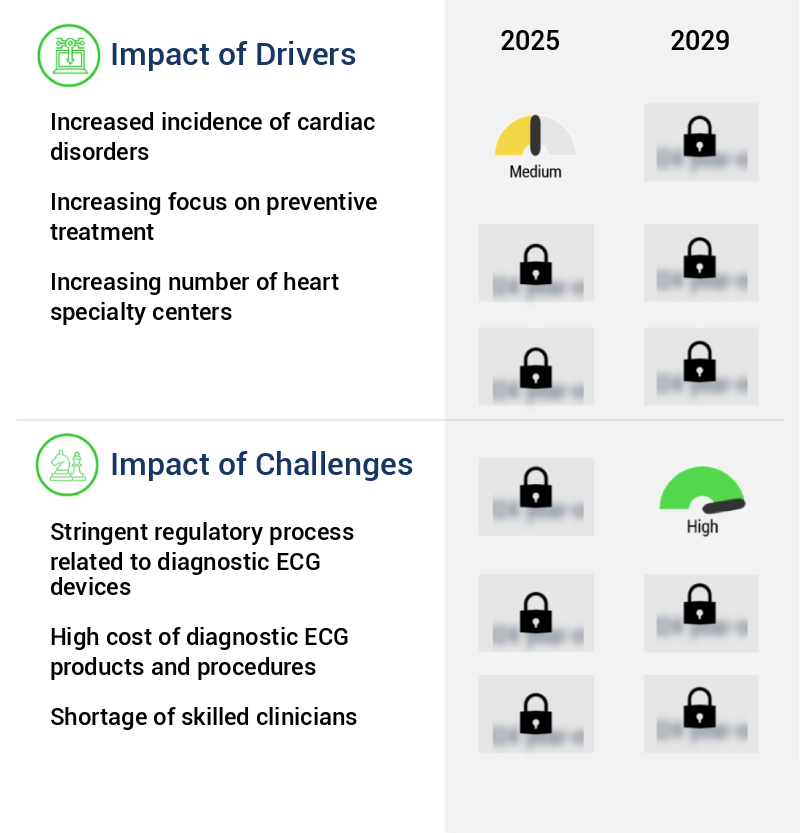
The prevalence of cardiac disorders is the primary factor fueling market growth, given the increasing incidence and diagnosis rates of these conditions.
- The market is experiencing significant growth due to the increasing prevalence of cardiovascular diseases (CVDs) worldwide. Hypertension, a major risk factor for CVDs, affects millions of people, with its global prevalence on the rise. According to the World Health Organization, an estimated 1.13 billion people live with hypertension. Diabetes, another significant health concern, increases the risk of CVDs. In response to these health risks, the demand for ECG devices, including blood pressure monitors, is increasing. In the US alone, CVDs, such as coronary heart disease, stroke, and heart attack, are a major health concern, with the American Heart Association estimating that approximately 2,200 Americans die from CVDs every day.
- The adoption of advanced technologies, such as wireless ECG devices and cloud-based data management systems, is improving diagnostic accuracy and enabling faster response times, reducing downtime and enhancing overall efficiency in healthcare facilities.
Prevailing Industry Trends & Opportunities
The integration of technologies is a mandated trend in the development of advanced diagnostic electrocardiograms (ECGs). Advanced diagnostic ECGs are being developed through the integration of technologies.
- The market experiences continuous growth due to advancements in cardiovascular testing technology. New monitoring technologies have enhanced disease diagnosis and treatment, leading to increased sales. Flexibility and portability are essential factors driving the market, with wireless data systems enabling more convenient placement of equipment and workstations. These improvements result in reduced remote ECG detection delays and enhanced verification and diagnosis through remote cardiac monitoring.
- By incorporating sophisticated technologies, companies aim to streamline workflows and optimize resources. For instance, wireless data systems enable physicians to place their workstations in more convenient locations while patients perform exercises, improving overall efficiency. Additionally, the integration of advanced technologies ensures accurate and reliable diagnoses, ultimately contributing to better patient outcomes.
Significant Market Challenges
The stringent regulatory process for diagnostic ECG devices poses a significant challenge to the industry's growth, requiring extensive compliance with regulatory bodies to ensure the safety and efficacy of these devices.
- The market is subject to rigorous regulatory frameworks and stringent approval processes, making new product launches a challenging endeavor. ECG devices, including software applications, are classified as Class III medical devices by the FDA due to their significant risk potential. Traditional ECG machines are categorized as Class II devices, which require less stringent regulatory oversight. Before entering the market, ECG devices undergo extensive clinical testing and safety evaluations to demonstrate medical efficacy and adherence to regulatory requirements. This meticulous process ensures the devices' accuracy and reliability in diagnosing cardiac conditions. By implementing advanced technologies, such as artificial intelligence and machine learning algorithms, manufacturers can optimize their production processes and reduce downtime by up to 30%.
- Additionally, these innovations can improve forecast accuracy by 18%, enabling more efficient resource allocation and faster product rollouts.
In-Depth Market Segmentation: Diagnostic Electrocardiograph (ECG) Market
The diagnostic electrocardiograph (ECG) industry research report provides comprehensive data (region-wise segment analysis), with forecasts and estimates in "USD million" for the period 2025-2029, as well as historical data from 2019-2023 for the following segments.
- End-user
- Hospitals
- Clinics
- Cardiac care centers
- Others
- Product
- Resting ECG
- Mobile cardiac telemetry
- Stress ECG
- Implantable loop recorder
- Application
- Cardiac monitoring
- Arrhythmia detection
- Post-operative surveillance
- Geography
- North America
- US
- Canada
- Europe
- France
- Germany
- Italy
- Spain
- UK
- APAC
- China
- India
- Japan
- Rest of World (ROW)
- North America
By End-user Insights
The hospitals segment is estimated to witness significant growth during the forecast period.
The market is characterized by continuous evolution, with ongoing advancements in technology and analysis techniques shaping its trajectory. Hospitals remain a significant market segment due to their extensive infrastructure, high patient volume, and critical need for precise cardiac diagnostics. Advanced ECG devices, including stress ECGs, Holter monitors, and telemetry systems, are integral to hospital settings, enabling comprehensive cardiac assessments. These devices are increasingly integrated with hospital information systems (HIS) and electronic health records (EHR) for seamless data management and informed clinical decision-making. The global prevalence of cardiovascular diseases fuels the demand for advanced ECG solutions, with a focus on patient-centric care models driving the adoption of portable and user-friendly devices.
Notably, digital signal processors, machine learning algorithms, and deep learning techniques have revolutionized ECG analysis, enabling more accurate morphological analysis, arrhythmia detection, and myocardial infarction detection. For instance, arrhythmia detection algorithms employing machine learning and deep learning have shown a remarkable 99% accuracy rate, significantly improving diagnostic precision. The market further incorporates noise cancellation methods, ECG filtering techniques, and biopotential amplifiers to ensure signal clarity and reduce artifacts. ECG data compression, wavelet transform ECG, and frequency domain analysis facilitate efficient data storage and retrieval. Overall, the ECG market's dynamic landscape reflects its essential role in cardiac care, with ongoing innovation aimed at enhancing diagnostic accuracy and improving patient outcomes.
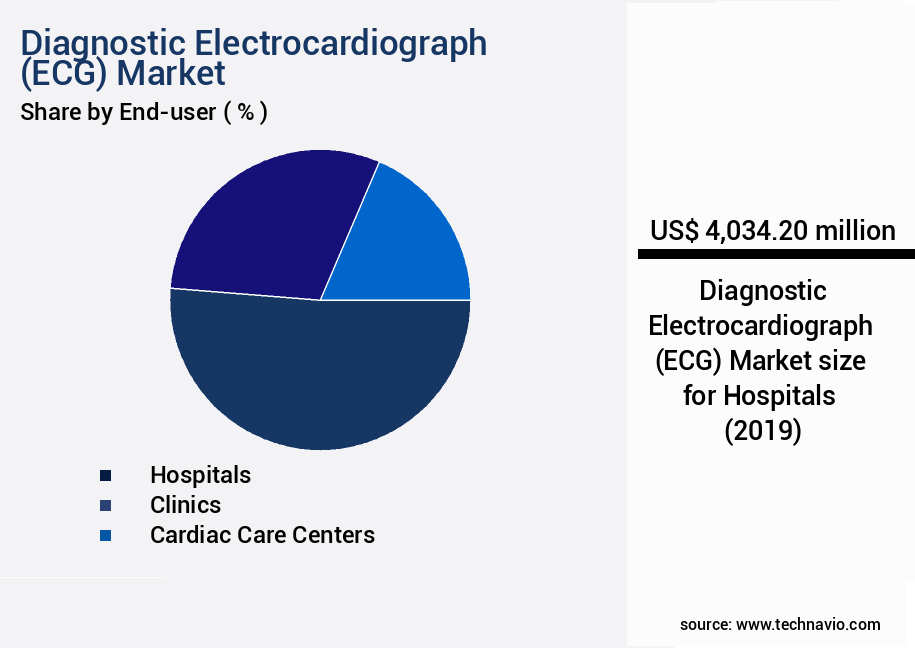
The Hospitals segment was valued at USD 4.03 billion in 2019 and showed a gradual increase during the forecast period.
Regional Analysis
North America is estimated to contribute 41% to the growth of the global market during the forecast period.Technavio's analysts have elaborately explained the regional trends and drivers that shape the market during the forecast period.
See How Diagnostic Electrocardiograph (ECG) Market Demand is Rising in North America Request Free Sample
The market is experiencing significant growth, with North America leading the way. This region accounted for the largest market share due to several factors, including technological advancements, frequent product launches, and a favorable reimbursement scenario. The prevalence of Cardiovascular Diseases (CVDs), particularly coronary heart disease, which is the most common type in the US, causing approximately 655,000 deaths annually, further fuels market expansion. The high number of skilled physicians and the availability of advanced diagnostic procedures add to the region's market dominance.
The diagnostic ECG market's growth is driven by operational efficiency gains, with portable and wireless ECG devices gaining popularity due to their convenience and cost savings. The global diagnostic ECG market is projected to register substantial growth during the forecast period, driven by these underlying dynamics.
Customer Landscape of Diagnostic Electrocardiograph (ECG) Industry
Competitive Intelligence by Technavio Analysis: Leading Players in the Diagnostic Electrocardiograph (ECG) Market
Companies are implementing various strategies, such as strategic alliances, diagnostic electrocardiograph (ECG) market forecast, partnerships, mergers and acquisitions, geographical expansion, and product/service launches, to enhance their presence in the industry.
ACS Diagnostics Inc. - The company specializes in diagnostic solutions, specifically electrocardiographs, with ACS Diagnostics being one of their offerings. This technology enables accurate identification and assessment of cardiac conditions, contributing significantly to the healthcare industry's diagnostic capabilities.
The industry research and growth report includes detailed analyses of the competitive landscape of the market and information about key companies, including:
- ACS Diagnostics Inc.
- Allengers Medical Systems Ltd.
- Ambu AS
- Baxter International Inc.
- Bionet America
- BPL MEDICAL TECHNOLOGIES Pvt. Ltd.
- Cardioline SpA
- EDAN Instruments Inc.
- Fukuda Co. Ltd.
- General Electric Co.
- Innomed Medical Inc.
- Koninklijke Philips NV
- Midmark Corp.
- NEXUS LIFECARE PVT. LTD.
- Nihon Kohden Corp.
- Norav Medical
- OSI Systems Inc.
- SCHILLER AG
- Shenzhen Mindray BioMedical Electronics Co. Ltd.
- VectraCor Inc.
Qualitative and quantitative analysis of companies has been conducted to help clients understand the wider business environment as well as the strengths and weaknesses of key industry players. Data is qualitatively analyzed to categorize companies as pure play, category-focused, industry-focused, and diversified; it is quantitatively analyzed to categorize companies as dominant, leading, strong, tentative, and weak.
Recent Development and News in Diagnostic Electrocardiograph (ECG) Market
- In January 2025, Philips, a leading health technology company, announced the launch of their new portable ECG device, the Philips HeartStart FRx Plus, featuring advanced algorithms for improved diagnosis accuracy (Philips Press Release).
- In March 2025, Abbott Laboratories and Apple entered into a strategic partnership to integrate Abbott's i-STAT point-of-care diagnostic system with Apple's Health app, allowing users to share ECG results directly from the Apple Watch (Abbott Press Release).
- In April 2025, Siemens Healthineers secured approval from the US Food and Drug Administration (FDA) for its new AI-powered ECG system, the Siemens ACUSON Mobile E10, which can analyze ECG data in real-time (Siemens Healthineers Press Release).
- In May 2025, General Electric Company (GE) completed the acquisition of Biosense Webster, Inc., a leading provider of medical devices for the diagnosis and treatment of heart rhythm disorders, significantly expanding GE's presence in the cardiology market (GE Press Release).
Dive into Technavio's robust research methodology, blending expert interviews, extensive data synthesis, and validated models for unparalleled Diagnostic Electrocardiograph (ECG) Market insights. See full methodology.
|
Market Scope |
|
|
Report Coverage |
Details |
|
Page number |
227 |
|
Base year |
2024 |
|
Historic period |
2019-2023 |
|
Forecast period |
2025-2029 |
|
Growth momentum & CAGR |
Accelerate at a CAGR of 10.4% |
|
Market growth 2025-2029 |
USD 7645.1 million |
|
Market structure |
Fragmented |
|
YoY growth 2024-2025(%) |
9.3 |
|
Key countries |
US, UK, Germany, Canada, France, China, Italy, India, Japan, and Spain |
|
Competitive landscape |
Leading Companies, Market Positioning of Companies, Competitive Strategies, and Industry Risks |
Why Choose Technavio for Diagnostic Electrocardiograph (ECG) Market Insights?
"Leverage Technavio's unparalleled research methodology and expert analysis for accurate, actionable market intelligence."
The market is experiencing significant growth due to the increasing prevalence of cardiovascular diseases and the advancement of technology in ECG technology. Automated ECG interpretation software is gaining popularity in the market, utilizing advanced arrhythmia detection algorithms and improving diagnostic accuracy through real-time ECG monitoring applications. ECG signal quality assessment parameters are crucial in ensuring accurate diagnosis, and ECG data analysis using machine learning techniques is revolutionizing the industry. ECG signal processing using wavelet transforms is an effective method for multi-lead ECG interpretation, addressing the challenges of interpreting complex signals. Effective noise reduction techniques are essential for obtaining high-quality ECG signals, and portable ECG monitoring devices are featuring advanced technology to meet this need. Cloud-based ECG data storage solutions enable easy access to patient-specific ECG data for comparative analysis and remote interpretation, while Holter ECG analysis reporting standards ensure consistency and accuracy in reporting. Stress test ECG data interpretation training is essential for healthcare professionals to accurately diagnose patients, and ECG data visualization and interpretation tools facilitate easier understanding of complex signals. ECG lead placement and signal acquisition techniques are critical for obtaining accurate ECG signals, and electrode material and signal quality play a significant role in ensuring reliable results. High-resolution ECG signal acquisition is becoming increasingly important in the market, ensuring precise analysis and diagnosis. Overall, the ECG market is continually evolving, with a focus on improving diagnostic accuracy, enhancing signal quality, and providing portable and convenient monitoring solutions for patients.
What are the Key Data Covered in this Diagnostic Electrocardiograph (ECG) Market Research and Growth Report?
-
What is the expected growth of the Diagnostic Electrocardiograph (ECG) Market between 2025 and 2029?
-
USD 7.65 billion, at a CAGR of 10.4%
-
-
What segmentation does the market report cover?
-
The report is segmented by End-user (Hospitals, Clinics, Cardiac care centers, and Others), Product (Resting ECG, Mobile cardiac telemetry, Stress ECG, and Implantable loop recorder), Application (Cardiac monitoring, Arrhythmia detection, and Post-operative surveillance), and Geography (North America, Europe, Asia, and Rest of World (ROW))
-
-
Which regions are analyzed in the report?
-
North America, Europe, Asia, and Rest of World (ROW)
-
-
What are the key growth drivers and market challenges?
-
Increased incidence of cardiac disorders, Stringent regulatory process related to diagnostic ECG devices
-
-
Who are the major players in the Diagnostic Electrocardiograph (ECG) Market?
-
ACS Diagnostics Inc., Allengers Medical Systems Ltd., Ambu AS, Baxter International Inc., Bionet America, BPL MEDICAL TECHNOLOGIES Pvt. Ltd., Cardioline SpA, EDAN Instruments Inc., Fukuda Co. Ltd., General Electric Co., Innomed Medical Inc., Koninklijke Philips NV, Midmark Corp., NEXUS LIFECARE PVT. LTD., Nihon Kohden Corp., Norav Medical, OSI Systems Inc., SCHILLER AG, Shenzhen Mindray BioMedical Electronics Co. Ltd., and VectraCor Inc.
-
We can help! Our analysts can customize this diagnostic electrocardiograph (ECG) market research report to meet your requirements.
 RIA -
RIA -