



Customer Information System Market Size 2026-2030
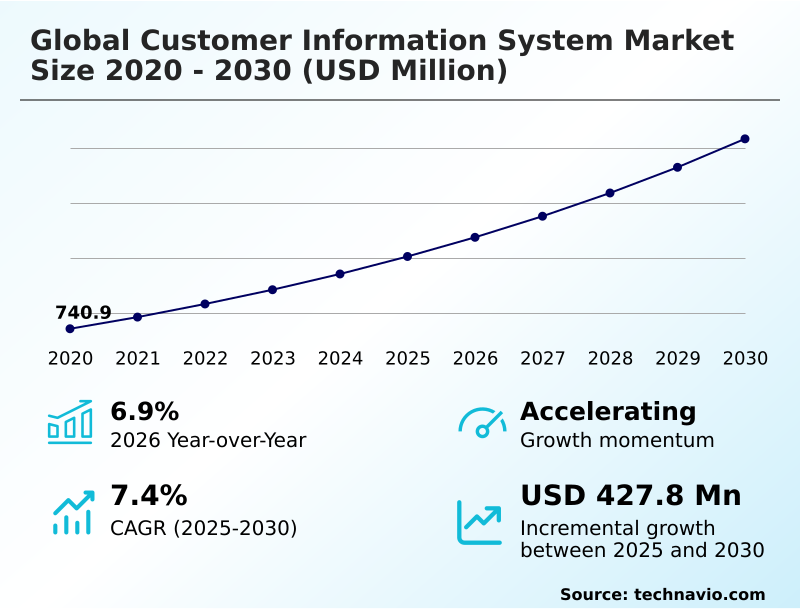
The customer information system market size is valued to increase by USD 427.8 million, at a CAGR of 7.4% from 2025 to 2030. Accelerated adoption of cloud-native architectures and SaaS models will drive the customer information system market.
Major Market Trends & Insights
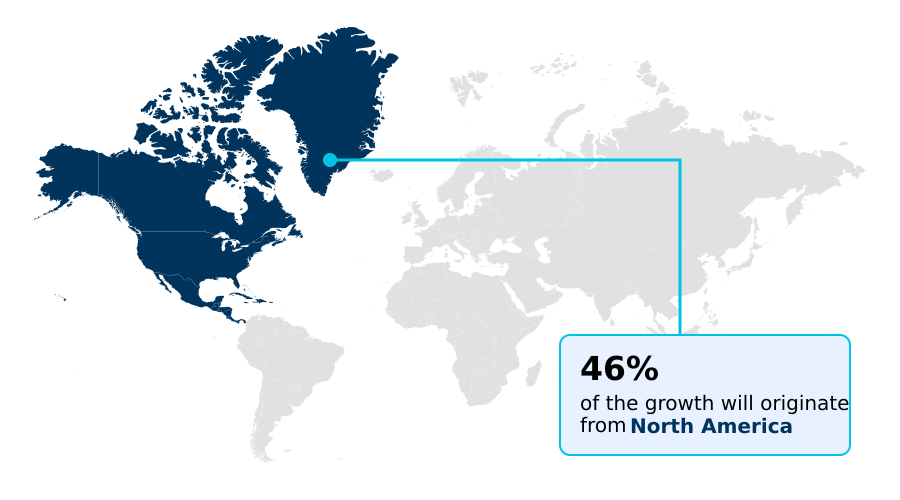
- North America dominated the market and accounted for a 45.9% growth during the forecast period.
- By Deployment - Cloud segment was valued at USD 491.1 million in 2024
- By Component - Software segment accounted for the largest market revenue share in 2024
Market Size & Forecast
- Market Opportunities: USD 690.6 million
- Market Future Opportunities: USD 427.8 million
- CAGR from 2025 to 2030 : 7.4%
Market Summary
- The Customer Information System market is undergoing a significant transformation, driven by the shift from monolithic on-premises solutions to agile cloud-native platforms. This modernization is critical for utility providers seeking to enhance operational efficiency and manage the complexities of a transitioning energy grid.
- The integration of agentic artificial intelligence and smart grid data analytics is a central theme, allowing for proactive outage communication and personalized services that improve customer satisfaction. A key driver is the accelerated adoption of a cloud-native CIS platform and SaaS deployment model, which provides scalability and reduces infrastructure costs.
- For instance, a multi-service utility might use a modern CIS to manage meter-to-cash cycle automation for its electricity, gas, and water services simultaneously, while using an integrated outage management system (OMS) to provide real-time updates during service disruptions. However, the industry faces challenges related to the high cost of legacy system modernization and the constant threat of cybersecurity for utilities.
- Navigating complex data privacy compliance regulations while ensuring data sovereignty management remains a critical hurdle for organizations aiming to deliver a seamless digital customer experience through a customer data platform (CDP) for utilities.
What will be the Size of the Customer Information System Market during the forecast period?
Get Key Insights on Market Forecast (PDF) Request Free Sample
How is the Customer Information System Market Segmented?
The customer information system industry research report provides comprehensive data (region-wise segment analysis), with forecasts and estimates in "USD million" for the period 2026-2030, as well as historical data from 2020-2024 for the following segments.
- Deployment
- Cloud
- On-premises
- Component
- Software
- Services
- Application
- Water and wastewater management
- Electricity and power management
- Utility gas management
- Geography
- North America
- US
- Canada
- Mexico
- APAC
- China
- Japan
- India
- Europe
- Germany
- UK
- France
- South America
- Brazil
- Argentina
- Middle East and Africa
- South Africa
- Saudi Arabia
- UAE
- Rest of World (ROW)
- North America
By Deployment Insights
The cloud segment is estimated to witness significant growth during the forecast period.
The cloud segment is experiencing rapid expansion as organizations increasingly adopt a SaaS deployment model to enhance digital agility.
This transition to a cloud-native CIS platform allows utilities to move beyond rigid legacy architectures, enabling dynamic scalability and reducing capital expenditure on physical data centers.
By leveraging a secure cloud infrastructure, providers can seamlessly deploy advanced capabilities, such as AI-powered virtual agents and real-time metering data processing, to improve the digital customer experience.
This strategic shift supports better DER integration and facilitates a more agile meter-to-cash process optimization.
A focus on cloud migration strategy has enabled some utilities to improve data processing efficiency by over 30%, which is critical for handling complex billing scenarios and achieving customer satisfaction improvement through proactive outage communication and customer self-service portals.
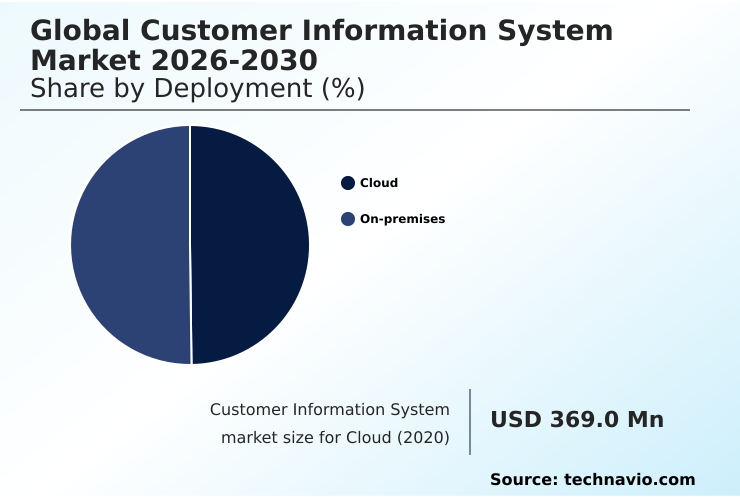
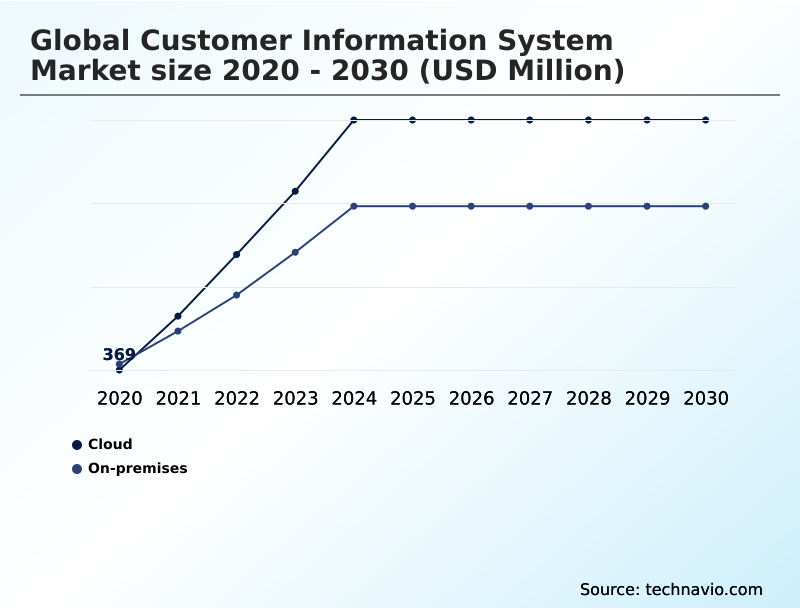
The Cloud segment was valued at USD 491.1 million in 2024 and showed a gradual increase during the forecast period.
Regional Analysis
North America is estimated to contribute 45.9% to the growth of the global market during the forecast period.Technavio’s analysts have elaborately explained the regional trends and drivers that shape the market during the forecast period.
See How Customer Information System Market Demand is Rising in North America Request Free Sample
The geographic landscape reflects varying maturity levels, with North America and Europe leading in adopting customer engagement platforms. These regions are focused on dynamic pricing models and EV charging billing. In North America, over 60% of utilities prioritize cloud investments.
In contrast, APAC is a high-growth region driven by the need for water and wastewater billing and utility gas management software.
CIS implementation services are in high demand, focusing on meter data management (MDM) and enterprise resource planning (ERP) integration for better asset performance management (APM).
In developing markets, the focus is establishing foundational real-time metering data infrastructure, where initial deployments show a potential 5% increase in revenue collection.
These regions often leverage mobile utility applications to leapfrog legacy models, supported by regulatory reporting automation and field service management integration. The implementation of automated payment plans is also gaining traction.
Market Dynamics
Our researchers analyzed the data with 2025 as the base year, along with the key drivers, trends, and challenges. A holistic analysis of drivers will help companies refine their marketing strategies to gain a competitive advantage.
- The strategic imperative for utilities is evolving from basic billing to holistic operational management, highlighting the diverse applications of modern platforms. For example, a customer information system for water utilities now focuses on leak detection and conservation as much as invoicing. Similarly, a cloud-based cis for electric cooperatives provides scalability and advanced analytics that were previously unattainable.
- The technical foundation involves integrating cis with meter data management, enabling real-time data processing in cis. In competitive environments, a flexible cis for deregulated energy markets is crucial for retaining customers. Organizations are recognizing the saas-based customer information system benefits, which include lower upfront costs and continuous innovation.
- The process of upgrading legacy cis to cloud native is a major undertaking, but it is essential to the cis role in smart grid implementation. The application of ai in cis for predictive analytics transforms raw data into actionable insights, crucial for managing ders with a modern cis and using cis for demand response management.
- A unified cis platform for multi-service utilities can handle electricity, gas, and water on a single system, streamlining operations. Enhancing cis for utility customer engagement is achieved through rich customer self-service features in cis. A key focus remains on ensuring data security in utility cis and maintaining cis compliance with data privacy laws.
- The drive toward improving billing accuracy with new cis has led some providers to see error rates drop to less than half of what they were with older systems.
- Finally, cis and crm integration for utilities and tools for mobile workforce management with cis create a connected enterprise, offering a seamless experience for both employees and customers of cis solutions for renewable energy providers.
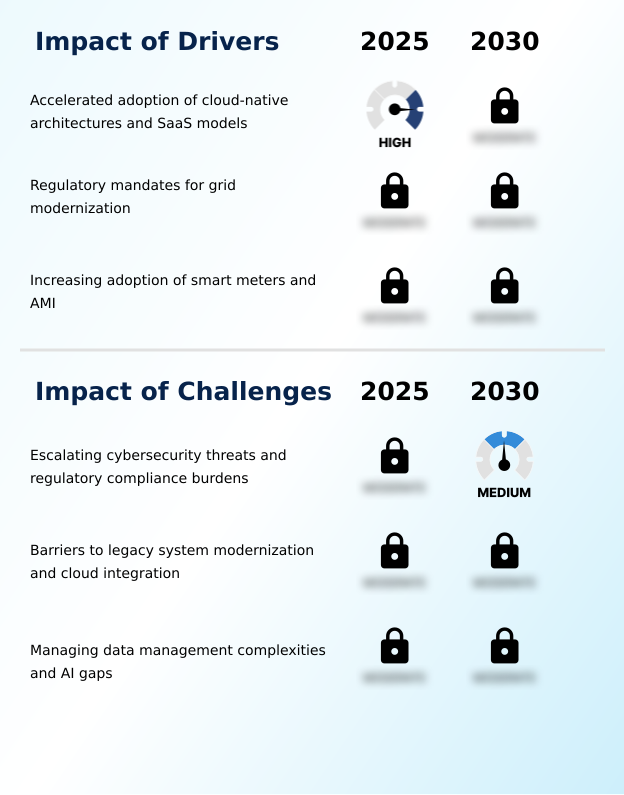
What are the key market drivers leading to the rise in the adoption of Customer Information System Industry?
- The accelerated adoption of cloud-native architectures and SaaS models is a key driver for the market, enabling greater flexibility and scalability for utility providers.
- The accelerated adoption of advanced metering infrastructure (AMI) is a primary market driver, compelling an overhaul of legacy systems. Modernization centered on meter-to-cash cycle automation and API-first integration is critical.
- Smart grid data analytics platforms, when integrated, have improved load forecasting accuracy by over 20%. Regulatory mandates for data transparency are pushing for more efficient regulatory compliance reporting, driving back-office process automation.
- Investment in platforms supporting IT/OT convergence and omnichannel customer communication is driven by the need for utility asset management.
- These systems have helped some utilities reduce customer churn by up to 5% annually by enabling personalized energy recommendations, improving revenue assurance for utilities and customer segmentation analysis.
What are the market trends shaping the Customer Information System Industry?
- A key market trend is the strategic integration of agentic AI for autonomous customer engagement. This evolution transforms how utility providers interact with their customer base through proactive, hyper-personalized service.
- A primary trend is the strategic shift toward agentic artificial intelligence for autonomous customer engagement, moving beyond traditional reactive service models. Modern platforms now offer customer journey orchestration to deliver hyper-personalized interactions, with some providers seeing a 40% reduction in call center volume.
- The adoption of composable CIS architecture and event-driven architecture allows for greater flexibility, enabling seamless geospatial information system (GIS) integration and management of demand response programs. This unification of utility billing software with grid edge intelligence enhances operational efficiency metrics.
- Utilities using these advanced systems report up to a 15% improvement in high-bill anomaly detection accuracy compared to legacy tools, significantly boosting customer lifecycle management and supporting a unified customer view.
What challenges does the Customer Information System Industry face during its growth?
- Escalating cybersecurity threats and regulatory compliance burdens are key challenges affecting industry growth, requiring significant investment in data security and governance.
- Key challenges include the complexities of legacy system modernization, with some migrations costing 25% more than budgeted. Cybersecurity for utilities is paramount, as a single breach can compromise millions of records, affecting service order management. Ensuring data sovereignty management introduces compliance burdens for utility data governance, impacting customer satisfaction scores which can drop by 10% during difficult transitions.
- A skills gap hinders use of predictive billing analytics and energy consumption analytics for non-revenue water (NRW) reduction. Organizations struggle with billing dispute resolution without modern tools, impacting cost-to-serve reduction goals. Managing net metering for solar and time-of-use (TOU) rates is a challenge for older customer information control system (CICS) platforms, which also struggle with data privacy compliance.
Exclusive Technavio Analysis on Customer Landscape
The customer information system market forecasting report includes the adoption lifecycle of the market, covering from the innovator’s stage to the laggard’s stage. It focuses on adoption rates in different regions based on penetration. Furthermore, the customer information system market report also includes key purchase criteria and drivers of price sensitivity to help companies evaluate and develop their market growth analysis strategies.
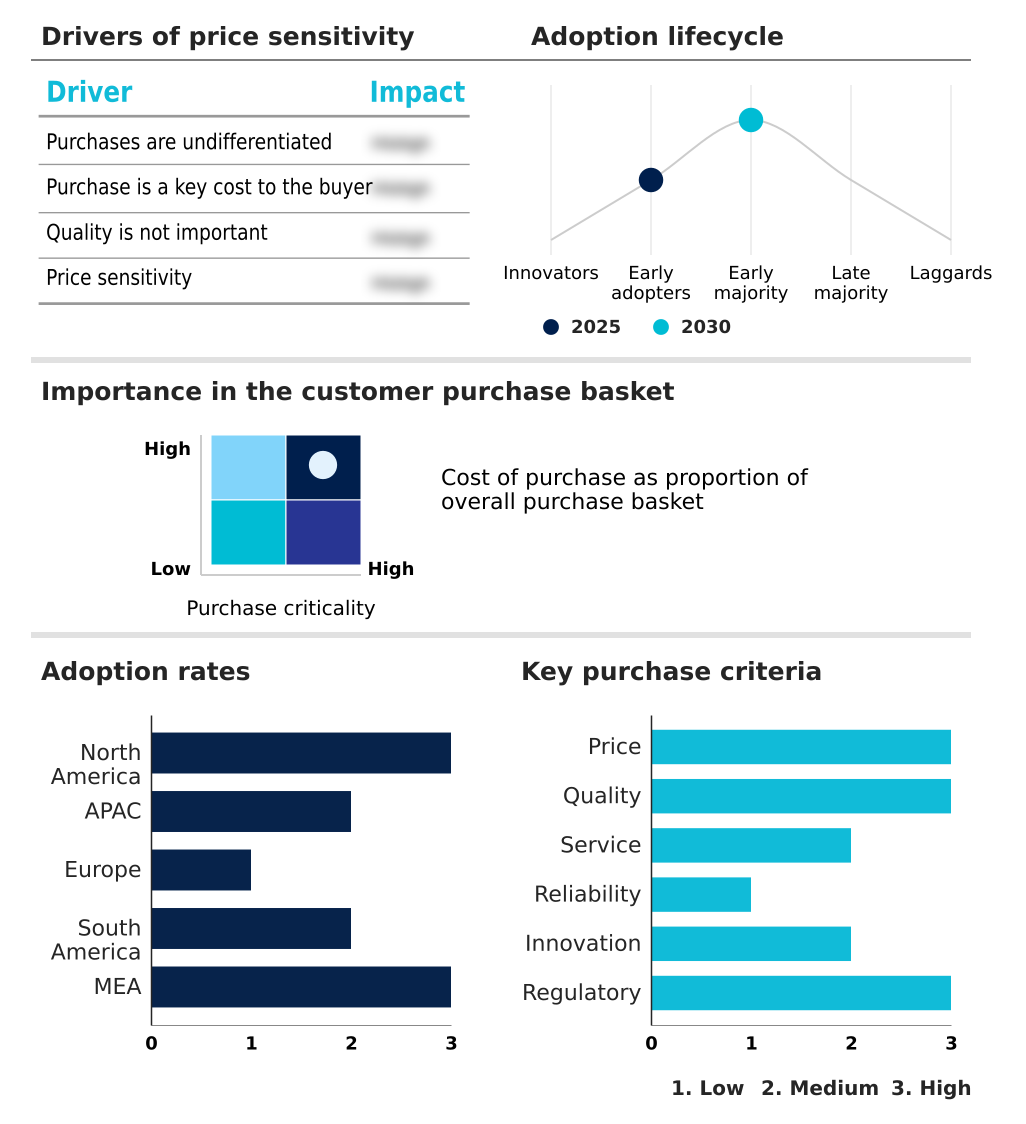
Customer Landscape of Customer Information System Industry
Competitive Landscape
Companies are implementing various strategies, such as strategic alliances, customer information system market forecast, partnerships, mergers and acquisitions, geographical expansion, and product/service launches, to enhance their presence in the industry.
Cogsdale Corp. - Delivering integrated customer information system platforms that unify billing, revenue management, and customer engagement for utility providers through cloud-native and on-premise solutions.
The industry research and growth report includes detailed analyses of the competitive landscape of the market and information about key companies, including:
- Cogsdale Corp.
- Constellation Software Inc.
- CSG Systems International Inc.
- Fluentgrid Ltd.
- Gentrack Group Ltd.
- Hansen Technologies Ltd.
- HCL Technologies Ltd.
- IBM Corp.
- Indra Sistemas SA
- Itineris NV
- Kraken Technologies Ltd.
- Microsoft Corp.
- Milsoft Utility Solutions
- Oracle Corp.
- Salesforce Inc.
- SAP SE
- Wipro Ltd.
Qualitative and quantitative analysis of companies has been conducted to help clients understand the wider business environment as well as the strengths and weaknesses of key industry players. Data is qualitatively analyzed to categorize companies as pure play, category-focused, industry-focused, and diversified; it is quantitatively analyzed to categorize companies as dominant, leading, strong, tentative, and weak.
Recent Development and News in Customer information system market
- In October 2024, American Water detected unauthorized activity on its systems, forcing a temporary shutdown of its customer portal and billing operations to contain the cybersecurity threat.
- In February 2025, Hansen Technologies launched HansenCIS, a new platform featuring AI-powered virtual agents and cloud-native architecture to assist energy and communications providers with modernizing their systems.
- In May 2025, Kraken Technologies partnered with National Grid to implement its operating system for over six million energy customers in Massachusetts and New York, replacing legacy infrastructure.
- In October 2025, Salesforce introduced Agentforce 360 for Energy and Utilities, a solution using autonomous AI agents to manage over 70% of customer inquiries without human intervention.
Dive into Technavio’s robust research methodology, blending expert interviews, extensive data synthesis, and validated models for unparalleled Customer Information System Market insights. See full methodology.
| Market Scope | |
|---|---|
| Page number | 286 |
| Base year | 2025 |
| Historic period | 2020-2024 |
| Forecast period | 2026-2030 |
| Growth momentum & CAGR | Accelerate at a CAGR of 7.4% |
| Market growth 2026-2030 | USD 427.8 million |
| Market structure | Fragmented |
| YoY growth 2025-2026(%) | 6.9% |
| Key countries | US, Canada, Mexico, China, Japan, India, Australia, South Korea, Indonesia, Germany, UK, France, Italy, Spain, The Netherlands, Brazil, Argentina, Chile, South Africa, Saudi Arabia, UAE, Egypt and Nigeria |
| Competitive landscape | Leading Companies, Market Positioning of Companies, Competitive Strategies, and Industry Risks |
Research Analyst Overview
- The market is pivoting from legacy system modernization toward the adoption of a cloud-native CIS platform using a SaaS deployment model. This shift is fundamental for utilities aiming for end-to-end meter-to-cash cycle automation. The core of this evolution lies in agentic artificial intelligence enabling autonomous customer engagement through a composable CIS architecture and event-driven architecture.
- Such systems leverage grid edge intelligence and advanced metering infrastructure (AMI) for superior meter data management (MDM). Modern utility billing software is essential for DER integration, non-revenue water (NRW) reduction, and handling real-time metering data. Effective service order management is now facilitated through a customer self-service portal, which also supports proactive outage communication.
- Leading platforms offer dynamic pricing models powered by smart grid data analytics, improving regulatory compliance reporting and data sovereignty management. With robust cybersecurity for utilities, API-first integration ensures seamless customer journey orchestration. The use of predictive billing analytics and energy consumption analytics has shown to reduce billing dispute resolution cases by over 15%.
- This is augmented by AI-powered virtual agents within a customer engagement platform or customer data platform (CDP) for utilities, which also handles omnichannel customer communication, EV charging billing, water and wastewater billing, and utility gas management software through enterprise resource planning (ERP) integration and utility asset management.
What are the Key Data Covered in this Customer Information System Market Research and Growth Report?
-
What is the expected growth of the Customer Information System Market between 2026 and 2030?
-
USD 427.8 million, at a CAGR of 7.4%
-
-
What segmentation does the market report cover?
-
The report is segmented by Deployment (Cloud, and On-premises), Component (Software, and Services), Application (Water and wastewater management, Electricity and power management, and Utility gas management) and Geography (North America, APAC, Europe, South America, Middle East and Africa)
-
-
Which regions are analyzed in the report?
-
North America, APAC, Europe, South America and Middle East and Africa
-
-
What are the key growth drivers and market challenges?
-
Accelerated adoption of cloud-native architectures and SaaS models, Escalating cybersecurity threats and regulatory compliance burdens
-
-
Who are the major players in the Customer Information System Market?
-
Cogsdale Corp., Constellation Software Inc., CSG Systems International Inc., Fluentgrid Ltd., Gentrack Group Ltd., Hansen Technologies Ltd., HCL Technologies Ltd., IBM Corp., Indra Sistemas SA, Itineris NV, Kraken Technologies Ltd., Microsoft Corp., Milsoft Utility Solutions, Oracle Corp., Salesforce Inc., SAP SE and Wipro Ltd.
-
Market Research Insights
- The market is characterized by a rapid shift toward platforms that provide a unified customer view and enhance the digital customer experience. Organizations are leveraging churn prediction models, which have proven to reduce customer attrition by up to 5% in competitive markets.
- The adoption of back-office process automation is another key dynamic, with some utilities reporting a 20% improvement in operational efficiency metrics. As providers implement demand response programs, the ability to manage complex billing scenarios and time-of-use (TOU) rates becomes critical. This requires sophisticated systems with robust utility data governance frameworks.
- CIS implementation services are increasingly focused on cloud migration strategy, as platforms hosted on a secure cloud infrastructure demonstrate 15% better uptime compared to on-premises alternatives.
We can help! Our analysts can customize this customer information system market research report to meet your requirements.