



Conversational AI And Virtual Agents Market Size 2025-2029
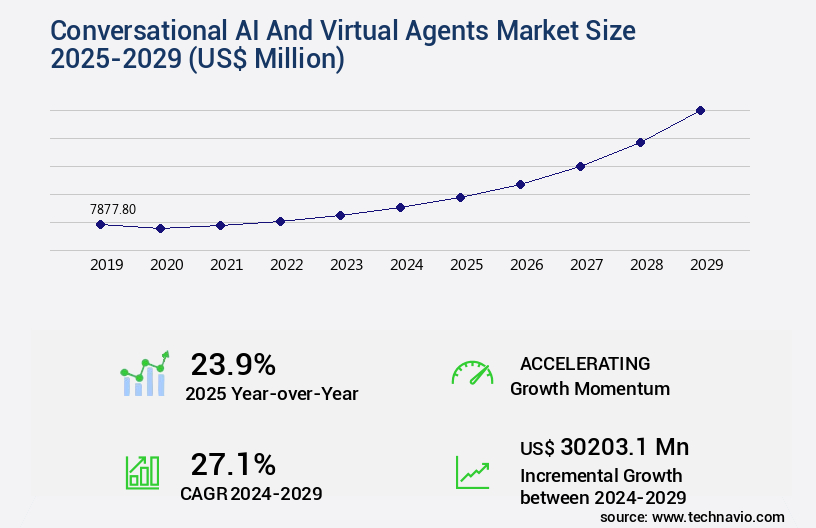
The conversational ai and virtual agents market size is valued to increase by USD 30.2 billion, at a CAGR of 27.1% from 2024 to 2029. Increasing demand for enhanced customer experience will drive the conversational ai and virtual agents market.
Major Market Trends & Insights
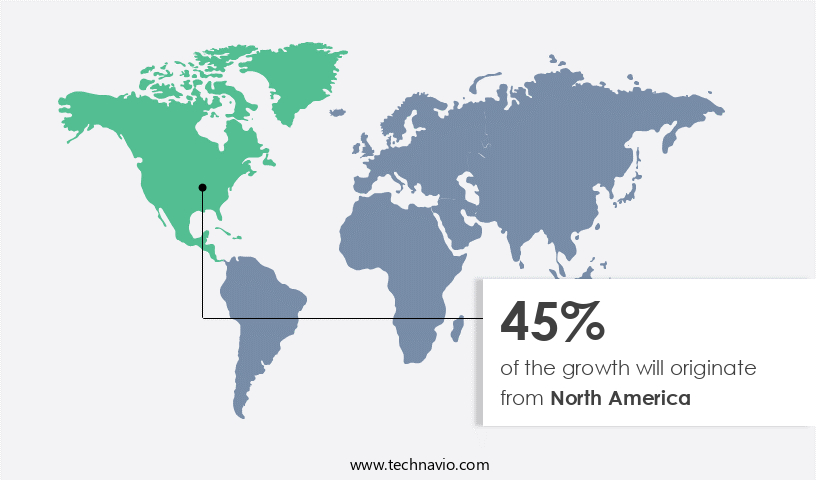
- North America dominated the market and accounted for a 45% growth during the forecast period.
- By Component - Solutions segment was valued at USD 4.35 billion in 2023
- By Deployment - On-premises segment accounted for the largest market revenue share in 2023
Market Size & Forecast
- Market Opportunities: USD 449.24 million
- Market Future Opportunities: USD 30203.10 million
- CAGR from 2024 to 2029 : 27.1%
Market Summary
- The market is experiencing significant growth, with businesses increasingly recognizing the value of human-like interactions to enhance customer experience. This trend is driven by the proliferation of omnichannel communication strategies and digital transformation initiatives. As businesses strive to meet evolving consumer expectations, conversational AI and virtual agents have emerged as essential tools for delivering seamless, personalized interactions across multiple touchpoints. However, this market's growth is not without challenges. Data privacy and security concerns continue to be a major focus, as businesses navigate the complexities of managing and protecting sensitive customer information.
- Balancing the benefits of AI (artificial intelligence) with the need for robust data security measures remains a critical priority. Despite these challenges, the future direction of the market remains promising. As technology advances and businesses continue to prioritize customer experience, the demand for more sophisticated and human-like interactions will only grow. By staying informed of the latest trends and best practices, businesses can effectively leverage conversational AI and virtual agents to build stronger relationships with their customers and gain a competitive edge.
What will be the Size of the Conversational AI And Virtual Agents Market during the forecast period?
Get Key Insights on Market Forecast (PDF) Request Free Sample
How is the Conversational AI And Virtual Agents Market Segmented ?
The conversational ai and virtual agents industry research report provides comprehensive data (region-wise segment analysis), with forecasts and estimates in "USD million" for the period 2025-2029, as well as historical data from 2019-2023 for the following segments.
- Component
- Solutions
- Services
- Deployment
- On-premises
- Cloud-based
- End-user
- BFSI
- Retail and eCommerce
- IT and telecom
- Healthcare
- Others
- Geography
- North America
- US
- Canada
- Europe
- France
- Germany
- UK
- APAC
- Australia
- China
- India
- Japan
- South Korea
- Rest of World (ROW)
- North America
By Component Insights
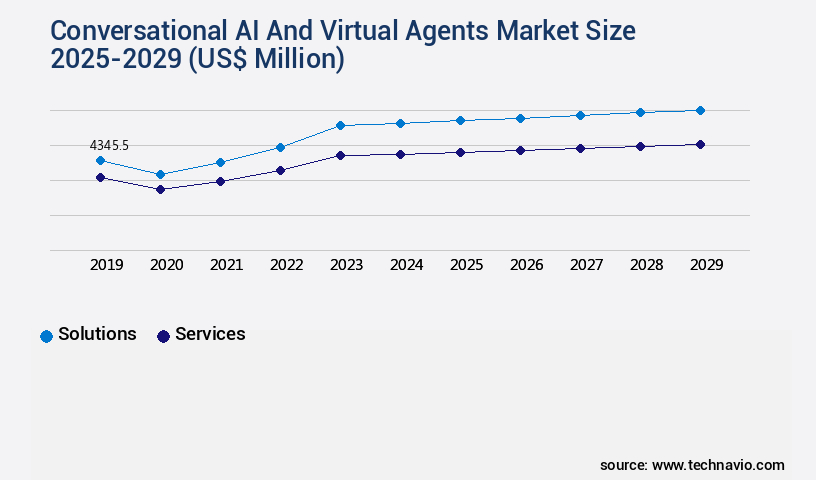
The solutions segment is estimated to witness significant growth during the forecast period.
The market continues to evolve, driven by advancements in technologies such as natural language processing (NLP), machine learning (ML), and speech recognition. These core components enable conversational systems to understand, process, and generate human-like interactions. For instance, NLP capabilities, including sentiment analysis techniques and intent recognition accuracy, are crucial for virtual agents to comprehend nuanced human language, moving beyond mere keyword recognition. ML and DL algorithms, meanwhile, allow these systems to learn from vast datasets, improving predictive capabilities and decision-making over time, leading to more personalized and effective responses. Evaluation metrics, such as customer satisfaction scores, are used to assess agent performance, while dialogue management systems and dialog state tracking ensure seamless conversation flow.
Security protocols and data privacy compliance are integral to maintaining user trust. Scalability and performance are essential, with voice user interfaces and text-to-speech synthesis enabling multi-lingual support and API integrations. Proactive assistance features, turn-taking mechanisms, and error handling strategies further enhance the user experience. A recent study reveals that AI-powered chatbots have achieved an intent recognition accuracy of 95%, underscoring their potential to revolutionize automated customer service. Virtual agent platforms and deployment architectures employing machine learning models and conversational AI frameworks are transforming industries, from healthcare to finance, by streamlining workflow automation and improving human-computer interaction.
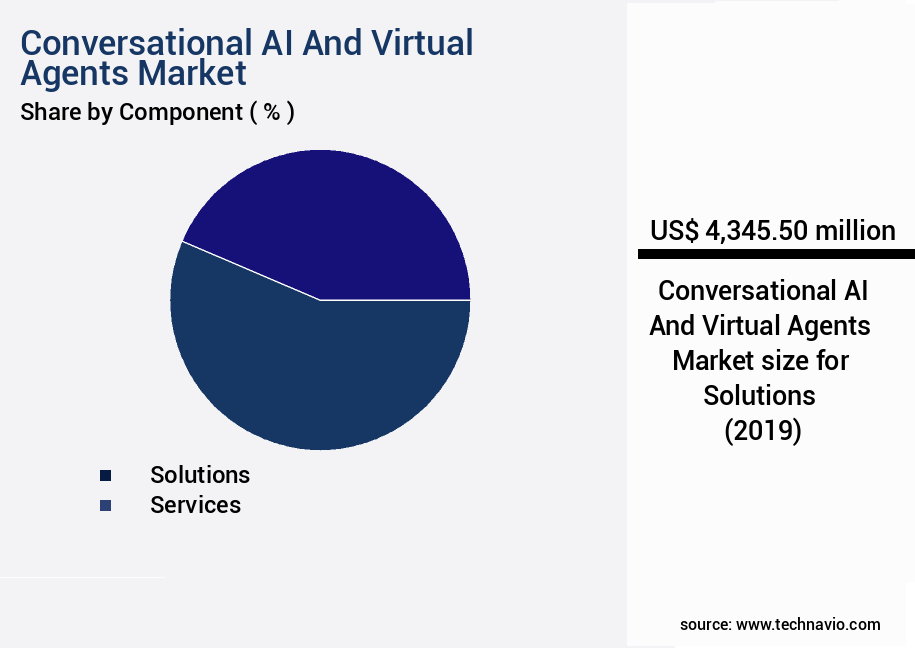
The Solutions segment was valued at USD 4.35 billion in 2019 and showed a gradual increase during the forecast period.
Regional Analysis
North America is estimated to contribute 45% to the growth of the global market during the forecast period.Technavio's analysts have elaborately explained the regional trends and drivers that shape the market during the forecast period.
See How Conversational AI And Virtual Agents Market Demand is Rising in North America Request Free Sample
The market is witnessing significant growth and transformation, with North America leading the charge. This region's technological infrastructure, high digital adoption rates, and innovative business environment make it a prime hub for conversational AI solutions. Major sectors, such as finance, healthcare, retail, and telecommunications, are actively adopting these technologies to enhance customer experience, streamline operations, and achieve substantial cost savings. According to recent studies, the North American conversational AI market is projected to expand at a remarkable pace, surpassing the growth rates observed in other regions.
Furthermore, The market is anticipated to reach a substantial value by 2027, driven by the increasing demand for personalized and efficient customer interactions.
Market Dynamics
Our researchers analyzed the data with 2024 as the base year, along with the key drivers, trends, and challenges. A holistic analysis of drivers will help companies refine their marketing strategies to gain a competitive advantage.
The market is experiencing rapid growth as businesses seek to enhance customer engagement and automate repetitive tasks. Dialogue management system design principles play a crucial role in creating effective conversational experiences, with natural language understanding (NLU) performance metrics and contextual understanding in virtual assistants being key areas of focus. Sentiment analysis applications in chatbots enable businesses to gauge customer emotions and tailor responses accordingly, while speech recognition accuracy improvement strategies and text-to-speech synthesis quality evaluation ensure seamless communication. Proactive assistance features are becoming increasingly important, requiring scalability challenges in conversational AI to be addressed.
Data privacy compliance for conversational agents is also a major concern, with user simulation testing methodologies and intent recognition accuracy improvement techniques used to ensure compliance and enhance user experience. Human-computer interaction in virtual agent design is essential for creating engaging and effective conversational experiences, with knowledge graph integration for chatbot knowledge bases and personalization algorithms used to deliver tailored responses. Multi-lingual support in conversational AI platforms and API integration strategies are also important considerations, with deployment architectures for conversational AI applications and security protocols ensuring reliable and secure implementation. Error handling strategies and training datasets for conversational AI models are essential for maintaining high levels of performance and accuracy. Overall, the market offers significant opportunities for businesses to streamline operations and enhance customer engagement, with ongoing innovation in technology and design driving continued growth.
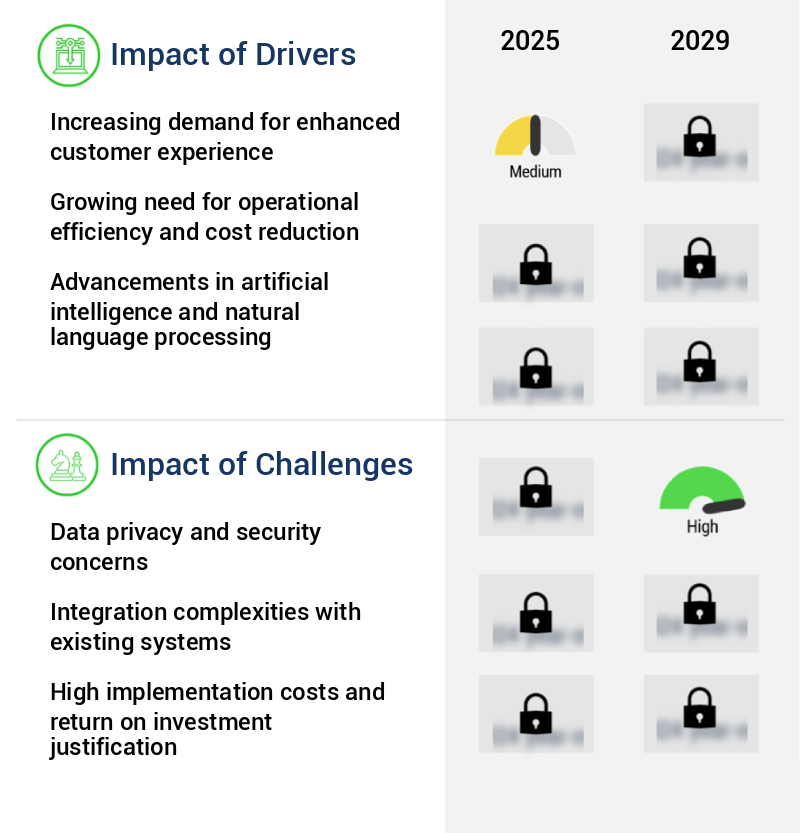
What are the key market drivers leading to the rise in the adoption of Conversational AI And Virtual Agents Industry?
- The escalating need for superior customer experiences serves as the primary catalyst for market growth.
- The market is experiencing significant growth as businesses prioritize superior customer experiences in the intensely competitive global marketplace. Across various sectors, organizations recognize that instant, personalized, and efficient support is no longer an advantage but a necessity. Conversational AI solutions, such as chatbots and virtual assistants, empower businesses to offer 24/7 availability, ensuring customers can receive assistance anytime, irrespective of geographical location or operational hours. This constant accessibility significantly reduces customer frustration caused by long wait times or limited support options. According to recent studies, the conversational AI market is projected to reach a value of over USD12 billion by 2027, representing a substantial increase from its current market size.
- Furthermore, virtual agents are estimated to handle over 25% of customer service interactions by 2023, underscoring their growing importance in delivering exceptional customer experiences.
What are the market trends shaping the Conversational AI And Virtual Agents Industry?
- The proliferation of omnichannel communication strategies and digital transformation initiatives is an emerging market trend. These approaches to business growth are increasingly popular.
- The market is experiencing significant growth and transformation, fueled by the increasing adoption of omnichannel communication strategies and digital transformation initiatives in businesses globally. In advanced regions like North America and Europe, where digital maturity is high, companies are integrating various communication channels such as web chat, mobile apps, social media, and email into a unified platform. Conversational AI serves as the central intelligence layer in this integration, enabling continuous customer interactions with context preserved across channels.
- This innovation reduces customer frustration by eliminating repetitive inquiries and enhances the overall customer experience. The market's expansion reflects the evolving business landscape, where seamless, consistent, and personalized interactions are essential for maintaining a competitive edge.
What challenges does the Conversational AI And Virtual Agents Industry face during its growth?
- Data privacy and security concerns represent a significant challenge to the industry's growth, necessitating robust measures to protect sensitive information and maintain consumer trust.
- Conversational AI and virtual agents have gained significant traction in various sectors due to their ability to enhance customer engagement and streamline business operations. However, the evolving nature of this technology raises concerns around data privacy and security. With conversational AI systems interacting directly with users, they collect and process vast amounts of sensitive information, including personal identifiable information (PII), financial details, and health records. The risks of data breaches, unauthorized access, and misuse of this information are substantial for both individuals and organizations. Compliance with an intricate and fragmented regulatory landscape further complicates matters for businesses operating globally.
- Regulations such as the General Data Protection Regulation (GDPR) in Europe, the California Consumer Privacy Act (CCPA) in North America, and various data localization laws in APAC necessitate stringent data protection measures.
Exclusive Technavio Analysis on Customer Landscape
The conversational ai and virtual agents market forecasting report includes the adoption lifecycle of the market, covering from the innovator's stage to the laggard's stage. It focuses on adoption rates in different regions based on penetration. Furthermore, the conversational ai and virtual agents market report also includes key purchase criteria and drivers of price sensitivity to help companies evaluate and develop their market growth analysis strategies.
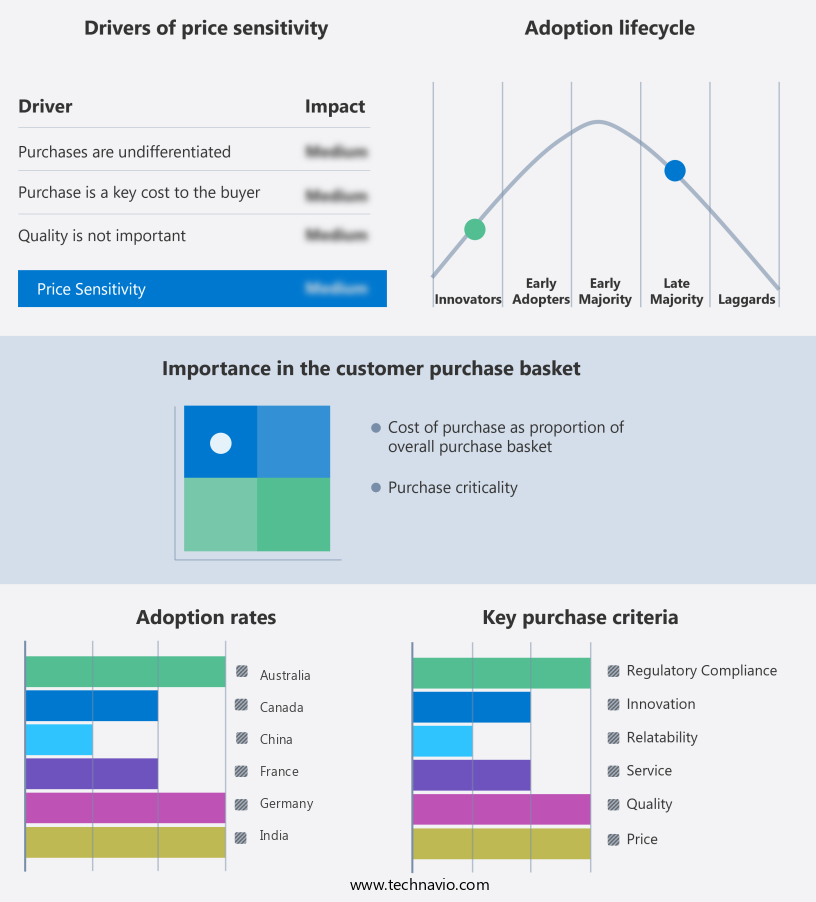
Customer Landscape of Conversational AI And Virtual Agents Industry
Competitive Landscape
Companies are implementing various strategies, such as strategic alliances, conversational ai and virtual agents market forecast, partnerships, mergers and acquisitions, geographical expansion, and product/service launches, to enhance their presence in the industry.
Amazon Web Services Inc. - The company specializes in conversational AI and virtual agents, utilizing Amazon Lex and Bedrock AgentCore for scalable chatbot solutions. These technologies power generative AI-driven workflows, enhancing customer engagement and streamlining business processes.
The industry research and growth report includes detailed analyses of the competitive landscape of the market and information about key companies, including:
- Amazon Web Services Inc.
- Avaamo Inc.
- Cognigy GmbH
- Conversica Inc.
- Fidelity National Information Services Inc.
- Five9 Inc.
- Google LLC
- International Business Machines Corp.
- Jio Haptik Technologies Ltd.
- Kasisto Inc.
- Kore.ai Inc.
- Microsoft Corp.
- Nuance Communications Inc.
- Oracle Corp.
- Pypestream Inc.
- Rasa Technologies Inc.
- SAP SE
- Teneo AI
- Zoho Corp. Pvt. Ltd.
Qualitative and quantitative analysis of companies has been conducted to help clients understand the wider business environment as well as the strengths and weaknesses of key industry players. Data is qualitatively analyzed to categorize companies as pure play, category-focused, industry-focused, and diversified; it is quantitatively analyzed to categorize companies as dominant, leading, strong, tentative, and weak.
Recent Development and News in Conversational AI And Virtual Agents Market
- In January 2024, Microsoft announced the integration of its Azure Bot Service with Teams and Skype, allowing businesses to create and manage conversational AI bots for these platforms (Microsoft Press Release). This expansion enhanced Microsoft's conversational AI offerings and broadened its reach in the customer service sector.
- In March 2024, IBM Watson and Mastercard partnered to develop virtual agents for the financial services industry, integrating Watson's AI capabilities with Mastercard's payment processing systems. This collaboration aimed to improve customer service and streamline transactions through conversational interfaces (IBM Press Release).
- In May 2024, Google Cloud Platform secured a significant investment of USD9 billion from its parent company, Alphabet, to accelerate its cloud business growth, including the development and deployment of advanced conversational AI solutions (Alphabet SEC Filing). This investment underscored Google's commitment to expanding its conversational AI capabilities and competing with market leaders like Amazon and Microsoft.
- In April 2025, Amazon announced the acquisition of a leading conversational AI startup, Ordesa, for an undisclosed amount. This acquisition strengthened Amazon's conversational AI capabilities and provided access to Ordesa's advanced natural language processing technology, enhancing Amazon's Alexa and other AI offerings (Amazon Press Release).
Dive into Technavio's robust research methodology, blending expert interviews, extensive data synthesis, and validated models for unparalleled Conversational AI And Virtual Agents Market insights. See full methodology.
|
Market Scope |
|
|
Report Coverage |
Details |
|
Page number |
239 |
|
Base year |
2024 |
|
Historic period |
2019-2023 |
|
Forecast period |
2025-2029 |
|
Growth momentum & CAGR |
Accelerate at a CAGR of 27.1% |
|
Market growth 2025-2029 |
USD 30203.1 million |
|
Market structure |
Fragmented |
|
YoY growth 2024-2025(%) |
23.9 |
|
Key countries |
US, China, Japan, UK, Canada, India, Germany, France, Australia, and South Korea |
|
Competitive landscape |
Leading Companies, Market Positioning of Companies, Competitive Strategies, and Industry Risks |
Research Analyst Overview
- The conversational AI and virtual agent market continues to evolve, driven by advancements in dialogue management systems, human-computer interaction, and contextual understanding. Evaluation metrics, such as intent recognition accuracy and customer satisfaction scores, are crucial for assessing agent performance and optimizing dialogue management. Machine learning models and conversational AI frameworks are at the heart of these advancements, enabling personalization algorithms and sentiment analysis techniques. For instance, a leading retailer reported a 15% increase in sales through the implementation of an AI-powered chatbot integrated with a voice user interface and natural language generation. The industry anticipates a growth of over 20% in the next five years, fueled by the integration of security protocols, scalability, and cost optimization strategies.
- Agent performance monitoring, error handling strategies, and data privacy compliance are essential aspects of conversational AI, ensuring seamless user experiences. Virtual agent platforms and deployment architectures provide the foundation for these applications, with multi-lingual support, API integrations, and workflow automation enhancing their capabilities. Dialog state tracking, natural language processing, and entity extraction methods are key components of effective dialogue management systems. Speech recognition engines and turn-taking mechanisms facilitate natural and efficient interactions. Proactive assistance features and contextual understanding further enrich the user experience. Knowledge graph integration and text-to-speech synthesis expand the functionality of conversational AI, enabling more sophisticated interactions and enhancing user engagement.
- Agent performance monitoring and sentiment analysis techniques ensure that these systems remain effective and adapt to user needs. Security protocols and contextual understanding are essential for building trust and confidence in conversational AI applications. Human-computer interaction and intent recognition accuracy are crucial for creating engaging and effective user experiences. Continuous innovation in these areas will shape the future of conversational AI and virtual agents in various sectors.
What are the Key Data Covered in this Conversational AI And Virtual Agents Market Research and Growth Report?
-
What is the expected growth of the Conversational AI And Virtual Agents Market between 2025 and 2029?
-
USD 30.2 billion, at a CAGR of 27.1%
-
-
What segmentation does the market report cover?
-
The report is segmented by Component (Solutions and Services), Deployment (On-premises and Cloud-based), End-user (BFSI, Retail and eCommerce, IT and telecom, Healthcare, and Others), and Geography (North America, APAC, Europe, Middle East and Africa, and South America)
-
-
Which regions are analyzed in the report?
-
North America, APAC, Europe, Middle East and Africa, and South America
-
-
What are the key growth drivers and market challenges?
-
Increasing demand for enhanced customer experience, Data privacy and security concerns
-
-
Who are the major players in the Conversational AI And Virtual Agents Market?
-
Amazon Web Services Inc., Avaamo Inc., Cognigy GmbH, Conversica Inc., Fidelity National Information Services Inc., Five9 Inc., Google LLC, International Business Machines Corp., Jio Haptik Technologies Ltd., Kasisto Inc., Kore.ai Inc., Microsoft Corp., Nuance Communications Inc., Oracle Corp., Pypestream Inc., Rasa Technologies Inc., SAP SE, Teneo AI, and Zoho Corp. Pvt. Ltd.
-
Market Research Insights
- The market for conversational AI and virtual agents continues to advance, with innovations in user experience testing, intent classification, and dialogue flow design driving progress. For instance, a leading company in the industry reported a 30% increase in customer engagement metrics through the implementation of a sophisticated chatbot system. Furthermore, industry analysts anticipate a growth rate of 25% annually over the next decade, fueled by advancements in machine learning algorithms, natural language processing techniques, and contextual awareness.
- These developments are transforming the way businesses interact with their customers, enabling more efficient and effective communication and enhancing overall user experience.
We can help! Our analysts can customize this conversational ai and virtual agents market research report to meet your requirements.
 RIA -
RIA -