



Consumer Battery Market Size 2025-2029
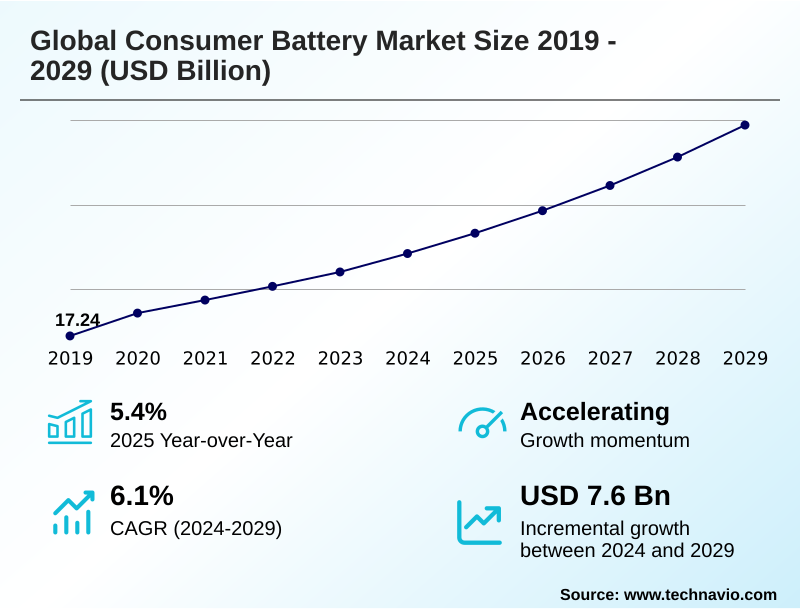
The consumer battery market size is valued to increase by USD 7.60 billion, at a CAGR of 6.1% from 2024 to 2029. Supportive government regulations will drive the consumer battery market.
Major Market Trends & Insights
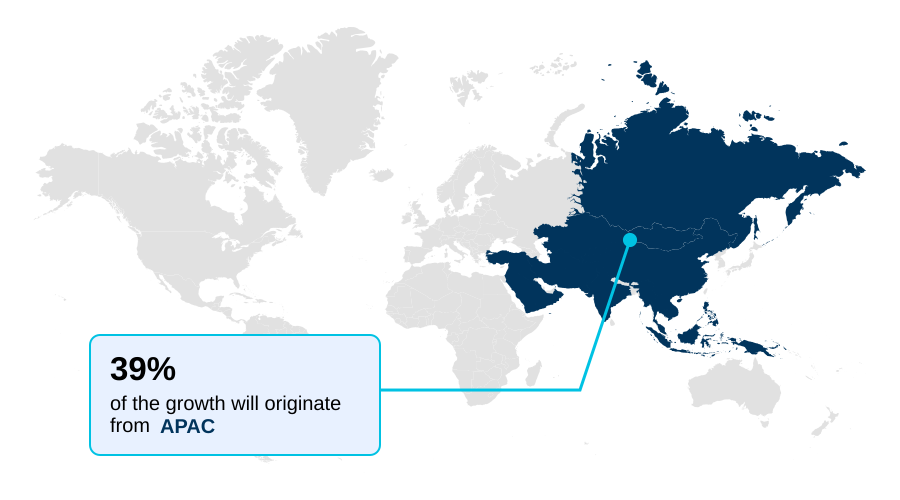
- APAC dominated the market and accounted for a 39% growth during the forecast period.
- By Type - Primary segment was valued at USD 13.31 billion in 2023
- By End-user - Residential segment accounted for the largest market revenue share in 2023
Market Size & Forecast
- Market Opportunities: USD 12.46 billion
- Market Future Opportunities: USD 7.60 billion
- CAGR from 2024 to 2029 : 6.1%
Market Summary
- The consumer battery market is undergoing a significant transformation, driven by advancements in lithium-ion chemistry and the increasing demand for high-performance portable power sources. The proliferation of consumer electronics, from smartphones to battery-powered wearables, necessitates continuous improvements in energy density and cycle life.
- A key industry focus is the development of a robust battery supply chain to manage the volatile raw material sourcing for critical components like anode materials and cathode materials. For instance, an OEM designing a new portable device must navigate complex trade-offs between battery manufacturing cost and performance, while ensuring compliance with evolving battery safety standards.
- This includes incorporating features like thermal runaway prevention and overcharge protection. The shift towards an eco-friendly battery design is also gaining traction, pushing manufacturers to improve battery recycling processes and explore sustainable battery materials to address growing e-waste reduction initiatives.
What will be the Size of the Consumer Battery Market during the forecast period?
Get Key Insights on Market Forecast (PDF) Request Free Sample
How is the Consumer Battery Market Segmented?
The consumer battery industry research report provides comprehensive data (region-wise segment analysis), with forecasts and estimates in "USD million" for the period 2025-2029, as well as historical data from 2019-2023 for the following segments.
- Type
- Primary
- Secondary
- End-user
- Residential
- Commercial
- Technology
- Lithium-ion batteries
- Alkaline batteries
- Nickel metal hydride
- Nickel cadmium
- Zinc-carbon batteries
- Geography
- North America
- US
- Canada
- Mexico
- APAC
- China
- Japan
- India
- Europe
- Germany
- UK
- France
- Middle East and Africa
- Saudi Arabia
- UAE
- South Africa
- South America
- Brazil
- Argentina
- Colombia
- Rest of World (ROW)
- North America
By Type Insights
The primary segment is estimated to witness significant growth during the forecast period.
Primary batteries, also known as disposable batteries, remain a foundational segment of the market, serving a vast range of low-drain electronics where convenience and long shelf life are paramount.
These single-use electrochemical cells, including alkaline battery technology and zinc-carbon cells, power everyday devices from remote controls to smoke detectors. However, the segment faces scrutiny over its environmental impact, as a significant portion of disposable batteries contribute to e-waste.
This has prompted a push toward eco-friendly battery design and improved battery recycling processes.
Industry data indicates that in certain regions, over 90% of specific primary battery compositions are improperly discarded, highlighting the need for better e-waste reduction initiatives and consumer education on responsible disposal.
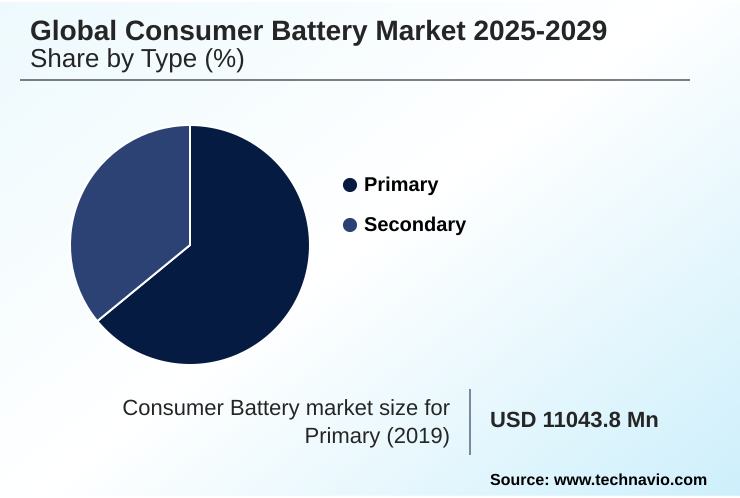
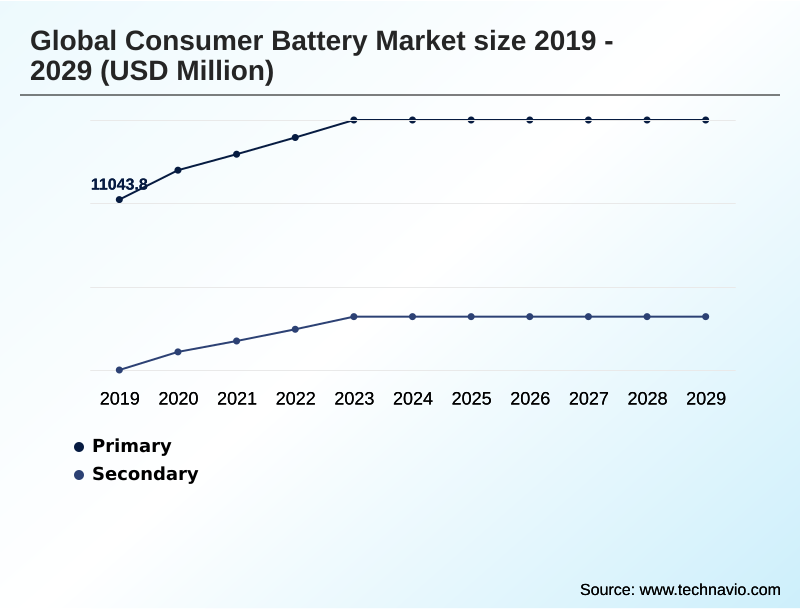
The Primary segment was valued at USD 13.31 billion in 2023 and showed a gradual increase during the forecast period.
Regional Analysis
APAC is estimated to contribute 39% to the growth of the global market during the forecast period.Technavio’s analysts have elaborately explained the regional trends and drivers that shape the market during the forecast period.
See How Consumer Battery Market Demand is Rising in APAC Request Free Sample
The geographic landscape is defined by regional specializations. APAC dominates global production, accounting for over 75% of the world's lithium-ion cell manufacturing capacity, which drives down battery manufacturing cost through a highly scaled battery supply chain.
North America leads in the adoption of residential energy storage systems, with some regions experiencing a 30% year-over-year increase in installations. This is driven by consumer demand for backup power systems and energy independence.
Europe is focused on creating a circular economy, enforcing stringent battery safety standards and e-waste reduction initiatives that influence global product design and battery recycling processes.
Market Dynamics
Our researchers analyzed the data with 2024 as the base year, along with the key drivers, trends, and challenges. A holistic analysis of drivers will help companies refine their marketing strategies to gain a competitive advantage.
- Strategic decision-making in the consumer battery market increasingly hinges on navigating complex technological and regulatory landscapes. The comparison of li-ion vs nimh for consumer devices remains a critical evaluation for product designers, who must balance cost with performance for different applications.
- Concurrently, the impact of raw material costs on battery prices forces a continuous re-evaluation of the battery supply chain and material sourcing strategies. A central theme is the role of bms in extending battery life, with advanced systems delivering tangible improvements in device longevity and reliability.
- As businesses prepare for the future, advancements in solid-state battery technology are dictating long-term R&D investments, promising a leap in safety and energy density. Firms that successfully integrate innovations in wireless charging for portable devices report customer satisfaction scores that are nearly double those of competitors, underscoring the value of user-centric features.
- However, challenges of counterfeit consumer batteries and evolving government regulations for battery disposal require vigilant compliance and quality control frameworks to mitigate risks and ensure market access.
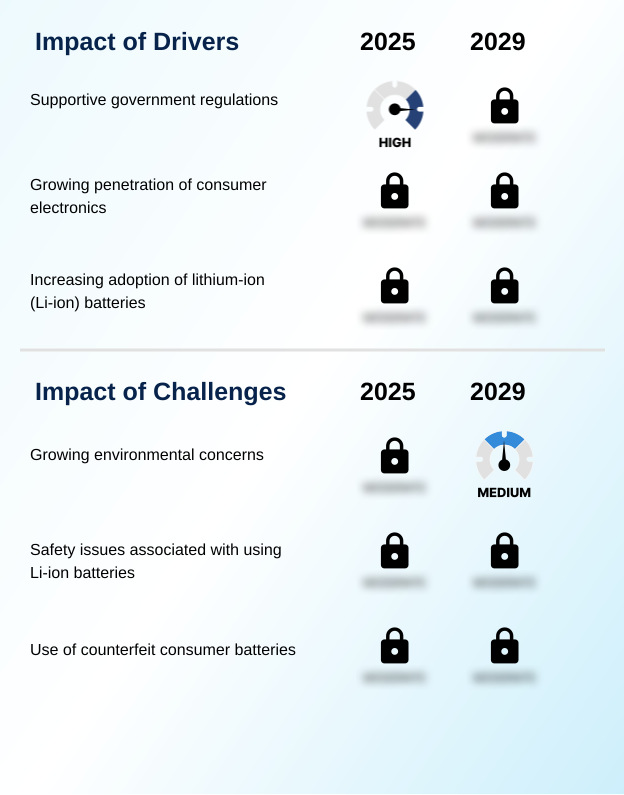
What are the key market drivers leading to the rise in the adoption of Consumer Battery Industry?
- Supportive government regulations concerning battery safety, transport, and disposal are a key driver influencing the market's growth and product quality standards.
- Market growth is fueled by the insatiable demand for consumer electronics power and the expanding universe of connected devices.
- The proliferation of IoT device batteries is a significant driver, with demand in certain low-power application segments surging by over 200% as smart home and industrial automation become mainstream.
- Government support for electric vehicle (EV) batteries creates beneficial economies of scale, lowering the battery manufacturing cost for consumer-grade cells by an average of 12%.
- Additionally, supportive regulations have streamlined battery recycling processes, improving material recovery rates by 15% and fostering a more circular battery supply chain. These factors collectively expand the applications for portable power source technologies.
What are the market trends shaping the Consumer Battery Industry?
- Technological developments aimed at enhancing battery performance are a significant upcoming market trend. These innovations focus on improving energy density, safety, and charging capabilities for consumer devices.
- Key trends are reshaping the market, with a strong emphasis on intelligence and sustainability. The emergence of smart battery features, enabled by integrated battery management systems, allows for real-time monitoring of battery performance metrics, which has been shown to reduce unexpected device failures by up to 25%.
- Concurrently, the adoption of wireless charging technology is accelerating, enhancing user convenience and driving new product designs for portable device battery applications. This technology has contributed to a 40% increase in positive user experience feedback for newly launched consumer electronics.
- Furthermore, the industry is increasingly focused on an eco-friendly battery design, with innovations in battery recycling processes leading to higher material recovery and supporting e-waste reduction initiatives.
What challenges does the Consumer Battery Industry face during its growth?
- Growing environmental concerns surrounding the production, disposal, and recycling of batteries present a key challenge to the industry's pursuit of sustainable growth.
- The market faces significant hurdles related to supply chain stability and product safety. Volatility in raw material sourcing for critical inputs like lithium and cobalt can cause battery manufacturing costs to fluctuate by as much as 30% within a single quarter, disrupting financial planning. Safety remains a primary concern, as improper design can lead to thermal runaway prevention failures.
- Counterfeit products, which often lack essential short-circuit protection and overcharge protection, are linked to a 70% higher incidence of device damage and pose serious risks. Addressing these challenges requires robust quality control, diversified sourcing strategies, and stringent adherence to battery safety standards across the entire battery supply chain.
Exclusive Technavio Analysis on Customer Landscape
The consumer battery market forecasting report includes the adoption lifecycle of the market, covering from the innovator’s stage to the laggard’s stage. It focuses on adoption rates in different regions based on penetration. Furthermore, the consumer battery market report also includes key purchase criteria and drivers of price sensitivity to help companies evaluate and develop their market growth analysis strategies.
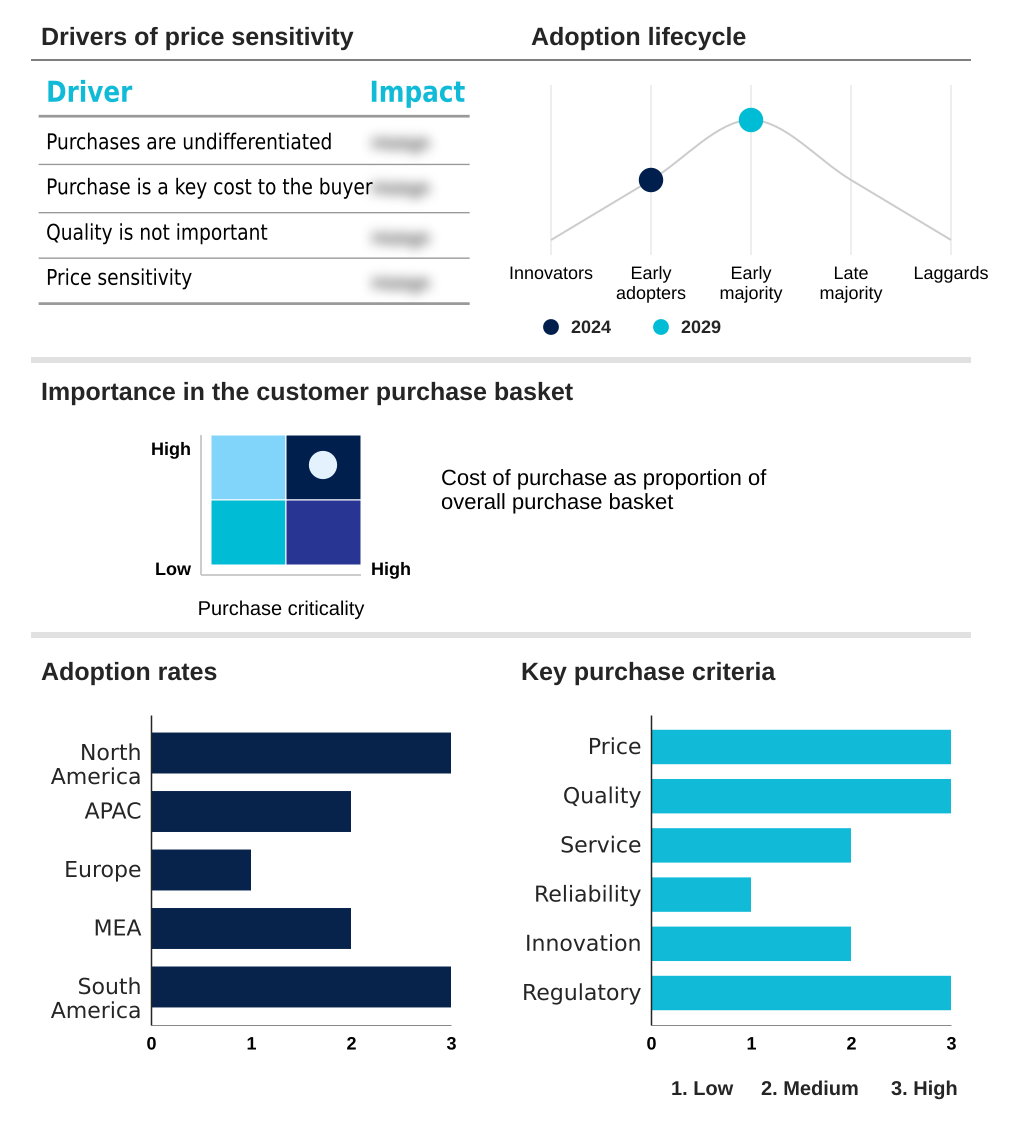
Customer Landscape of Consumer Battery Industry
Competitive Landscape
Companies are implementing various strategies, such as strategic alliances, consumer battery market forecast, partnerships, mergers and acquisitions, geographical expansion, and product/service launches, to enhance their presence in the industry.
Electrochem Automation Inc. - Key offerings include consumer battery products, from alkaline and lithium coin cells to rechargeable NiMH batteries, for a wide range of devices.
The industry research and growth report includes detailed analyses of the competitive landscape of the market and information about key companies, including:
- Electrochem Automation Inc.
- Energizer Holdings Inc.
- EVE Energy Co. Ltd.
- Eveready Industries India Ltd.
- FDK Corp.
- GP Batteries International Ltd.
- Jiangmen TWD Technology Co. Ltd.
- MAXELL EUROPE LTD.
- Murata Manufacturing Co. Ltd.
- Panasonic Holdings Corp.
- Samsung SDI Co. Ltd.
- Shenzhen PKCELL Battery Co. Ltd
- Suzhou South Large Battery Co. Ltd.
- The Duracell Co.
- The Swatch Group Ltd.
- Ultralife Corp.
- VARTA AG
Qualitative and quantitative analysis of companies has been conducted to help clients understand the wider business environment as well as the strengths and weaknesses of key industry players. Data is qualitatively analyzed to categorize companies as pure play, category-focused, industry-focused, and diversified; it is quantitatively analyzed to categorize companies as dominant, leading, strong, tentative, and weak.
Recent Development and News in Consumer battery market
- In August, 2024, leading South Korean manufacturers reportedly initiated a strategic pivot toward prismatic batteries, a form factor gaining popularity in the electric vehicle market, signaling a shift in manufacturing focus.
- In November, 2024, Honda unveiled a demonstration production line for its proprietary all-solid-state batteries, marking a significant step toward the commercialization of next-generation battery technology.
- In January, 2025, Masdar announced a project in the UAE to develop a landmark energy facility that will integrate 5.2 gigawatts of solar capacity with 19 gigawatt-hours of battery storage.
- In March, 2025, Mexico's government introduced a mandate requiring that all future wind and solar energy projects must include battery energy storage systems, aiming to stabilize the national grid.
Dive into Technavio’s robust research methodology, blending expert interviews, extensive data synthesis, and validated models for unparalleled Consumer Battery Market insights. See full methodology.
| Market Scope | |
|---|---|
| Page number | 287 |
| Base year | 2024 |
| Historic period | 2019-2023 |
| Forecast period | 2025-2029 |
| Growth momentum & CAGR | Accelerate at a CAGR of 6.1% |
| Market growth 2025-2029 | USD 7596.8 million |
| Market structure | Fragmented |
| YoY growth 2024-2025(%) | 5.4% |
| Key countries | US, Canada, Mexico, China, Japan, India, South Korea, Australia, Indonesia, Germany, UK, France, Italy, Spain, The Netherlands, Saudi Arabia, UAE, South Africa, Israel, Turkey, Brazil, Argentina and Colombia |
| Competitive landscape | Leading Companies, Market Positioning of Companies, Competitive Strategies, and Industry Risks |
Research Analyst Overview
- The consumer battery market is evolving beyond simple power delivery to become a nexus of advanced materials science and intelligent system design. A key boardroom consideration is the strategic pivot toward an eco-friendly battery design, driven by both regulatory pressure and consumer demand. Incorporating sustainable battery materials is no longer optional but a critical differentiator.
- Innovations in lithium-ion chemistry continue, but the focus is increasingly on enhancing safety features like thermal runaway prevention and short-circuit protection. Designs that integrate an advanced battery management system (BMS) for monitoring electrochemical cells demonstrate superior performance, with some achieving a 40% reduction in degradation rates under stress conditions.
- The development of solid-state electrolyte technology and advanced electrode surface coating techniques represents the next frontier, promising to redefine benchmarks for energy density and cycle life in rechargeable battery packs and other portable power source applications.
What are the Key Data Covered in this Consumer Battery Market Research and Growth Report?
-
What is the expected growth of the Consumer Battery Market between 2025 and 2029?
-
USD 7.60 billion, at a CAGR of 6.1%
-
-
What segmentation does the market report cover?
-
The report is segmented by Type (Primary, and Secondary), End-user (Residential, and Commercial), Technology (Lithium-ion batteries, Alkaline batteries, Nickel metal hydride, Nickel cadmium, and Zinc-carbon batteries) and Geography (North America, APAC, Europe, Middle East and Africa, South America)
-
-
Which regions are analyzed in the report?
-
North America, APAC, Europe, Middle East and Africa and South America
-
-
What are the key growth drivers and market challenges?
-
Supportive government regulations, Growing environmental concerns
-
-
Who are the major players in the Consumer Battery Market?
-
Electrochem Automation Inc., Energizer Holdings Inc., EVE Energy Co. Ltd., Eveready Industries India Ltd., FDK Corp., GP Batteries International Ltd., Jiangmen TWD Technology Co. Ltd., MAXELL EUROPE LTD., Murata Manufacturing Co. Ltd., Panasonic Holdings Corp., Samsung SDI Co. Ltd., Shenzhen PKCELL Battery Co. Ltd, Suzhou South Large Battery Co. Ltd., The Duracell Co., The Swatch Group Ltd., Ultralife Corp. and VARTA AG
-
Market Research Insights
- The market's dynamics are shaped by the dual demand for high-capacity energy storage solutions and efficient consumer electronics power. The transition toward electric vehicle (EV) batteries is creating economies of scale, impacting the battery manufacturing cost for all segments.
- The adoption of advanced battery management systems has led to a 15% improvement in battery lifespan optimization for portable device battery applications. Furthermore, strategic raw material sourcing has helped manufacturers mitigate price volatility, reducing production costs by up to 10% in certain segments.
- The expansion into residential energy storage and grid energy storage, coupled with the rising use of IoT device batteries, underscores the industry's broadening scope beyond traditional consumer goods.
We can help! Our analysts can customize this consumer battery market research report to meet your requirements.
 RIA -
RIA -