


Concrete Machinery Market Size 2024-2028
The concrete machinery market size is forecast to increase by USD 6.68 billion at a CAGR of 5.6% between 2023 and 2028.
- The market is witnessing significant growth due to the expansion of the construction industry and the increasing demand for precast concrete in non-residential construction projects. The trend toward dry construction methods is also driving market growth, as concrete machinery is essential for producing and transporting dry concrete mix. Additionally, the growing secondhand machine market is providing cost-effective options for construction companies. The implementation of industrial automation, logistics, and robotics in concrete machinery is another trend, enabling increased efficiency and productivity. Furthermore, the adoption of analytics, building information modeling (BIM), valves, software, and concrete pumps is transforming the market. As the construction materials sector continues to digitalize, the use of self-compacting concrete and advanced concrete mixers is becoming increasingly popular. Overall, these trends and factors are shaping the market and are expected to continue driving growth In the coming years.
What will be the Size of the Concrete Machinery Market During the Forecast Period?
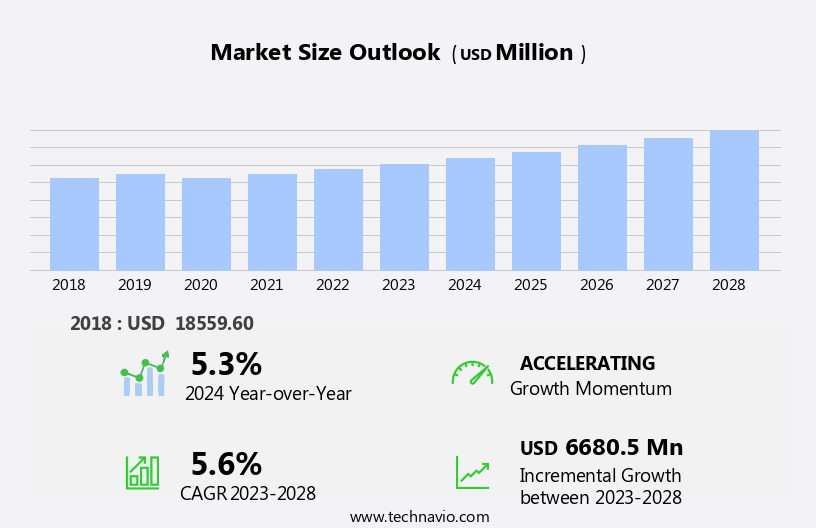
- The market is experiencing significant growth and innovation, driven by the convergence of digital technologies and the construction industry. This market encompasses a range of solutions, including concrete automation, quality control systems, smart concrete, and construction efficiency software. Key trends include the adoption of Concrete 4.0 principles, which prioritize digitalization and automation to enhance production optimization, reduce costs, and improve safety. The future of construction lies in smart and sustainable solutions, with a focus on data management, analytics, and remote monitoring. Construction robotics and concrete innovation are also gaining traction, enabling greater precision, consistency, and sustainability in concrete production. Overall, the market is poised for continued expansion as it addresses the evolving needs of the construction industry.
How is this Concrete Machinery Industry segmented and which is the largest segment?
The industry research report provides comprehensive data (region-wise segment analysis), with forecasts and estimates in "USD million" for the period 2024-2028, as well as historical data from 2018-2022 for the following segments.
- End-user
- Non-residential
- Residential
- Geography
- APAC
- China
- India
- Japan
- South Korea
- North America
- Canada
- US
- Europe
- Germany
- UK
- France
- South America
- Middle East and Africa
- APAC
By End-user Insights
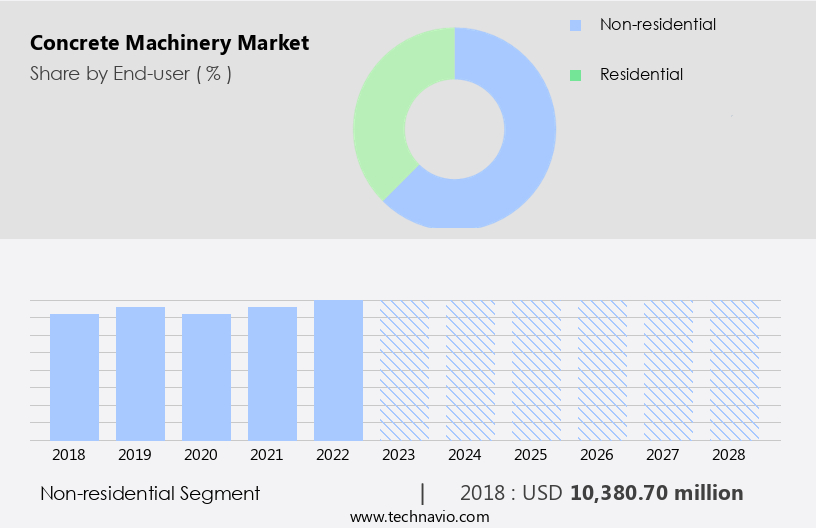
The non-residential segment is estimated to witness significant growth during the forecast period. Dry construction, also known as non-load bearing or modular construction, is increasingly popular for commercial buildings due to its flexibility and efficiency. This construction method allows for temporary modifications to office or retail spaces, making it a preferred choice for businesses that require adaptable spaces. In contrast to residential dry construction, which is primarily used in developed countries, non-residential dry construction is gaining traction in both developed and developing nations. The construction process relies heavily on concrete machinery such as concrete batching plants, pumps, laser screeds, and mixers for optimal efficiency. Technological advancements, including IoT-enabled machines and energy-efficient equipment, are further enhancing the sustainability and precision of concrete construction.
Urbanization and infrastructure projects are major drivers of the demand for dry construction techniques, making the market for concrete machinery a significant one. Additionally, the use of eco-friendly and low-carbon concrete, as well as installation processes that minimize environmental impact, are becoming increasingly important considerations In the construction industry. Overall, the market is poised for growth due to the increasing adoption of dry construction techniques for non-residential buildings.
Get a glance at the market report of share of various segments Request Free Sample
The Non-residential segment was valued at USD 10.38 billion in 2018 and showed a gradual increase during the forecast period.
Regional Analysis
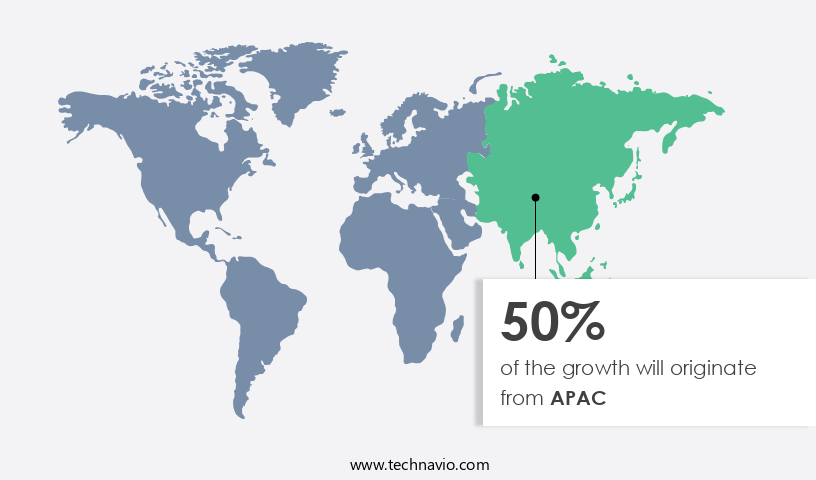
APAC is estimated to contribute 50% to the growth of the global market during the forecast period. Technavio's analysts have elaborately explained the regional trends and drivers that shape the market during the forecast period.
For more insights on the market size of various regions, Request Free Sample
The market in Asia Pacific (APAC) is experiencing significant growth, primarily driven by the demand for concrete batching plants, concrete pumps, and other equipment types in key countries such as China, India, Japan, and Thailand. Urbanization and infrastructure development are major factors fueling this demand, particularly in residential construction and eco-friendly, energy-efficient concrete projects. Technological advancements, including IoT-enabled machines, precision concrete laser screeds, and self-compacting concrete, are optimizing installation processes and reducing the environmental impact of concrete construction. Additionally, the adoption of low-carbon concrete and 3D printing technologies is further enhancing the market's growth potential. Governments In the region are investing in infrastructure projects to improve efficiency and sustainability, leading to increased demand for concrete machinery.
Market Dynamics
Our researchers analyzed the data with 2023 as the base year, along with the key drivers, trends, and challenges. A holistic analysis of drivers will help companies refine their marketing strategies to gain a competitive advantage.
What are the key market drivers leading to the rise In the adoption of Concrete Machinery Industry?
- Expansion of the construction industry is the key driver of the market. The market is experiencing significant growth due to the expansion of construction and renovation activities worldwide. Economic development, increasing income levels, and urbanization are key drivers, as well as the commitment to eco-friendly and energy-efficient construction practices. Advanced materials, such as low-carbon concrete, are gaining popularity for their precision and sustainability.
- The market growth is expected across all regions, fueled by the rise in residential and commercial construction and infrastructure development projects. Technological advancements, including IoT-enabled machines, robotics, 3D printing, and self-compacting concrete, are revolutionizing installation processes and offering real-time monitoring for improved efficiency and environmental impact reduction. The market is poised to continue growing as the construction industry embraces energy-efficient equipment and innovative technologies.
What are the market trends shaping the Concrete Machinery Industry?
- Increasing demand for precast concrete for non-residential construction is the upcoming market trend. Precast concrete, a type of concrete manufactured off-site in reusable molds, offers cost-effectiveness and practicality over traditional building materials. Structural components such as columns, floors, wall panels, beams, pipes, and tunnels are commonly produced using this method. The construction industry increasingly favors precast concrete for non-residential projects due to its efficiency, which reduces construction time, labor requirements, and expenses. Technological advancements, including IoT-enabled machines, robotics, and 3D printing, are revolutionizing the concrete industry. IoT-enabled machines facilitate real-time monitoring and optimization, ensuring precision and energy efficiency. Energy-efficient equipment and low-carbon concrete are essential components of sustainable and eco-friendly construction practices.
- Prefabricated concrete elements, including concrete pumps and laser screeds, play a significant role in infrastructure projects. Concrete type optimization and self-compacting installation processes further enhance the versatility and adaptability of precast concrete. The increasing demand for modern, energy-efficient, and sustainable construction solutions will continue to drive market growth In the concrete industry.
What challenges does the Concrete Machinery Industry face during its growth?
- The growing secondhand machine market is a key challenge affecting the industry growth. The market is experiencing significant developments due to urbanization and the increasing demand for concrete construction in infrastructure projects and residential sectors. Technological advancements, such as IoT-enabled machines, robotics, and 3D printing, are revolutionizing installation processes and improving efficiency. Concrete type optimization, energy-efficient equipment, and low-carbon concrete are key trends driving market growth. However, the market faces a challenge with the slow growth of the global secondhand machine market. Many European and US manufacturing industries have moved production to Asia due to lower manufacturing costs, resulting In the availability of secondhand machines. Asian contractors and mining companies are eagerly purchasing these machines at lower prices, which may impact the sales of new machinery.
- Precision tools like concrete laser screeds and concrete pumps, as well as self-compacting concrete mixers, are also gaining popularity for their energy efficiency and eco-friendliness. Real-time monitoring systems and the use of precision technology in concrete construction are essential for reducing environmental impact and improving overall project efficiency.
Exclusive Customer Landscape
The market forecasting report includes the adoption lifecycle of the market, covering from the innovator's stage to the laggard's stage. It focuses on adoption rates in different regions based on penetration. Furthermore, the market report also includes key purchase criteria and drivers of price sensitivity to help companies evaluate and develop their market growth analysis strategies.
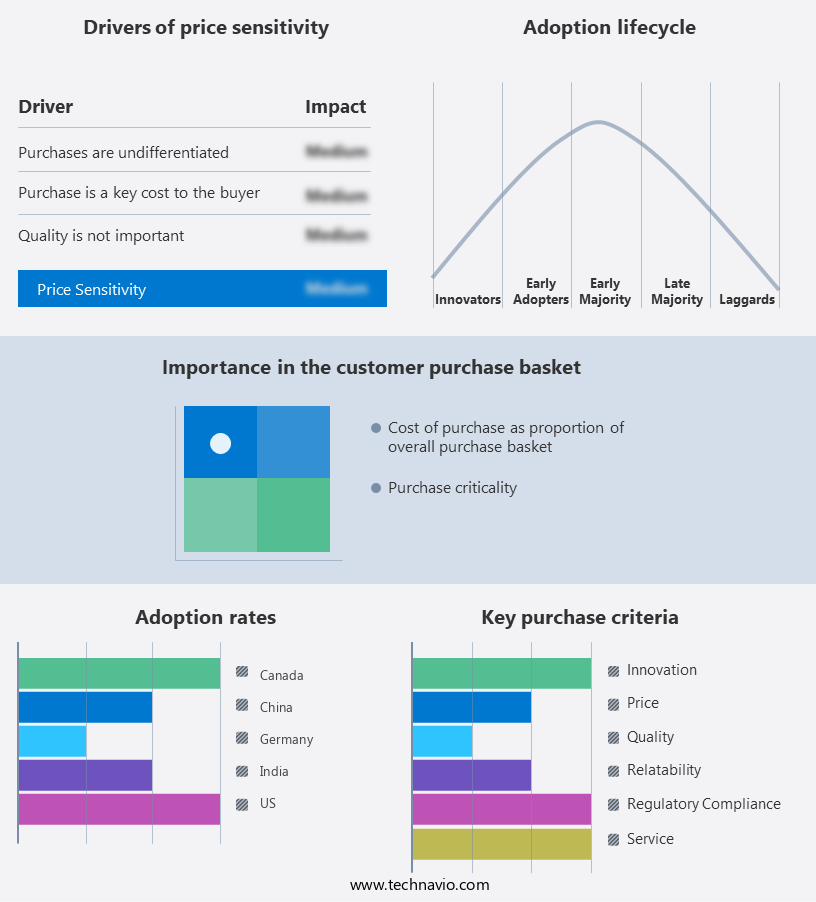
Customer Landscape
Key Companies & Market Insights
Companies are implementing various strategies, such as strategic alliances, market forecast, partnerships, mergers and acquisitions, geographical expansion, and product/service launches, to enhance their presence In the industry.
The industry research and growth report includes detailed analyses of the competitive landscape of the market and information about key companies, including:
- BHS-Sonthofen GmbH
- EMAC International Group
- Hess Corp.
- Holcombe Mixers
- Hyundai Motor Co.
- Liugong Construction Machinery Jiangsu Co. Ltd
- Luoyang CIMC Lingyu Automobile Co. Ltd.
- Marsay Equipment CC
- Mbw Inc.
- Metalgalante SpA
- Powertek Bulgaria Ltd.
- Rometa SA
- Sami Srl
- Sany Group
- Sermac Srl
- Shantui Jianyou Machinery Co. Ltd.
- SICOMA North America Inc.
- Terex Corp.
- Thomas Concrete Group AB
- Xuzhou Construction Machinery Group Co. Ltd.
- Zhengzhou Huazhong Construction Machinery Co. Ltd.
- Zoomlion India Pvt. Ltd.
Qualitative and quantitative analysis of companies has been conducted to help clients understand the wider business environment as well as the strengths and weaknesses of key industry players. Data is qualitatively analyzed to categorize companies as pure play, category-focused, industry-focused, and diversified; it is quantitatively analyzed to categorize companies as dominant, leading, strong, tentative, and weak.
Research Analyst Overview
The market is experiencing significant growth due to the increasing demand for infrastructure development and urbanization. With the rise of prefabricated concrete construction, efficiency has become a key priority In the industry. Concrete batching plants, a crucial equipment type In the production process, are being optimized to reduce waste and improve productivity. One of the major drivers of this trend is the increasing adoption of IoT-enabled machines. Concrete pumps, concrete laser screeds, and concrete mixers are being integrated with IoT technology to enhance precision and energy efficiency. This technological advancement allows for real-time monitoring of equipment performance and optimizes the concrete mixing process. The concrete pump and concrete laser screed are essential tools in modern construction, ensuring precision and efficiency, while self-compacting concrete is gaining popularity, and the Internet of Things (IoT) is being integrated to monitor and optimize the entire concrete pouring process.
Moreover, the shift towards sustainable and eco-friendly concrete construction is another significant factor fueling the growth of the market. Low-carbon concrete and energy-efficient equipment are becoming increasingly popular as the construction industry seeks to minimize its environmental impact. Concrete construction, a staple in infrastructure projects, is benefiting greatly from these technological advancements. Installation processes are becoming more streamlined, with self-compacting concrete and 3D printing technologies reducing the need for manual labor and minimizing errors. The use of robotics in concrete construction is also gaining traction, with companies investing in automation to improve precision and reduce labor costs. Concrete type optimization is another area of focus, with researchers exploring ways to create stronger and more durable concrete mixtures.
Furthermore, urbanization and infrastructure development are driving the demand for concrete machinery. As cities continue to grow, the need for efficient and sustainable construction practices becomes more pressing. The market is expected to continue its growth trajectory as technological advancements and eco-friendly initiatives shape the future of the industry. Digital construction is revolutionizing the industry with concrete quality control and smart construction methods, leading to significant construction cost reduction, improved construction safety, and enhanced construction automation solutions. Moreover, construction technology and construction data management are streamlining processes, while concrete production optimization ensures higher efficiency and quality. Concrete industry trends are increasingly focused on construction analytics, which help in optimizing processes, while the use of sustainable construction materials is driving concrete sustainability efforts to reduce environmental impact.
|
Market Scope |
|
|
Report Coverage |
Details |
|
Page number |
174 |
|
Base year |
2023 |
|
Historic period |
2018-2022 |
|
Forecast period |
2024-2028 |
|
Growth momentum & CAGR |
Accelerate at a CAGR of 5.6% |
|
Market growth 2024-2028 |
USD 6.68 billion |
|
Market structure |
Fragmented |
|
YoY growth 2023-2024(%) |
5.3 |
|
Key countries |
China, US, Germany, Canada, India, France, Japan, South Korea, UK, and Australia |
|
Competitive landscape |
Leading Companies, Market Positioning of Companies, Competitive Strategies, and Industry Risks |
What are the Key Data Covered in this Concrete Machinery Market Research and Growth Report?
- CAGR of the Concrete Machinery industry during the forecast period
- Detailed information on factors that will drive the market growth and forecasting between 2024 and 2028
- Precise estimation of the size of the market and its contribution of the industry in focus to the parent market
- Accurate predictions about upcoming growth and trends and changes in consumer behaviour
- Growth of the market across APAC, North America, Europe, South America, and Middle East and Africa
- Thorough analysis of the market's competitive landscape and detailed information about companies
- Comprehensive analysis of factors that will challenge the concrete machinery market growth of industry companies
We can help! Our analysts can customize this concrete machinery market research report to meet your requirements.
 RIA -
RIA -