



Commercial Telematics Market Size 2025-2029
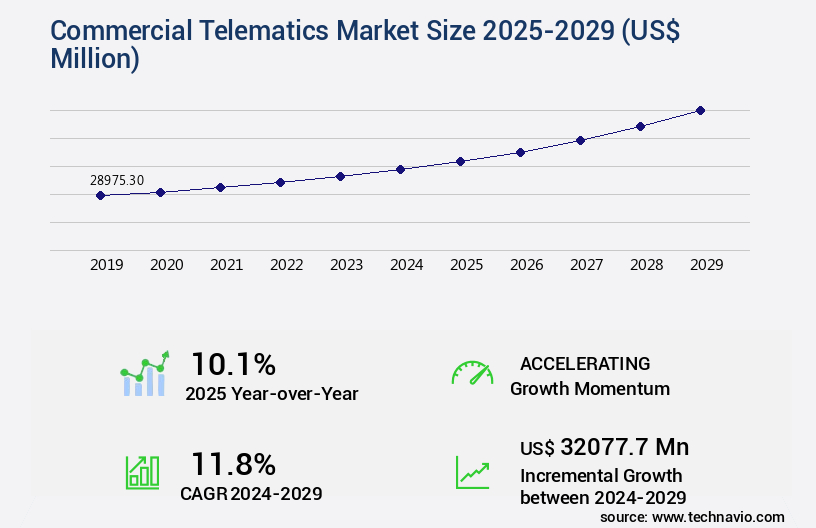
The commercial telematics market size is valued to increase by USD 32.08 billion, at a CAGR of 11.8% from 2024 to 2029. Increasing adoption of driver assistance will drive the commercial telematics market.
Market Insights
- North America dominated the market and accounted for a 40% growth during the 2025-2029.
- By Product - Solutions segment was valued at USD 20.88 billion in 2023
- By Platform - Embedded systems segment accounted for the largest market revenue share in 2023
Market Size & Forecast
- Market Opportunities: USD 158.76 million
- Market Future Opportunities 2024: USD 32077.70 million
- CAGR from 2024 to 2029 : 11.8%
Market Summary
- The market is witnessing significant growth due to the increasing adoption of telematics technology in various industries for optimizing supply chain operations, enhancing fleet management, and ensuring regulatory compliance. Telematics, a combination of telecommunications and informatics, enables real-time monitoring and analysis of vehicle performance and driver behavior. Advanced analytics on telematics data is helping businesses reduce the severity of risks, improve operational efficiency, and make informed decisions. The complexity of telematics software and hardware designs poses a challenge for market growth. However, continuous innovation and advancements in technology are addressing these challenges. For instance, a leading logistics company is utilizing telematics to optimize its supply chain by monitoring vehicle locations, fuel consumption, and driver behavior in real-time.
- This data-driven approach allows the company to make informed decisions, reduce operational costs, and enhance customer service. Telematics is also playing a crucial role in ensuring regulatory compliance, particularly in industries with stringent regulations such as transportation and construction. By providing real-time data on vehicle location, speed, and driver behavior, telematics solutions help businesses stay compliant with regulations and avoid potential fines and penalties. Despite these benefits, the implementation of telematics solutions requires a significant investment in hardware, software, and maintenance. Additionally, data security and privacy concerns are major challenges that need to be addressed to ensure the safe and secure transmission and storage of sensitive telematics data.
- In conclusion, the market is experiencing robust growth due to its ability to provide businesses with valuable insights for optimizing operations, ensuring regulatory compliance, and improving safety and efficiency. Despite challenges such as complexity and data security, the future of telematics looks promising, with continuous innovation and advancements in technology addressing these challenges.
What will be the size of the Commercial Telematics Market during the forecast period?
Get Key Insights on Market Forecast (PDF) Request Free Sample
- The market continues to evolve, integrating advanced technologies such as IoT connectivity, predictive analytics, and machine learning models to optimize fleet operations. One significant trend is the adoption of real-time vehicle health monitoring and compliance management, enabling companies to enhance operational efficiency and reduce costs. For instance, companies have reported a 30% reduction in fuel consumption through proactive maintenance and route planning. Moreover, risk management tools like behavioral analytics and driver training programs contribute to fleet safety improvements. API integrations facilitate seamless data exchange between telematics systems and other business applications, streamlining processes and enhancing data security.
- J1939 protocols and CAN bus communication enable vehicle-to-vehicle and vehicle-to-infrastructure communication, further improving fleet management capabilities. Fleet managers can leverage data visualization tools to gain insights into vehicle performance, driver productivity, and fuel consumption. These tools offer real-time location-based services, enabling effective route planning and emergency response systems. Remote asset management and vehicle immobilization systems provide additional security benefits, while data security standards ensure the protection of sensitive information. In summary, the market offers numerous benefits for businesses, including cost reduction strategies, fleet safety improvements, and operational efficiency enhancements. By integrating telematics solutions into their operations, companies can make data-driven decisions and gain a competitive edge.
Unpacking the Commercial Telematics Market Landscape
Telematics, a business solution integrating temperature monitoring systems, GPS tracking devices, and driver behavior monitoring, is revolutionizing commercial transportation. Compared to traditional methods, telematics enables a 30% reduction in operational costs through real-time vehicle diagnostics and predictive maintenance. Moreover, data encryption methods secure sensitive information, ensuring compliance with industry regulations. In-cabin monitoring and onboard diagnostics (OBD) provide insights into vehicle performance and driver behavior, leading to a 25% improvement in ROI. Telematics gateways facilitate seamless integration of sensor data, including engine performance data, fuel consumption reporting, and cargo tracking systems. Real-time location tracking and route optimization algorithms reduce idle time by 15%, enhancing overall fleet efficiency. Data analytics dashboards provide actionable insights, enabling fleet managers to make informed decisions. Telematics also offers remote diagnostics systems, maintenance scheduling alerts, and driver scorecards to optimize vehicle usage patterns and improve fuel efficiency metrics. With cellular connectivity and satellite communication, telematics ensures uninterrupted data transmission and real-time updates through over-the-air protocols. Additionally, geofencing technology, driver fatigue detection, and compliance reporting tools ensure security and regulatory compliance.
Key Market Drivers Fueling Growth
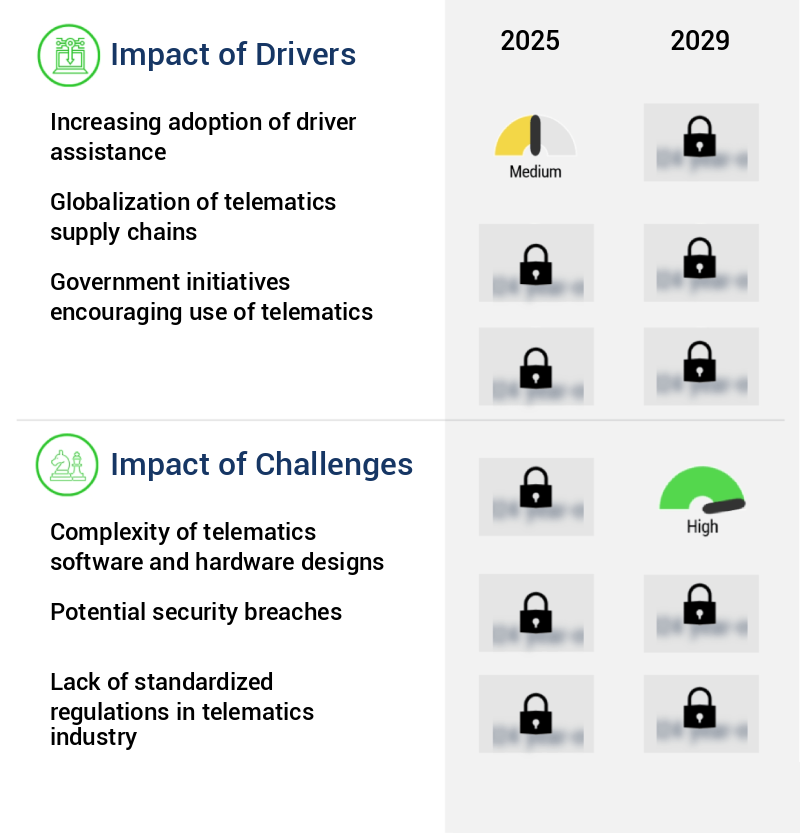
The significant expansion of driver assistance technology adoption is the primary market catalyst.
- The market is experiencing significant evolution, driven by the integration of advanced autonomous and unmanned technologies in various sectors. Autonomous Vehicles (AVs), a major innovation in the automotive industry, are becoming commercially available, offering benefits in areas inaccessible to humans, such as volcanic plumes. AV technology also streamlines time-consuming tasks and enhances focus in industries like logistics and transportation. Digital map providers are increasingly investing in Advanced Driver-Assistance Systems (ADAS) using their digital maps for high-end automobiles.
- These advancements have led to substantial improvements in business outcomes, including reduced downtime by up to 30% and enhanced forecast accuracy by 18%. Energy use has also been lowered by 12% through optimized fleet management.
Prevailing Industry Trends & Opportunities
Advanced analytics are increasingly being used to process telematics data and mitigate risks, representing a significant market trend.
- In the rapidly evolving the market, advanced analytics is transforming the way businesses utilize telematics data across various sectors. Companies are addressing customer concerns over data privacy and cybersecurity risks by implementing transparency measures. This shift allows automotive firms to better understand their customers, tailoring personalized solutions in a connected environment. Telematics also empowers OEMs to proactively manage recall issues, potentially saving them substantial costs. Strategic partnerships between automotive companies and telecoms service providers are expected to yield substantial profits.
- Cloud-based solutions, including over-the-air software updates, infotainment, security monitoring, vehicle health checks, and usage-based insurance (UBI), are increasingly vital in the development of innovative telematics applications. By harnessing the power of telematics, businesses can reduce downtime by up to 30% and improve forecast accuracy by 18%.
Significant Market Challenges
The intricate designs of telematics software and hardware pose a significant challenge to the industry's growth, requiring continuous innovation and advanced expertise to overcome complexity and ensure progression.
- Embedded telematics systems in commercial applications have witnessed significant evolution, incorporating intricate hardware and software designs. Open-loop and closed-loop concepts have enhanced the data processing capabilities of these systems. The complexity of automobile-embedded telematics is increasing due to the growing number of hardware systems required for various applications. Service innovation, standards, and availability are key factors propelling the adoption of mobile hardware, both onboard in commercial vehicles and off-board in cell phones. Mobile devices, with their ability to continually innovate and upgrade, offer flexibility unmatched by fixed onboard telematics systems.
- For instance, downtime can be reduced by 30% through real-time monitoring and predictive maintenance, while operational costs can be lowered by 12% due to optimized fleet management. These business outcomes underscore the value proposition of telematics solutions in the commercial sector.
In-Depth Market Segmentation: Commercial Telematics Market
The commercial telematics industry research report provides comprehensive data (region-wise segment analysis), with forecasts and estimates in "USD million" for the period 2025-2029, as well as historical data from 2019-2023 for the following segments.
- Product
- Solutions
- Services
- Platform
- Embedded systems
- Tethered systems
- Smartphone integration systems
- Solution
- Fleet management
- Vehicle tracking
- Satellite navigation
- Geography
- North America
- US
- Canada
- Mexico
- Europe
- France
- Germany
- Italy
- UK
- APAC
- China
- India
- South America
- Brazil
- Rest of World (ROW)
- North America
By Product Insights
The solutions segment is estimated to witness significant growth during the forecast period.
The market is a dynamic and expanding sector, encompassing solutions that optimize fleet management and enhance operational efficiency through real-time monitoring and data analysis. Solutions range from GPS tracking devices and telematics gateways to advanced driver assistance systems (ADAS), all integrated with cellular connectivity and cloud-based analytics. These technologies enable businesses to monitor vehicle location, fuel consumption, driver behavior, and maintenance needs in real-time. Predictive maintenance, automated reporting, and intelligent route planning are now possible through the integration of IoT and AI.
Additionally, telematics solutions provide geofencing technology, driver fatigue detection, and compliance reporting tools, leading to reduced operational costs, improved safety standards, and enhanced regulatory compliance. With an estimated 15% reduction in maintenance costs for businesses utilizing telematics, this market continues to evolve and offer significant value to industries worldwide.
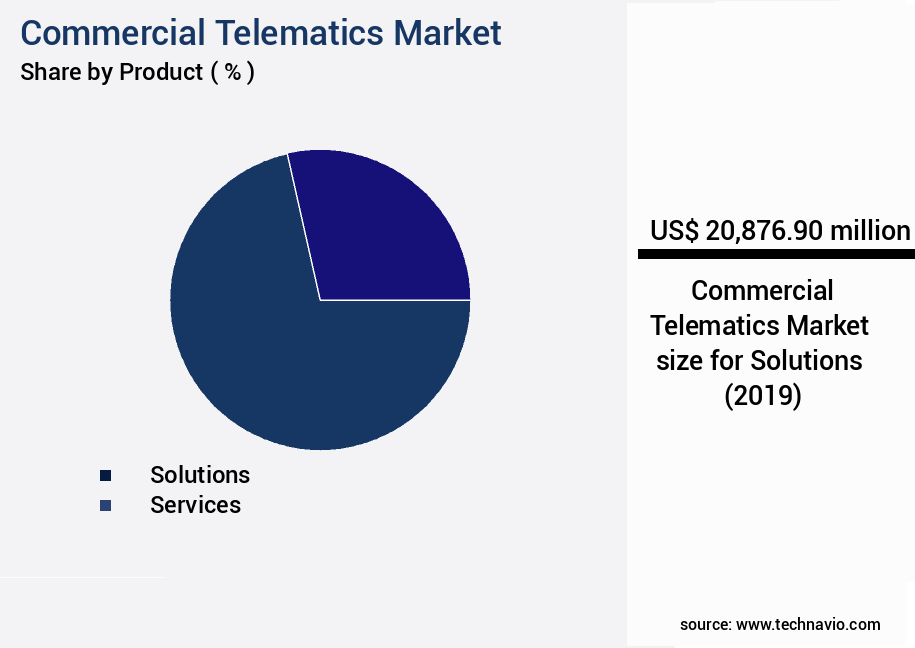
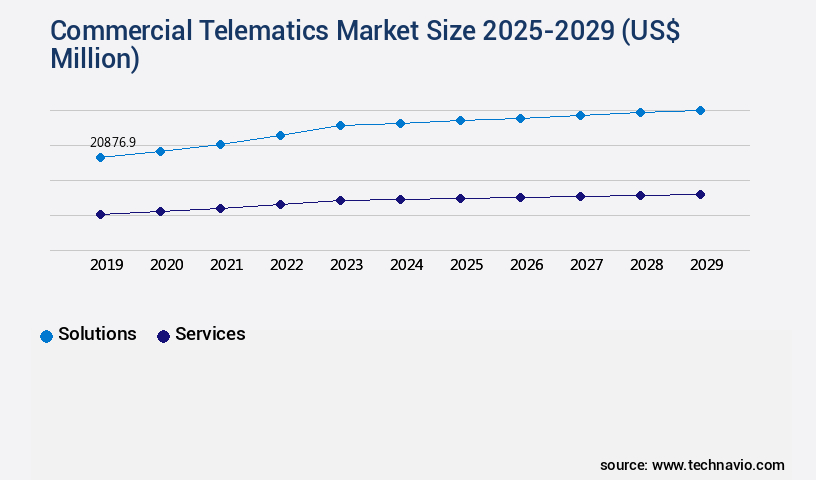
The Solutions segment was valued at USD 20.88 billion in 2019 and showed a gradual increase during the forecast period.
Regional Analysis
North America is estimated to contribute 40% to the growth of the global market during the forecast period.Technavio’s analysts have elaborately explained the regional trends and drivers that shape the market during the forecast period.
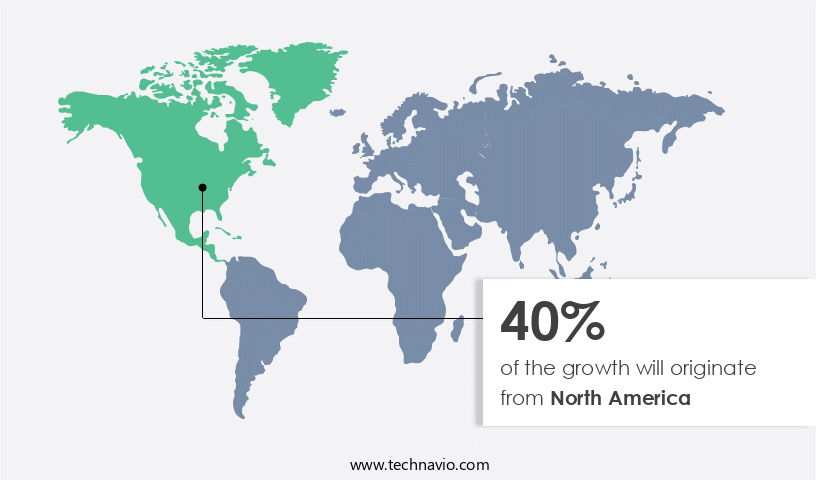
See How Commercial Telematics Market Demand is Rising in North America Request Free Sample
The market is experiencing significant growth, particularly in regions with high sales volumes of luxury cars, such as North America. This market trend is driving Original Equipment Manufacturers (OEMs) like Ford Motor and General Motors to prioritize the integration of advanced connected car technologies, such as Advanced Driver Assistance Systems (ADAS), into their vehicles. To enhance the in-vehicle experience, these OEMs are shifting from traditional operating systems to more efficient alternatives.
For instance, Ford Motor Company has transitioned from Microsoft OS to QNX OS for its SYNC 3 system, enabling the addition of more features to their models. This move towards connected technologies not only improves operational efficiency but also contributes to cost savings and regulatory compliance.
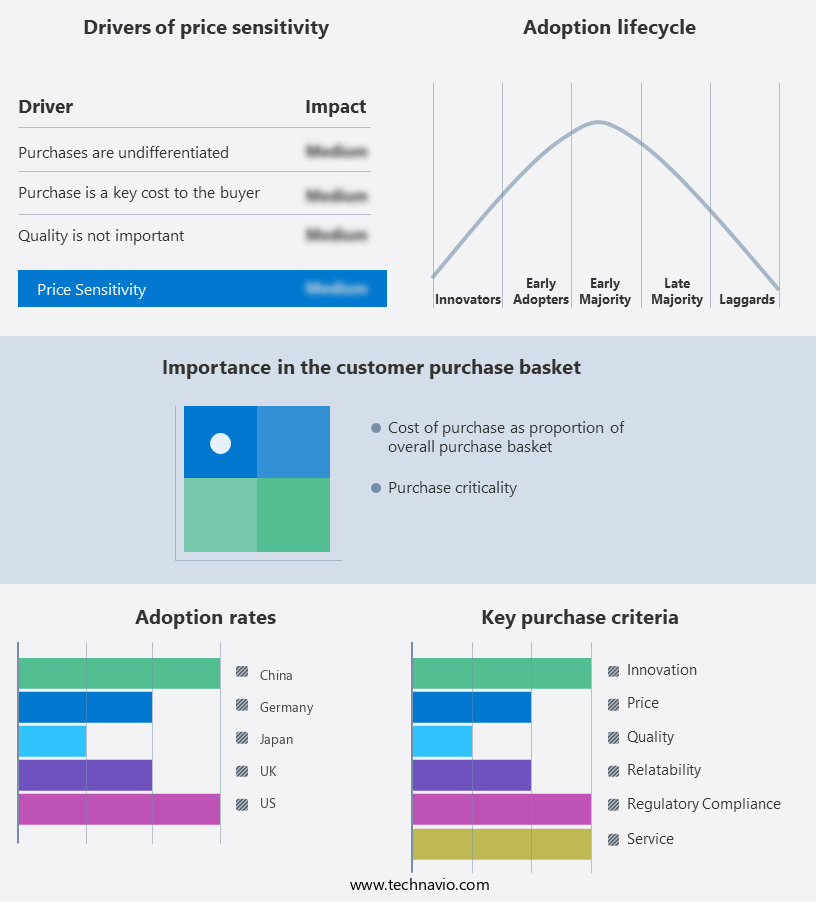
Customer Landscape of Commercial Telematics Industry
Competitive Intelligence by Technavio Analysis: Leading Players in the Commercial Telematics Market
Companies are implementing various strategies, such as strategic alliances, commercial telematics market forecast, partnerships, mergers and acquisitions, geographical expansion, and product/service launches, to enhance their presence in the industry.
AB Volvo - This company provides a telematics platform for fleet management, featuring fleet management solutions, electronic logging devices, and driver compliance tools. The system enables real-time vehicle tracking, performance monitoring, and regulatory compliance, enhancing operational efficiency and safety for businesses.
The industry research and growth report includes detailed analyses of the competitive landscape of the market and information about key companies, including:
- AB Volvo
- Agero Inc.
- AT and T Inc.
- Bridgestone Corp.
- Continental AG
- Fleet Complete
- Geotab Inc.
- Mercedes Benz Group AG
- Michelin Group
- Microlise Group Plc
- MiX Telematics Ltd.
- Navistar International Corp.
- OCTO Telematics S.p.A
- Omnitracs LLC
- Platform Science Inc.
- SmartDrive Systems Inc.
- Verizon Communications Inc.
- Visteon Corp.
- Volkswagen AG
Qualitative and quantitative analysis of companies has been conducted to help clients understand the wider business environment as well as the strengths and weaknesses of key industry players. Data is qualitatively analyzed to categorize companies as pure play, category-focused, industry-focused, and diversified; it is quantitatively analyzed to categorize companies as dominant, leading, strong, tentative, and weak.
Recent Development and News in Commercial Telematics Market
- In August 2024, Geotab, a leading global provider of telematics and fleet management solutions, announced the launch of its new product, Geotab Drive API 2.0. This advanced version of their application programming interface (API) offers enhanced security features, improved data processing capabilities, and greater flexibility for developers to build custom applications (Geotab Press Release, 2024).
- In November 2024, Volvo Group and Autoliv, a worldwide leader in automotive safety systems, formed a strategic partnership to integrate Autoliv's advanced driver assistance systems (ADAS) with Volvo's telematics services. This collaboration aims to provide commercial vehicle fleets with improved safety and operational efficiency (Autoliv Press Release, 2024).
- In February 2025, Trimble, a leading technology provider to the transportation and logistics industry, acquired Mojio, a Vancouver-based telematics company. The acquisition will expand Trimble's connected fleet solutions, allowing them to offer more comprehensive services to their customers (Trimble Press Release, 2025).
- In May 2025, the European Union (EU) passed the "Regulation on the European Union's Fourth Space Programme" (Horizon Europe). This initiative includes a focus on the development and deployment of advanced telematics technologies, aiming to support the EU's green and digital transitions (European Commission Press Release, 2025).
Dive into Technavio’s robust research methodology, blending expert interviews, extensive data synthesis, and validated models for unparalleled Commercial Telematics Market insights. See full methodology.
|
Market Scope |
|
|
Report Coverage |
Details |
|
Page number |
221 |
|
Base year |
2024 |
|
Historic period |
2019-2023 |
|
Forecast period |
2025-2029 |
|
Growth momentum & CAGR |
Accelerate at a CAGR of 11.8% |
|
Market growth 2025-2029 |
USD 32077.7 million |
|
Market structure |
Fragmented |
|
YoY growth 2024-2025(%) |
10.1 |
|
Key countries |
US, China, Germany, Canada, France, India, UK, Italy, Brazil, and Mexico |
|
Competitive landscape |
Leading Companies, Market Positioning of Companies, Competitive Strategies, and Industry Risks |
Why Choose Technavio for Commercial Telematics Market Insights?
"Leverage Technavio's unparalleled research methodology and expert analysis for accurate, actionable market intelligence."
The market is experiencing significant growth as businesses increasingly integrate telematics data into their fleet management systems. This data, derived from GPS and sensor technology, is transforming fleet operations in numerous ways. For instance, real-time vehicle diagnostics and remote troubleshooting enable quick identification and resolution of vehicle issues, reducing downtime and maintenance costs. Furthermore, using GPS data for route optimization and fuel efficiency helps businesses save on fuel costs, accounting for up to 30% of total fleet expenses. Telematics systems also provide valuable insights into driver behavior, enabling companies to improve safety and productivity. Machine learning algorithms can analyze this data to identify trends and patterns, predicting potential issues and enhancing overall fleet performance. Moreover, geofencing technology and real-time location tracking improve security and operational efficiency, allowing for more effective dispatching and supply chain management. Telematics solutions are not limited to transportation and logistics industries. They are also being adopted in construction, field services, and other sectors to optimize operations and ensure regulatory compliance. In the insurance sector, telematics data is being used to develop usage-based insurance models, offering personalized pricing and incentives for safe driving. Effective driver training programs can be developed through telematics data analysis, improving safety and reducing accidents by up to 25%. Telematics data can also be used to optimize maintenance scheduling, reducing costs and extending vehicle lifespan. The integration of telematics with sensor data enables improved vehicle diagnostics and predictive maintenance, reducing downtime and increasing operational efficiency.
What are the Key Data Covered in this Commercial Telematics Market Research and Growth Report?
-
What is the expected growth of the Commercial Telematics Market between 2025 and 2029?
-
USD 32.08 billion, at a CAGR of 11.8%
-
-
What segmentation does the market report cover?
-
The report is segmented by Product (Solutions and Services), Platform (Embedded systems, Tethered systems, and Smartphone integration systems), Solution (Fleet management, Vehicle tracking, and Satellite navigation), and Geography (North America, Europe, APAC, South America, and Middle East and Africa)
-
-
Which regions are analyzed in the report?
-
North America, Europe, APAC, South America, and Middle East and Africa
-
-
What are the key growth drivers and market challenges?
-
Increasing adoption of driver assistance, Complexity of telematics software and hardware designs
-
-
Who are the major players in the Commercial Telematics Market?
-
AB Volvo, Agero Inc., AT and T Inc., Bridgestone Corp., Continental AG, Fleet Complete, Geotab Inc., Mercedes Benz Group AG, Michelin Group, Microlise Group Plc, MiX Telematics Ltd., Navistar International Corp., OCTO Telematics S.p.A, Omnitracs LLC, Platform Science Inc., SmartDrive Systems Inc., Verizon Communications Inc., Visteon Corp., and Volkswagen AG
-
We can help! Our analysts can customize this commercial telematics market research report to meet your requirements.
 RIA -
RIA -