


Commercial Microwave Ovens Market Size 2025-2029
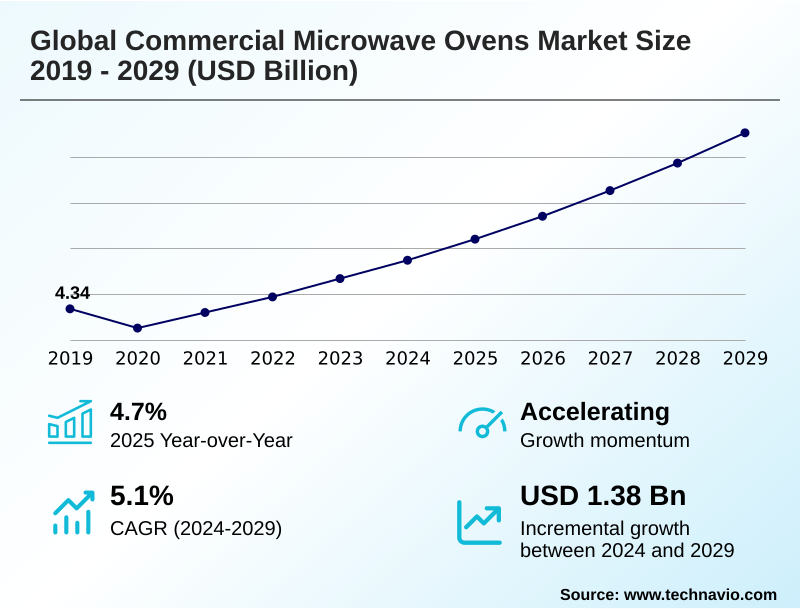
The commercial microwave ovens market size is valued to increase by USD 1.38 billion, at a CAGR of 5.1% from 2024 to 2029. Growing food service industry will drive the commercial microwave ovens market.
Major Market Trends & Insights
- APAC dominated the market and accounted for a 48.6% growth during the forecast period.
- By Type - Button controls segment was valued at USD 3.09 billion in 2023
- By Product - Commercial heavy-duty microwave ovens segment accounted for the largest market revenue share in 2023
Market Size & Forecast
- Market Opportunities: USD 1.92 billion
- Market Future Opportunities: USD 1.38 billion
- CAGR from 2024 to 2029 : 5.1%
Market Summary
- The commercial microwave ovens market is undergoing a significant transformation, driven by the dual needs of operational efficiency and culinary versatility in professional kitchens. Demand is fundamentally linked to the expansion of the foodservice sector, from quick-service restaurants to institutional settings, where accelerated cooking processes are critical.
- A key market dynamic is the increasing adoption of units with advanced features like a self-diagnostic function and food temperature sensor, which enhance reliability and ensure product quality assurance.
- For example, a global coffee chain can leverage commercial microwaves with USB menu management and Wi-Fi enabled programming to deploy standardized recipe execution for new menu items across thousands of locations overnight, ensuring brand consistency without extensive on-site staff retraining. This move toward smarter, more connected equipment addresses labor shortages by enabling kitchen staff de-skilling.
- However, the market also contends with the long lifecycle of these robustly built appliances, which can temper the pace of new technology adoption.
- Concurrently, the rise of the high-speed combination oven, which integrates technologies like convection heating element and impinged air circulation, presents both a competitive challenge and an evolutionary path for the traditional microwave by offering superior food browning technology and texture.
What will be the Size of the Commercial Microwave Ovens Market during the forecast period?
Get Key Insights on Market Forecast (PDF) Request Free Sample
How is the Commercial Microwave Ovens Market Segmented?
The commercial microwave ovens industry research report provides comprehensive data (region-wise segment analysis), with forecasts and estimates in "USD million" for the period 2025-2029, as well as historical data from 2019-2023 for the following segments.
- Type
- Button controls
- Dial controls
- Product
- Commercial heavy-duty microwave ovens
- Commercial medium-duty microwave ovens
- Commercial light-duty microwave ovens
- Distribution channel
- Offline
- Online
- Geography
- APAC
- China
- India
- Japan
- Europe
- Germany
- France
- UK
- North America
- US
- Canada
- Mexico
- South America
- Brazil
- Argentina
- Colombia
- Middle East and Africa
- Saudi Arabia
- UAE
- South Africa
- Rest of World (ROW)
- APAC
By Type Insights
The button controls segment is estimated to witness significant growth during the forecast period.
The commercial microwave ovens market segmentation reflects a significant divergence based on control interfaces, directly impacting professional kitchen workflow optimization.
Button-controlled models, which often feature touch-button controls and programmable memory pads, are gaining dominance in settings that prioritize menu item consistency and standardized recipe execution.
This shift is particularly evident in quick service restaurant equipment and fast casual dining appliance applications. These systems allow for precise, repeatable automated cooking programs, reducing reliance on skilled labor and minimizing operational errors.
For instance, implementing units with multi-power level setting capabilities can decrease order preparation variance by over 15%.
As the industry seeks labor-saving kitchen automation and enhanced kitchen throughput enhancement, the adoption of this intuitive push button operation continues to define the equipment landscape for high-volume foodservice solution providers.
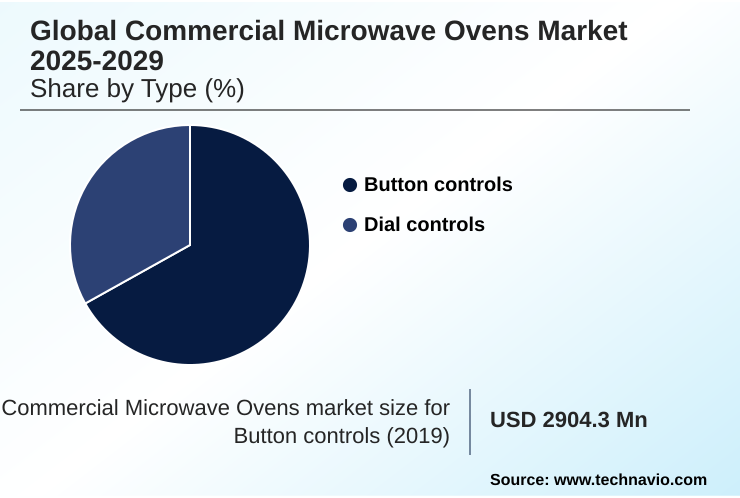
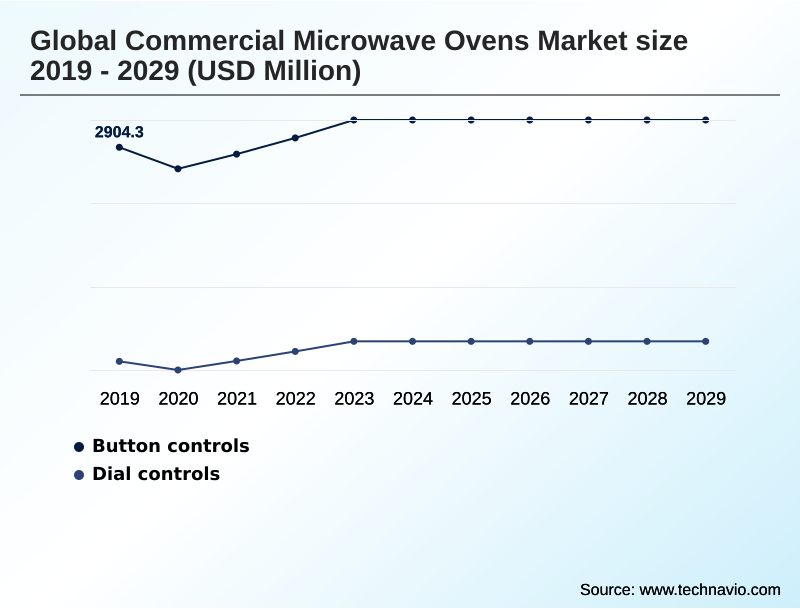
The Button controls segment was valued at USD 3.09 billion in 2023 and showed a gradual increase during the forecast period.
Regional Analysis
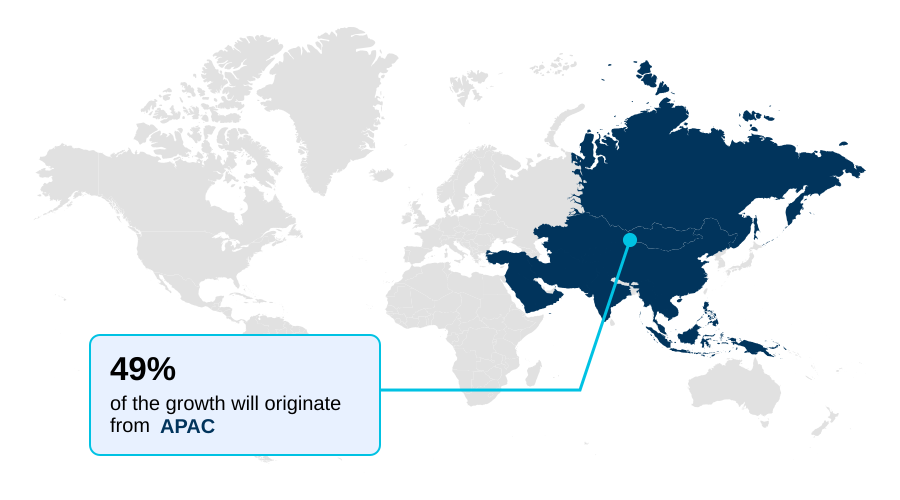
APAC is estimated to contribute 48.6% to the growth of the global market during the forecast period.Technavio’s analysts have elaborately explained the regional trends and drivers that shape the market during the forecast period.
See How Commercial Microwave Ovens Market Demand is Rising in APAC Request Free Sample
The geographic landscape of the commercial microwave ovens market is characterized by diverse regional dynamics.
APAC is the fastest-growing region, projected to account for nearly 49% of the market's incremental growth, driven by the rapid expansion of convenience store food preparation and ghost kitchen cooking line infrastructure in countries like China and India.
This contrasts with the mature markets of North America and Europe, which together represent over 43% of growth, primarily fueled by equipment replacement cycles and the adoption of advanced technology.
In North America, demand for light-duty microwave oven and medium-duty microwave oven models is strong in the convenience and institutional foodservice appliance sectors.
European operators prioritize the compact kitchen footprint solution and culinary versatility, leading to higher adoption of multi-functional cooking units.
Market Dynamics
Our researchers analyzed the data with 2024 as the base year, along with the key drivers, trends, and challenges. A holistic analysis of drivers will help companies refine their marketing strategies to gain a competitive advantage.
- Strategic procurement in the commercial microwave ovens market requires a nuanced understanding of specific operational needs. The decision in the heavy duty vs medium duty microwave debate hinges on daily usage volume; a high-volume food service establishment requires the durability of a heavy-duty model, whereas a commercial microwave for coffee shops may only need a medium-duty unit.
- The benefits of programmable commercial microwaves are most apparent in chain operations, where consistency is paramount and a commercial oven with USB programming can ensure uniform recipe execution across all locations. Evaluating the energy consumption of commercial microwaves is crucial for managing long-term operational costs.
- Concurrently, the rise of the combination oven vs microwave oven as a viable alternative presents a significant market shift. These high speed cooking oven technology units, which can brown and crisp foods, are increasingly preferred in settings where menu diversity is key, such as a commercial microwave for food trucks.
- For businesses prioritizing hygiene, understanding how to clean a stainless steel microwave efficiently is a practical consideration, while adherence to safety standards for commercial ovens, including NSF certified microwave for restaurants and features addressing commercial microwave radiation safety features, is non-negotiable for compliance and brand protection.
- The long commercial microwave oven replacement cycle means that each purchasing decision has a decade-long impact, making initial assessments of factors like dual magnetron microwave benefits critical for future-proofing kitchen operations.
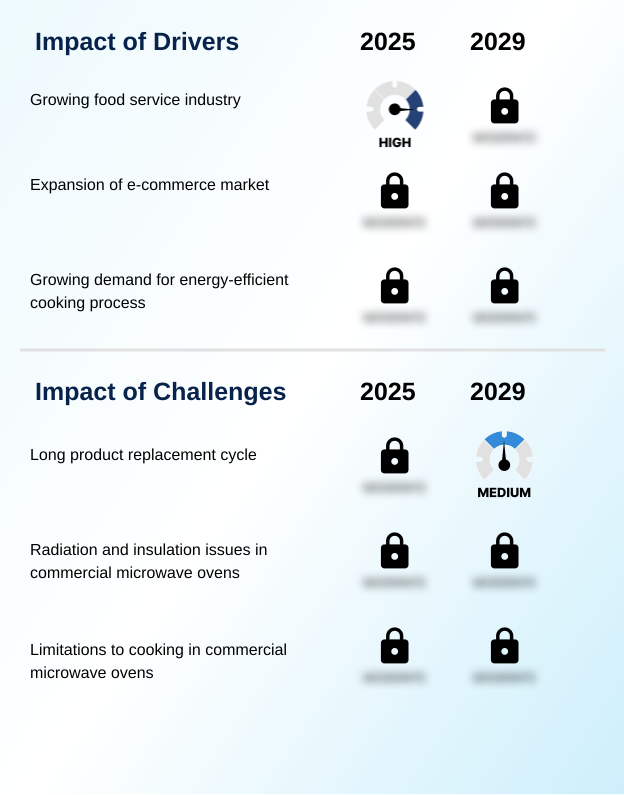
What are the key market drivers leading to the rise in the adoption of Commercial Microwave Ovens Industry?
- The sustained and dynamic growth of the global foodservice industry, encompassing quick service restaurants, ghost kitchens, and institutional catering, serves as the primary driver for the commercial microwave ovens market.
- Market growth is fundamentally driven by the relentless expansion of the global foodservice industry, especially the quick service restaurant equipment sector.
- The proliferation of food delivery optimization platforms has reshaped consumer expectations, demanding an accelerated cooking process to meet tight delivery windows. This directly fuels investment in high-performance equipment.
- For example, adopting rapid-cook oven technology can cut order fulfillment times by over 40% compared to conventional methods. Concurrently, a growing emphasis on sustainability and operational cost reduction is accelerating demand for ENERGY STAR rated appliances.
- These models, featuring superior microwave radiation containment, not only align with corporate responsibility goals but also reduce utility costs by approximately 15%, enhancing the long-term value proposition for hotel and catering equipment operators.
What are the market trends shaping the Commercial Microwave Ovens Industry?
- The increasing integration of sophisticated automatic timers and programmable controls represents a significant market trend. This shift is driven by the operational need for product consistency and efficiency in modern foodservice environments.
- A dominant trend is the integration of advanced automation to enhance kitchen efficiency and consistency. The adoption of commercial microwaves with an automatic cooking timer and sophisticated automated cooking programs is becoming standard, particularly in fast-paced environments. This technology enables kitchen staff to achieve identical results with every order, with programmable units reducing preparation errors by up to 20%.
- Furthermore, the market is seeing a push towards connectivity, with features like remote diagnostic capability allowing for proactive maintenance, which can reduce equipment downtime by 30%. This evolution towards smarter, more autonomous equipment like a stackable unit design with a rotary dial control directly addresses industry-wide labor shortages by simplifying operations and minimizing training requirements.
What challenges does the Commercial Microwave Ovens Industry face during its growth?
- The market's growth is constrained by the characteristically long product replacement cycle of durable, commercial-grade equipment, which often exceeds a decade of operational use.
- A primary structural challenge is the extended product lifecycle, with the average replacement for a heavy-duty microwave oven often exceeding 10 years. This durability, while beneficial for operators' initial return on investment, slows the adoption of newer technologies. Another significant hurdle is the inherent culinary limitation of standalone microwave technology.
- The inability to produce browning and crisping textures, a key aspect of food browning technology, relegates the appliance to a secondary role. This weakness is exploited by the rise of more versatile equipment; high-speed combination oven sales now account for over 25% of the rapid-cook market.
- Additionally, ensuring safety through robust microwave radiation containment systems and effective high-density thermal insulation adds to manufacturing costs, creating a difficult trade-off between performance, safety, and price, a core issue in brand reputation protection.
Exclusive Technavio Analysis on Customer Landscape
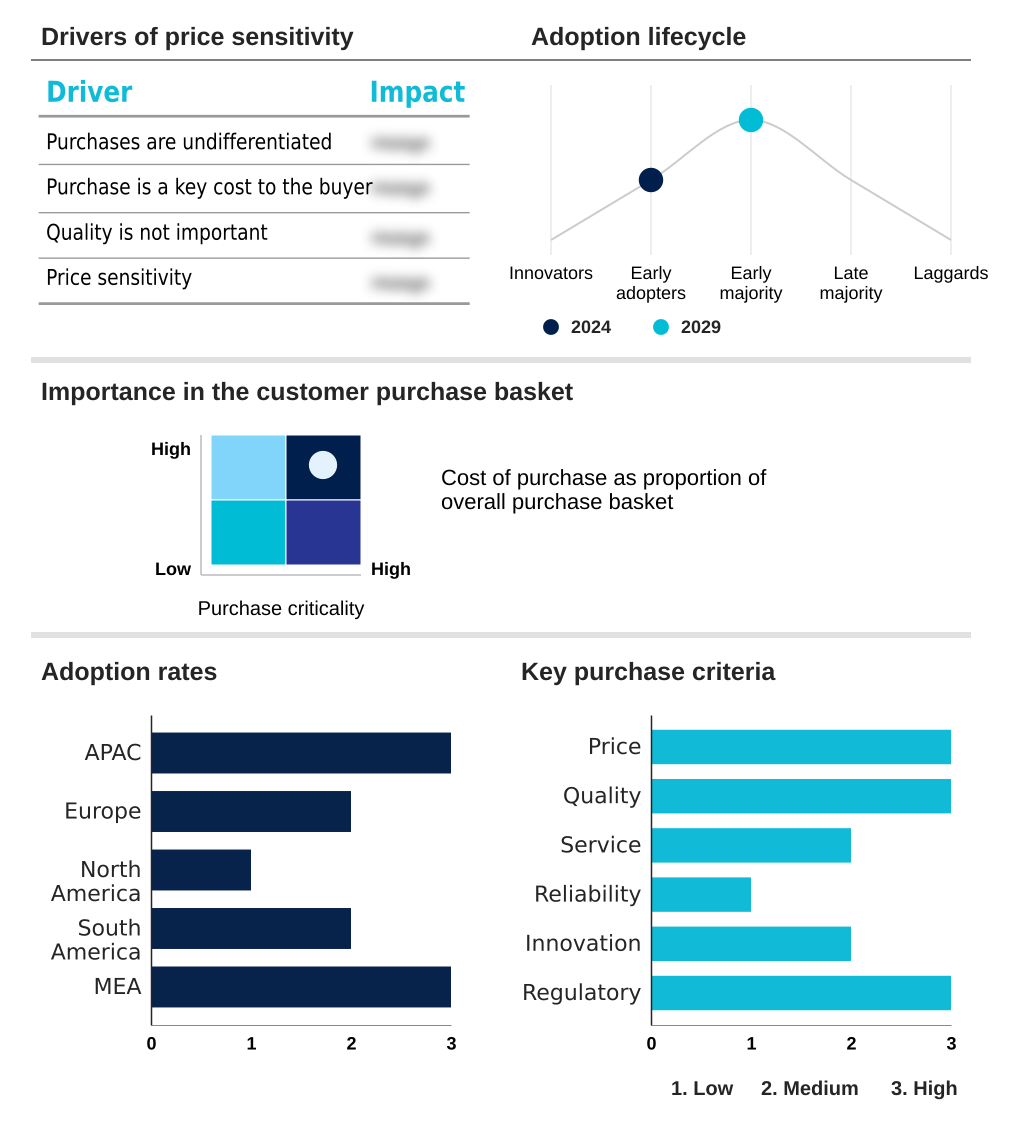
The commercial microwave ovens market forecasting report includes the adoption lifecycle of the market, covering from the innovator’s stage to the laggard’s stage. It focuses on adoption rates in different regions based on penetration. Furthermore, the commercial microwave ovens market report also includes key purchase criteria and drivers of price sensitivity to help companies evaluate and develop their market growth analysis strategies.
Customer Landscape of Commercial Microwave Ovens Industry
Competitive Landscape
Companies are implementing various strategies, such as strategic alliances, commercial microwave ovens market forecast, partnerships, mergers and acquisitions, geographical expansion, and product/service launches, to enhance their presence in the industry.
AB Electrolux - Offerings span from light-duty models for basic reheating to programmable, heavy-duty units and high-speed combination ovens designed for demanding, high-volume foodservice operations.
The industry research and growth report includes detailed analyses of the competitive landscape of the market and information about key companies, including:
- AB Electrolux
- Ali Group Srl
- Celco Inc.
- Comcater Pty Ltd.
- Felix Storch Inc.
- Labnics
- Labtron Equipment Ltd.
- Midea Group Co. Ltd.
- Panasonic Holdings Corp.
- Sammic SL
- Samsung Electronics Co. Ltd.
- Smad Electric Appliances
- Solwave Inc.
- The Middleby Corp.
- Trufrost Cooling Pvt. Ltd.
- Waring Commercial
- Whirlpool Corp.
Qualitative and quantitative analysis of companies has been conducted to help clients understand the wider business environment as well as the strengths and weaknesses of key industry players. Data is qualitatively analyzed to categorize companies as pure play, category-focused, industry-focused, and diversified; it is quantitatively analyzed to categorize companies as dominant, leading, strong, tentative, and weak.
Recent Development and News in Commercial microwave ovens market
- In September 2024, The Middleby Corp. launched a new line of high-speed ovens integrating AI-powered sensor technology and a ventless cooking system, designed to automate cooking processes for quick service restaurants.
- In November 2024, Panasonic Holdings Corp. announced a strategic partnership with a leading IoT software provider to roll out enhanced remote diagnostic capabilities and Wi-Fi enabled programming across its commercial microwave oven portfolio, targeting large enterprise clients.
- In January 2025, Ali Group Srl completed the acquisition of a specialized technology firm known for its innovative impinged air circulation and combination cooking technology, aiming to strengthen its position in the rapid-cook oven segment.
- In April 2025, Midea Group Co. Ltd. revealed plans to construct a new manufacturing facility in India, dedicated to producing ENERGY STAR rated appliances to meet the growing demand for energy-efficient commercial appliances in the APAC region.
Dive into Technavio’s robust research methodology, blending expert interviews, extensive data synthesis, and validated models for unparalleled Commercial Microwave Ovens Market insights. See full methodology.
| Market Scope | |
|---|---|
| Page number | 290 |
| Base year | 2024 |
| Historic period | 2019-2023 |
| Forecast period | 2025-2029 |
| Growth momentum & CAGR | Accelerate at a CAGR of 5.1% |
| Market growth 2025-2029 | USD 1384.9 million |
| Market structure | Fragmented |
| YoY growth 2024-2025(%) | 4.7% |
| Key countries | China, India, Japan, South Korea, Australia, Indonesia, Germany, France, UK, Italy, The Netherlands, Spain, US, Canada, Mexico, Brazil, Argentina, Colombia, Saudi Arabia, UAE, South Africa, Israel and Turkey |
| Competitive landscape | Leading Companies, Market Positioning of Companies, Competitive Strategies, and Industry Risks |
Research Analyst Overview
- The commercial microwave ovens market is evolving beyond simple heating to become integral to automated kitchen ecosystems. Boardroom decisions are increasingly influenced by the need for equipment that ensures compliance and operational excellence, such as models with NSF International certification and Underwriters Laboratories compliance.
- The integration of a heavy-duty magnetron and dual magnetron configuration delivers the power required for high-throughput environments. Features like a static ceramic base and an easy-clean interior address maintenance and sanitation concerns, which are critical for brand reputation. The technological shift is evident in the adoption of a high-speed combination oven with combination cooking technology, which offers greater menu flexibility.
- For standard operations, units featuring a dial timer mechanism or advanced touch-button controls with a see-through door panel offer tailored usability. Implementing units with programmable memory pads can decrease order inaccuracies by over 25% in high-volume settings.
- The market's trajectory is defined by a push for smarter, more versatile equipment that combines robust engineering—from the door interlock system to high-density thermal insulation—with intelligent features like a self-diagnostic function and food temperature sensor, ultimately delivering a higher return on investment.
What are the Key Data Covered in this Commercial Microwave Ovens Market Research and Growth Report?
-
What is the expected growth of the Commercial Microwave Ovens Market between 2025 and 2029?
-
USD 1.38 billion, at a CAGR of 5.1%
-
-
What segmentation does the market report cover?
-
The report is segmented by Type (Button controls, and Dial controls), Product (Commercial heavy-duty microwave ovens, Commercial medium-duty microwave ovens, and Commercial light-duty microwave ovens), Distribution Channel (Offline, and Online) and Geography (APAC, Europe, North America, South America, Middle East and Africa)
-
-
Which regions are analyzed in the report?
-
APAC, Europe, North America, South America and Middle East and Africa
-
-
What are the key growth drivers and market challenges?
-
Growing food service industry, Long product replacement cycle
-
-
Who are the major players in the Commercial Microwave Ovens Market?
-
AB Electrolux, Ali Group Srl, Celco Inc., Comcater Pty Ltd., Felix Storch Inc., Labnics, Labtron Equipment Ltd., Midea Group Co. Ltd., Panasonic Holdings Corp., Sammic SL, Samsung Electronics Co. Ltd., Smad Electric Appliances, Solwave Inc., The Middleby Corp., Trufrost Cooling Pvt. Ltd., Waring Commercial and Whirlpool Corp.
-
Market Research Insights
- Market dynamics are shaped by a push for higher efficiency and lower total cost of ownership. The adoption of an energy-efficient commercial appliance can reduce utility expenses by up to 15% annually, a critical factor for operational cost reduction.
- Furthermore, investments in food safety certified equipment, which meets stringent health codes, can mitigate liability risks and secure more favorable insurance terms, improving return on investment. The integration of technology for preventative maintenance alerts reduces equipment downtime by an average of 20%, directly supporting on-demand food service.
- This focus on measurable business outcomes, rather than just initial price, reflects a maturing market where performance, reliability, and long-term value guide procurement decisions for any commercial kitchen appliance.
We can help! Our analysts can customize this commercial microwave ovens market research report to meet your requirements.
 RIA -
RIA -