


Commercial HVAC Market Analysis, Size, and Forecast 2025-2029: North America (US and Canada), Europe (France, Germany, and UK), Middle East and Africa (UAE), APAC (China, India, and Japan), South America (Brazil), and Rest of World (ROW)

Commercial HVAC Market Analysis, Size, and Forecast 2025-2029:
North America (US and Canada), Europe (France, Germany, and UK), Middle East and Africa (UAE), APAC (China, India, and Japan), South America (Brazil), and Rest of World (ROW)

Published: Jun 2025 241 Pages SKU: IRTNTR73213

Market Overview at a Glance

$28.8 B
Market Opportunity
4.7%
CAGR
4.4
YoY growth 2024-2025(%)

Commercial HVAC Market Size 2025-2029

The commercial HVAC market size is forecast to increase by USD 28.8 million, at a CAGR of 4.7% between 2024 and 2029.

  • The market is experiencing significant growth, driven by the increasing number of data centers and the emergence of smart and connected HVAC systems. The proliferation of data centers necessitates advanced cooling solutions to maintain optimal operating temperatures, leading to increased demand for Commercial HVAC systems. Furthermore, the integration of IoT technologies in HVAC systems enables remote monitoring, predictive maintenance, and energy efficiency, making them an attractive investment for businesses. However, the market faces formidable competition, with numerous players vying for market share. This intense competition necessitates continuous innovation and differentiation to gain a competitive edge.
  • Additionally, the integration of new technologies into HVAC systems can pose challenges, such as high implementation costs and the need for specialized expertise. Building management systems and IoT integration facilitate data analytics and remote monitoring, allowing for real-time performance optimization. Companies seeking to capitalize on market opportunities must focus on delivering cost-effective, energy-efficient, and technologically advanced solutions while navigating these challenges effectively. By staying abreast of market trends and addressing customer needs, businesses can position themselves for long-term success in the market.

What will be the Size of the Commercial HVAC Market during the forecast period?
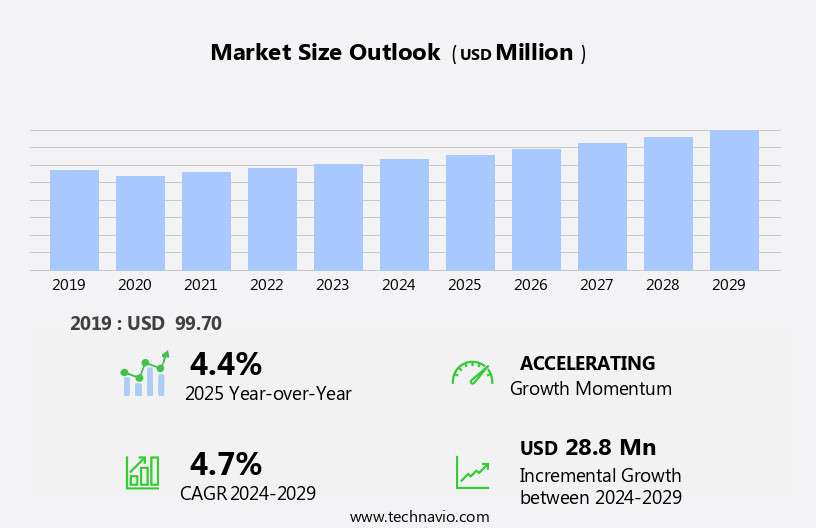
Commercial HVAC Market Size

Explore in-depth regional segment analysis with market size data - historical 2019-2023 and forecasts 2025-2029 - in the full report.  
Request Free Sample

The market continues to evolve, driven by the need for carbon footprint reduction, improved air filtration, and enhanced indoor air quality. HVAC systems, including air handlers, packaged units, and rooftop units, are being integrated with advanced technologies such as variable speed drives, flow sensors, and demand response programs. These innovations enable energy efficiency, optimized performance, and demand response capabilities. New construction projects and building renovations are embracing sustainable design, adhering to codes and standards, and implementing green building practices. HVAC systems are being modeled and simulated to ensure optimal energy usage and carbon footprint reduction.

Air conditioning systems are being augmented with air filtration and indoor air quality solutions, such as air purifiers, UV air treatment, and humidity sensors. Water systems are being optimized for energy efficiency and carbon footprint reduction through the use of heat pumps and cooling towers. Variable refrigerant flow and VAV systems are gaining popularity for their energy efficiency and ability to adapt to changing environmental conditions. Smart controls and building automation systems are being employed to enhance overall system performance and reduce energy consumption. Carbon dioxide monitoring and temperature sensors are becoming essential components of HVAC systems, ensuring optimal indoor air quality and maintaining a healthy environment for building occupants.

HVAC software and cloud-based platforms are facilitating the integration of these advanced technologies, enabling building owners and operators to make data-driven decisions and maximize their return on investment.

How is this Commercial HVAC Industry segmented?

The commercial HVAC industry research report provides comprehensive data (region-wise segment analysis), with forecasts and estimates in "USD million" for the period 2025-2029, as well as historical data from 2019-2023 for the following segments.

  • Application
    • Equipment
    • Services
  • Type
    • Heat pump
    • Furnaces
    • Boilers
    • Unitary heaters
  • Technology
    • Conventional HVAC systems
    • Smart HVAC systems
  • Variant
    • Retrofit and replacement
    • New installation
  • Geography
    • North America
      • US
      • Canada
    • Europe
      • France
      • Germany
      • UK
    • Middle East and Africa
      • UAE
    • APAC
      • China
      • India
      • Japan
    • South America
      • Brazil
    • Rest of World (ROW)

By Application Insights

The Equipment segment is estimated to witness significant growth during the forecast period. HVAC equipment, which includes heating, ventilation, and air conditioning systems, is experiencing significant demand due to the construction boom in the Middle East and Asian economies. In Europe and North America, where harsh winters necessitate heating, underfloor heating (UFH) systems are increasingly popular due to their energy savings and minimal space requirement. Split systems, a type of air conditioning equipment, are also gaining traction due to their energy efficiency and flexibility. Cloud-based platforms and building management systems are revolutionizing HVAC operations through remote monitoring, data analytics, and performance optimization.

Energy management systems, including variable speed drives and smart controls, are essential for reducing energy consumption and carbon footprint. Air filtration and indoor air quality systems, such as air purifiers and UV air treatment, are crucial for maintaining healthy indoor environments. Codes and standards, including LEED certification, are driving the market towards sustainable design and energy efficiency. HVAC software and building automation systems are facilitating the integration of IoT and demand response programs for enhanced energy efficiency. Additionally, innovative technologies like VAV systems, modeling and simulation, and variable refrigerant flow are transforming the HVAC landscape. Water systems, cooling towers, and fan coil units are other essential components of HVAC systems, ensuring optimal temperature and humidity control.

The focus on energy efficiency and sustainability is expected to continue driving the growth of the HVAC market.
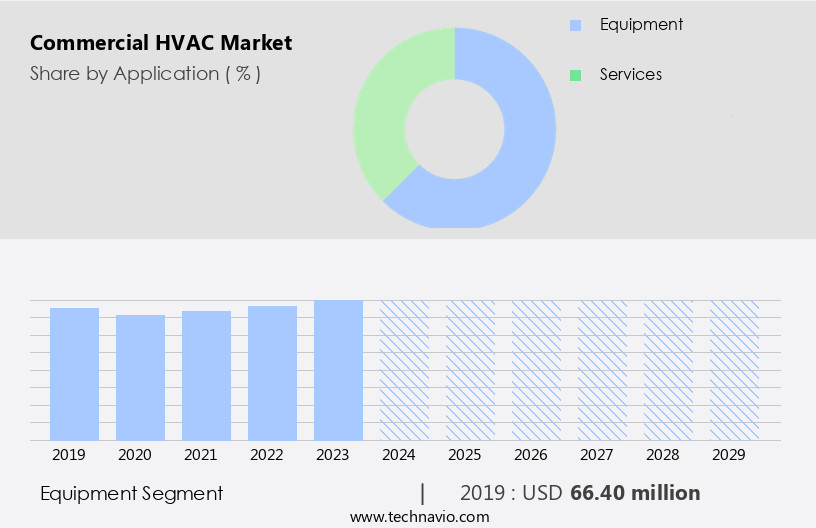
Commercial HVAC Market Size

Request Free Sample

The Equipment segment was valued at USD 66.40 million in 2019 and showed a gradual increase during the forecast period.

The Commercial HVAC Market is becoming more intelligent and sustainable with innovations across chiller plant and central plant systems. Solutions like air purification, UV lamps, and refrigerant recovery enhance indoor air quality and environmental safety. Advanced leak detection and HVAC controls improve operational reliability. Strategic energy audits, precise load calculations, and occupancy sensing optimize building efficiency. Adherence to building codes compliance is ensured by expert commissioning agents and skilled HVAC technicians. Routine preventative maintenance is key to system longevity. Technologies like digital twins and AI-driven optimization redefine performance. Flexible HVAC equipment financing, performance contracting, and renewable energy integration empower sustainability goals. Solutions such as district cooling, district heating, waste heat recovery, fluid coolers, and cloud-based monitoring platforms are leading the market transformation.

Regional Analysis

APAC is estimated to contribute 35% to the growth of the global market during the forecast period. Technavio's analysts have elaborately explained the regional trends and drivers that shape the market during the forecast period.
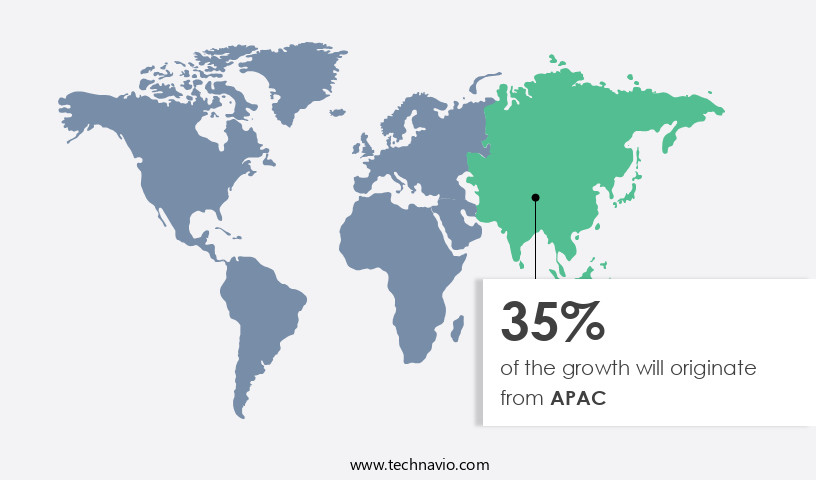
Commercial HVAC Market Share by Geography

 Request Free Sample

The market in APAC is experiencing significant growth, with this region being the highest contributor to the global market. The rise in infrastructure spending on commercial projects is driving the demand for advanced HVAC systems in APAC. The positive economic climate in emerging economies like India, China, Vietnam, and the Philippines is boosting investments in the commercial real estate sector, which in turn is fueling the demand for energy-efficient HVAC solutions. China, Japan, and India are the leading contributors to the market in APAC. The increasing number of smart city projects in Asia is further augmenting the demand for commercial buildings, leading to a higher adoption rate of HVAC systems.

Sustainable design, energy management, and performance optimization are key trends in the market, with an emphasis on energy efficiency, indoor air quality, and carbon footprint reduction. HVAC equipment, including rooftop units, split systems, and packaged units, is being integrated with IoT technology, building automation, and smart controls for enhanced energy savings and operational efficiency. Additionally, the adoption of cloud-based platforms, modeling and simulation, and data analytics is enabling better performance optimization and remote monitoring of HVAC systems. Variable speed drives, air filtration, and humidity sensors are also gaining popularity in the market for their energy-saving capabilities and contribution to improved indoor air quality.

The market in APAC is expected to continue its growth trajectory, driven by the increasing demand for sustainable and energy-efficient solutions in the commercial sector.

Market Dynamics

Our researchers analyzed the data with 2024 as the base year, along with the key drivers, trends, and challenges. A holistic analysis of drivers will help companies refine their marketing strategies to gain a competitive advantage.

What are the key market drivers leading to the rise in the adoption of Commercial HVAC Industry?

  • The increasing number of data centers serves as the primary catalyst for market growth. The market is experiencing significant growth due to the increasing demand for energy efficiency and green building practices in both residential and commercial buildings. Building automation systems, including smart controls, IoT integration, and humidity sensors, are becoming increasingly popular for optimizing energy usage and improving indoor air quality. Variable refrigerant flow (VRF) systems, which offer energy savings and zoned temperature control, are also gaining traction. Cooling towers and fan coil units are essential components of commercial HVAC systems, ensuring efficient cooling and heating. Building codes continue to evolve, mandating higher energy efficiency standards, which further drives market growth.
  • Builders of modern commercial buildings are prioritizing sustainable practices, leading to the adoption of energy-efficient HVAC systems and renewable energy sources. Demand response programs, which incentivize building owners to reduce energy usage during peak demand periods, are also contributing to market expansion. Moreover, the integration of advanced technologies, such as IoT and building automation, enables real-time monitoring and analysis of energy usage, leading to increased energy savings and operational efficiency. The focus on sustainability and reducing carbon footprints is also fueling market growth, as green building practices become more prevalent. Overall, the market is expected to continue its upward trajectory, driven by the need for energy efficiency, advanced technologies, and regulatory requirements.

What are the market trends shaping the Commercial HVAC Industry?

  • The emergence of smart and connected HVAC systems represents a significant market trend. Intelligent heating, ventilation, and air conditioning (HVAC) technologies are becoming increasingly popular due to their energy efficiency, convenience, and advanced features. The market is witnessing significant growth due to the increasing focus on reducing carbon footprint and enhancing indoor air quality. Advanced technologies such as air filtration systems, flow sensors, and HVAC software are gaining popularity. These technologies enable real-time monitoring and analysis of HVAC system performance, leading to energy savings and improved air quality. Packaged units and air handlers are being upgraded with smart features, allowing for demand response and integration with building management systems.
  • These thermostats can learn user preferences and adjust temperatures accordingly, leading to significant energy savings and improved comfort. Moreover, the use of carbon filters and UV germicidal irradiation systems in HVAC systems is on the rise. These technologies help in removing harmful pollutants and maintaining optimal indoor air quality. The market is experiencing dynamic growth, driven by the need for energy efficiency, improved indoor air quality, and advanced technologies. The focus on reducing carbon footprint and optimizing energy usage is leading to the adoption of smart and connected HVAC systems, which offer significant benefits in terms of cost savings, comfort, and health. This not only optimizes energy usage but also ensures better temperature control and comfort. Smart thermostats are becoming increasingly common, providing users with the ability to remotely manage their HVAC systems.

What challenges does the Commercial HVAC Industry face during its growth?

  • In the industry, intense market competition poses a significant challenge to growth. The market is characterized by intense competition due to the presence of numerous international and regional players. Established companies with strong brand value and extensive geographical reach coexist with emerging local players, particularly in Asia Pacific (APAC), who offer competitive pricing. The region's low manufacturing costs for raw materials and labor enable these companies to undercut international prices. Furthermore, APAC's well-established distribution channels contribute to the affordability of HVAC systems in the region. Market competition is primarily driven by the non-restrictive nature of regulations on HVAC systems in APAC.
  • Companies are investing in research and development to introduce innovative HVAC solutions that cater to these trends while maintaining energy efficiency and cost-effectiveness. The market is highly competitive, with established players and local competitors offering various solutions to meet the evolving demands of commercial buildings. The market's competitiveness is driven by factors such as pricing, technological innovation, and regulatory environments. As the market continues to grow, companies must stay informed about the latest trends and technologies to remain competitive. Sustainable design, energy management, and advanced technologies such as LEED certification, split systems, cloud-based platforms, variable speed drives, rooftop units, water systems, air purifiers, and UV air treatment are key trends in the market.

Exclusive Customer Landscape

The commercial HVAC market forecasting report includes the adoption lifecycle of the market, covering from the innovator's stage to the laggard's stage. It focuses on adoption rates in different regions based on penetration. Furthermore, the commercial HVAC market report also includes key purchase criteria and drivers of price sensitivity to help companies evaluate and develop their market growth analysis strategies.
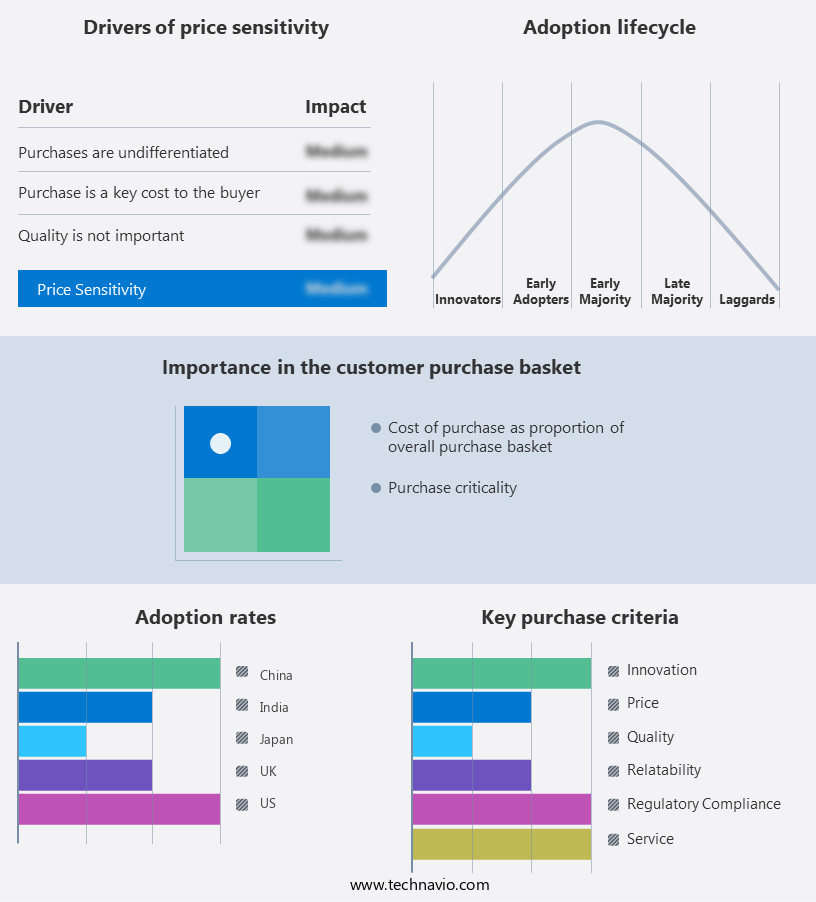
Commercial HVAC Market Share by Geography

 Customer Landscape

Key Companies & Market Insights

Companies are implementing various strategies, such as strategic alliances, commercial HVAC market forecast, partnerships, mergers and acquisitions, geographical expansion, and product/service launches, to enhance their presence in the industry.

Arkema - The company specializes in providing commercial HVAC solutions and offers advanced refrigerant technologies, with a primary focus on Forane gases.

The industry research and growth report includes detailed analyses of the competitive landscape of the market and information about key companies, including:

  • Arkema
  • Carrier Global Corp.
  • Daikin Industries Ltd.
  • Danfoss AS
  • Emerson Electric Co.
  • Fujitsu Ltd.
  • Gree Electric Appliances Inc. of Zhuhai
  • Haier Smart Home Co. Ltd.
  • Honeywell International Inc.
  • Johnson Controls International Plc
  • Lennox International Inc.
  • LG Corp.
  • MIDEA Group Co. Ltd.
  • Mitsubishi Electric Corp.
  • Nortek
  • Panasonic Holdings Corp.
  • Rheem Manufacturing Co.
  • Robert Bosch GmbH
  • Samsung Electronics Co. Ltd.
  • Trane Technologies plc

Qualitative and quantitative analysis of companies has been conducted to help clients understand the wider business environment as well as the strengths and weaknesses of key industry players. Data is qualitatively analyzed to categorize companies as pure play, category-focused, industry-focused, and diversified; it is quantitatively analyzed to categorize companies as dominant, leading, strong, tentative, and weak.

Recent Development and News in Commercial HVAC Market

  • In February 2023, Carrier Global Corporation, a leading HVAC manufacturer, announced the launch of its new AquaEdge 19DV centrifugal chiller, featuring a digital intelligence platform that optimizes energy efficiency and reduces carbon emissions by up to 20% (Carrier, 2023).
  • In April 2024, Johnson Controls and Google entered into a strategic partnership to integrate Google's Building IoT platform with Johnson Controls' Metasys building management system, enabling real-time data analysis and predictive maintenance for commercial HVAC systems (Johnson Controls, 2024).
  • In June 2024, LG Electronics acquired Webgains, a digital marketing agency specializing in the HVAC sector, to expand its market reach and enhance its digital marketing capabilities (LG Electronics, 2024).

Research Analyst Overview

The market is experiencing significant shifts, driven by advancements in technology and evolving regulations. Indoor comfort remains a top priority for facility managers and building owners, leading to increased adoption of Air Handling Units (AHUs) equipped with remote diagnostics capabilities. Geothermal energy and solar thermal systems are gaining traction as sustainable alternatives to traditional HVAC systems, reducing building's carbon footprint and energy consumption. EPA regulations and Energy Star certifications continue to shape the market, pushing manufacturers to improve thermal comfort and refrigerant management. Mechanical engineers and HVAC contractors are integrating building automation systems to optimize ventilation rates, air velocity, and air pressure for optimal building performance monitoring. Ozone depletion concerns have led to the phase-out of certain refrigerants, necessitating refrigerant charge management. OSHA standards ensure occupant health and safety, while maintenance technicians implement measures to minimize global warming potential.

The Commercial HVAC Market is advancing through innovation in air conditioners and ventilation systems, offering higher efficiency and indoor comfort. Enhanced compressor technology, heat exchangers, and improved SEER rating, EER rating, and IPLV rating are driving energy performance. These refrigerants are optimized for cooling applications and find extensive use in various sectors, including automotive, food processing, commercial refrigeration, industrial refrigeration, chillers, and supermarkets. Modern HVAC design incorporates absorption chillers, watercooled chillers, and aircooled chillers for versatile applications. Features like heat recovery, optimized ventilation rate, and minimal pressure drop improve system efficiency. Reduced noise levels and smart control valves ensure quieter and more precise operation. BMS integration and cloud connectivity streamline monitoring and automation. Long-term value is maximized with service contracts, efficient parts distribution, targeted training programs, and thorough lifecycle cost analysis, making commercial HVAC a cornerstone of sustainable infrastructure.

Dive into Technavio's robust research methodology, blending expert interviews, extensive data synthesis, and validated models for unparalleled Commercial HVAC Market insights. See full methodology.

Market Scope

Report Coverage

Details

Page number

241

Base year

2024

Historic period

2019-2023

Forecast period

2025-2029

Growth momentum & CAGR

Accelerate at a CAGR of 4.7%

Market growth 2025-2029

USD 28.8 million

Market structure

Fragmented

YoY growth 2024-2025(%)

4.4

Key countries

China, US, Germany, Japan, France, Brazil, India, Canada, UK, and UAE

Competitive landscape

Leading Companies, Market Positioning of Companies, Competitive Strategies, and Industry Risks

Request Free Sample

What are the Key Data Covered in this Commercial HVAC Market Research and Growth Report?

  • CAGR of the Commercial HVAC industry during the forecast period
  • Detailed information on factors that will drive the growth and forecasting between 2025 and 2029
  • Precise estimation of the size of the market and its contribution of the industry in focus to the parent market
  • Accurate predictions about upcoming growth and trends and changes in consumer behaviour
  • Growth of the market across APAC, North America, Europe, South America, and Middle East and Africa
  • Thorough analysis of the market's competitive landscape and detailed information about companies
  • Comprehensive analysis of factors that will challenge the commercial HVAC market growth of industry companies

We can help! Our analysts can customize this commercial HVAC market research report to meet your requirements.

Get in touch

1 Executive Summary

  • 1.1 Market overview
    • Executive Summary - Chart on Market Overview
    • Executive Summary - Data Table on Market Overview
    • Executive Summary - Chart on Global Market Characteristics
    • Executive Summary - Chart on Market by Geography
    • Executive Summary - Chart on Market Segmentation by Application
    • Executive Summary - Chart on Market Segmentation by Type
    • Executive Summary - Chart on Market Segmentation by Technology
    • Executive Summary - Chart on Market Segmentation by Variant
    • Executive Summary - Chart on Incremental Growth
    • Executive Summary - Data Table on Incremental Growth
    • Executive Summary - Chart on Company Market Positioning

2 Technavio Analysis

  • 2.1 Analysis of price sensitivity, lifecycle, customer purchase basket, adoption rates, and purchase criteria
    • Analysis of price sensitivity, lifecycle, customer purchase basket, adoption rates, and purchase criteria
  • 2.2 Criticality of inputs and Factors of differentiation
    • Overview on criticality of inputs and factors of differentiation
  • 2.3 Factors of disruption
    • Overview on factors of disruption
  • 2.4 Impact of drivers and challenges
    • Impact of drivers and challenges in 2024 and 2029

3 Market Landscape

  • 3.1 Market ecosystem
    • Parent Market
    • Data Table on - Parent Market
  • 3.2 Market characteristics
    • Market characteristics analysis
  • 3.3 Value chain analysis
    • Value chain analysis

4 Market Sizing

  • 4.1 Market definition
    • Offerings of companies included in the market definition
  • 4.2 Market segment analysis
    • Market segments
  • 4.3 Market size 2024
    • 4.4 Market outlook: Forecast for 2024-2029
      • Chart on Global - Market size and forecast 2024-2029 ($ billion)
      • Data Table on Global - Market size and forecast 2024-2029 ($ billion)
      • Chart on Global Market: Year-over-year growth 2024-2029 (%)
      • Data Table on Global Market: Year-over-year growth 2024-2029 (%)

    5 Historic Market Size

    • 5.1 Global Commercial HVAC Market 2019 - 2023
      • Historic Market Size - Data Table on Global Commercial HVAC Market 2019 - 2023 ($ billion)
    • 5.2 Application segment analysis 2019 - 2023
      • Historic Market Size - Application Segment 2019 - 2023 ($ billion)
    • 5.3 Type segment analysis 2019 - 2023
      • Historic Market Size - Type Segment 2019 - 2023 ($ billion)
    • 5.4 Technology segment analysis 2019 - 2023
      • Historic Market Size - Technology Segment 2019 - 2023 ($ billion)
    • 5.5 Variant segment analysis 2019 - 2023
      • Historic Market Size - Variant Segment 2019 - 2023 ($ billion)
    • 5.6 Geography segment analysis 2019 - 2023
      • Historic Market Size - Geography Segment 2019 - 2023 ($ billion)
    • 5.7 Country segment analysis 2019 - 2023
      • Historic Market Size - Country Segment 2019 - 2023 ($ billion)

    6 Qualitative Analysis

    • 6.1 Impact of AI in global commercial HVAC market

      7 Five Forces Analysis

      • 7.1 Five forces summary
        • Five forces analysis - Comparison between 2024 and 2029
      • 7.2 Bargaining power of buyers
        • Bargaining power of buyers - Impact of key factors 2024 and 2029
      • 7.3 Bargaining power of suppliers
        • Bargaining power of suppliers - Impact of key factors in 2024 and 2029
      • 7.4 Threat of new entrants
        • Threat of new entrants - Impact of key factors in 2024 and 2029
      • 7.5 Threat of substitutes
        • Threat of substitutes - Impact of key factors in 2024 and 2029
      • 7.6 Threat of rivalry
        • Threat of rivalry - Impact of key factors in 2024 and 2029
      • 7.7 Market condition
        • Chart on Market condition - Five forces 2024 and 2029

      8 Market Segmentation by Application

      • 8.1 Market segments
        • Chart on Application - Market share 2024-2029 (%)
        • Data Table on Application - Market share 2024-2029 (%)
      • 8.2 Comparison by Application
        • Chart on Comparison by Application
        • Data Table on Comparison by Application
      • 8.3 Equipment - Market size and forecast 2024-2029
        • Chart on Equipment - Market size and forecast 2024-2029 ($ billion)
        • Data Table on Equipment - Market size and forecast 2024-2029 ($ billion)
        • Chart on Equipment - Year-over-year growth 2024-2029 (%)
        • Data Table on Equipment - Year-over-year growth 2024-2029 (%)
      • 8.4 Services - Market size and forecast 2024-2029
        • Chart on Services - Market size and forecast 2024-2029 ($ billion)
        • Data Table on Services - Market size and forecast 2024-2029 ($ billion)
        • Chart on Services - Year-over-year growth 2024-2029 (%)
        • Data Table on Services - Year-over-year growth 2024-2029 (%)
      • 8.5 Market opportunity by Application
        • Market opportunity by Application ($ billion)
        • Data Table on Market opportunity by Application ($ billion)

      9 Market Segmentation by Type

      • 9.1 Market segments
        • Chart on Type - Market share 2024-2029 (%)
        • Data Table on Type - Market share 2024-2029 (%)
      • 9.2 Comparison by Type
        • Chart on Comparison by Type
        • Data Table on Comparison by Type
      • 9.3 Heat pump - Market size and forecast 2024-2029
        • Chart on Heat pump - Market size and forecast 2024-2029 ($ billion)
        • Data Table on Heat pump - Market size and forecast 2024-2029 ($ billion)
        • Chart on Heat pump - Year-over-year growth 2024-2029 (%)
        • Data Table on Heat pump - Year-over-year growth 2024-2029 (%)
      • 9.4 Furnaces - Market size and forecast 2024-2029
        • Chart on Furnaces - Market size and forecast 2024-2029 ($ billion)
        • Data Table on Furnaces - Market size and forecast 2024-2029 ($ billion)
        • Chart on Furnaces - Year-over-year growth 2024-2029 (%)
        • Data Table on Furnaces - Year-over-year growth 2024-2029 (%)
      • 9.5 Boilers - Market size and forecast 2024-2029
        • Chart on Boilers - Market size and forecast 2024-2029 ($ billion)
        • Data Table on Boilers - Market size and forecast 2024-2029 ($ billion)
        • Chart on Boilers - Year-over-year growth 2024-2029 (%)
        • Data Table on Boilers - Year-over-year growth 2024-2029 (%)
      • 9.6 Unitary heaters - Market size and forecast 2024-2029
        • Chart on Unitary heaters - Market size and forecast 2024-2029 ($ billion)
        • Data Table on Unitary heaters - Market size and forecast 2024-2029 ($ billion)
        • Chart on Unitary heaters - Year-over-year growth 2024-2029 (%)
        • Data Table on Unitary heaters - Year-over-year growth 2024-2029 (%)
      • 9.7 Market opportunity by Type
        • Market opportunity by Type ($ billion)
        • Data Table on Market opportunity by Type ($ billion)

      10 Market Segmentation by Technology

      • 10.1 Market segments
        • Chart on Technology - Market share 2024-2029 (%)
        • Data Table on Technology - Market share 2024-2029 (%)
      • 10.2 Comparison by Technology
        • Chart on Comparison by Technology
        • Data Table on Comparison by Technology
      • 10.3 Conventional HVAC systems - Market size and forecast 2024-2029
        • Chart on Conventional HVAC systems - Market size and forecast 2024-2029 ($ billion)
        • Data Table on Conventional HVAC systems - Market size and forecast 2024-2029 ($ billion)
        • Chart on Conventional HVAC systems - Year-over-year growth 2024-2029 (%)
        • Data Table on Conventional HVAC systems - Year-over-year growth 2024-2029 (%)
      • 10.4 Smart HVAC systems - Market size and forecast 2024-2029
        • Chart on Smart HVAC systems - Market size and forecast 2024-2029 ($ billion)
        • Data Table on Smart HVAC systems - Market size and forecast 2024-2029 ($ billion)
        • Chart on Smart HVAC systems - Year-over-year growth 2024-2029 (%)
        • Data Table on Smart HVAC systems - Year-over-year growth 2024-2029 (%)
      • 10.5 Market opportunity by Technology
        • Market opportunity by Technology ($ billion)
        • Data Table on Market opportunity by Technology ($ billion)

      11 Market Segmentation by Variant

      • 11.1 Market segments
        • Chart on Variant - Market share 2024-2029 (%)
        • Data Table on Variant - Market share 2024-2029 (%)
      • 11.2 Comparison by Variant
        • Chart on Comparison by Variant
        • Data Table on Comparison by Variant
      • 11.3 Retrofit and replacement - Market size and forecast 2024-2029
        • Chart on Retrofit and replacement - Market size and forecast 2024-2029 ($ billion)
        • Data Table on Retrofit and replacement - Market size and forecast 2024-2029 ($ billion)
        • Chart on Retrofit and replacement - Year-over-year growth 2024-2029 (%)
        • Data Table on Retrofit and replacement - Year-over-year growth 2024-2029 (%)
      • 11.4 New installation - Market size and forecast 2024-2029
        • Chart on New installation - Market size and forecast 2024-2029 ($ billion)
        • Data Table on New installation - Market size and forecast 2024-2029 ($ billion)
        • Chart on New installation - Year-over-year growth 2024-2029 (%)
        • Data Table on New installation - Year-over-year growth 2024-2029 (%)
      • 11.5 Market opportunity by Variant
        • Market opportunity by Variant ($ billion)
        • Data Table on Market opportunity by Variant ($ billion)

      12 Customer Landscape

      • 12.1 Customer landscape overview
        • Analysis of price sensitivity, lifecycle, customer purchase basket, adoption rates, and purchase criteria

      13 Geographic Landscape

      • 13.1 Geographic segmentation
        • Chart on Market share by geography 2024-2029 (%)
        • Data Table on Market share by geography 2024-2029 (%)
      • 13.2 Geographic comparison
        • Chart on Geographic comparison
        • Data Table on Geographic comparison
      • 13.3 APAC - Market size and forecast 2024-2029
        • Chart on APAC - Market size and forecast 2024-2029 ($ billion)
        • Data Table on APAC - Market size and forecast 2024-2029 ($ billion)
        • Chart on APAC - Year-over-year growth 2024-2029 (%)
        • Data Table on APAC - Year-over-year growth 2024-2029 (%)
      • 13.4 North America - Market size and forecast 2024-2029
        • Chart on North America - Market size and forecast 2024-2029 ($ billion)
        • Data Table on North America - Market size and forecast 2024-2029 ($ billion)
        • Chart on North America - Year-over-year growth 2024-2029 (%)
        • Data Table on North America - Year-over-year growth 2024-2029 (%)
      • 13.5 Europe - Market size and forecast 2024-2029
        • Chart on Europe - Market size and forecast 2024-2029 ($ billion)
        • Data Table on Europe - Market size and forecast 2024-2029 ($ billion)
        • Chart on Europe - Year-over-year growth 2024-2029 (%)
        • Data Table on Europe - Year-over-year growth 2024-2029 (%)
      • 13.6 South America - Market size and forecast 2024-2029
        • Chart on South America - Market size and forecast 2024-2029 ($ billion)
        • Data Table on South America - Market size and forecast 2024-2029 ($ billion)
        • Chart on South America - Year-over-year growth 2024-2029 (%)
        • Data Table on South America - Year-over-year growth 2024-2029 (%)
      • 13.7 Middle East and Africa - Market size and forecast 2024-2029
        • Chart on Middle East and Africa - Market size and forecast 2024-2029 ($ billion)
        • Data Table on Middle East and Africa - Market size and forecast 2024-2029 ($ billion)
        • Chart on Middle East and Africa - Year-over-year growth 2024-2029 (%)
        • Data Table on Middle East and Africa - Year-over-year growth 2024-2029 (%)
      • 13.8 China - Market size and forecast 2024-2029
        • Chart on China - Market size and forecast 2024-2029 ($ billion)
        • Data Table on China - Market size and forecast 2024-2029 ($ billion)
        • Chart on China - Year-over-year growth 2024-2029 (%)
        • Data Table on China - Year-over-year growth 2024-2029 (%)
      • 13.9 US - Market size and forecast 2024-2029
        • Chart on US - Market size and forecast 2024-2029 ($ billion)
        • Data Table on US - Market size and forecast 2024-2029 ($ billion)
        • Chart on US - Year-over-year growth 2024-2029 (%)
        • Data Table on US - Year-over-year growth 2024-2029 (%)
      • 13.10 Germany - Market size and forecast 2024-2029
        • Chart on Germany - Market size and forecast 2024-2029 ($ billion)
        • Data Table on Germany - Market size and forecast 2024-2029 ($ billion)
        • Chart on Germany - Year-over-year growth 2024-2029 (%)
        • Data Table on Germany - Year-over-year growth 2024-2029 (%)
      • 13.11 Japan - Market size and forecast 2024-2029
        • Chart on Japan - Market size and forecast 2024-2029 ($ billion)
        • Data Table on Japan - Market size and forecast 2024-2029 ($ billion)
        • Chart on Japan - Year-over-year growth 2024-2029 (%)
        • Data Table on Japan - Year-over-year growth 2024-2029 (%)
      • 13.12 France - Market size and forecast 2024-2029
        • Chart on France - Market size and forecast 2024-2029 ($ billion)
        • Data Table on France - Market size and forecast 2024-2029 ($ billion)
        • Chart on France - Year-over-year growth 2024-2029 (%)
        • Data Table on France - Year-over-year growth 2024-2029 (%)
      • 13.13 Brazil - Market size and forecast 2024-2029
        • Chart on Brazil - Market size and forecast 2024-2029 ($ billion)
        • Data Table on Brazil - Market size and forecast 2024-2029 ($ billion)
        • Chart on Brazil - Year-over-year growth 2024-2029 (%)
        • Data Table on Brazil - Year-over-year growth 2024-2029 (%)
      • 13.14 India - Market size and forecast 2024-2029
        • Chart on India - Market size and forecast 2024-2029 ($ billion)
        • Data Table on India - Market size and forecast 2024-2029 ($ billion)
        • Chart on India - Year-over-year growth 2024-2029 (%)
        • Data Table on India - Year-over-year growth 2024-2029 (%)
      • 13.15 Canada - Market size and forecast 2024-2029
        • Chart on Canada - Market size and forecast 2024-2029 ($ billion)
        • Data Table on Canada - Market size and forecast 2024-2029 ($ billion)
        • Chart on Canada - Year-over-year growth 2024-2029 (%)
        • Data Table on Canada - Year-over-year growth 2024-2029 (%)
      • 13.16 UK - Market size and forecast 2024-2029
        • Chart on UK - Market size and forecast 2024-2029 ($ billion)
        • Data Table on UK - Market size and forecast 2024-2029 ($ billion)
        • Chart on UK - Year-over-year growth 2024-2029 (%)
        • Data Table on UK - Year-over-year growth 2024-2029 (%)
      • 13.17 UAE - Market size and forecast 2024-2029
        • Chart on UAE - Market size and forecast 2024-2029 ($ billion)
        • Data Table on UAE - Market size and forecast 2024-2029 ($ billion)
        • Chart on UAE - Year-over-year growth 2024-2029 (%)
        • Data Table on UAE - Year-over-year growth 2024-2029 (%)
      • 13.18 Market opportunity by geography
        • Market opportunity by geography ($ billion)
        • Data Tables on Market opportunity by geography ($ billion)

      14 Drivers, Challenges, and Opportunity/Restraints

      • 14.1 Market drivers
        • 14.2 Market challenges
          • 14.3 Impact of drivers and challenges
            • Impact of drivers and challenges in 2024 and 2029
          • 14.4 Market opportunities/restraints

            15 Competitive Landscape

            • 15.1 Overview
              • 15.2 Competitive Landscape
                • Overview on criticality of inputs and factors of differentiation
              • 15.3 Landscape disruption
                • Overview on factors of disruption
              • 15.4 Industry risks
                • Impact of key risks on business

              16 Competitive Analysis

              • 16.1 Companies profiled
                • Companies covered
              • 16.2 Company ranking index
                • Company ranking index
              • 16.3 Market positioning of companies
                • Matrix on companies position and classification
              • 16.4 Arkema
                • Arkema - Overview
                • Arkema - Business segments
                • Arkema - Key news
                • Arkema - Key offerings
                • Arkema - Segment focus
                • SWOT
              • 16.5 Carrier Global Corp.
                • Carrier Global Corp. - Overview
                • Carrier Global Corp. - Business segments
                • Carrier Global Corp. - Key news
                • Carrier Global Corp. - Key offerings
                • Carrier Global Corp. - Segment focus
                • SWOT
              • 16.6 Daikin Industries Ltd.
                • Daikin Industries Ltd. - Overview
                • Daikin Industries Ltd. - Business segments
                • Daikin Industries Ltd. - Key news
                • Daikin Industries Ltd. - Key offerings
                • Daikin Industries Ltd. - Segment focus
                • SWOT
              • 16.7 Danfoss AS
                • Danfoss AS - Overview
                • Danfoss AS - Product / Service
                • Danfoss AS - Key offerings
                • SWOT
              • 16.8 Emerson Electric Co.
                • Emerson Electric Co. - Overview
                • Emerson Electric Co. - Business segments
                • Emerson Electric Co. - Key news
                • Emerson Electric Co. - Key offerings
                • Emerson Electric Co. - Segment focus
                • SWOT
              • 16.9 Fujitsu Ltd.
                • Fujitsu Ltd. - Overview
                • Fujitsu Ltd. - Business segments
                • Fujitsu Ltd. - Key news
                • Fujitsu Ltd. - Key offerings
                • Fujitsu Ltd. - Segment focus
                • SWOT
              • 16.10 Haier Smart Home Co. Ltd.
                • Haier Smart Home Co. Ltd. - Overview
                • Haier Smart Home Co. Ltd. - Business segments
                • Haier Smart Home Co. Ltd. - Key offerings
                • Haier Smart Home Co. Ltd. - Segment focus
                • SWOT
              • 16.11 Johnson Controls International Plc
                • Johnson Controls International Plc - Overview
                • Johnson Controls International Plc - Business segments
                • Johnson Controls International Plc - Key news
                • Johnson Controls International Plc - Key offerings
                • Johnson Controls International Plc - Segment focus
                • SWOT
              • 16.12 Lennox International Inc.
                • Lennox International Inc. - Overview
                • Lennox International Inc. - Business segments
                • Lennox International Inc. - Key news
                • Lennox International Inc. - Key offerings
                • Lennox International Inc. - Segment focus
                • SWOT
              • 16.13 LG Corp.
                • LG Corp. - Overview
                • LG Corp. - Product / Service
                • LG Corp. - Key offerings
                • SWOT
              • 16.14 MIDEA Group Co. Ltd.
                • MIDEA Group Co. Ltd. - Overview
                • MIDEA Group Co. Ltd. - Product / Service
                • MIDEA Group Co. Ltd. - Key news
                • MIDEA Group Co. Ltd. - Key offerings
                • SWOT
              • 16.15 Panasonic Holdings Corp.
                • Panasonic Holdings Corp. - Overview
                • Panasonic Holdings Corp. - Business segments
                • Panasonic Holdings Corp. - Key news
                • Panasonic Holdings Corp. - Key offerings
                • Panasonic Holdings Corp. - Segment focus
                • SWOT
              • 16.16 Robert Bosch GmbH
                • Robert Bosch GmbH - Overview
                • Robert Bosch GmbH - Product / Service
                • Robert Bosch GmbH - Key news
                • Robert Bosch GmbH - Key offerings
                • SWOT
              • 16.17 Samsung Electronics Co. Ltd.
                • Samsung Electronics Co. Ltd. - Overview
                • Samsung Electronics Co. Ltd. - Business segments
                • Samsung Electronics Co. Ltd. - Key news
                • Samsung Electronics Co. Ltd. - Key offerings
                • Samsung Electronics Co. Ltd. - Segment focus
                • SWOT
              • 16.18 Trane Technologies plc
                • Trane Technologies plc - Overview
                • Trane Technologies plc - Business segments
                • Trane Technologies plc - Key news
                • Trane Technologies plc - Key offerings
                • Trane Technologies plc - Segment focus
                • SWOT

              17 Appendix

              • 17.1 Scope of the report
                • 17.2 Inclusions and exclusions checklist
                  • Inclusions checklist
                  • Exclusions checklist
                • 17.3 Currency conversion rates for US$
                  • Currency conversion rates for US$
                • 17.4 Research methodology
                  • Research methodology
                • 17.5 Data procurement
                  • Information sources
                • 17.6 Data validation
                  • Data validation
                • 17.7 Validation techniques employed for market sizing
                  • Validation techniques employed for market sizing
                • 17.8 Data synthesis
                  • Data synthesis
                • 17.9 360 degree market analysis
                  • 360 degree market analysis
                • 17.10 List of abbreviations
                  • List of abbreviations

                Research Methodology

                Technavio presents a detailed picture of the market by way of study, synthesis, and summation of data from multiple sources. The analysts have presented the various facets of the market with a particular focus on identifying the key industry influencers. The data thus presented is comprehensive, reliable, and the result of extensive research, both primary and secondary.

                INFORMATION SOURCES

                Primary sources

                • Manufacturers and suppliers
                • Channel partners
                • Industry experts
                • Strategic decision makers

                Secondary sources

                • Industry journals and periodicals
                • Government data
                • Financial reports of key industry players
                • Historical data
                • Press releases

                DATA ANALYSIS

                Data Synthesis

                • Collation of data
                • Estimation of key figures
                • Analysis of derived insights

                Data Validation

                • Triangulation with data models
                • Reference against proprietary databases
                • Corroboration with industry experts

                REPORT WRITING

                Qualitative

                • Market drivers
                • Market challenges
                • Market trends
                • Five forces analysis

                Quantitative

                • Market size and forecast
                • Market segmentation
                • Geographical insights
                • Competitive landscape

                Interested in this report?

                Get your sample now to see our research methodology and insights!

                Download Now

                Frequently Asked Questions

                Commercial Hvac market growth will increase by $ 28.8 bn during 2025-2029.

                The Commercial Hvac market is expected to grow at a CAGR of 4.7% during 2025-2029.

                Commercial Hvac market is segmented by Application( Equipment, Services) Type( Heat pump, Furnaces, Boilers, Unitary heaters, Middle East and Africa) Technology( Conventional HVAC systems, Smart HVAC systems, Europe, South America, Middle East and Africa)

                Arkema, Carrier Global Corp., Daikin Industries Ltd., Danfoss AS, Emerson Electric Co., Fujitsu Ltd., Gree Electric Appliances Inc. of Zhuhai, Haier Smart Home Co. Ltd., Honeywell International Inc., Johnson Controls International Plc, Lennox International Inc., LG Electronics Inc., MIDEA Group Co. Ltd., Mitsubishi Electric Corp., Nortek, Panasonic Holdings Corp., Rheem Manufacturing Co., Robert Bosch GmbH, Samsung Electronics Co. Ltd., Trane Technologies plc are a few of the key vendors in the Commercial Hvac market.

                APAC will register the highest growth rate of 35% among the other regions. Therefore, the Commercial Hvac market in APAC is expected to garner significant business opportunities for the vendors during the forecast period.

                China, US, Germany, Japan, France, Brazil, India, Canada, UK, UAE

                • Rising number of data centersThe significant rise in data generation across a variety of industries has led to a rise in demand for data servers and data centers. The massive infrastructure needed in data centers costs billions of dollars to construct because it needs to be as efficient as possible. Alphabet Inc. (Google) is the driving factor this market.
                • Amazon.com Inc. (Amazon) is the driving factor this market.
                • Microsoft Corp. (Microsoft) is the driving factor this market.
                • and other prominent internet companies have their own data centers spread across the world. Additionally is the driving factor this market.
                • smaller companies also have their own server and data center needs is the driving factor this market.
                • although there has been a shift in the last few years. The rise of cloud computing has led Amazon is the driving factor this market.
                • Microsoft is the driving factor this market.
                • and smaller companies to invest heavily in servers to allow businesses to get the infrastructure that they need without building a data center. A data center comprises highly sensitive electronic components wherein temperature is the driving factor this market.
                • humidity is the driving factor this market.
                • airflow is the driving factor this market.
                • and cleanliness should be maintained consistently to prevent the failure of critical equipment. HVAC systems form an indispensable part of a data center is the driving factor this market.
                • and cooling systems account for a significant part of the overall costs in data center operations. Too low cooling can result in a slowdown or the malfunctioning of servers is the driving factor this market.
                • while above-normal cooling can result in significantly higher operating costs. The increasing number of data centers across the globe has augmented the need to manage the significant amount of heat dissipated by the equipment and machines in data centers. Air quality also needs to be monitored because if even the smallest particles are not filtered out is the driving factor this market.
                • they can gradually build up inside servers and cause the equipment to malfunction. With the help of robust HVAC systems is the driving factor this market.
                • data center operators can ensure that server rooms are kept at the appropriate temperature and humidity levels. An increase in the rack level and the growth in the number of hyperscale data centers have rendered conventional cooling techniques ineffective is the driving factor this market.
                • thus giving rise to the need for precision air conditioners. North America and Europe continue to record growth with respect to the data center market. Asia is also recording strong growth in the number of data centers. This is because many companies in China is the driving factor this market.
                • India is the driving factor this market.
                • Vietnam is the driving factor this market.
                • the Philippines is the driving factor this market.
                • and Indonesia are establishing many data centers to make significant technological leaps and use the Internet. In Southeast Asia is the driving factor this market.
                • Singapore is the driving factor this market.
                • Indonesia is the driving factor this market.
                • and Malaysia will be the fastest-growing countries for the setting up of co-location data centers over the next five years. Furthermore is the driving factor this market.
                • government programs will drive the demand for data centers in APAC. Internet penetration worldwide has been rising primarily because of the high adoption of smartphones across the globe. The rise in IoT-connected devices is the driving factor this market.
                • the increasing use of smart devices (smartwatches and smart bands) is the driving factor this market.
                • and the high penetration of the Internet have increased the demand for data centers. The use of data analytics for analyzing machine and consumer data has prompted organizations to establish data centers. The increasing number of data centers and the need to optimize their energy use will require efficient HVAC systems. This will augment the demand for commercial HVAC systems is the driving factor this market.
                • which will drive the growth of the global commercial HVAC market during the forecast period. is the driving factor this market.

                The Commercial Hvac market vendors should focus on grabbing business opportunities from the Equipment segment as it accounted for the largest market share in the base year.