


Commercial Beverage Blender Market Size 2026-2030
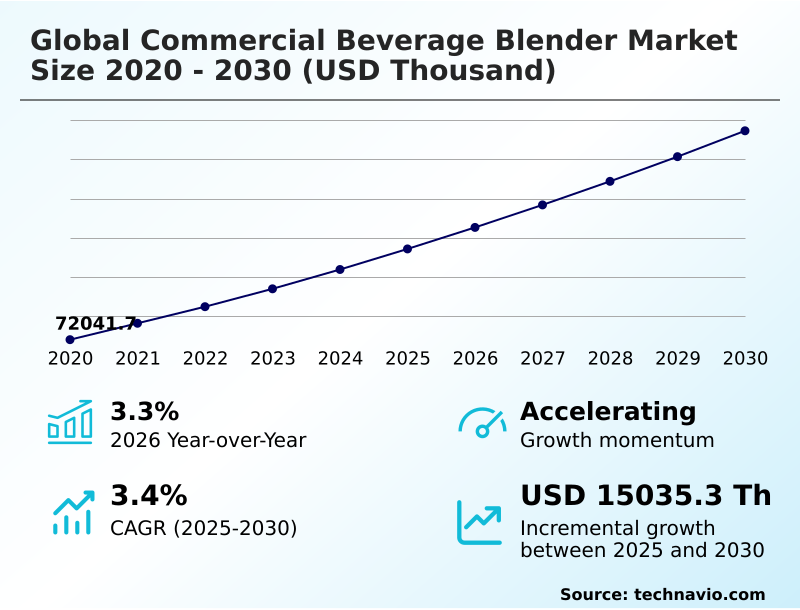
The commercial beverage blender market size is valued to increase by USD 15.04 million, at a CAGR of 3.4% from 2025 to 2030. Strategic pivot toward cold and customized beverage platforms will drive the commercial beverage blender market.
Major Market Trends & Insights
- North America dominated the market and accounted for a 32.6% growth during the forecast period.
- By End-user - JCP segment was valued at USD 37.22 million in 2024
- By Distribution Channel - Offline segment accounted for the largest market revenue share in 2024
Market Size & Forecast
- Market Opportunities:
- Market Future Opportunities: USD 15.04 million
- CAGR from 2025 to 2030 : 3.4%
Market Summary
- The commercial beverage blender market is undergoing a significant transformation, driven by the foodservice industry's pivot toward high-margin, complex cold beverages and the pressing need for labor automation. The modern blender is no longer a simple appliance but a critical component of operational throughput, with advanced features such as programmable logic controllers and high-torque blending capability.
- This evolution is a direct response to menu diversification, which now includes everything from functional smoothies with fibrous ingredients to texturally complex cold foams, requiring superior emulsification performance. As a result, operators are investing in heavy-duty culinary blenders that offer reliability and consistency.
- For instance, a quick-service restaurant chain seeking to reduce drive-thru service times might evaluate a fleet of smart blenders with automated shut-off and pre-set cycles.
- The decision involves balancing the substantial initial capital expenditure against the projected return on investment from increased transaction speed and reduced staff training, a calculation central to surviving in a competitive landscape where efficiency dictates profitability. This dynamic is pushing manufacturers to innovate in areas like motor torque at low speeds and acoustic engineering.
What will be the Size of the Commercial Beverage Blender Market during the forecast period?
Get Key Insights on Market Forecast (PDF) Request Free Sample
How is the Commercial Beverage Blender Market Segmented?
The commercial beverage blender industry research report provides comprehensive data (region-wise segment analysis), with forecasts and estimates in "USD thousand" for the period 2026-2030, as well as historical data from 2020-2024 for the following segments.
- End-user
- JCP
- Eateries and restaurants
- Others
- Distribution channel
- Offline
- Online
- Material
- Stainless-steel
- Plastic
- Glass
- Geography
- North America
- US
- Canada
- Mexico
- Europe
- Germany
- UK
- France
- APAC
- China
- Japan
- India
- South America
- Brazil
- Argentina
- Colombia
- Middle East and Africa
- South Africa
- Saudi Arabia
- UAE
- Rest of World (ROW)
- North America
By End-user Insights
The jcp segment is estimated to witness significant growth during the forecast period.
The JCP segment, including juice bars and coffee shops, is the most demanding, relying on high-torque blending and superior emulsification performance for complex fresh beverage offerings. As many operate in open layouts, quiet commercial blenders are essential.
The model requires equipment for high-viscosity drink processing and diverse frozen beverage equipment, making beverage texture diversification a key differentiator. Innovations in blade geometry, hardened steel blades, and BPA-free materials support the creation of grab-and-go formats.
Effective airflow design is crucial for motor longevity, while nutrient extraction capability meets the demand for functional beverages.
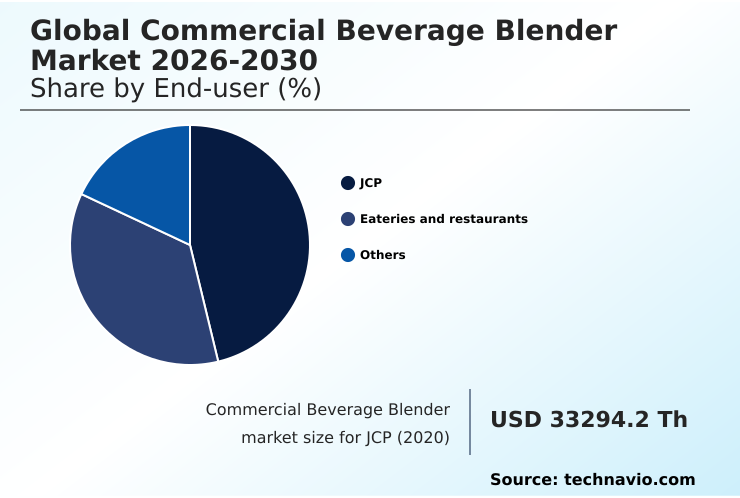
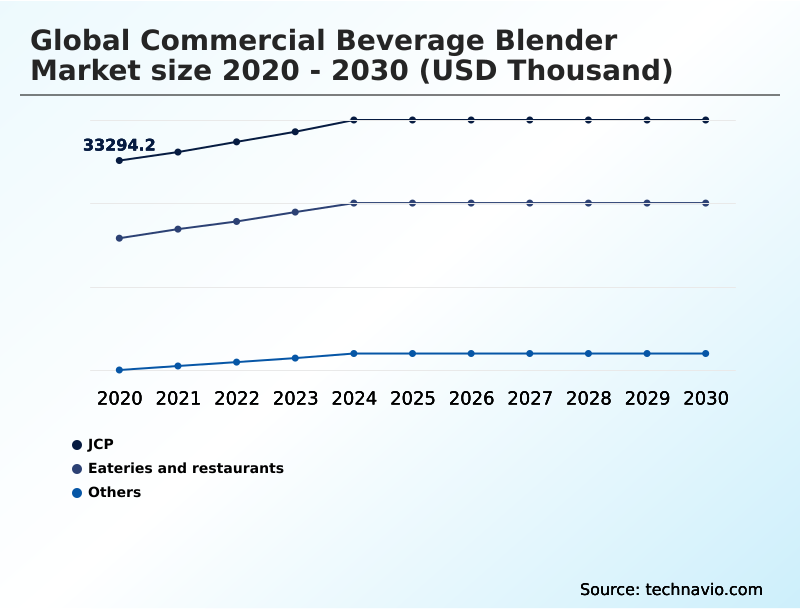
The JCP segment was valued at USD 37.22 million in 2024 and showed a gradual increase during the forecast period.
Regional Analysis
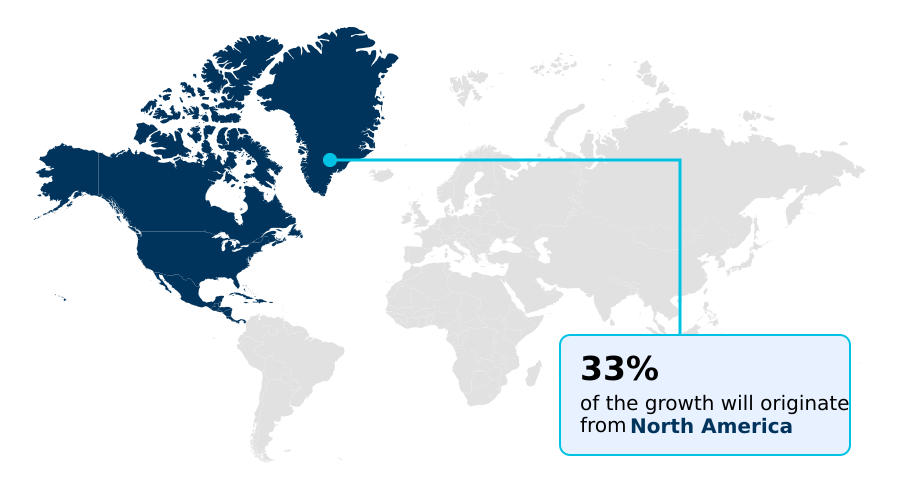
North America is estimated to contribute 32.6% to the growth of the global market during the forecast period.Technavio’s analysts have elaborately explained the regional trends and drivers that shape the market during the forecast period.
See How Commercial Beverage Blender Market Demand is Rising in North America Request Free Sample
The geographic landscape is diverse, with North America driving 32.6% of incremental growth through demand for speed and automation. Operators here prioritize features for smoothie bowl blenders and nutrient extraction blenders.
Europe focuses on acoustics and compliance, favoring culinary-grade machines with superior vortex dynamics. APAC serves as the volume engine, where demand for durable copolyester containers and polycarbonate jars is high.
Universally, blending cycle customization is key, reducing preparation times by up to 25%. High-impact polycarbonate and managing motor torque at low speeds to achieve cavitation prevention are critical for front-of-house blending solutions that meet strict hygiene standards.
Market Dynamics
Our researchers analyzed the data with 2025 as the base year, along with the key drivers, trends, and challenges. A holistic analysis of drivers will help companies refine their marketing strategies to gain a competitive advantage.
- Foodservice operators are increasingly strategic when selecting equipment, moving beyond basic specifications to address specific menu needs. The decision to invest in a commercial blender for cold foam versus a high-performance blender for smoothie bowls now involves a detailed analysis of blender jar geometry for thick mixtures.
- When comparing brushless and universal blender motors, businesses weigh the upfront cost against long-term energy savings and noise levels, a critical factor when reducing noise in front-of-house blenders. The search for the quietest blender for coffee shops often leads to units with a commercial blender with sound enclosure.
- For high-volume environments, finding the best blender for crushing ice and a durable blender for high-volume use is paramount. The rise of health-conscious consumers drives demand for a blender for functional nutrition drinks and a blender for plant-based protein shakes.
- Automation is a key value proposition; an automated blender for labor savings with walk-away operation in commercial blenders can reduce training times by half compared to manual models. Chains are implementing IoT-enabled blenders for chain restaurants with a blender with pre-programmed blend cycles for consistency. The choice between stainless steel vs polycarbonate blender jars comes down to durability versus visibility.
- Success requires a focus on blender maintenance for foodservice and optimizing workflow with smart blenders, particularly for a blender for heavy-duty culinary tasks that relies on robust thermal protection in commercial blenders.
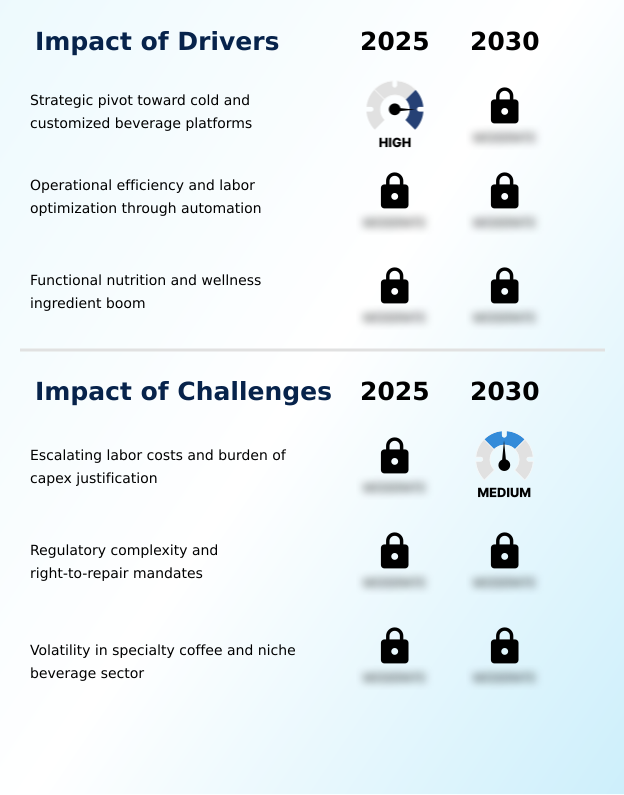
What are the key market drivers leading to the rise in the adoption of Commercial Beverage Blender Industry?
- A strategic pivot by foodservice operators toward cold and customized beverage platforms is the key driver of market growth.
- The shift toward cold beverages, now over 60% of sales in leading chains, is a critical driver demanding superior ice crushing capability and rapid processing speeds.
- To manage costs, operators are investing in labor optimization blenders that offer walk-away blending capability through sensory feedback systems and variable speed control, increasing throughput by 15% during peak hours.
- The growth of beverage-led concepts requires equipment that can handle high-viscosity processing and has good thermal management. This trend, pushing drive-thru blending efficiency and specialized tamper tool design, validates the strong return on investment from advanced commercial blending stations.
What are the market trends shaping the Commercial Beverage Blender Industry?
- The market is undergoing a significant transformation centered on acoustic engineering. This evolution in front-of-house optimization focuses on reducing operational noise to enhance the customer experience.
- A primary trend is the focus on front-of-house optimization, driven by the prevalence of open-kitchen layouts. Manufacturers are prioritizing acoustic engineering for a low-decibel output, with sound dampening enclosures reducing noise by up to 10 decibels. The adoption of brushless motor technology and floating motor mounts supports these stealth blending solutions.
- Concurrently, workflow automation is critical, with programmable logic controllers ensuring recipe consistency with less than 2% variance. This evolution toward smart blender technology features automated shut-off and integrates equipment into a connected kitchen ecosystem for automated beverage production in high-velocity workflows.
What challenges does the Commercial Beverage Blender Industry face during its growth?
- Escalating labor costs and the increasing burden of capital expenditure justification present a key challenge affecting the industry's growth trajectory.
- A significant challenge is economic pressure from labor costs, compelling over 40% of operators to extend the replacement cycle. This lengthens the total cost of ownership calculation for premium equipment. New repair mandates, increasing compliance costs by 5-8%, demand a focus on modular architecture and drive socket durability.
- This forces a redesign of units with waterproof control panels and accessible universal motor design, impacting both industrial-grade components and liquid preparation technology. Effective after-sales maintenance is now essential for front counter equipment and back-of-house operations, especially for heavy-duty culinary blending.
Exclusive Technavio Analysis on Customer Landscape
The commercial beverage blender market forecasting report includes the adoption lifecycle of the market, covering from the innovator’s stage to the laggard’s stage. It focuses on adoption rates in different regions based on penetration. Furthermore, the commercial beverage blender market report also includes key purchase criteria and drivers of price sensitivity to help companies evaluate and develop their market growth analysis strategies.
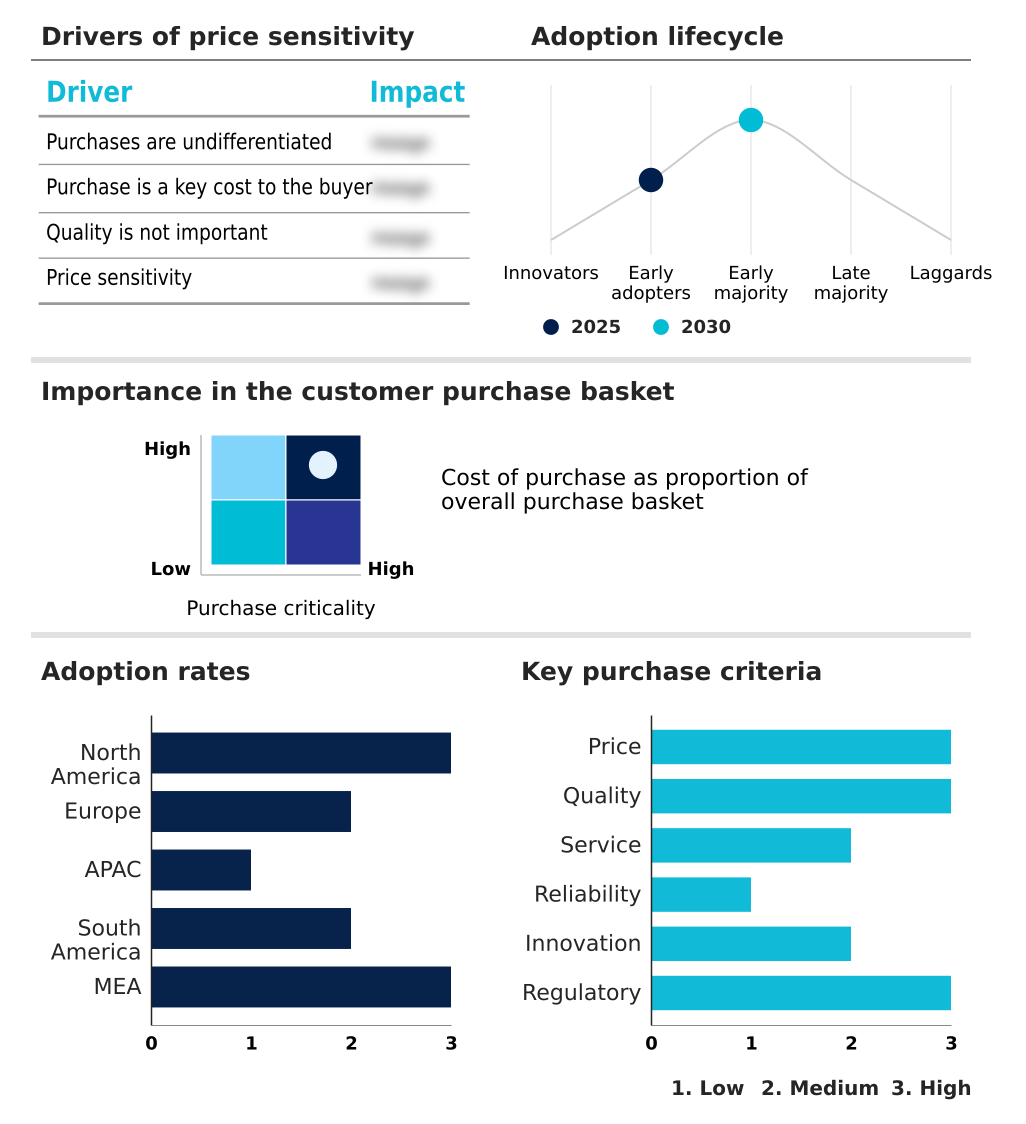
Customer Landscape of Commercial Beverage Blender Industry
Competitive Landscape
Companies are implementing various strategies, such as strategic alliances, commercial beverage blender market forecast, partnerships, mergers and acquisitions, geographical expansion, and product/service launches, to enhance their presence in the industry.
bianco di puro GmbH and Co. KG - Key offerings consist of high-performance commercial beverage blenders engineered for durability and speed, targeting the rigorous demands of professional foodservice environments.
The industry research and growth report includes detailed analyses of the competitive landscape of the market and information about key companies, including:
- bianco di puro GmbH and Co. KG
- Blendtec Inc.
- Breville Group Limited.
- Brew Driver
- Electrolux Professional AB
- Hamilton Beach Brands Inc.
- Kenwood Ltd.
- KitchenAid
- Koninklijke Philips NV
- Omcan Inc.
- Optimum Appliances
- Optimum Appliances Pty Ltd.
- ROBOT COUPE SNC.
- Sammic SL
- SANTOS SAS
- Skyfood Equipment LLC
- Smeg S.p.a.
- Stoelting Foodservice Equipment
- Vita Mix Corp.
- Waring Commercial
Qualitative and quantitative analysis of companies has been conducted to help clients understand the wider business environment as well as the strengths and weaknesses of key industry players. Data is qualitatively analyzed to categorize companies as pure play, category-focused, industry-focused, and diversified; it is quantitatively analyzed to categorize companies as dominant, leading, strong, tentative, and weak.
Recent Development and News in Commercial beverage blender market
- In August 2024, Dutch Bros Inc. confirmed an aggressive expansion strategy, targeting nearly one thousand locations by year-end, driving demand for heavy-duty blenders for its signature Freeze beverages.
- In October 2024, Smoothie King introduced a specialized menu for customers on GLP-1 medications, requiring blenders capable of processing high-protein, nutrient-dense ingredients.
- In January 2025, Arcos Dorados, the world's largest McDonald's franchisee, announced a capital investment plan of approximately $350 for the year, with a significant portion allocated to modernizing restaurant units and enhancing beverage capabilities.
- In February 2025, at The NAFEM Show in Atlanta, Hamilton Beach Commercial showcased its new Compact Big Rig immersion blender, emphasizing versatility and hygiene with a detachable shaft for simplified cleaning.
Dive into Technavio’s robust research methodology, blending expert interviews, extensive data synthesis, and validated models for unparalleled Commercial Beverage Blender Market insights. See full methodology.
| Market Scope | |
|---|---|
| Page number | 291 |
| Base year | 2025 |
| Historic period | 2020-2024 |
| Forecast period | 2026-2030 |
| Growth momentum & CAGR | Accelerate at a CAGR of 3.4% |
| Market growth 2026-2030 | USD 15035.3 thousand |
| Market structure | Fragmented |
| YoY growth 2025-2026(%) | 3.3% |
| Key countries | US, Canada, Mexico, Germany, UK, France, Italy, Spain, The Netherlands, China, Japan, India, South Korea, Australia, Indonesia, Brazil, Argentina, Colombia, South Africa, Saudi Arabia, UAE, Egypt and Turkey |
| Competitive landscape | Leading Companies, Market Positioning of Companies, Competitive Strategies, and Industry Risks |
Research Analyst Overview
- The commercial beverage blender market is defined by a push toward integrating advanced technology to solve core operational challenges in foodservice. Innovations in brushless motor technology and high-torque blending are no longer just for performance but are integral to thermal management and equipment longevity.
- A key trend is the adoption of programmable logic controllers, enabling blending cycle customization across franchise networks, a boardroom-level decision to ensure brand consistency. This allows for precise control over emulsification performance and vortex dynamics, essential for high-viscosity processing. The use of durable materials like hardened steel blades, high-impact polycarbonate, and advanced copolyester containers improves drive socket durability.
- With sensory feedback systems and automated shut-off features, chains have achieved a 30% reduction in processing time. This evolution demands sophisticated blade geometry, acoustic engineering with sound dampening enclosures, floating motor mounts, and effective airflow design for cavitation prevention and managing motor torque at low speeds.
- The focus on modular architecture and industrial-grade components like waterproof control panels and polycarbonate jars addresses the need for both heavy-duty culinary blending and nutrient extraction capability.
What are the Key Data Covered in this Commercial Beverage Blender Market Research and Growth Report?
-
What is the expected growth of the Commercial Beverage Blender Market between 2026 and 2030?
-
USD 15.04 million, at a CAGR of 3.4%
-
-
What segmentation does the market report cover?
-
The report is segmented by End-user (JCP, Eateries and restaurants, and Others), Distribution Channel (Offline, and Online), Material (Stainless-steel, Plastic, and Glass) and Geography (North America, Europe, APAC, South America, Middle East and Africa)
-
-
Which regions are analyzed in the report?
-
North America, Europe, APAC, South America and Middle East and Africa
-
-
What are the key growth drivers and market challenges?
-
Strategic pivot toward cold and customized beverage platforms, Escalating labor costs and burden of capex justification
-
-
Who are the major players in the Commercial Beverage Blender Market?
-
bianco di puro GmbH and Co. KG, Blendtec Inc., Breville Group Limited., Brew Driver, Electrolux Professional AB, Hamilton Beach Brands Inc., Kenwood Ltd., KitchenAid, Koninklijke Philips NV, Omcan Inc., Optimum Appliances, Optimum Appliances Pty Ltd., ROBOT COUPE SNC., Sammic SL, SANTOS SAS, Skyfood Equipment LLC, Smeg S.p.a., Stoelting Foodservice Equipment, Vita Mix Corp. and Waring Commercial
-
Market Research Insights
- The market is evolving beyond simple blending, with a focus on total cost of ownership and labor optimization blenders. The adoption of walk-away blending capability, which improves staff efficiency by over 30%, is a key trend in automated beverage production.
- Quiet commercial blenders, leveraging stealth blending solutions, can reduce ambient noise levels by 5-10 decibels compared to legacy models, making them ideal for front-of-house blending solutions and open-kitchen layouts. The growth of beverage-led concepts and fresh beverage offerings in grab-and-go formats drives demand for heavy-duty culinary blenders and culinary-grade machines capable of high-viscosity drink processing.
- Operators now demand robust after-sales maintenance to manage the replacement cycle and secure return on investment from commercial blending stations and frozen beverage equipment, especially in high-velocity workflows where hygiene standards are critical.
We can help! Our analysts can customize this commercial beverage blender market research report to meet your requirements.
 RIA -
RIA -