


Cloud Machine Learning Market Analysis, Size, and Forecast 2025-2029: North America (US, Canada, and Mexico), APAC (China, Japan, and India), Europe (Germany, UK, and France), South America (Brazil, Argentina, and Colombia), Middle East and Africa (UAE, Saudi Arabia, and South Africa), and Rest of World (ROW)

Cloud Machine Learning Market Analysis, Size, and Forecast 2025-2029:
North America (US, Canada, and Mexico), APAC (China, Japan, and India), Europe (Germany, UK, and France), South America (Brazil, Argentina, and Colombia), Middle East and Africa (UAE, Saudi Arabia, and South Africa), and Rest of World (ROW)

Published: Dec 2025 312 Pages SKU: IRTNTR81084

Market Overview at a Glance

$51.44 B
Market Opportunity
36.7%
CAGR 2024 - 2029
37.7%
North America Growth
$7.59 B
Solutions segment 2023

Cloud Machine Learning Market Size 2025-2029

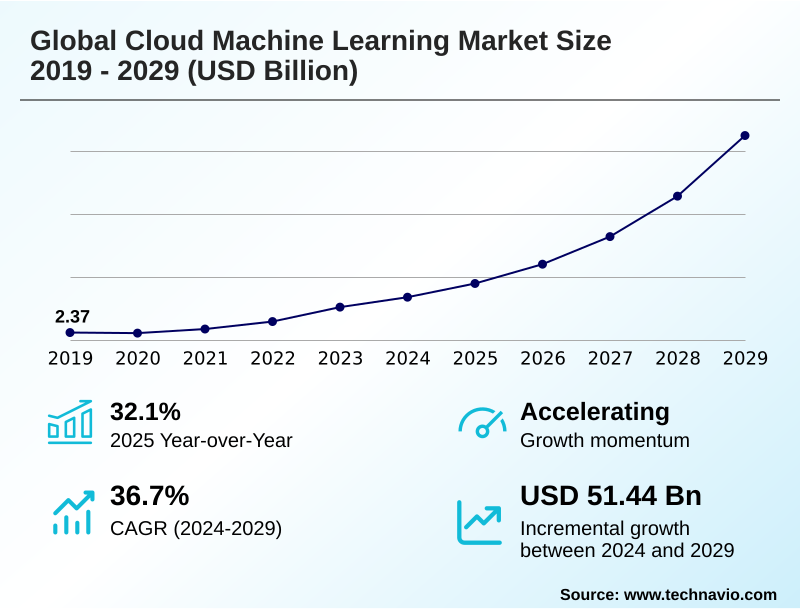
The cloud machine learning market size is valued to increase by USD 51.44 billion, at a CAGR of 36.7% from 2024 to 2029. Escalating volume and complexity of data will drive the cloud machine learning market.

Major Market Trends & Insights

  • North America dominated the market and accounted for a 37.7% growth during the forecast period.
  • By Component - Solutions segment was valued at USD 7.59 billion in 2023
  • By Deployment - Public cloud segment accounted for the largest market revenue share in 2023

Market Size & Forecast

  • Market Opportunities: USD 62.69 billion
  • Market Future Opportunities: USD 51.44 billion
  • CAGR from 2024 to 2029 : 36.7%

Market Summary

  • The cloud machine learning market is undergoing a significant transformation, driven by the democratization of advanced AI capabilities. Organizations are increasingly shifting from capital-intensive on-premises infrastructures to scalable, flexible cloud environments to harness the power of big data technologies. This transition is fueled by the escalating demand for data-driven decisions across all sectors.
  • Key trends shaping the landscape include the pervasive integration of generative artificial intelligence, the operational discipline of machine learning operations (MLOps), and the convergence of cloud with edge computing for low-latency applications. For example, in the manufacturing sector, businesses utilize cloud platforms to analyze real-time sensor data for predictive maintenance, forecasting equipment failures to minimize downtime and optimize operational efficiency.
  • However, realizing the full potential of these technologies is contingent on navigating challenges such as a persistent digital skills gap, the complexities of data governance, and the need to demonstrate a clear return on investment from escalating cloud infrastructure expenses.
  • The market's trajectory points toward more accessible, automated, and integrated AI solutions that are embedded into core business processes, enabling a new wave of innovation and competitive advantage.

What will be the Size of the Cloud Machine Learning Market during the forecast period?
Get Key Insights on Market Forecast (PDF) Request Free Sample

How is the Cloud Machine Learning Market Segmented?

The cloud machine learning industry research report provides comprehensive data (region-wise segment analysis), with forecasts and estimates in "USD million" for the period 2025-2029, as well as historical data from 2019-2023 for the following segments.

  • Component
    • Solutions
    • Services
  • Deployment
    • Public cloud
    • Hybrid cloud
    • Private cloud
  • Application
    • Marketing and advertising analytics
    • Fraud detection and risk management
    • Predictive maintenance and demand forecasting
    • Others
  • Geography
    • North America
      • US
      • Canada
      • Mexico
    • APAC
      • China
      • Japan
      • India
    • Europe
      • Germany
      • UK
      • France
    • South America
      • Brazil
      • Argentina
      • Colombia
    • Middle East and Africa
      • UAE
      • Saudi Arabia
      • South Africa
    • Rest of World (ROW)

By Component Insights

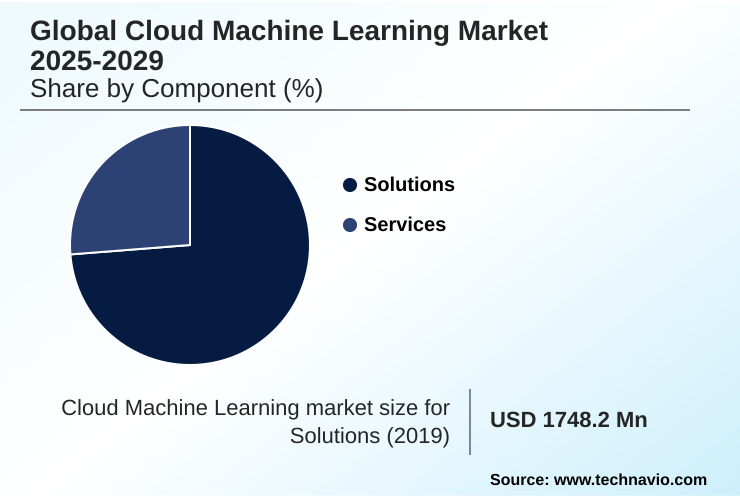
The solutions segment is estimated to witness significant growth during the forecast period.

The solutions segment is defined by software platforms and tools providing the foundational infrastructure for developing and managing machine learning models.

A key component involves Machine Learning as a Service (MLaaS) offerings, which feature tools for data preprocessing and model deployment, making advanced AI-powered applications accessible through a pay-as-you-go model.

Specialized platforms for machine learning operations (MLOps) are also critical, focusing on model management and the entire lifecycle to ensure scalability and governance.

The rise of automated machine learning, or AutoML, which can accelerate development cycles by up to 30%, further democratizes access.

These solutions increasingly incorporate generative artificial intelligence, edge computing, and capabilities for natural language processing and computer vision, enabling more sophisticated and intelligent applications.
Request Free Sample

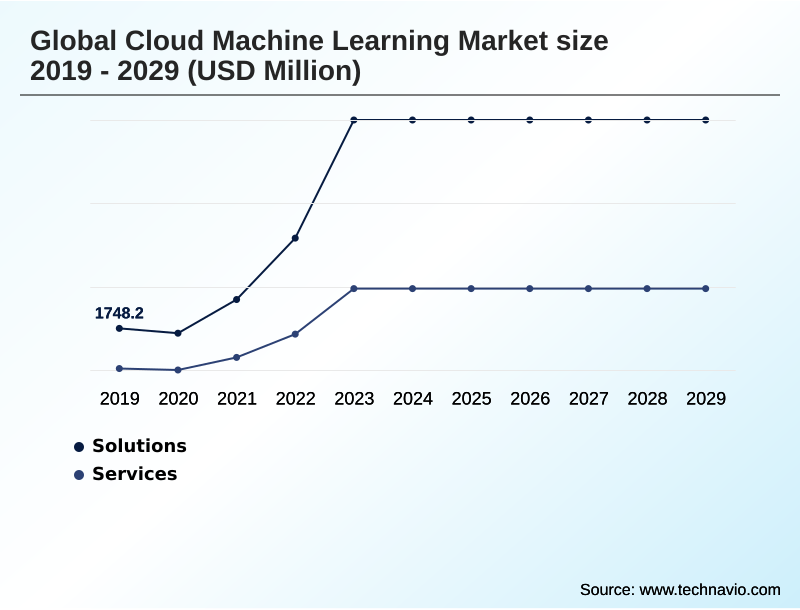
The Solutions segment was valued at USD 7.59 billion in 2023 and showed a gradual increase during the forecast period.
Request Free Sample

Regional Analysis

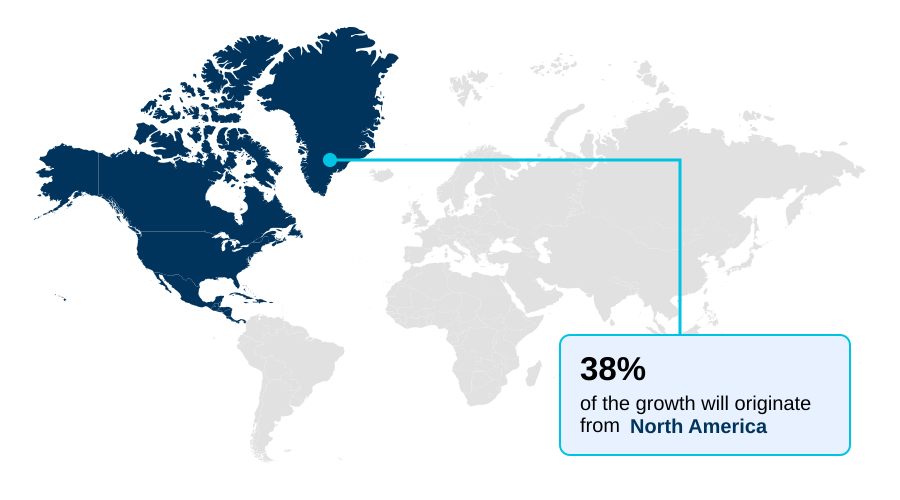
North America is estimated to contribute 37.7% to the growth of the global market during the forecast period.Technavio’s analysts have elaborately explained the regional trends and drivers that shape the market during the forecast period.
See How Cloud Machine Learning Market Demand is Rising in North America Request Free Sample

North America leads the global cloud machine learning market, commanding over 32% of the market share, driven by high adoption rates and the presence of major technology providers.

The region's focus on AI-first strategies and high-performance computing fosters innovation across finance, healthcare, and retail. Meanwhile, APAC is the fastest-growing region, fueled by digital transformation and government initiatives.

The expansion of cloud infrastructure is critical, with investments aimed at reducing latency and complying with data sovereignty laws.

The convergence with edge computing is creating new opportunities, with thick edge locations enabling real-time processing that can improve equipment runtime by 10%.

Across regions, the push for AI-driven automation is balanced by the need for secure and sovereign cloud solutions to manage sensitive data and navigate complex regulatory environments.

Market Dynamics

Our researchers analyzed the data with 2024 as the base year, along with the key drivers, trends, and challenges. A holistic analysis of drivers will help companies refine their marketing strategies to gain a competitive advantage.

  • The enterprise adoption of cloud machine learning is accelerating, driven by the clear advantages of integrating AI into core business operations. A primary application is cloud machine learning for fraud detection, where financial institutions leverage scalable platforms to analyze transaction patterns in real time.
  • Similarly, the industrial sector benefits from cloud machine learning for predictive maintenance, using sensor data to prevent costly equipment failures. The technology is rapidly advancing, with generative AI in cloud service offerings becoming a standard feature, enabling businesses to innovate with new content and services.
  • To manage this complexity, organizations are adopting MLOps for scalable model deployment, which can more than double the speed of model updates compared to manual methods. This operational discipline is crucial for deploying large-scale inference models on cloud architectures efficiently. Architectural choices are also evolving, with hybrid cloud for sensitive data workloads providing a balance of security and flexibility.
  • For applications requiring instant response, edge AI for low-latency applications is becoming essential. However, challenges remain, including managing costs of generative AI training and the impact of skills gap on AI adoption. Demonstrating ROI for AI cloud projects is a key executive focus, requiring robust strategies for effective cloud cost optimization.
  • Furthermore, navigating data privacy in cloud machine learning and the challenges in cross-border data transfers for AI are critical for global operations. Building AI-ready data architecture on cloud and understanding the role of GPUs in cloud machine learning are foundational steps for any organization embarking on this transformative journey, particularly in sectors like cloud machine learning in financial services.
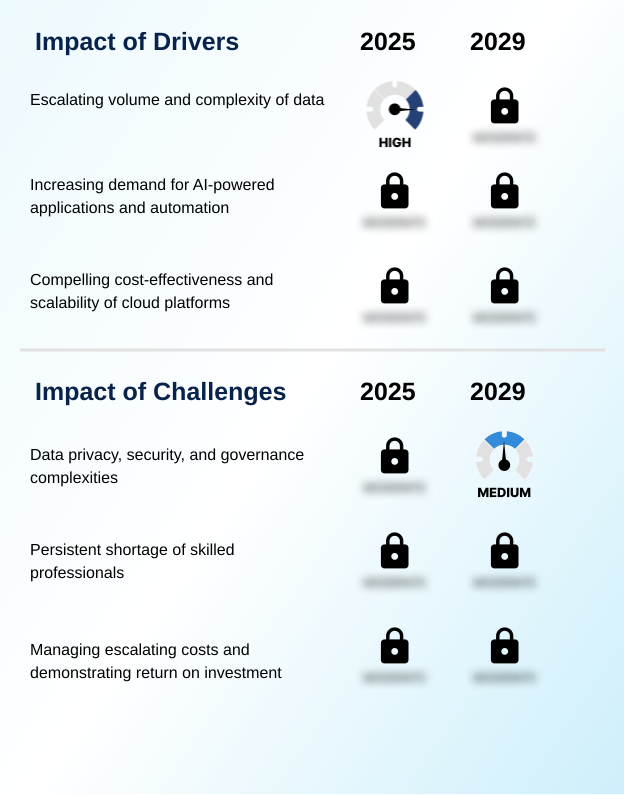
What are the key market drivers leading to the rise in the adoption of Cloud Machine Learning Industry?

  • The escalating volume and complexity of data serve as a key driver for the market, necessitating powerful cloud-based solutions for analysis and insight extraction.

  • Market growth is propelled by a confluence of powerful drivers. The exponential increase in data volume and complexity necessitates the scalable computational resources offered by cloud platforms.
  • Organizations are leveraging foundation models and multimodal generative models to transform vast data lakes and data warehousing assets into actionable insights. This is fueling a surge in demand for AI-powered applications, with 78% of businesses now reporting AI use.
  • The economic advantages are also a significant factor, as the cloud's pay-as-you-go model and the availability of containerized AI software lower the barrier to entry.
  • This shift is reflected in the over 20% increase in public cloud spending, as companies prioritize digital skills gap closure and a clear return on investment over traditional IT budget allocation.

What are the market trends shaping the Cloud Machine Learning Industry?

  • The pervasive integration of generative artificial intelligence is emerging as a significant market trend. This technology is becoming a fundamental component of cloud service offerings, driving innovation and growth.

  • The market is being reshaped by three pivotal trends. First, the widespread integration of generative artificial intelligence is transforming service offerings, with deep learning models capable of creating novel content. Second, the rise of machine learning operations (MLOps) is industrializing AI deployment.
  • North America's MLOps market dominance, with over 41% share, highlights the strategic move toward scalable and governed model management. This disciplined approach ensures the reliability of predictive analytics. Third, the convergence of cloud with edge computing enables real-time data processing and low latency applications, which can reduce processing delays by over 50%.
  • This synergy, powered by GPU orchestration and accessible through MLOps platforms, allows for sophisticated local data processing while leveraging the cloud for computationally intensive tasks like continuous training.

What challenges does the Cloud Machine Learning Industry face during its growth?

  • Complexities surrounding data privacy, security, and governance present a key challenge affecting the growth of the industry.

  • Navigating the complexities of cost, skills, and governance remains a primary challenge. While cloud platforms offer scalability, 67% of businesses anticipate rising cloud costs, which directly impacts the financial viability of large-scale AI projects. Compounding this is the difficulty in quantifying success, as a staggering 82% of organizations lack a formal strategy for tracking AI return on investment.
  • A persistent digital skills gap in data science and data engineering further hampers the ability to leverage big data technologies effectively and make data-driven decisions. This creates a reliance on specialized platforms like Amazon SageMaker or watsonx.ai.
  • Moreover, ensuring data privacy and security within hybrid cloud environments and private cloud AI deployments presents ongoing hurdles, requiring robust frameworks for governance and compliance.

Exclusive Technavio Analysis on Customer Landscape

The cloud machine learning market forecasting report includes the adoption lifecycle of the market, covering from the innovator’s stage to the laggard’s stage. It focuses on adoption rates in different regions based on penetration. Furthermore, the cloud machine learning market report also includes key purchase criteria and drivers of price sensitivity to help companies evaluate and develop their market growth analysis strategies.
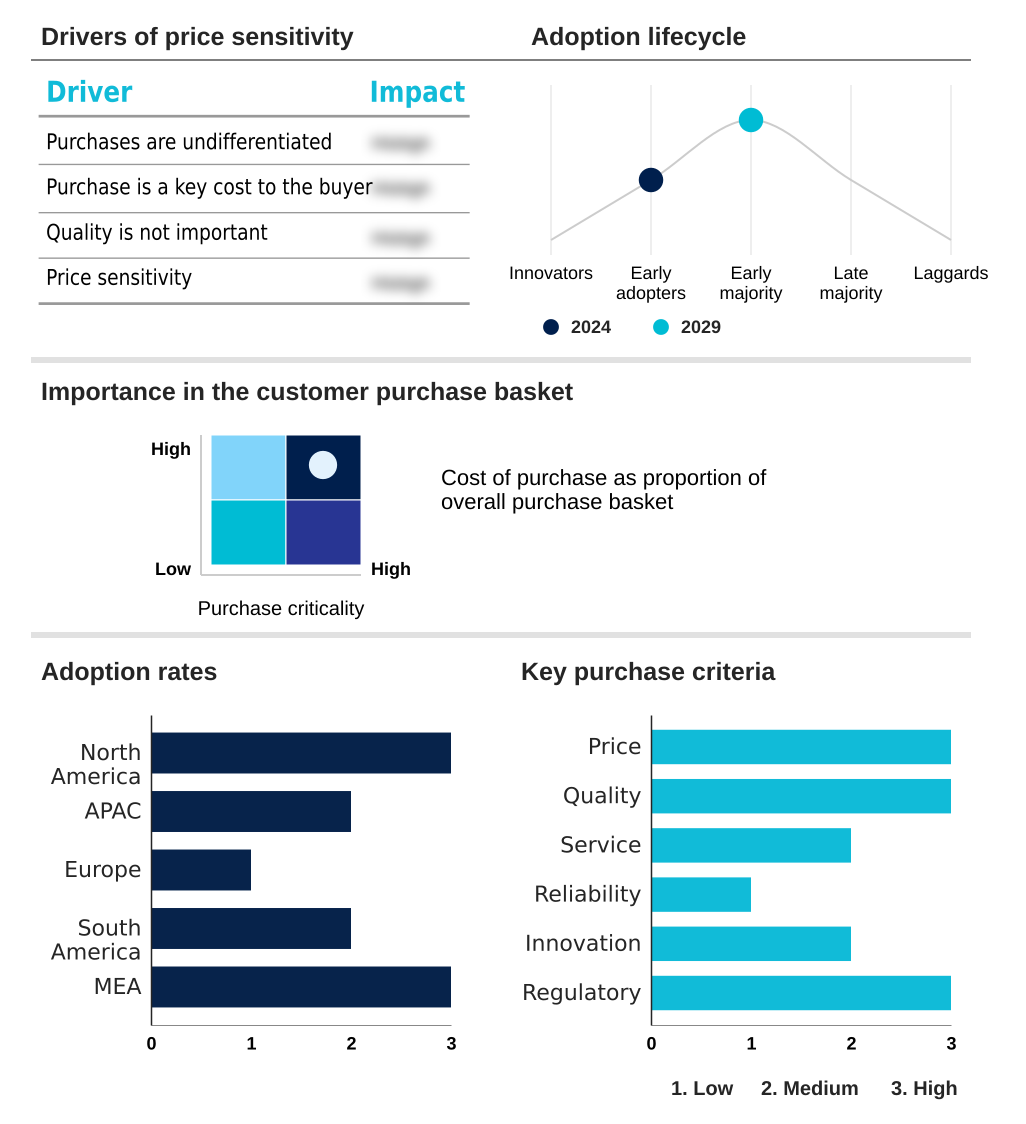
Customer Landscape of Cloud Machine Learning Industry

Competitive Landscape

Companies are implementing various strategies, such as strategic alliances, cloud machine learning market forecast, partnerships, mergers and acquisitions, geographical expansion, and product/service launches, to enhance their presence in the industry.

Alibaba Group Holding Ltd. - The offering includes a comprehensive AI platform supporting the entire model lifecycle, from development and training to deployment, utilizing AutoML, visual workflows, and scalable GPU clusters.

The industry research and growth report includes detailed analyses of the competitive landscape of the market and information about key companies, including:

  • Alibaba Group Holding Ltd.
  • Amazon Web Services Inc.
  • Anaconda Inc.
  • Baidu Inc.
  • Cisco Systems Inc.
  • Cloudera Inc.
  • DataRobot Inc.
  • Dell Technologies Inc.
  • Google LLC
  • Hewlett Packard
  • IBM Corp.
  • Microsoft Corp.
  • NVIDIA Corp.
  • Open Text Corp.
  • Oracle Corp.
  • Salesforce Inc.
  • SAP SE
  • Snowflake Inc.
  • Tencent Holdings Ltd.
  • Teradata Corp.

Qualitative and quantitative analysis of companies has been conducted to help clients understand the wider business environment as well as the strengths and weaknesses of key industry players. Data is qualitatively analyzed to categorize companies as pure play, category-focused, industry-focused, and diversified; it is quantitatively analyzed to categorize companies as dominant, leading, strong, tentative, and weak.

Recent Development and News in Cloud machine learning market

  • In February, 2025, Alibaba Cloud announced the launch of its first cloud region in Mexico, a move designed to provide scalable and secure cloud services and strengthen the AI ecosystem in Latin America.
  • In October, 2024, Infineon launched its DEEPCRAFT Edge AI development suite, aimed at simplifying the deployment of artificial intelligence models on its microcontroller platforms for edge computing applications.
  • In September, 2024, Alibaba Cloud introduced over 100 new open-source AI models and released its Qwen 2 large language model series, underscoring its commitment to advancing AI innovation.
  • In August, 2024, Broadcom and Hitachi Vantara launched a new private and hybrid cloud solution designed to help organizations manage data proliferation and the increasing demands of AI workloads.

Dive into Technavio’s robust research methodology, blending expert interviews, extensive data synthesis, and validated models for unparalleled Cloud Machine Learning Market insights. See full methodology.

Market Scope
Page number 312
Base year 2024
Historic period 2019-2023
Forecast period 2025-2029
Growth momentum & CAGR Accelerate at a CAGR of 36.7%
Market growth 2025-2029 USD 51444.6 million
Market structure Fragmented
YoY growth 2024-2025(%) 32.1%
Key countries US, Canada, Mexico, China, Japan, India, South Korea, Australia, Indonesia, Germany, UK, France, Italy, Spain, The Netherlands, Brazil, Argentina, Colombia, UAE, Saudi Arabia, South Africa, Israel and Turkey
Competitive landscape Leading Companies, Market Positioning of Companies, Competitive Strategies, and Industry Risks

Request Free Sample

Research Analyst Overview

  • The market is defined by a strategic shift from experimental AI projects to the industrialization of machine learning, embedded within core business processes. This evolution is driven by the accessibility of high-performance computing, enabling the use of sophisticated deep learning models and foundation models for a wide range of applications, including predictive analytics and real-time fraud detection.
  • A key boardroom consideration is the adoption of machine learning operations (MLOps), which necessitates budgeting for specialized platforms and data science proficiency to ensure governance and a quantifiable return on investment. Effective cloud cost optimization is paramount, as organizations have demonstrated the ability to reduce infrastructure waste by 20 to 30% through disciplined management.
  • The landscape is advancing with technologies like multimodal generative models and agentic workflows, powered by GPU orchestration and containerized AI software. Success hinges on mastering data engineering to build AI-ready intelligence from data lakes and data warehousing, while navigating challenges like data sovereignty laws, insecure APIs, and the demand for predictive maintenance and demand forecasting.

What are the Key Data Covered in this Cloud Machine Learning Market Research and Growth Report?

  • What is the expected growth of the Cloud Machine Learning Market between 2025 and 2029?

    • USD 51.44 billion, at a CAGR of 36.7%

  • What segmentation does the market report cover?

    • The report is segmented by Component (Solutions, and Services), Deployment (Public cloud, Hybrid cloud, and Private cloud), Application (Marketing and advertising analytics, Fraud detection and risk management, Predictive maintenance and demand forecasting, and Others) and Geography (North America, APAC, Europe, South America, Middle East and Africa)

  • Which regions are analyzed in the report?

    • North America, APAC, Europe, South America and Middle East and Africa

  • What are the key growth drivers and market challenges?

    • Escalating volume and complexity of data, Data privacy, security, and governance complexities

  • Who are the major players in the Cloud Machine Learning Market?

    • Alibaba Group Holding Ltd., Amazon Web Services Inc., Anaconda Inc., Baidu Inc., Cisco Systems Inc., Cloudera Inc., DataRobot Inc., Dell Technologies Inc., Google LLC, Hewlett Packard, IBM Corp., Microsoft Corp., NVIDIA Corp., Open Text Corp., Oracle Corp., Salesforce Inc., SAP SE, Snowflake Inc., Tencent Holdings Ltd. and Teradata Corp.

Market Research Insights

  • The market's momentum is shaped by the compelling economics of the pay-as-you-go model, which lowers entry barriers for AI adoption. With 78% of organizations reporting AI use, the demand for accessible and scalable intelligent applications is surging.
  • This is driving a shift toward AI-first strategies, where businesses leverage platforms like Vertex AI platform and Azure Machine Learning to modernize data architectures. The focus on return on investment is critical, as effective cloud cost optimization strategies can reduce infrastructure waste by 20% to 30%.
  • This dynamic interplay between cost-efficiency, widespread AI adoption, and the strategic need for a clear ROI is accelerating the integration of cloud machine learning into core business operations, fostering innovation while demanding rigorous financial governance and IT budget allocation.

We can help! Our analysts can customize this cloud machine learning market research report to meet your requirements.

Get in touch

1. Executive Summary

1.1 Market overview

Executive Summary - Chart on Market Overview
Executive Summary - Data Table on Market Overview
Executive Summary - Chart on Global Market Characteristics
Executive Summary - Chart on Market by Geography
Executive Summary - Chart on Market Segmentation by Component
Executive Summary - Chart on Market Segmentation by Deployment
Executive Summary - Chart on Market Segmentation by Application
Executive Summary - Chart on Incremental Growth
Executive Summary - Data Table on Incremental Growth
Executive Summary - Chart on Company Market Positioning

2. Technavio Analysis

2.1 Analysis of price sensitivity, lifecycle, customer purchase basket, adoption rates, and purchase criteria

2.2 Criticality of inputs and Factors of differentiation

Chart on Overview on criticality of inputs and factors of differentiation

2.3 Factors of disruption

Chart on Overview on factors of disruption

2.4 Impact of drivers and challenges

Chart on Impact of drivers and challenges in 2024 and 2029

3. Market Landscape

3.1 Market ecosystem

Chart on Parent Market
Data Table on - Parent Market

3.2 Market characteristics

Chart on Market characteristics analysis

3.3 Value chain analysis

Chart on Value chain analysis

4. Market Sizing

4.1 Market definition

Data Table on Offerings of companies included in the market definition

4.2 Market segment analysis

Market segments

4.3 Market size 2024

4.4 Market outlook: Forecast for 2024-2029

Chart on Global - Market size and forecast 2024-2029 ($ million)
Data Table on Global - Market size and forecast 2024-2029 ($ million)
Chart on Global Market: Year-over-year growth 2024-2029 (%)
Data Table on Global Market: Year-over-year growth 2024-2029 (%)

5. Historic Market Size

5.1 Global Cloud Machine Learning Market 2019 - 2023

Historic Market Size - Data Table on Global Cloud Machine Learning Market 2019 - 2023 ($ million)

5.2 Component segment analysis 2019 - 2023

Historic Market Size - Component Segment 2019 - 2023 ($ million)

5.3 Deployment segment analysis 2019 - 2023

Historic Market Size - Deployment Segment 2019 - 2023 ($ million)

5.4 Application segment analysis 2019 - 2023

Historic Market Size - Application Segment 2019 - 2023 ($ million)

5.5 Geography segment analysis 2019 - 2023

Historic Market Size - Geography Segment 2019 - 2023 ($ million)

5.6 Country segment analysis 2019 - 2023

Historic Market Size - Country Segment 2019 - 2023 ($ million)

6. Five Forces Analysis

6.1 Five forces summary

Five forces analysis - Comparison between 2024 and 2029

6.2 Bargaining power of buyers

Bargaining power of buyers - Impact of key factors 2024 and 2029

6.3 Bargaining power of suppliers

Bargaining power of suppliers - Impact of key factors in 2024 and 2029

6.4 Threat of new entrants

Threat of new entrants - Impact of key factors in 2024 and 2029

6.5 Threat of substitutes

Threat of substitutes - Impact of key factors in 2024 and 2029

6.6 Threat of rivalry

Threat of rivalry - Impact of key factors in 2024 and 2029

6.7 Market condition

Chart on Market condition - Five forces 2024 and 2029

7. Market Segmentation by Component

7.1 Market segments

Chart on Component - Market share 2024-2029 (%)
Data Table on Component - Market share 2024-2029 (%)

7.2 Comparison by Component

Chart on Comparison by Component
Data Table on Comparison by Component

7.3 Solutions - Market size and forecast 2024-2029

Chart on Solutions - Market size and forecast 2024-2029 ($ million)
Data Table on Solutions - Market size and forecast 2024-2029 ($ million)
Chart on Solutions - Year-over-year growth 2024-2029 (%)
Data Table on Solutions - Year-over-year growth 2024-2029 (%)

7.4 Services - Market size and forecast 2024-2029

Chart on Services - Market size and forecast 2024-2029 ($ million)
Data Table on Services - Market size and forecast 2024-2029 ($ million)
Chart on Services - Year-over-year growth 2024-2029 (%)
Data Table on Services - Year-over-year growth 2024-2029 (%)

7.5 Market opportunity by Component

Market opportunity by Component ($ million)
Data Table on Market opportunity by Component ($ million)

8. Market Segmentation by Deployment

8.1 Market segments

Chart on Deployment - Market share 2024-2029 (%)
Data Table on Deployment - Market share 2024-2029 (%)

8.2 Comparison by Deployment

Chart on Comparison by Deployment
Data Table on Comparison by Deployment

8.3 Public cloud - Market size and forecast 2024-2029

Chart on Public cloud - Market size and forecast 2024-2029 ($ million)
Data Table on Public cloud - Market size and forecast 2024-2029 ($ million)
Chart on Public cloud - Year-over-year growth 2024-2029 (%)
Data Table on Public cloud - Year-over-year growth 2024-2029 (%)

8.4 Hybrid cloud - Market size and forecast 2024-2029

Chart on Hybrid cloud - Market size and forecast 2024-2029 ($ million)
Data Table on Hybrid cloud - Market size and forecast 2024-2029 ($ million)
Chart on Hybrid cloud - Year-over-year growth 2024-2029 (%)
Data Table on Hybrid cloud - Year-over-year growth 2024-2029 (%)

8.5 Private cloud - Market size and forecast 2024-2029

Chart on Private cloud - Market size and forecast 2024-2029 ($ million)
Data Table on Private cloud - Market size and forecast 2024-2029 ($ million)
Chart on Private cloud - Year-over-year growth 2024-2029 (%)
Data Table on Private cloud - Year-over-year growth 2024-2029 (%)

8.6 Market opportunity by Deployment

Market opportunity by Deployment ($ million)
Data Table on Market opportunity by Deployment ($ million)

9. Market Segmentation by Application

9.1 Market segments

Chart on Application - Market share 2024-2029 (%)
Data Table on Application - Market share 2024-2029 (%)

9.2 Comparison by Application

Chart on Comparison by Application
Data Table on Comparison by Application

9.3 Marketing and advertising analytics - Market size and forecast 2024-2029

Chart on Marketing and advertising analytics - Market size and forecast 2024-2029 ($ million)
Data Table on Marketing and advertising analytics - Market size and forecast 2024-2029 ($ million)
Chart on Marketing and advertising analytics - Year-over-year growth 2024-2029 (%)
Data Table on Marketing and advertising analytics - Year-over-year growth 2024-2029 (%)

9.4 Fraud detection and risk management - Market size and forecast 2024-2029

Chart on Fraud detection and risk management - Market size and forecast 2024-2029 ($ million)
Data Table on Fraud detection and risk management - Market size and forecast 2024-2029 ($ million)
Chart on Fraud detection and risk management - Year-over-year growth 2024-2029 (%)
Data Table on Fraud detection and risk management - Year-over-year growth 2024-2029 (%)

9.5 Predictive maintenance and demand forecasting - Market size and forecast 2024-2029

Chart on Predictive maintenance and demand forecasting - Market size and forecast 2024-2029 ($ million)
Data Table on Predictive maintenance and demand forecasting - Market size and forecast 2024-2029 ($ million)
Chart on Predictive maintenance and demand forecasting - Year-over-year growth 2024-2029 (%)
Data Table on Predictive maintenance and demand forecasting - Year-over-year growth 2024-2029 (%)

9.6 Others - Market size and forecast 2024-2029

Chart on Others - Market size and forecast 2024-2029 ($ million)
Data Table on Others - Market size and forecast 2024-2029 ($ million)
Chart on Others - Year-over-year growth 2024-2029 (%)
Data Table on Others - Year-over-year growth 2024-2029 (%)

9.7 Market opportunity by Application

Market opportunity by Application ($ million)
Data Table on Market opportunity by Application ($ million)

10. Customer Landscape

10.1 Customer landscape overview

Analysis of price sensitivity, lifecycle, customer purchase basket, adoption rates, and purchase criteria

11. Geographic Landscape

11.1 Geographic segmentation

Chart on Market share by geography 2024-2029 (%)
Data Table on Market share by geography 2024-2029 (%)

11.2 Geographic comparison

Chart on Geographic comparison
Data Table on Geographic comparison

11.3 North America - Market size and forecast 2024-2029

Chart on North America - Market size and forecast 2024-2029 ($ million)
Data Table on North America - Market size and forecast 2024-2029 ($ million)
Chart on North America - Year-over-year growth 2024-2029 (%)
Data Table on North America - Year-over-year growth 2024-2029 (%)
Chart on Regional Comparison - North America
Data Table on Regional Comparison - North America

11.3.1 US - Market size and forecast 2024-2029

Chart on US - Market size and forecast 2024-2029 ($ million)
Data Table on US - Market size and forecast 2024-2029 ($ million)
Chart on US - Year-over-year growth 2024-2029 (%)
Data Table on US - Year-over-year growth 2024-2029 (%)

11.3.2 Canada - Market size and forecast 2024-2029

Chart on Canada - Market size and forecast 2024-2029 ($ million)
Data Table on Canada - Market size and forecast 2024-2029 ($ million)
Chart on Canada - Year-over-year growth 2024-2029 (%)
Data Table on Canada - Year-over-year growth 2024-2029 (%)

11.3.3 Mexico - Market size and forecast 2024-2029

Chart on Mexico - Market size and forecast 2024-2029 ($ million)
Data Table on Mexico - Market size and forecast 2024-2029 ($ million)
Chart on Mexico - Year-over-year growth 2024-2029 (%)
Data Table on Mexico - Year-over-year growth 2024-2029 (%)

11.4 APAC - Market size and forecast 2024-2029

Chart on APAC - Market size and forecast 2024-2029 ($ million)
Data Table on APAC - Market size and forecast 2024-2029 ($ million)
Chart on APAC - Year-over-year growth 2024-2029 (%)
Data Table on APAC - Year-over-year growth 2024-2029 (%)
Chart on Regional Comparison - APAC
Data Table on Regional Comparison - APAC

11.4.1 China - Market size and forecast 2024-2029

Chart on China - Market size and forecast 2024-2029 ($ million)
Data Table on China - Market size and forecast 2024-2029 ($ million)
Chart on China - Year-over-year growth 2024-2029 (%)
Data Table on China - Year-over-year growth 2024-2029 (%)

11.4.2 Japan - Market size and forecast 2024-2029

Chart on Japan - Market size and forecast 2024-2029 ($ million)
Data Table on Japan - Market size and forecast 2024-2029 ($ million)
Chart on Japan - Year-over-year growth 2024-2029 (%)
Data Table on Japan - Year-over-year growth 2024-2029 (%)

11.4.3 India - Market size and forecast 2024-2029

Chart on India - Market size and forecast 2024-2029 ($ million)
Data Table on India - Market size and forecast 2024-2029 ($ million)
Chart on India - Year-over-year growth 2024-2029 (%)
Data Table on India - Year-over-year growth 2024-2029 (%)

11.4.4 South Korea - Market size and forecast 2024-2029

Chart on South Korea - Market size and forecast 2024-2029 ($ million)
Data Table on South Korea - Market size and forecast 2024-2029 ($ million)
Chart on South Korea - Year-over-year growth 2024-2029 (%)
Data Table on South Korea - Year-over-year growth 2024-2029 (%)

11.4.5 Australia - Market size and forecast 2024-2029

Chart on Australia - Market size and forecast 2024-2029 ($ million)
Data Table on Australia - Market size and forecast 2024-2029 ($ million)
Chart on Australia - Year-over-year growth 2024-2029 (%)
Data Table on Australia - Year-over-year growth 2024-2029 (%)

11.4.6 Indonesia - Market size and forecast 2024-2029

Chart on Indonesia - Market size and forecast 2024-2029 ($ million)
Data Table on Indonesia - Market size and forecast 2024-2029 ($ million)
Chart on Indonesia - Year-over-year growth 2024-2029 (%)
Data Table on Indonesia - Year-over-year growth 2024-2029 (%)

11.5 Europe - Market size and forecast 2024-2029

Chart on Europe - Market size and forecast 2024-2029 ($ million)
Data Table on Europe - Market size and forecast 2024-2029 ($ million)
Chart on Europe - Year-over-year growth 2024-2029 (%)
Data Table on Europe - Year-over-year growth 2024-2029 (%)
Chart on Regional Comparison - Europe
Data Table on Regional Comparison - Europe

11.5.1 Germany - Market size and forecast 2024-2029

Chart on Germany - Market size and forecast 2024-2029 ($ million)
Data Table on Germany - Market size and forecast 2024-2029 ($ million)
Chart on Germany - Year-over-year growth 2024-2029 (%)
Data Table on Germany - Year-over-year growth 2024-2029 (%)

11.5.2 UK - Market size and forecast 2024-2029

Chart on UK - Market size and forecast 2024-2029 ($ million)
Data Table on UK - Market size and forecast 2024-2029 ($ million)
Chart on UK - Year-over-year growth 2024-2029 (%)
Data Table on UK - Year-over-year growth 2024-2029 (%)

11.5.3 France - Market size and forecast 2024-2029

Chart on France - Market size and forecast 2024-2029 ($ million)
Data Table on France - Market size and forecast 2024-2029 ($ million)
Chart on France - Year-over-year growth 2024-2029 (%)
Data Table on France - Year-over-year growth 2024-2029 (%)

11.5.4 Italy - Market size and forecast 2024-2029

Chart on Italy - Market size and forecast 2024-2029 ($ million)
Data Table on Italy - Market size and forecast 2024-2029 ($ million)
Chart on Italy - Year-over-year growth 2024-2029 (%)
Data Table on Italy - Year-over-year growth 2024-2029 (%)

11.5.5 Spain - Market size and forecast 2024-2029

Chart on Spain - Market size and forecast 2024-2029 ($ million)
Data Table on Spain - Market size and forecast 2024-2029 ($ million)
Chart on Spain - Year-over-year growth 2024-2029 (%)
Data Table on Spain - Year-over-year growth 2024-2029 (%)

11.5.6 The Netherlands - Market size and forecast 2024-2029

Chart on The Netherlands - Market size and forecast 2024-2029 ($ million)
Data Table on The Netherlands - Market size and forecast 2024-2029 ($ million)
Chart on The Netherlands - Year-over-year growth 2024-2029 (%)
Data Table on The Netherlands - Year-over-year growth 2024-2029 (%)

11.6 South America - Market size and forecast 2024-2029

Chart on South America - Market size and forecast 2024-2029 ($ million)
Data Table on South America - Market size and forecast 2024-2029 ($ million)
Chart on South America - Year-over-year growth 2024-2029 (%)
Data Table on South America - Year-over-year growth 2024-2029 (%)
Chart on Regional Comparison - South America
Data Table on Regional Comparison - South America

11.6.1 Brazil - Market size and forecast 2024-2029

Chart on Brazil - Market size and forecast 2024-2029 ($ million)
Data Table on Brazil - Market size and forecast 2024-2029 ($ million)
Chart on Brazil - Year-over-year growth 2024-2029 (%)
Data Table on Brazil - Year-over-year growth 2024-2029 (%)

11.6.2 Argentina - Market size and forecast 2024-2029

Chart on Argentina - Market size and forecast 2024-2029 ($ million)
Data Table on Argentina - Market size and forecast 2024-2029 ($ million)
Chart on Argentina - Year-over-year growth 2024-2029 (%)
Data Table on Argentina - Year-over-year growth 2024-2029 (%)

11.6.3 Colombia - Market size and forecast 2024-2029

Chart on Colombia - Market size and forecast 2024-2029 ($ million)
Data Table on Colombia - Market size and forecast 2024-2029 ($ million)
Chart on Colombia - Year-over-year growth 2024-2029 (%)
Data Table on Colombia - Year-over-year growth 2024-2029 (%)

11.7 Middle East and Africa - Market size and forecast 2024-2029

Chart on Middle East and Africa - Market size and forecast 2024-2029 ($ million)
Data Table on Middle East and Africa - Market size and forecast 2024-2029 ($ million)
Chart on Middle East and Africa - Year-over-year growth 2024-2029 (%)
Data Table on Middle East and Africa - Year-over-year growth 2024-2029 (%)
Chart on Regional Comparison - Middle East and Africa
Data Table on Regional Comparison - Middle East and Africa

11.7.1 UAE - Market size and forecast 2024-2029

Chart on UAE - Market size and forecast 2024-2029 ($ million)
Data Table on UAE - Market size and forecast 2024-2029 ($ million)
Chart on UAE - Year-over-year growth 2024-2029 (%)
Data Table on UAE - Year-over-year growth 2024-2029 (%)

11.7.2 Saudi Arabia - Market size and forecast 2024-2029

Chart on Saudi Arabia - Market size and forecast 2024-2029 ($ million)
Data Table on Saudi Arabia - Market size and forecast 2024-2029 ($ million)
Chart on Saudi Arabia - Year-over-year growth 2024-2029 (%)
Data Table on Saudi Arabia - Year-over-year growth 2024-2029 (%)

11.7.3 South Africa - Market size and forecast 2024-2029

Chart on South Africa - Market size and forecast 2024-2029 ($ million)
Data Table on South Africa - Market size and forecast 2024-2029 ($ million)
Chart on South Africa - Year-over-year growth 2024-2029 (%)
Data Table on South Africa - Year-over-year growth 2024-2029 (%)

11.7.4 Israel - Market size and forecast 2024-2029

Chart on Israel - Market size and forecast 2024-2029 ($ million)
Data Table on Israel - Market size and forecast 2024-2029 ($ million)
Chart on Israel - Year-over-year growth 2024-2029 (%)
Data Table on Israel - Year-over-year growth 2024-2029 (%)

11.7.5 Turkey - Market size and forecast 2024-2029

Chart on Turkey - Market size and forecast 2024-2029 ($ million)
Data Table on Turkey - Market size and forecast 2024-2029 ($ million)
Chart on Turkey - Year-over-year growth 2024-2029 (%)
Data Table on Turkey - Year-over-year growth 2024-2029 (%)

11.8 Market opportunity by geography

Market opportunity by geography ($ million)
Data Tables on Market opportunity by geography ($ million)

12. Drivers, Challenges, and Opportunity

12.1 Market drivers

Escalating volume and complexity of data
Increasing demand for AI-powered applications and automation
Compelling cost-effectiveness and scalability of cloud platforms

12.2 Market challenges

Data privacy, security, and governance complexities
Persistent shortage of skilled professionals
Managing escalating costs and demonstrating return on investment

12.3 Impact of drivers and challenges

Impact of drivers and challenges in 2024 and 2029

12.4 Market opportunities

Pervasive integration of generative artificial intelligence
Ascendancy of machine learning operations
Convergence of cloud and edge computing for AI applications

13. Competitive Landscape

13.1 Overview

13.2

Overview on criticality of inputs and factors of differentiation

13.3 Landscape disruption

Overview on factors of disruption

13.4 Industry risks

Impact of key risks on business

14. Competitive Analysis

14.1 Companies profiled

Companies covered

14.2 Company ranking index

14.3 Market positioning of companies

Matrix on companies position and classification

14.4 Alibaba Group Holding Ltd.

Alibaba Group Holding Ltd. - Overview
Alibaba Group Holding Ltd. - Business segments
Alibaba Group Holding Ltd. - Key news
Alibaba Group Holding Ltd. - Key offerings
Alibaba Group Holding Ltd. - Segment focus
SWOT

14.5 Amazon Web Services Inc.

Amazon Web Services Inc. - Overview
Amazon Web Services Inc. - Product / Service
Amazon Web Services Inc. - Key news
Amazon Web Services Inc. - Key offerings
SWOT

14.6 Baidu Inc.

Baidu Inc. - Overview
Baidu Inc. - Business segments
Baidu Inc. - Key offerings
Baidu Inc. - Segment focus
SWOT

14.7 Cisco Systems Inc.

Cisco Systems Inc. - Overview
Cisco Systems Inc. - Business segments
Cisco Systems Inc. - Key news
Cisco Systems Inc. - Key offerings
Cisco Systems Inc. - Segment focus
SWOT

14.8 Dell Technologies Inc.

Dell Technologies Inc. - Overview
Dell Technologies Inc. - Business segments
Dell Technologies Inc. - Key news
Dell Technologies Inc. - Key offerings
Dell Technologies Inc. - Segment focus
SWOT

14.9 Google LLC

Google LLC - Overview
Google LLC - Product / Service
Google LLC - Key offerings
SWOT

14.10 Hewlett Packard

Hewlett Packard - Overview
Hewlett Packard - Business segments
Hewlett Packard - Key news
Hewlett Packard - Key offerings
Hewlett Packard - Segment focus
SWOT

14.11 IBM Corp.

IBM Corp. - Overview
IBM Corp. - Business segments
IBM Corp. - Key news
IBM Corp. - Key offerings
IBM Corp. - Segment focus
SWOT

14.12 Microsoft Corp.

Microsoft Corp. - Overview
Microsoft Corp. - Business segments
Microsoft Corp. - Key news
Microsoft Corp. - Key offerings
Microsoft Corp. - Segment focus
SWOT

14.13 NVIDIA Corp.

NVIDIA Corp. - Overview
NVIDIA Corp. - Business segments
NVIDIA Corp. - Key news
NVIDIA Corp. - Key offerings
NVIDIA Corp. - Segment focus
SWOT

14.14 Oracle Corp.

Oracle Corp. - Overview
Oracle Corp. - Business segments
Oracle Corp. - Key news
Oracle Corp. - Key offerings
Oracle Corp. - Segment focus
SWOT

14.15 Salesforce Inc.

Salesforce Inc. - Overview
Salesforce Inc. - Product / Service
Salesforce Inc. - Key news
Salesforce Inc. - Key offerings
SWOT

14.16 SAP SE

SAP SE - Overview
SAP SE - Business segments
SAP SE - Key news
SAP SE - Key offerings
SAP SE - Segment focus
SWOT

14.17 Snowflake Inc.

Snowflake Inc. - Overview
Snowflake Inc. - Product / Service
Snowflake Inc. - Key offerings
SWOT

14.18 Tencent Holdings Ltd.

Tencent Holdings Ltd. - Overview
Tencent Holdings Ltd. - Business segments
Tencent Holdings Ltd. - Key news
Tencent Holdings Ltd. - Key offerings
Tencent Holdings Ltd. - Segment focus
SWOT

15. Appendix

15.1 Scope of the report

Market definition
Objectives
Notes and caveats

15.2 Inclusions and exclusions checklist

Inclusions checklist
Exclusions checklist

15.3 Currency conversion rates for US$

15.4 Research methodology

15.5 Data procurement

Information sources

15.6 Data validation

15.7 Validation techniques employed for market sizing

15.8 Data synthesis

15.9 360 degree market analysis

15.10 List of abbreviations

Research Methodology

Technavio presents a detailed picture of the market by way of study, synthesis, and summation of data from multiple sources. The analysts have presented the various facets of the market with a particular focus on identifying the key industry influencers. The data thus presented is comprehensive, reliable, and the result of extensive research, both primary and secondary.

INFORMATION SOURCES

Primary sources

  • Manufacturers and suppliers
  • Channel partners
  • Industry experts
  • Strategic decision makers

Secondary sources

  • Industry journals and periodicals
  • Government data
  • Financial reports of key industry players
  • Historical data
  • Press releases

DATA ANALYSIS

Data Synthesis

  • Collation of data
  • Estimation of key figures
  • Analysis of derived insights

Data Validation

  • Triangulation with data models
  • Reference against proprietary databases
  • Corroboration with industry experts

REPORT WRITING

Qualitative

  • Market drivers
  • Market challenges
  • Market trends
  • Five forces analysis

Quantitative

  • Market size and forecast
  • Market segmentation
  • Geographical insights
  • Competitive landscape

Interested in this report?

Get your sample now to see our research methodology and insights!

Download Now

Frequently Asked Questions

Cloud Machine Learning market growth will increase by USD 51444.6 million during 2025-2029.

The Cloud Machine Learning market is expected to grow at a CAGR of 36.7% during 2025-2029.

Cloud Machine Learning market is segmented by Component (Solutions, Services) Deployment (Public cloud, Hybrid cloud, Private cloud) Application (Marketing and advertising analytics, Fraud detection and risk management, Predictive maintenance and demand forecasting, Others)

Alibaba Group Holding Ltd., Amazon Web Services Inc., Anaconda Inc., Baidu Inc., Cisco Systems Inc., Cloudera Inc., DataRobot Inc., Dell Technologies Inc., Google LLC, Hewlett Packard, IBM Corp., Microsoft Corp., NVIDIA Corp., Open Text Corp., Oracle Corp., Salesforce Inc., SAP SE, Snowflake Inc., Tencent Holdings Ltd., Teradata Corp. are a few of the key vendors in the Cloud Machine Learning market.

North America will register the highest growth rate of 37.7% among the other regions. Therefore, the Cloud Machine Learning market in North America is expected to garner significant business opportunities for the vendors during the forecast period.

US, Canada, Mexico, China, Japan, India, South Korea, Australia, Indonesia, Germany, UK, France, Italy, Spain, The Netherlands, Brazil, Argentina, Colombia, UAE, Saudi Arabia, South Africa, Israel, Turkey

  • Escalating volume and complexity of data is the driving factor this market.

The Cloud Machine Learning market vendors should focus on grabbing business opportunities from the Component segment as it accounted for the largest market share in the base year.