


Cleaning Services Market Size 2026-2030
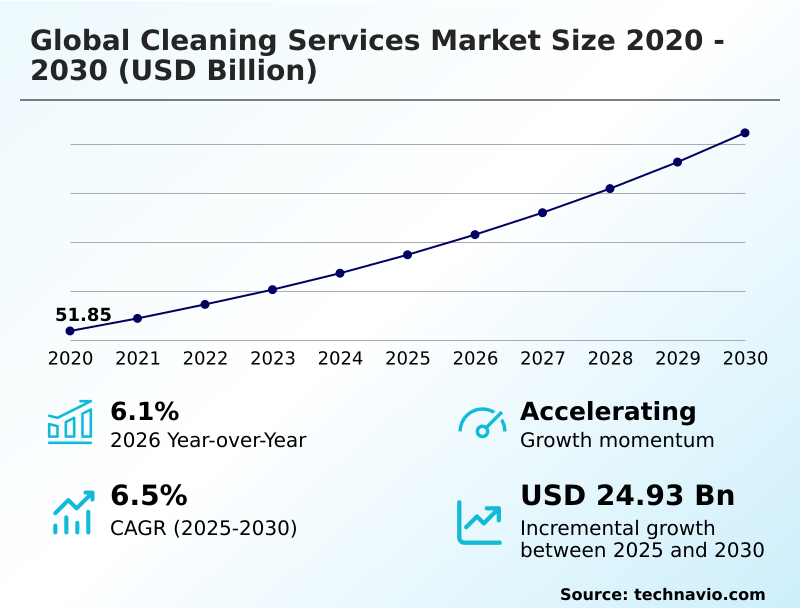
The cleaning services market size is valued to increase by USD 24.93 billion, at a CAGR of 6.5% from 2025 to 2030. Heightened focus on health, hygiene, and workplace safety will drive the cleaning services market.
Major Market Trends & Insights
- North America dominated the market and accounted for a 40.2% growth during the forecast period.
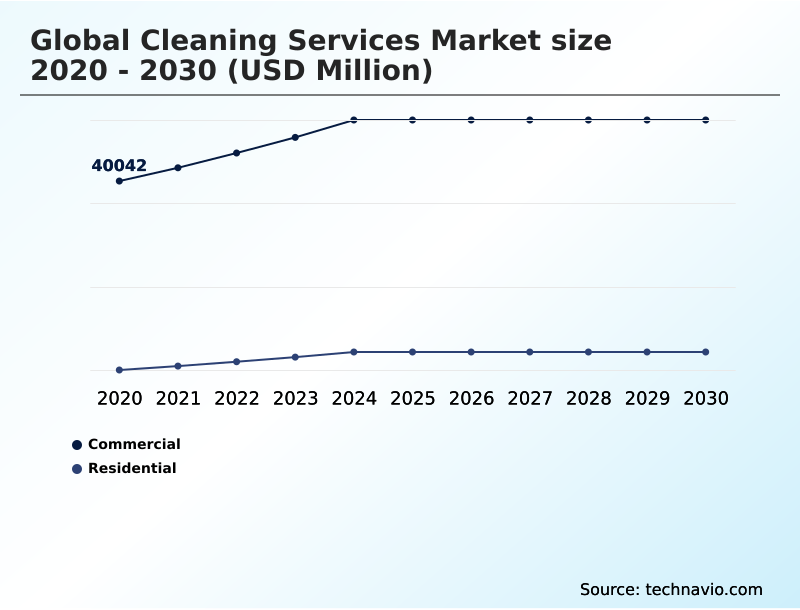
- By End-user - Commercial segment was valued at USD 49.17 billion in 2024
- By Type - Floor care segment accounted for the largest market revenue share in 2024
Market Size & Forecast
- Market Opportunities: USD 40.52 billion
- Market Future Opportunities: USD 24.93 billion
- CAGR from 2025 to 2030 : 6.5%
Market Summary
- The cleaning services market is undergoing a significant transformation, evolving from a labor-intensive industry to a sophisticated, technology-driven sector. This shift is propelled by a heightened emphasis on health and hygiene, making professional cleaning a critical component of risk management for businesses.
- Key drivers include the sustained demand for specialized services like high-touch surface disinfection and a growing trend toward outsourcing non-core functions to achieve operational efficiency. For instance, a multi-site retail corporation can leverage an integrated facility management provider to standardize cleaning protocols across all locations, ensuring brand consistency and compliance while reducing administrative overhead.
- The industry is also shaped by the mainstreaming of sustainability, with increasing pressure to adopt green cleaning solutions and environmentally friendly practices. Technology, particularly robotics and IoT, is reshaping service delivery, enabling data-driven, on-demand cleaning models that optimize resource allocation.
- Despite challenges like persistent labor shortages and intense price competition, the market's trajectory remains positive, driven by innovation and its essential role in maintaining safe and functional public and private spaces.
What will be the Size of the Cleaning Services Market during the forecast period?
Get Key Insights on Market Forecast (PDF) Request Free Sample
How is the Cleaning Services Market Segmented?
The cleaning services industry research report provides comprehensive data (region-wise segment analysis), with forecasts and estimates in "USD million" for the period 2026-2030, as well as historical data from 2020-2024 for the following segments.
- End-user
- Commercial
- Residential
- Type
- Floor care
- Vacuuming
- Maid service
- Window cleaning
- Others
- Product type
- Services
- Equipment and accessories
- Geography
- North America
- US
- Canada
- Mexico
- Europe
- Germany
- UK
- France
- APAC
- China
- Japan
- India
- South America
- Brazil
- Argentina
- Middle East and Africa
- Saudi Arabia
- UAE
- South Africa
- Rest of World (ROW)
- North America
By End-user Insights
The commercial segment is estimated to witness significant growth during the forecast period.
The commercial segment is driven by a non-negotiable need for professional environments that prioritize health and safety. Organizations are increasingly outsourcing commercial janitorial services as part of a broader integrated facility management strategy, enabling them to focus on core operations.
Service requirements now extend beyond aesthetics to include rigorous high-touch surface disinfection and infection prevention and control protocols, particularly in healthcare environmental services and educational facility cleaning.
Providers are expected to implement certified green cleaning solutions using biodegradable chemicals to meet client ESG corporate mandates and standards like LEED building certification.
The provision of day porter services and specialized night cleaning operations ensures operational continuity for corporate offices and other real estate facility services, with providers acting as strategic partners in maintaining brand reputation and occupant well-being.
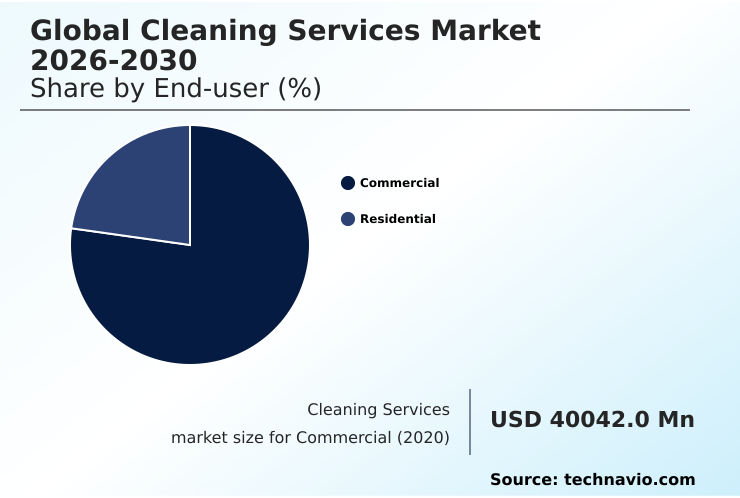
The Commercial segment was valued at USD 49.17 billion in 2024 and showed a gradual increase during the forecast period.
Regional Analysis
North America is estimated to contribute 40.2% to the growth of the global market during the forecast period.Technavio’s analysts have elaborately explained the regional trends and drivers that shape the market during the forecast period.
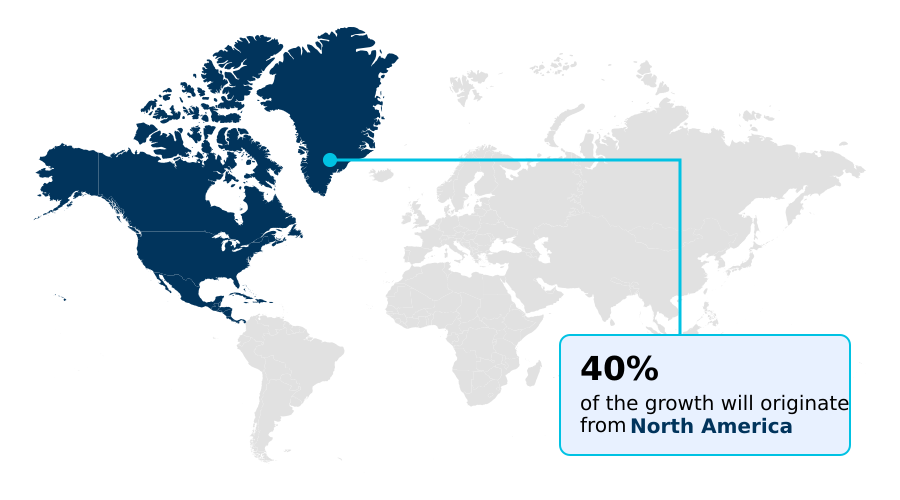
See How Cleaning Services Market Demand is Rising in North America Request Free Sample
The global market exhibits significant regional disparities in maturity and technological adoption. North America leads in deploying advanced automation, with an adoption rate for robotics in large facilities that is nearly double that of some developing regions.
This is driven by high labor costs and demand for predictive maintenance analytics.
In Europe, stringent environmental certification standards are paramount, with over 80% of new commercial contracts requiring certified green products, driving a focus on outcome-based cleaning services that guarantee specific hygiene levels.
The APAC market is characterized by rapid growth in aviation cleaning services and sports venue cleaning, fueled by infrastructure development.
Across all regions, the trend is toward providing unified facility services that bundle cleaning with landscaping and groundskeeping and asset compliance solutions. Companies specializing in niche areas like moving-related cleaning services and cleanroom cleaning standards are finding opportunities globally.
Market Dynamics
Our researchers analyzed the data with 2025 as the base year, along with the key drivers, trends, and challenges. A holistic analysis of drivers will help companies refine their marketing strategies to gain a competitive advantage.
- The strategic direction of the cleaning services market is increasingly shaped by technology and specialization. The deployment of autonomous floor care for retail is becoming a competitive differentiator, while the use of iot for restroom supply management optimizes labor and material costs. Clients now demand data-driven disinfection verification reporting to ensure compliance and safety.
- For businesses targeting premium contracts, offering green cleaning for leed certified buildings is essential. The hospitality sector, in particular, is expanding its use of robotic vacuums in hospitality sector to address labor challenges. The future lies in ai-powered predictive cleaning schedules and offering integrated facility services for healthcare to provide holistic solutions.
- This includes focusing on sustainable waste management in commercial properties and leveraging workforce optimization software for janitorial staff. Niche expertise in specialized cleaning for manufacturing facilities and creating viable franchise models for commercial cleaning businesses are proven growth avenues. Furthermore, demonstrating capabilities in infection control cleaning for educational institutions is crucial for public sector contracts.
- A key consideration for corporate clients is the efficiency gained from outsourcing janitorial services for corporate offices. However, the entire industry must navigate the impact of labor shortages on cleaning industry. The high rate of technology adoption in commercial cleaning services is a direct response, with businesses closely analyzing the roi of robotic cleaning equipment.
- Successful smart building integration with cleaning operations can reduce energy consumption by over 10% compared to non-integrated systems. The market is also responding to the demand for certified green cleaning products, stringent compliance with health and safety regulations, and the growth of residential cleaning service booking platforms.
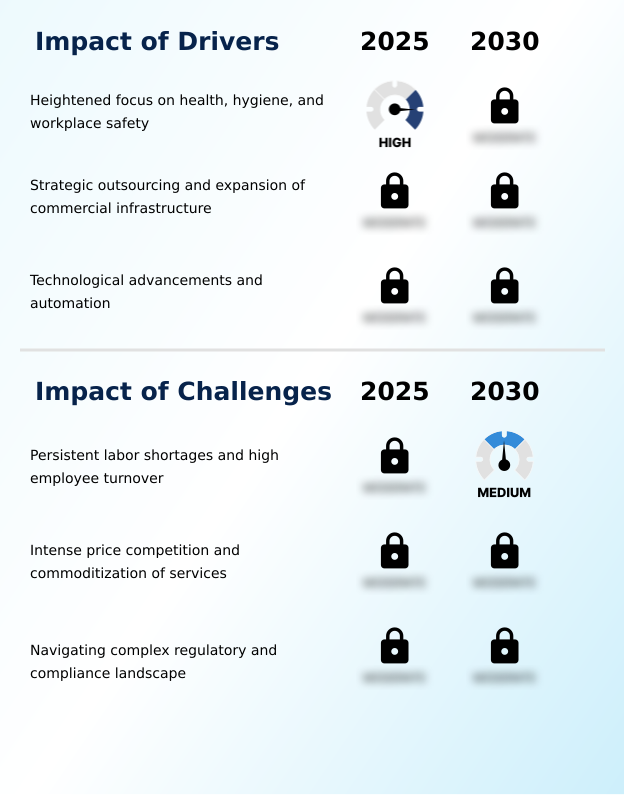
What are the key market drivers leading to the rise in the adoption of Cleaning Services Industry?
- A heightened focus on health, hygiene, and workplace safety is a primary driver, repositioning professional cleaning as an essential component of risk management and public health infrastructure.
- A profound shift in attitudes toward health has repositioned professional cleaning as an essential service. There is sustained demand for advanced specialized hygiene services, including virucidal deep cleaning and proactive indoor air quality management.
- Providers are expected to use hospital-grade disinfectants and possess expertise in sterile environment maintenance, which is critical for healthcare facilities. The scope of work now frequently includes complex tasks like post-construction cleanup, hazardous material handling, and environmental site decontamination services.
- In specialized sectors, services like disaster restoration cleaning and mold remediation services have seen a surge, with certified firms demonstrating a 50% faster response time.
- This elevated expectation transforms cleaning companies into vital partners for foodservice-related sanitation, where adherence to protocols can reduce cross-contamination incidents by over 90%, justifying investment in premium property restoration services.
What are the market trends shaping the Cleaning Services Industry?
- The accelerated adoption of smart cleaning solutions, including robotics and IoT-enabled systems, is a defining trend. This shift is fundamentally reshaping operational models and service delivery across the industry.
- The industry's digital transformation is driven by the integration of technology to boost efficiency and service quality. The adoption of robotic process automation and fleets of autonomous floor scrubbers is becoming standard, with some advanced systems improving floor coverage consistency by over 40% compared to manual methods.
- This shift to demand-driven cleaning models is enabled by internet of things sensors that monitor facility usage, reducing unnecessary labor costs by up to 25%. Workforce management software and digital quality inspections provide unprecedented operational transparency.
- Innovations like surface-adaptive ai technology are now entering the market, allowing a single machine to service multiple environments from high-tech manufacturing cleaning areas to office spaces. These on-demand cleaning platforms and smart building integration capabilities are defining the next generation of service delivery, enhancing everything from routine tasks to specialized bioremediation services.
What challenges does the Cleaning Services Industry face during its growth?
- Persistent labor shortages and high employee turnover represent a fundamental challenge, impacting service quality, operational costs, and overall industry growth.
- The industry grapples with intense price competition, often driven by the fragmented nature of franchise-based commercial cleaning and the low barrier to entry for residential maid service. This puts pressure on margins, making it difficult to invest in technology.
- Providers must balance client cost expectations with the need for effective restroom sanitation protocols and sustainable practices like comprehensive waste diversion rate reporting and carbon footprint reduction.
- Executing specialized tasks such as industrial degreasing, floor stripping and waxing, or carpet hot water extraction requires skilled labor, which remains scarce, leading to project delays that affect up to 20% of specialized contracts.
- Some providers mitigate this by offering bundled services, such as pest control integration, which can improve contract retention by 15% and offer a more holistic solution for communal area maintenance and end-of-tenancy cleaning.
Exclusive Technavio Analysis on Customer Landscape
The cleaning services market forecasting report includes the adoption lifecycle of the market, covering from the innovator’s stage to the laggard’s stage. It focuses on adoption rates in different regions based on penetration. Furthermore, the cleaning services market report also includes key purchase criteria and drivers of price sensitivity to help companies evaluate and develop their market growth analysis strategies.
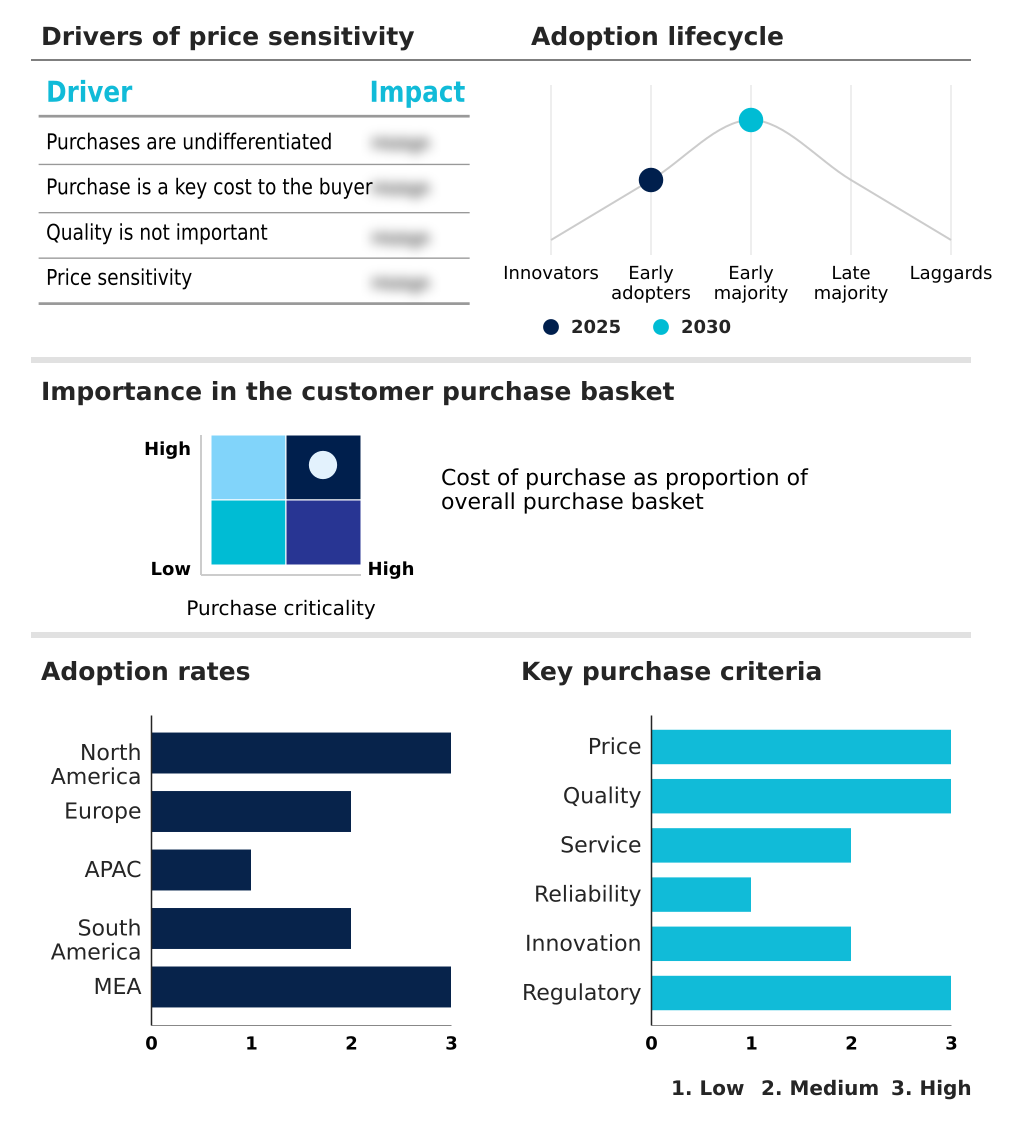
Customer Landscape of Cleaning Services Industry
Competitive Landscape
Companies are implementing various strategies, such as strategic alliances, cleaning services market forecast, partnerships, mergers and acquisitions, geographical expansion, and product/service launches, to enhance their presence in the industry.
ABM Industries Inc. - Vendors offer integrated solutions, from janitorial services to specialized disinfection, focusing on hygiene, safety, and operational efficiency for commercial and residential clients.
The industry research and growth report includes detailed analyses of the competitive landscape of the market and information about key companies, including:
- ABM Industries Inc.
- Aden Group
- Anago Cleaning Systems Inc.
- Atlas Facilities Management
- BELFOR Holdings Inc.
- Cleaning Services Group Inc.
- Compass Group Plc
- Crest Licensing Systems Ltd.
- Cushman and Wakefield Plc
- ecoserv
- Extra Clean Inc.
- GSN Property Services Co. Ltd.
- Harvard Service Group
- ISS AS
- Jani King International Inc.
- Jones Lang LaSalle Inc.
- Nugent Contract Cleaning
- Sodexo SA
- The ServiceMaster Co. LLC
Qualitative and quantitative analysis of companies has been conducted to help clients understand the wider business environment as well as the strengths and weaknesses of key industry players. Data is qualitatively analyzed to categorize companies as pure play, category-focused, industry-focused, and diversified; it is quantitatively analyzed to categorize companies as dominant, leading, strong, tentative, and weak.
Recent Development and News in Cleaning services market
- In September 2024, ISS A/S announced the full-scale rollout of its PureSpace offering, a new outcome-based cleaning model that contractually guarantees specific environmental quality outcomes, such as defined levels of airborne particulate matter, verified by a proprietary AI platform and sensor network.
- In November 2024, Tennant Company launched its new T-series autonomous floor care system, the industry's first to feature Surface-Adaptive AI technology, enabling a single robotic unit to identify different floor types and automatically adjust its cleaning tools and chemical dispensing.
- In March 2025, JLL unveiled its Sustainable Workplace Initiative, a new operational standard mandating that all contracted janitorial providers use cleaning solutions with top environmental certifications and provide quarterly reports on water usage, waste diversion, and carbon footprint.
- In April 2025, Amazon mandated through its Project Clean Core initiative that a minimum of 75% of floor space in its fulfillment and data centers must be maintained by autonomous robotic systems integrated with its internal facility management software for real-time hygiene data reporting.
Dive into Technavio’s robust research methodology, blending expert interviews, extensive data synthesis, and validated models for unparalleled Cleaning Services Market insights. See full methodology.
| Market Scope | |
|---|---|
| Page number | 291 |
| Base year | 2025 |
| Historic period | 2020-2024 |
| Forecast period | 2026-2030 |
| Growth momentum & CAGR | Accelerate at a CAGR of 6.5% |
| Market growth 2026-2030 | USD 24933.6 million |
| Market structure | Fragmented |
| YoY growth 2025-2026(%) | 6.1% |
| Key countries | US, Canada, Mexico, Germany, UK, France, Italy, Spain, The Netherlands, China, Japan, India, South Korea, Australia, Indonesia, Brazil, Argentina, Chile, Saudi Arabia, UAE, South Africa, Israel and Turkey |
| Competitive landscape | Leading Companies, Market Positioning of Companies, Competitive Strategies, and Industry Risks |
Research Analyst Overview
- The market's evolution is defined by a strategic shift from basic janitorial work to sophisticated integrated facility management, where outcome-based cleaning services are paramount. A key boardroom focus is the implementation of robust data-driven cleaning protocols and robotic process automation, including the deployment of autonomous floor scrubbers with surface-adaptive ai technology.
- This is driven by the need for verifiable infection prevention and control, utilizing hospital-grade disinfectants for high-touch surface disinfection and virucidal deep cleaning. Modern contracts demand excellence in indoor air quality management and adherence to restroom sanitation protocols.
- Sustainability is no longer optional, with clients mandating green cleaning solutions, the use of biodegradable chemicals, and comprehensive water conservation techniques to meet LEED building certification and other environmental certification standards. Providers must now deliver detailed waste diversion rate reporting and demonstrate carbon footprint reduction to satisfy corporate ESG corporate mandates.
- Workforce management software and digital quality inspections are critical for optimizing operations, which now include specialized hygiene services for sterile environment maintenance and cleanroom cleaning standards. The service scope has expanded to cover post-construction cleanup, industrial degreasing, hazardous material handling, and even commercial kitchen cleaning. Expertise in floor stripping and waxing and carpet hot water extraction remains fundamental.
- The use of internet of things sensors, environmental sensor networks, and predictive maintenance analytics enables proactive, demand-driven cleaning models, with leading firms showing a 20% improvement in resource allocation.
What are the Key Data Covered in this Cleaning Services Market Research and Growth Report?
-
What is the expected growth of the Cleaning Services Market between 2026 and 2030?
-
USD 24.93 billion, at a CAGR of 6.5%
-
-
What segmentation does the market report cover?
-
The report is segmented by End-user (Commercial, and Residential), Type (Floor care, Vacuuming, Maid service, Window cleaning, and Others), Product Type (Services, and Equipment and accessories) and Geography (North America, Europe, APAC, South America, Middle East and Africa)
-
-
Which regions are analyzed in the report?
-
North America, Europe, APAC, South America and Middle East and Africa
-
-
What are the key growth drivers and market challenges?
-
Heightened focus on health, hygiene, and workplace safety, Persistent labor shortages and high employee turnover
-
-
Who are the major players in the Cleaning Services Market?
-
ABM Industries Inc., Aden Group, Anago Cleaning Systems Inc., Atlas Facilities Management, BELFOR Holdings Inc., Cleaning Services Group Inc., Compass Group Plc, Crest Licensing Systems Ltd., Cushman and Wakefield Plc, ecoserv, Extra Clean Inc., GSN Property Services Co. Ltd., Harvard Service Group, ISS AS, Jani King International Inc., Jones Lang LaSalle Inc., Nugent Contract Cleaning, Sodexo SA and The ServiceMaster Co. LLC
-
Market Research Insights
- The market is defined by a shift toward integrated and technology-enabled service delivery. Unified facility services models that combine commercial window washing, day porter services, and pest control integration are gaining traction, with providers reporting a 15% increase in client retention for bundled contracts.
- The rise of on-demand cleaning platforms has revolutionized the residential sector, while franchise-based commercial cleaning networks leverage standardized processes to serve national accounts. Specialized segments like disaster restoration cleaning and healthcare environmental services command higher margins due to rigorous certification requirements.
- Firms offering expertise in niche areas such as aviation cleaning services or high-tech manufacturing cleaning can achieve profitability rates up to 20% higher than those offering only general janitorial services, demonstrating the value of specialization in a competitive landscape.
We can help! Our analysts can customize this cleaning services market research report to meet your requirements.