


Bidets Market Size 2026-2030
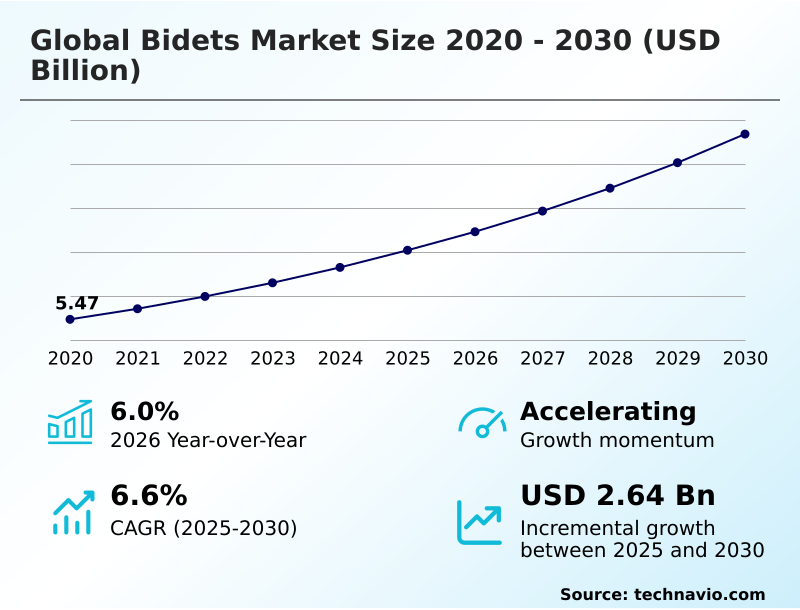
The bidets market size is valued to increase by USD 2.64 billion, at a CAGR of 6.6% from 2025 to 2030. Aging population comfort demand will drive the bidets market.
Major Market Trends & Insights
- APAC dominated the market and accounted for a 40.2% growth during the forecast period.
- By Product - Floor mounted segment was valued at USD 4.07 billion in 2024
- By Technology - Conventional bidets segment accounted for the largest market revenue share in 2024
Market Size & Forecast
- Market Opportunities: USD 4.21 billion
- Market Future Opportunities: USD 2.64 billion
- CAGR from 2025 to 2030 : 6.6%
Market Summary
- The bidets market is undergoing a significant transformation, driven by a convergence of demand for superior personal hygiene, environmental sustainability, and smart home integration. Growth is fueled by rising consumer awareness of the benefits of water-based cleaning over traditional methods, leading to increased adoption in both residential and commercial sectors.
- Market dynamics are shaped by continuous technological innovation, with advancements in features such as adjustable water pressure, heated seating, and air-drying systems becoming standard. A key trend is the development of integrated smart toilets that offer personalized settings and connectivity. However, the market faces challenges related to high initial installation costs and varying infrastructure compatibility.
- For instance, a global hospitality chain aiming to enhance guest experience must balance the high upfront investment for advanced bidet systems against the long-term operational savings from reduced consumable costs and improved brand perception. This scenario highlights the strategic trade-offs companies navigate to capitalize on the shift toward modern, hygienic, and sustainable bathroom solutions.
- The industry's trajectory is toward making these advanced hygiene solutions a standard fixture in modern living spaces.
What will be the Size of the Bidets Market during the forecast period?
Get Key Insights on Market Forecast (PDF) Request Free Sample
How is the Bidets Market Segmented?
The bidets industry research report provides comprehensive data (region-wise segment analysis), with forecasts and estimates in "USD million" for the period 2026-2030, as well as historical data from 2020-2024 for the following segments.
- Product
- Floor mounted
- Wall mounted
- Technology
- Conventional bidets
- Electronic bidets
- End-user
- Residential
- Non-residential
- Geography
- APAC
- Japan
- South Korea
- China
- Europe
- Italy
- Spain
- France
- North America
- US
- Canada
- Mexico
- Middle East and Africa
- UAE
- Saudi Arabia
- South Africa
- South America
- Brazil
- Argentina
- Rest of World (ROW)
- APAC
By Product Insights
The floor mounted segment is estimated to witness significant growth during the forecast period.
The floor-mounted segment remains a cornerstone of the market, valued for its stability and straightforward installation in both new and existing constructions.
This category is evolving beyond basic fixtures, increasingly incorporating features like touchless operation and advanced antimicrobial nozzle material to meet modern hygiene standards. A user-centric design approach is driving the integration of water-efficient mechanisms that support sustainable sanitation practices.
Innovations such as instant water heating technology are also being introduced, transforming the traditional floor-mounted unit into an eco-friendly bathroom fixture.
This focus on enhancing durability and hygiene while ensuring ease of maintenance has resulted in a notable reduction in service calls for commercial installations, improving operational efficiency.
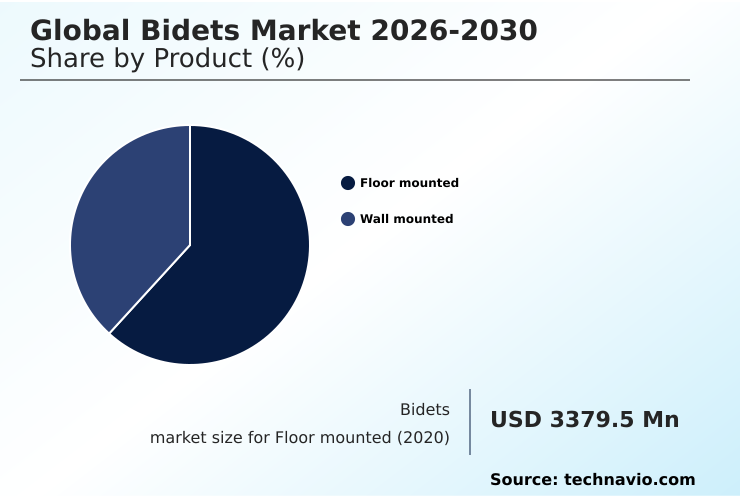
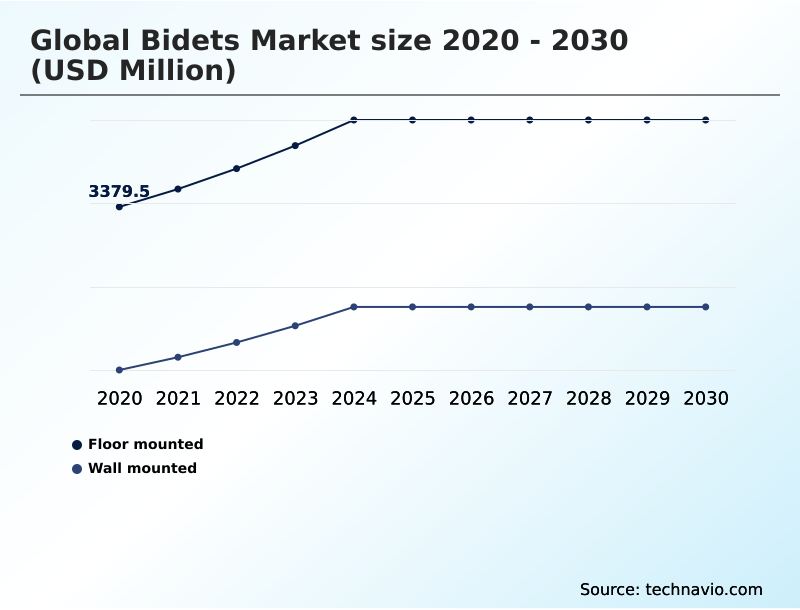
The Floor mounted segment was valued at USD 4.07 billion in 2024 and showed a gradual increase during the forecast period.
Regional Analysis
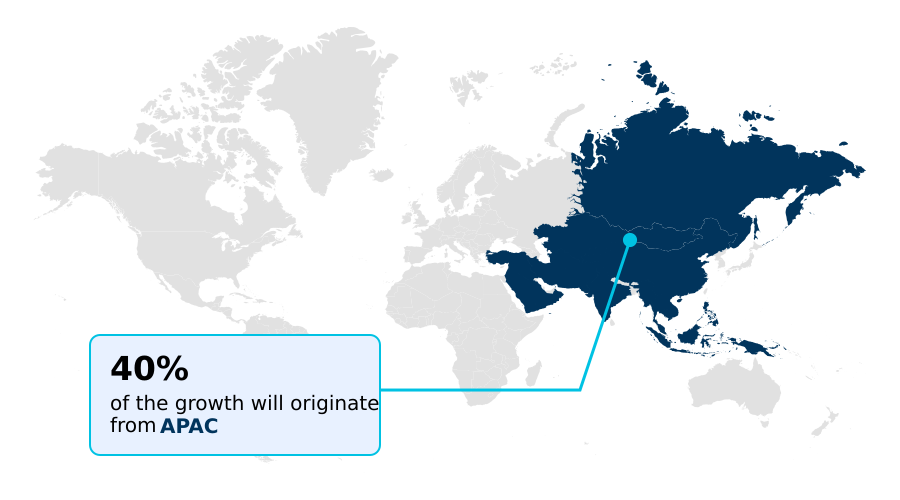
APAC is estimated to contribute 40.2% to the growth of the global market during the forecast period.Technavio’s analysts have elaborately explained the regional trends and drivers that shape the market during the forecast period.
See How Bidets Market Demand is Rising in APAC Request Free Sample
The geographic landscape of the market is led by APAC, which accounts for 40.2% of the incremental growth, driven by deep-rooted cultural preferences and high adoption rates.
In this region, the smart toilet system with features like an automated flushing system is becoming standard in new constructions.
North America is an accelerating market, where residential bathroom renovation projects increasingly include bidet installations to align with smart home integration.
In Europe, the focus is on both new builds and retrofitting, with demand for advanced systems that enhance the hospitality guest experience.
The commercial sector adoption is a universal driver, with facilities globally upgrading to fixtures with a motion-activated lid, adjustable nozzle positioning, and smart flushing mechanism to improve hygiene and operational efficiency.
This global trend underscores the shift toward technologically advanced and connected bathroom environments.
Market Dynamics
Our researchers analyzed the data with 2025 as the base year, along with the key drivers, trends, and challenges. A holistic analysis of drivers will help companies refine their marketing strategies to gain a competitive advantage.
- Strategic decisions in the market increasingly hinge on understanding specific consumer needs, which is reflected in the debate between floor mounted vs wall mounted bidet designs for different architectural styles. The electronic bidet seat installation cost remains a key consideration for homeowners, influencing the choice between advanced and basic models.
- For urban dwellers, finding the best non-electric bidet for small bathroom spaces is a common challenge, driving innovation in compact and efficient designs. A significant advancement is the integrated smart toilet with health monitoring, which is moving the product from a hygiene device to a wellness tool.
- The development of the dual wand bidet for gender-specific hygiene showcases a commitment to personalized user experiences. Furthermore, the introduction of the portable bidet for travel use has expanded the market beyond fixed installations.
- Addressing bidet attachment compatibility with standard toilets is crucial for the retrofit market, while the demand for a water-efficient bidet with air dryer reflects a growing eco-consciousness. Firms specializing in bidet systems for elderly and disabled users see nearly double the customer loyalty compared to competitors without a focus on accessibility.
- Finally, the implementation of touchless bidet operation in commercial restrooms is setting new public hygiene standards.
What are the key market drivers leading to the rise in the adoption of Bidets Industry?
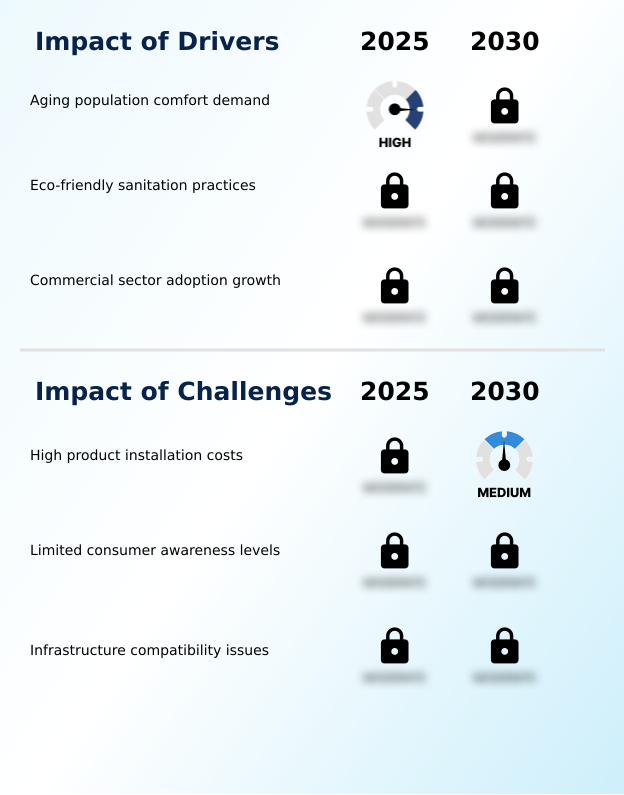
- Increasing demand for comfort and accessibility from the aging population is a primary driver of market growth.
- Market growth is significantly propelled by an inclusive design strategy that makes hygiene solutions more accessible.
- The demand for an integrated bidet toilet with features such as heated seating, warm water cleansing, and an air-drying system is rising, particularly to provide enhanced user comfort for the aging population.
- These systems, often managed by remote operation, offer a practical and accessible hygiene solution for assisted living hygiene.
- This demographic driver is complemented by sustainability concerns, with bidet adoption proven to reduce household toilet paper consumption by as much as 70%.
- The convergence of comfort, accessibility, and eco-consciousness is creating sustained demand for advanced bidet systems across a broadening consumer base.
What are the market trends shaping the Bidets Industry?
- The growing adoption of advanced dual wand bidet systems is a key market trend. These systems enhance hygiene precision and deliver a personalized user experience.
- Key market trends are centered on technological advancements that enhance the personal hygiene solution. The adoption of the electronic bidet seat with a dual wand bidet system is accelerating, driven by demand for hygiene precision control and a premium bathroom amenity. These systems feature adjustable water pressure and a self-cleaning nozzle, which together provide a superior wellness-oriented functionality.
- Innovations are also prominent in integrated systems, where the one-piece toilet innovation combines aesthetics with advanced features. This focus on sophisticated and convenient solutions is reshaping consumer expectations, with user satisfaction levels for advanced models exceeding 75% in recent surveys, indicating strong market acceptance and a clear direction toward more intelligent and personalized bathroom technologies.
What challenges does the Bidets Industry face during its growth?
- High product installation costs represent a significant challenge, restraining widespread market adoption.
- Key challenges impacting market expansion include installation complexity and cost, particularly for a retrofit bathroom upgrade. While a non-electric bidet attachment or a handheld bidet sprayer offers a lower-cost entry point, advanced systems often require plumbing modifications. Infrastructure compatibility remains a hurdle, with analysis showing that nearly 25% of existing plumbing systems require alterations.
- This highlights the need for improved bathroom sanitation technology that can be seamlessly integrated into modern bathroom infrastructure. Furthermore, ensuring a consistent water-based cleaning method requires features like integrated water filtration to manage regional water quality variations. Advanced solutions also rely on components like a ceramic heating system and UV-based sterilization, which contribute to higher product costs, restraining mass adoption.
Exclusive Technavio Analysis on Customer Landscape
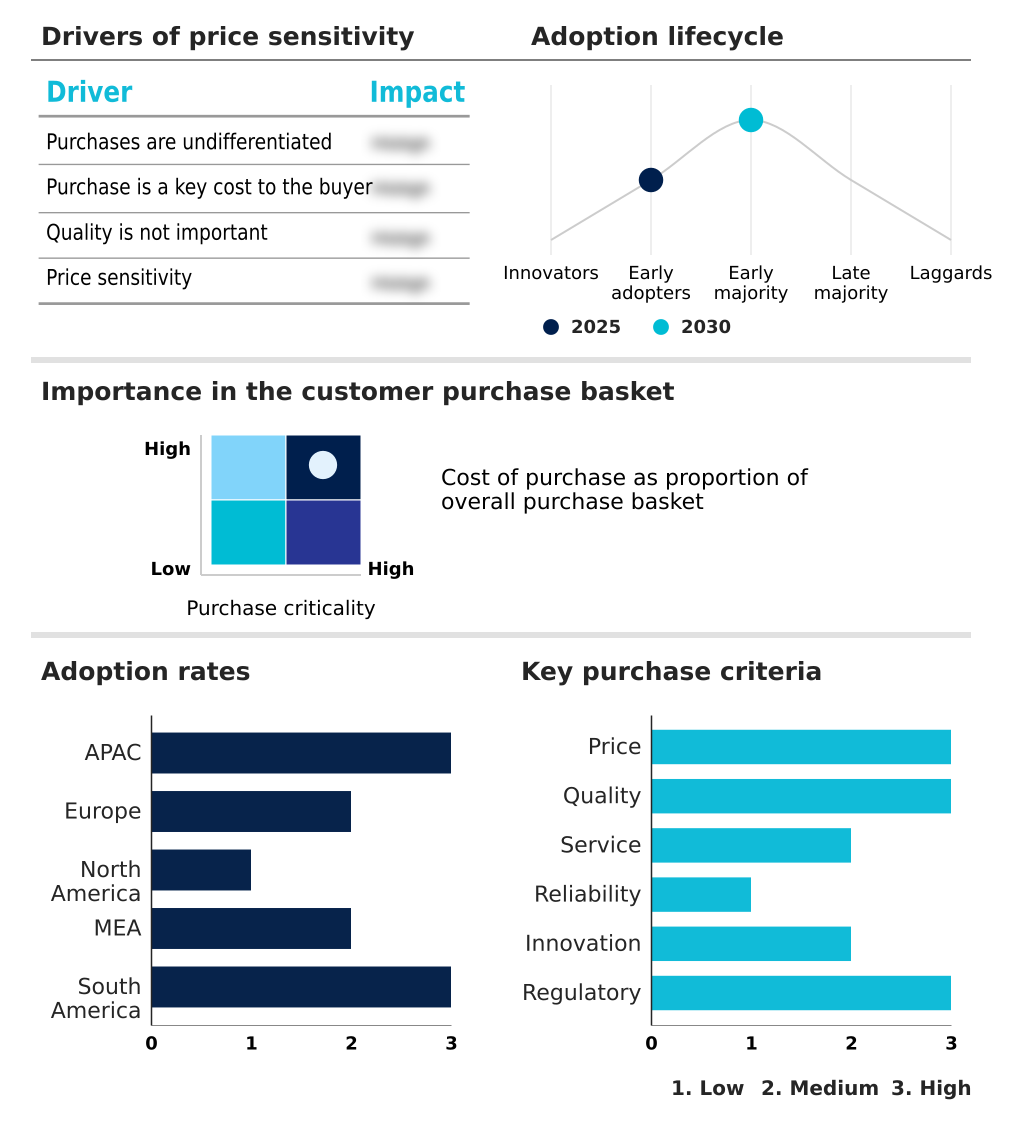
The bidets market forecasting report includes the adoption lifecycle of the market, covering from the innovator’s stage to the laggard’s stage. It focuses on adoption rates in different regions based on penetration. Furthermore, the bidets market report also includes key purchase criteria and drivers of price sensitivity to help companies evaluate and develop their market growth analysis strategies.
Customer Landscape of Bidets Industry
Competitive Landscape
Companies are implementing various strategies, such as strategic alliances, bidets market forecast, partnerships, mergers and acquisitions, geographical expansion, and product/service launches, to enhance their presence in the industry.
2GoProducts LLC - Analysis indicates a focus on bidet seats and attachments, delivering accessible and enhanced bathroom hygiene solutions for modern sanitation needs.
The industry research and growth report includes detailed analyses of the competitive landscape of the market and information about key companies, including:
- 2GoProducts LLC
- Bemis Manufacturing Co.
- Brondell Inc.
- CleanSense Bidet
- Duravit AG
- Geberit International AG
- Infinity Bidet
- Jaquar Group
- Kohler Co.
- Laufen Bathrooms AG
- LIXIL Corp.
- Noken Design S.A.U.
- Panasonic Holdings Corp.
- RinseWorks Inc.
- Roca Sanitario S.A.
- Soothingware Sanitary Co. Ltd.
- Taihe Sanitary Wares Co. Ltd.
- Toto Ltd.
- Villeroy and Boch AG
- VitrA
Qualitative and quantitative analysis of companies has been conducted to help clients understand the wider business environment as well as the strengths and weaknesses of key industry players. Data is qualitatively analyzed to categorize companies as pure play, category-focused, industry-focused, and diversified; it is quantitatively analyzed to categorize companies as dominant, leading, strong, tentative, and weak.
Recent Development and News in Bidets market
- In August 2024, VitrA introduced a designer collection that incorporates recycled materials in bidet construction, aligning with the growing consumer demand for environmentally responsible products.
- In February 2025, TOTO Ltd. showcased its latest innovations at a major industry exhibition, introducing the WASHLET S2 bidet seat designed with a slimmer profile that utilizes fewer materials, reflecting a commitment to reducing environmental footprint.
- In March 2025, Villeroy and Boch AG expanded its bathroom solutions portfolio through curated product showcases at industry events, reinforcing its strategic focus on design innovation and integrated bathroom environments.
- In March 2025, Roca Sanitario SA introduced its Inspira collection, which features versatile ceramic designs and enhanced material technologies that improve the durability, hygiene, and ease of maintenance of conventional bidet models.
Dive into Technavio’s robust research methodology, blending expert interviews, extensive data synthesis, and validated models for unparalleled Bidets Market insights. See full methodology.
| Market Scope | |
|---|---|
| Page number | 292 |
| Base year | 2025 |
| Historic period | 2020-2024 |
| Forecast period | 2026-2030 |
| Growth momentum & CAGR | Accelerate at a CAGR of 6.6% |
| Market growth 2026-2030 | USD 2636.5 million |
| Market structure | Fragmented |
| YoY growth 2025-2026(%) | 6.0% |
| Key countries | Japan, South Korea, China, India, Australia, Indonesia, Italy, Spain, France, Germany, UK, The Netherlands, US, Canada, Mexico, UAE, Saudi Arabia, South Africa, Egypt, Qatar, Brazil, Argentina and Chile |
| Competitive landscape | Leading Companies, Market Positioning of Companies, Competitive Strategies, and Industry Risks |
Research Analyst Overview
- The market's evolution is defined by rapid technological integration, moving from basic fixtures to sophisticated, user-centric systems. A core aspect of this transformation is the electronic bidet seat, which now frequently includes a dual wand bidet system for tailored hygiene and a self-cleaning nozzle to ensure sanitation.
- The development of the one-piece toilet innovation and the fully integrated bidet toilet represents a push toward seamless design and functionality. For boardroom consideration, product strategy must now account for smart home ecosystems, where a smart toilet system with a motion-activated lid and smart flushing mechanism is a key differentiator.
- Features such as adjustable water pressure, warm water cleansing from an instant water heating technology or ceramic heating system, and an integrated air-drying system are becoming standard expectations. Innovations like antimicrobial nozzle material, UV-based sterilization, and integrated water filtration are enhancing product value. Even non-electric bidet attachment and handheld bidet sprayer models are seeing design upgrades.
- The inclusion of an automated flushing system and remote operation offers hands-free convenience, and heated seating provides added comfort. Analysis shows that models featuring automated self-cleaning have reduced user maintenance by over 50%, a compelling metric for both residential and commercial buyers.
What are the Key Data Covered in this Bidets Market Research and Growth Report?
-
What is the expected growth of the Bidets Market between 2026 and 2030?
-
USD 2.64 billion, at a CAGR of 6.6%
-
-
What segmentation does the market report cover?
-
The report is segmented by Product (Floor mounted, and Wall mounted), Technology (Conventional bidets, and Electronic bidets), End-user (Residential, and Non-residential) and Geography (APAC, Europe, North America, Middle East and Africa, South America)
-
-
Which regions are analyzed in the report?
-
APAC, Europe, North America, Middle East and Africa and South America
-
-
What are the key growth drivers and market challenges?
-
Aging population comfort demand, High product installation costs
-
-
Who are the major players in the Bidets Market?
-
2GoProducts LLC, Bemis Manufacturing Co., Brondell Inc., CleanSense Bidet, Duravit AG, Geberit International AG, Infinity Bidet, Jaquar Group, Kohler Co., Laufen Bathrooms AG, LIXIL Corp., Noken Design S.A.U., Panasonic Holdings Corp., RinseWorks Inc., Roca Sanitario S.A., Soothingware Sanitary Co. Ltd., Taihe Sanitary Wares Co. Ltd., Toto Ltd., Villeroy and Boch AG and VitrA
-
Market Research Insights
- The market is shaped by a strategic shift toward providing an accessible hygiene solution that offers enhanced user comfort and aligns with modern wellness-oriented functionality. This evolution is evident in the commercial sector adoption, where installations in hospitality and healthcare have climbed by over 40%, directly impacting the hospitality guest experience and brand perception.
- The emphasis on sustainable sanitation practice is also a significant factor, as a water-based cleaning method can reduce household paper consumption by up to 70%, reinforcing the value of an eco-friendly bathroom fixture. This transition is not only reshaping residential bathroom renovation trends but is also establishing a new standard for modern bathroom infrastructure, making advanced hygiene a mainstream expectation.
We can help! Our analysts can customize this bidets market research report to meet your requirements.
 RIA -
RIA -