



Beauty Camera Apps Market Size 2026-2030
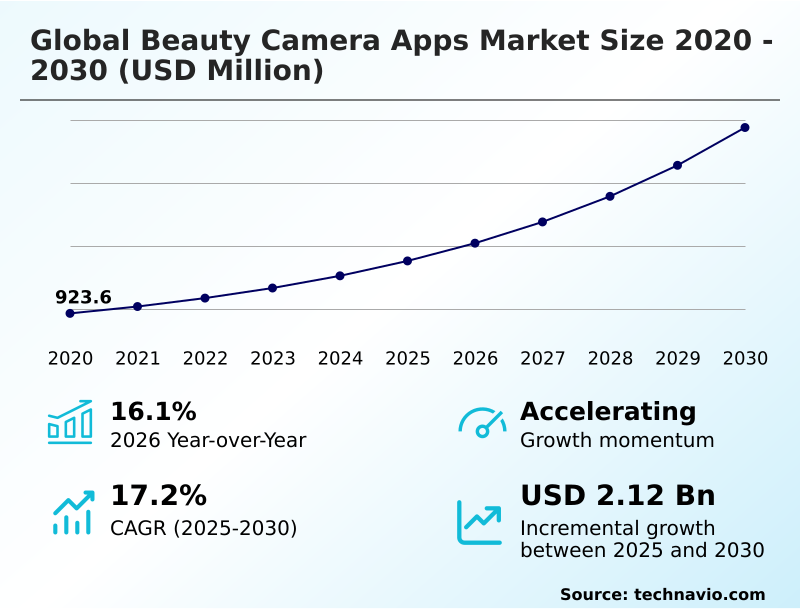
The beauty camera apps market size is valued to increase by USD 2.12 billion, at a CAGR of 17.2% from 2025 to 2030. Increasing smartphone penetration globally will drive the beauty camera apps market.
Major Market Trends & Insights
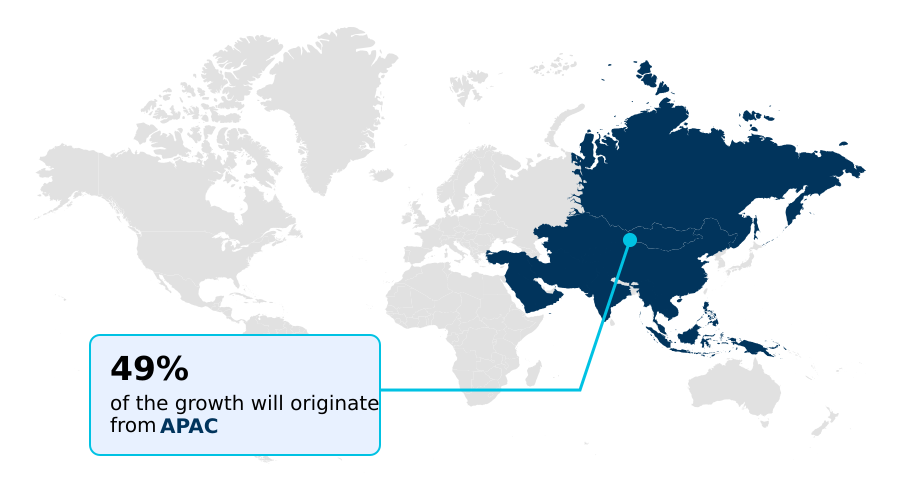
- APAC dominated the market and accounted for a 49% growth during the forecast period.
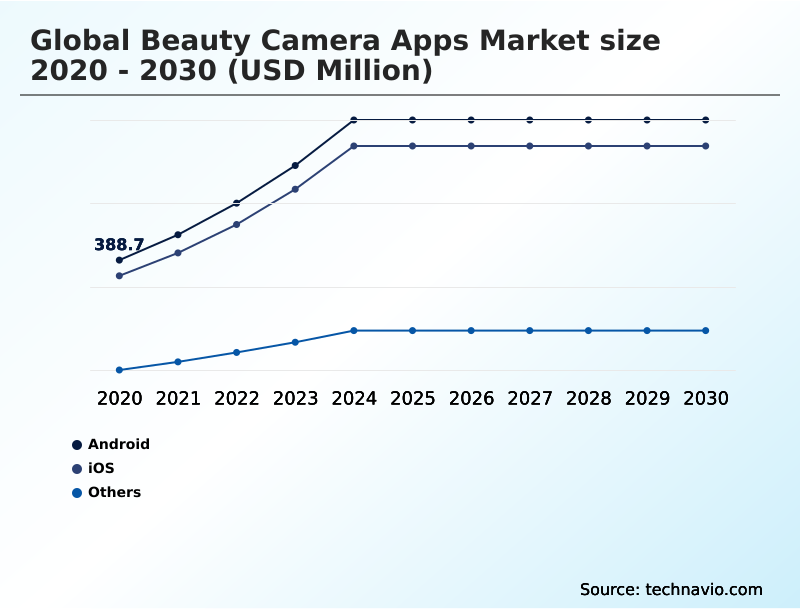
- By Product Type - Android segment was valued at USD 659.3 million in 2024
- By Solution - Free with in-app purchases segment accounted for the largest market revenue share in 2024
Market Size & Forecast
- Market Opportunities: USD 2.96 billion
- Market Future Opportunities: USD 2.12 billion
- CAGR from 2025 to 2030 : 17.2%
Market Summary
- The beauty camera apps market is defined by rapid technological evolution, centered on sophisticated artificial intelligence and augmented reality. The industry has moved beyond simple filters to complex generative AI models that offer high-fidelity digital enhancements. This progression is fueled by the rising influence of social media platforms and growing consumer demand for professional-grade editing tools on mobile devices.
- A key business application involves e-commerce integration, where a cosmetics brand can deploy a virtual makeup application using 3D facial reconstruction. This allows customers to engage in a virtual try-on experience, significantly boosting user engagement and driving sales without the need for physical product samples.
- However, the market's trajectory is tempered by significant challenges, including intense competition from free applications and growing consumer concerns regarding the privacy and use of facial data. Success in this landscape requires continuous innovation in features, monetization strategies, and a commitment to data security.
- Vendors are focusing on creating unique, value-added experiences that free alternatives cannot easily replicate, such as hyper-realistic AR effects and advanced video editing capabilities.
What will be the Size of the Beauty Camera Apps Market during the forecast period?
Get Key Insights on Market Forecast (PDF) Request Free Sample
How is the Beauty Camera Apps Market Segmented?
The beauty camera apps industry research report provides comprehensive data (region-wise segment analysis), with forecasts and estimates in "USD million" for the period 2026-2030, as well as historical data from 2020-2024 for the following segments.
- Product type
- Android
- iOS
- Others
- Solution
- Free with in-app purchases
- Freemium
- Paid subscription
- Type
- Standalone apps
- Integrated into social media platforms
- Camera accessories
- Geography
- APAC
- China
- India
- Japan
- North America
- US
- Canada
- Mexico
- Europe
- Germany
- UK
- France
- South America
- Brazil
- Argentina
- Colombia
- Middle East and Africa
- Saudi Arabia
- UAE
- South Africa
- Rest of World (ROW)
- APAC
By Product Type Insights
The android segment is estimated to witness significant growth during the forecast period.
The market is segmented by product type, solution, and geography. The Android segment is a significant market force, driven by a diverse hardware ecosystem and a large global user base.
Developers in this space face challenges related to device fragmentation, which they address by leveraging advanced photo enhancement APIs and photo retouching SDKs. The increasing adoption of on-device AI processing is critical for delivering low-latency, privacy-centric experiences.
As core AI-powered photo editing features become standard in native operating systems, third-party app developers are compelled to innovate with specialized portrait editing tools and deep learning models.
This competition has accelerated the integration of sophisticated facial feature mapping, with some platforms achieving a 99% accuracy rate in real-time facial landmark detection, enabling more realistic digital enhancements and personalized user experiences.
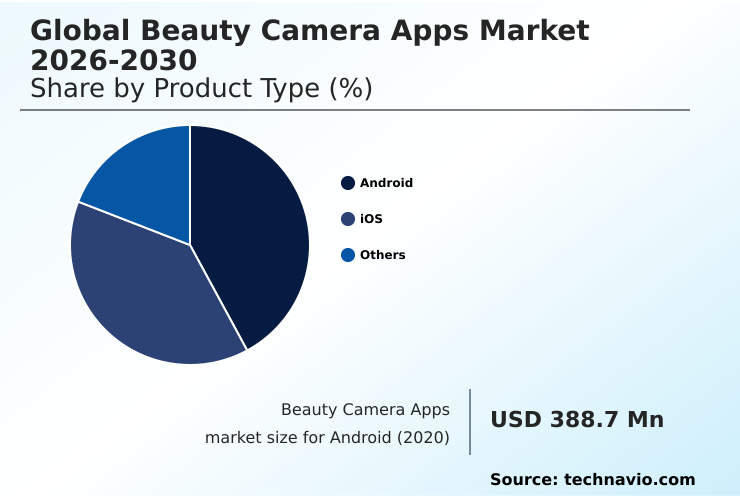
The Android segment was valued at USD 659.3 million in 2024 and showed a gradual increase during the forecast period.
Regional Analysis
APAC is estimated to contribute 49% to the growth of the global market during the forecast period.Technavio’s analysts have elaborately explained the regional trends and drivers that shape the market during the forecast period.
See How Beauty Camera Apps Market Demand is Rising in APAC Request Free Sample
The geographic landscape of the market is led by the APAC region, which is projected to contribute approximately 49% of the market's incremental growth.
This dominance is fueled by a strong culture of digital self-expression in countries like China and high smartphone penetration in India.
In these markets, there is a strong demand for localized predictive AI filters and virtual hairstyle simulation that align with regional beauty standards. North America follows, with a focus on integrating these technologies with social commerce.
The competitive environment is driving innovation in generative adversarial networks and image reconstruction algorithms, forcing developers to utilize cross-platform AR development and AR effects for social media to capture and retain user interest in a crowded marketplace.
Market Dynamics
Our researchers analyzed the data with 2025 as the base year, along with the key drivers, trends, and challenges. A holistic analysis of drivers will help companies refine their marketing strategies to gain a competitive advantage.
- The evolution of the market is increasingly focused on technical sophistication, moving toward hyper-realism and specialized use cases. Core advancements in AI for realistic skin retouching and 3D facial mesh generation are establishing new quality benchmarks. These technologies enable more immersive applications, such as real-time video makeup application and seamless, real-time hair color changing.
- Beyond personal use, these tools have significant commercial implications. AR filters for brand marketing are becoming a key component of digital campaigns, while AI photo enhancement for e-commerce helps create compelling product visuals. Enterprises that integrate augmented reality for jewelry try-on often report user engagement metrics that are twice as high as static image galleries.
- The technical debate between on-device vs cloud AI processing is central to strategy, as developers balance performance with user privacy in facial data analysis. Innovations like generative AI avatar creation tools and AI to adjust facial symmetry are pushing the boundaries of personalization.
- Further specialized functions, such as AI for automatic blemish removal, AI to enhance photo resolution, and the ability to create custom AR filters through a beauty tech SDK for developers, define the competitive frontier.
- This rich feature set is vital for both standalone apps and AI in social media filters, which continue to drive mainstream adoption and user engagement through features like automated video highlight generation.
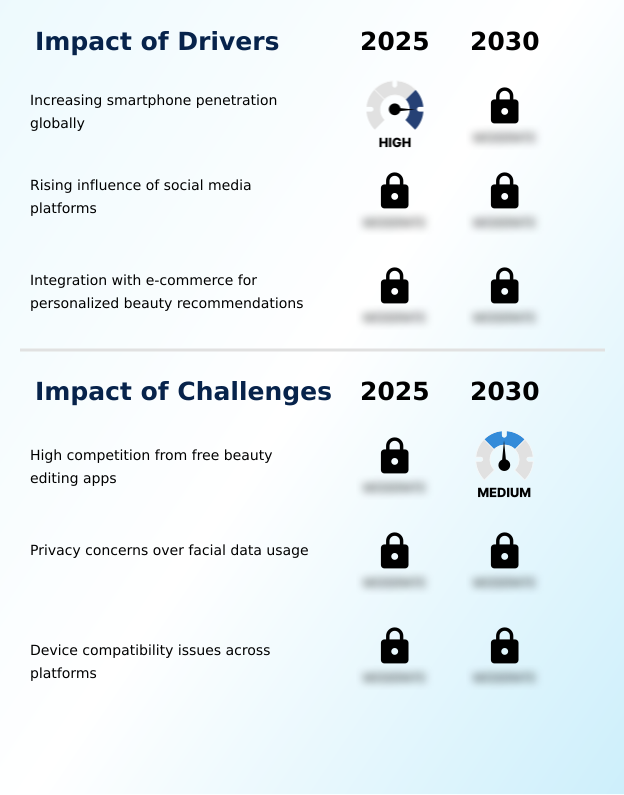
What are the key market drivers leading to the rise in the adoption of Beauty Camera Apps Industry?
- The expansion of the market is significantly driven by the increasing global penetration of high-capability smartphones.
- Market growth is fundamentally driven by the global proliferation of smartphones equipped with powerful hardware, including advanced cameras and dedicated neural processing units.
- This hardware acceleration enables complex, on-device AI-driven video beautification and high-resolution rendering without significant latency, which is critical for real-time applications. The rising influence of social media platforms, which prioritize visually compelling content, further fuels demand.
- Smartphone adoption in key emerging markets continues to drive a 25% year-over-year increase in related app downloads. Developers are harnessing these conditions by implementing sophisticated computer vision algorithms and style transfer technology.
- The demand for AI-powered camera features and selfie enhancement technology is pushing innovation in mobile GPU acceleration for AI, creating a dynamic ecosystem for growth and user acquisition.
What are the market trends shaping the Beauty Camera Apps Industry?
- The market is increasingly shaped by the emergence of AI-powered real-time beauty enhancement tools. This trend is redefining user expectations for digital self-expression and interaction.
- Key market trends are centered on the integration of advanced AI and AR technologies to deliver hyper-realistic user experiences. The adoption of generative AI models enables 3D facial reconstruction and sophisticated virtual makeup application, creating effects that were previously achievable only with professional software.
- This shift is driving demand for AR beauty filter development and virtual try-on for e-commerce, with AR-driven product visualizations proven to increase online sales conversion rates by over 60%. Innovations in real-time facial analysis and AI image processing allow for dynamic adjustments that maintain realism.
- Leading applications are incorporating real-time video processing APIs and tools for generative AI for content creation, setting new standards for user engagement and creative expression.
What challenges does the Beauty Camera Apps Industry face during its growth?
- Industry growth is constrained by high competition from a wide array of free beauty editing applications.
- A primary market challenge is the intense competition from free alternatives, including features embedded within native smartphone cameras and major social media platforms. With over 80% of consumers expressing reluctance to pay for applications when comparable free options are available, monetizing through subscriptions or premium sales is difficult. This forces developers to innovate continuously to justify their value proposition.
- Furthermore, rising consumer awareness and regulatory scrutiny around facial recognition privacy compliance create significant operational and legal hurdles. Effectively managing user data privacy in AI apps is now a critical business imperative.
- The need to deliver unique features like superior skin texture preservation, flawless digital cosmetic overlays, and precise semantic image segmentation, while navigating a price-sensitive and privacy-conscious market, remains a core strategic challenge.
Exclusive Technavio Analysis on Customer Landscape
The beauty camera apps market forecasting report includes the adoption lifecycle of the market, covering from the innovator’s stage to the laggard’s stage. It focuses on adoption rates in different regions based on penetration. Furthermore, the beauty camera apps market report also includes key purchase criteria and drivers of price sensitivity to help companies evaluate and develop their market growth analysis strategies.
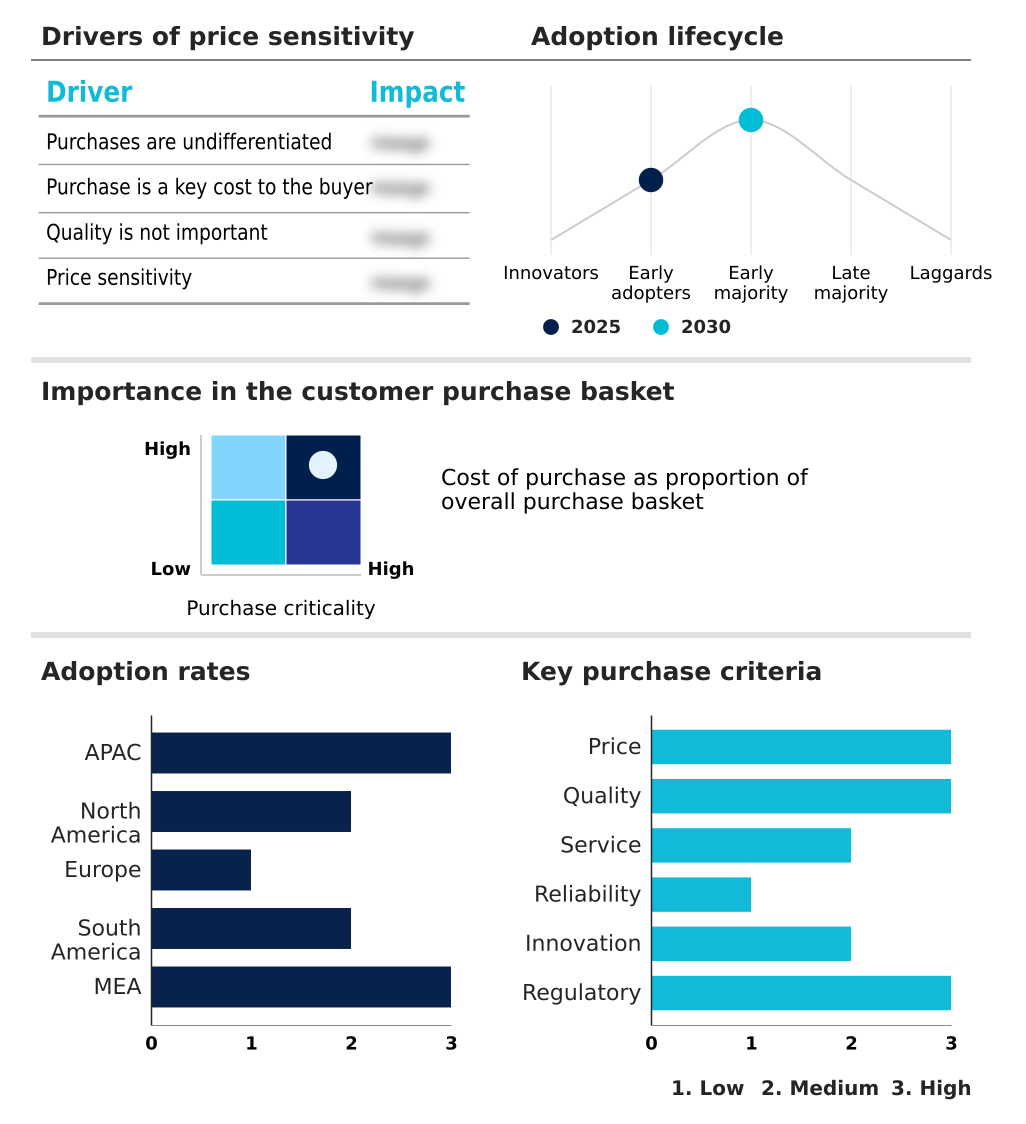
Customer Landscape of Beauty Camera Apps Industry
Competitive Landscape
Companies are implementing various strategies, such as strategic alliances, beauty camera apps market forecast, partnerships, mergers and acquisitions, geographical expansion, and product/service launches, to enhance their presence in the industry.
Adobe Inc. - Key offerings include integrated AI and AR solutions that provide professional-grade digital content creation tools and optimize customer experiences on mobile platforms.
The industry research and growth report includes detailed analyses of the competitive landscape of the market and information about key companies, including:
- Adobe Inc.
- Beijing Beta Technology
- ByteDance Ltd.
- Chengdu Pinguo Technology Co.
- Claranova SE
- CyberLink Corp.
- FaceApp
- InShot lnc.
- Lightricks Ltd.
- Meitu Inc.
- Perfect Corp.
- PicsArt Inc.
- Pixocial Technology Pte. Ltd.
- Prisma Labs Inc
- Reface
- Snap Inc.
- SNOW Corp.
- TOGL Technology Sdn Bhd
Qualitative and quantitative analysis of companies has been conducted to help clients understand the wider business environment as well as the strengths and weaknesses of key industry players. Data is qualitatively analyzed to categorize companies as pure play, category-focused, industry-focused, and diversified; it is quantitatively analyzed to categorize companies as dominant, leading, strong, tentative, and weak.
Recent Development and News in Beauty camera apps market
- In August, 2025, Xiaomi introduced a decentralized artificial intelligence processing framework, enabling beauty camera applications to execute complex facial reconstruction algorithms locally on mid-range hardware without cloud connectivity.
- In April, 2025, BeautyPlus released a significant facial reshaping update, introducing precision tools for adjusting face shape, eyes, and other facial features with natural-looking results through advanced AI.
- In January, 2025, Samsung Electronics unveiled its new ProVisual Engine with the latest smartphone series, which uses artificial intelligence to enhance facial textures in real-time during video captures.
- In January, 2025, YouCam Makeup introduced an Expression Switcheroo feature, which allows users to modify facial expressions in photos using powerful AI-driven editing tools.
Dive into Technavio’s robust research methodology, blending expert interviews, extensive data synthesis, and validated models for unparalleled Beauty Camera Apps Market insights. See full methodology.
| Market Scope | |
|---|---|
| Page number | 282 |
| Base year | 2025 |
| Historic period | 2020-2024 |
| Forecast period | 2026-2030 |
| Growth momentum & CAGR | Accelerate at a CAGR of 17.2% |
| Market growth 2026-2030 | USD 2122.6 million |
| Market structure | Fragmented |
| YoY growth 2025-2026(%) | 16.1% |
| Key countries | China, India, Japan, South Korea, Australia, Indonesia, US, Canada, Mexico, Germany, UK, France, Italy, Spain, The Netherlands, Brazil, Argentina, Colombia, Saudi Arabia, UAE, South Africa, Israel and Egypt |
| Competitive landscape | Leading Companies, Market Positioning of Companies, Competitive Strategies, and Industry Risks |
Research Analyst Overview
- The market is undergoing a strategic shift driven by the integration of sophisticated technologies. Boardroom decisions increasingly center on R&D investments in proprietary generative AI models and on-device AI processing to mitigate reliance on cloud services and address data privacy concerns.
- This pivot is critical, as on-device implementation can reduce server-side operational costs by up to 40% for applications with high daily active users. The competitive landscape demands mastery of a wide array of tools, including AI-powered photo editing, augmented reality filters, and virtual makeup application.
- Success requires advanced capabilities in real-time facial analysis, 3D facial reconstruction, and AI image processing while ensuring skin texture preservation. The use of generative adversarial networks, deep learning models, and computer vision algorithms is now standard. Key functionalities such as AI-driven video beautification, semantic image segmentation, and style transfer technology are differentiators.
- Developers are leveraging neural processing units for high-resolution rendering and dynamic lighting adaptation to create more realistic interactive AR features and virtual hairstyle simulation with a real-time beautification engine.
What are the Key Data Covered in this Beauty Camera Apps Market Research and Growth Report?
-
What is the expected growth of the Beauty Camera Apps Market between 2026 and 2030?
-
USD 2.12 billion, at a CAGR of 17.2%
-
-
What segmentation does the market report cover?
-
The report is segmented by Product Type (Android, iOS, and Others), Solution (Free with in-app purchases, Freemium, and Paid subscription), Type (Standalone apps, Integrated into social media platforms, and Camera accessories) and Geography (APAC, North America, Europe, South America, Middle East and Africa)
-
-
Which regions are analyzed in the report?
-
APAC, North America, Europe, South America and Middle East and Africa
-
-
What are the key growth drivers and market challenges?
-
Increasing smartphone penetration globally, High competition from free beauty editing apps
-
-
Who are the major players in the Beauty Camera Apps Market?
-
Adobe Inc., Beijing Beta Technology, ByteDance Ltd., Chengdu Pinguo Technology Co., Claranova SE, CyberLink Corp., FaceApp, InShot lnc., Lightricks Ltd., Meitu Inc., Perfect Corp., PicsArt Inc., Pixocial Technology Pte. Ltd., Prisma Labs Inc, Reface, Snap Inc., SNOW Corp. and TOGL Technology Sdn Bhd
-
Market Research Insights
- The market's competitive dynamics are shaped by the strategic implementation of advanced technologies to improve business outcomes. Analysis of AI-driven user engagement metrics reveals that a well-executed AR beauty filter development strategy can increase average user session times by over 50%.
- Furthermore, integrating a virtual try-on for e-commerce solution has proven to reduce product returns by more than 30% for participating cosmetic brands. Developers are leveraging mobile camera enhancement software and real-time video processing APIs to deliver superior user experiences. Success depends on effective AI for personalized advertising, adherence to facial recognition privacy compliance, and utilizing generative AI for content creation.
- As the sector matures, differentiation is achieved through advanced portrait retouching, cross-platform AR development, and optimizing AI model optimization for mobile to ensure seamless performance.
We can help! Our analysts can customize this beauty camera apps market research report to meet your requirements.