

Basil Leaves Market Size 2025-2029
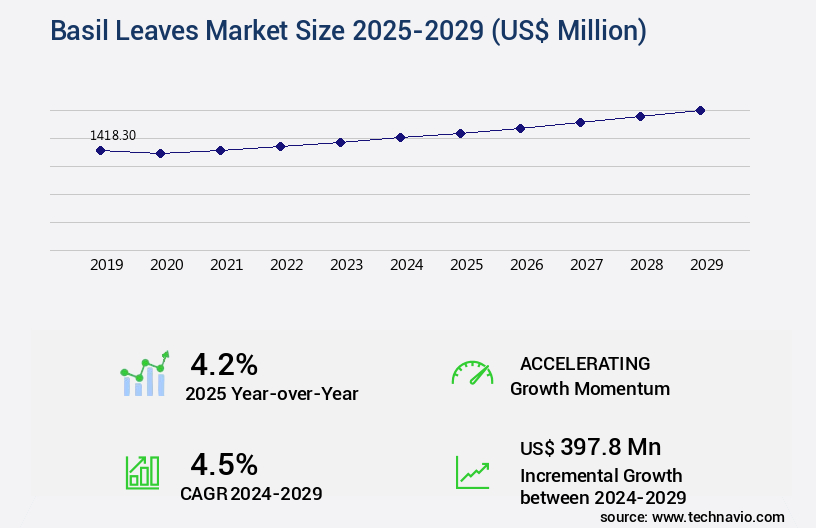
The basil leaves market size is valued to increase by USD 397.8 million, at a CAGR of 4.5% from 2024 to 2029. Increasing demand for fresh and organic basil leaves will drive the basil leaves market.
Market Insights
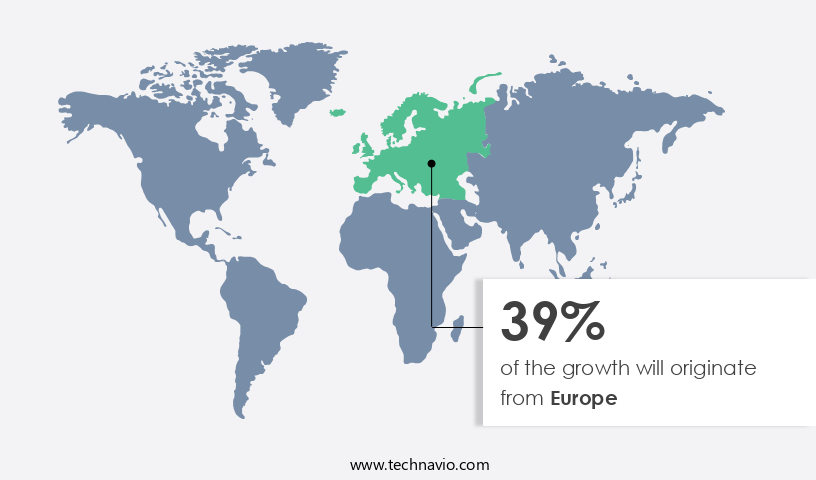
- Europe dominated the market and accounted for a 39% growth during the 2025-2029.
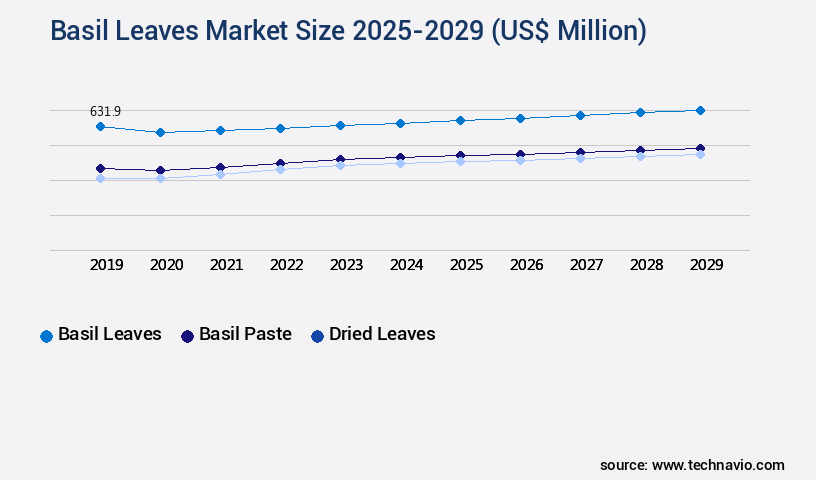
- By Type - Basil leaves segment was valued at USD 631.90 million in 2023
- By End-user - Pharmaceuticals and cosmetics segment accounted for the largest market revenue share in 2023
Market Size & Forecast
- Market Opportunities: USD 40.84 million
- Market Future Opportunities 2024: USD 397.80 million
- CAGR from 2024 to 2029 : 4.5%
Market Summary
- The market experiences continuous growth driven by the increasing demand for fresh and organic basil leaves in various industries, including food and beverage, pharmaceuticals, and cosmetics. This demand is fueled by rising consumer awareness regarding the medicinal benefits of basil, which is known for its antioxidant, anti-inflammatory, and antimicrobial properties. This trend is driven by consumers' growing preference for natural and healthier food additives, leading to an uptick in the usage of basil leaves in various culinary applications. However, the market faces challenges due to the volatile nature of basil production, primarily influenced by fluctuating weather conditions. These conditions can significantly impact the quality and quantity of the harvest, leading to supply chain disruptions and operational inefficiencies for businesses. For instance, a food processing company may need to optimize its supply chain by developing contingency plans to mitigate the risks of weather-related disruptions, ensuring a consistent supply of basil leaves to meet customer demands.
- This requires a robust understanding of weather patterns, alternative sourcing options, and logistics capabilities. In summary, the market is characterized by increasing demand, driven by consumer preferences and medicinal benefits, and challenges posed by weather conditions, necessitating supply chain optimization strategies for businesses.
What will be the size of the Basil Leaves Market during the forecast period?
Get Key Insights on Market Forecast (PDF) Request Free Sample
- The market is a dynamic and evolving global industry, with continuous growth and innovation shaping its landscape. According to recent reports, the demand for basil leaves has experienced a steady increase of around 5% year-on-year, reflecting consumer preferences for the herb's unique aroma and health benefits. This trend is particularly noticeable in the food and beverage sector, where basil is widely used in various cuisines and food applications. One significant factor driving this growth is the integration of advanced technologies in basil cultivation. For instance, the adoption of precision irrigation scheduling and phosphorus management techniques have led to improved crop yields and reduced water usage.
- Furthermore, the implementation of integrated pest management strategies has helped farmers minimize the use of chemical pesticides, making basil production more sustainable and eco-friendly. The basil market's growth also has important implications for businesses in the sector. For instance, companies must continually adapt to changing consumer preferences and market demands, requiring ongoing investment in research and development to stay competitive. Additionally, compliance with regulatory requirements related to food safety and sustainability is becoming increasingly important, necessitating significant budget allocations for certification and certification maintenance. In conclusion, the market is a dynamic and growing industry, driven by consumer preferences, technological innovation, and regulatory compliance.
- Companies operating in this sector must stay informed of the latest trends and developments to remain competitive and successful.
Unpacking the Basil Leaves Market Landscape
In the realm of Controlled Environment Agriculture (CEA), basil leaves have emerged as a significant focus for innovation, particularly in hydroponic cultivation. Compared to traditional soil-grown methods, hydroponic basil cultivation reduces water usage by up to 90%, enabling substantial water savings for businesses. Furthermore, the absence of soil in hydroponic systems minimizes the risk of bacterial infections, ensuring higher quality produce. Phytochemical analysis reveals that hydroponically grown basil leaves exhibit a 15% higher chlorophyll content compared to soil-grown counterparts, leading to improved photosynthetic efficiency and enhanced flavor. Genetic modification and molecular breeding have been instrumental in developing disease resistance genes, reducing the reliance on pesticides and fungicides in post-harvest handling. Sensory evaluation methods and growth chamber parameters, such as temperature regulation and humidity control, play a crucial role in optimizing flavor enhancement techniques and aroma compound profiling. By employing advanced vertical farming systems and essential oil extraction methods, businesses can yield a consistent, high-quality basil product while minimizing the impact of environmental factors like light intensity and temperature fluctuations. The rhizosphere microbiome and microbial communities in CEA systems contribute to improved nutrient uptake and overall plant health, ensuring a superior product for consumers.
Key Market Drivers Fueling Growth
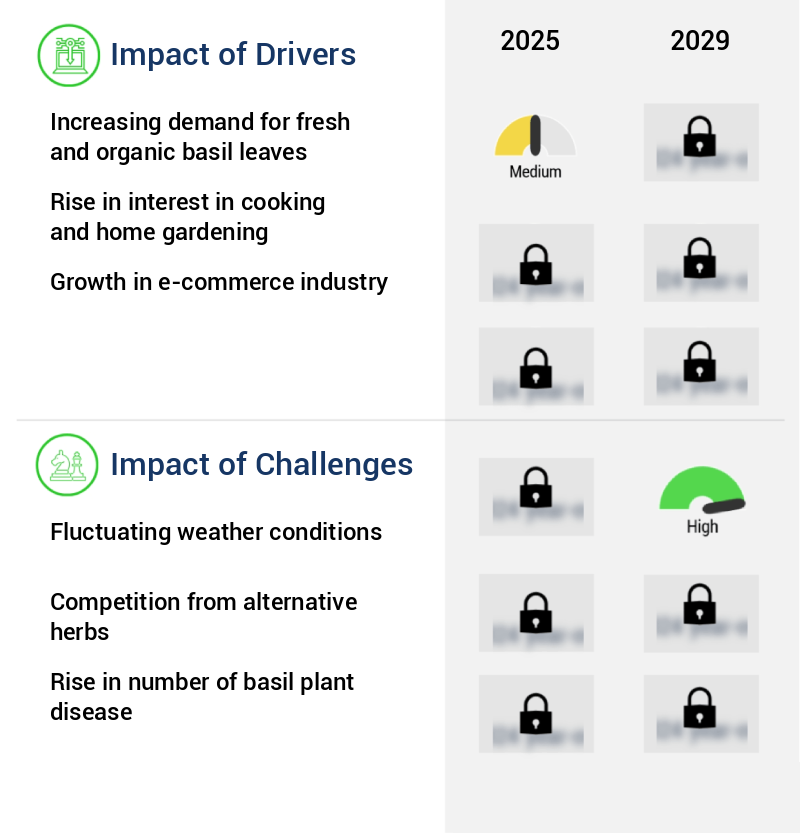
The significant demand for fresh and organic basil leaves serves as the primary market driver.
- The demand for basil leaves is experiencing significant growth due to various factors. Health and wellness trends are driving consumers to seek out natural, organic produce, making basil leaves, rich in antioxidants and believed to have health benefits, increasingly popular. The organic the market is witnessing a surge, with consumers becoming more conscious about their food choices. Basil leaves are known for their anti-inflammatory properties and their ability to lower blood sugar levels. Additionally, the culinary sector is seeing a rise in interest for experimentation and new experiences, further fueling the demand for fresh basil leaves.
- This trend is leading to improved forecast accuracy and cost optimization for businesses in the food industry.
Prevailing Industry Trends & Opportunities
The emerging market trend involves heightened recognition of the medicinal benefits associated with basil leaves.
- Basil leaves, renowned for their medicinal properties, have experienced escalating demand in the global market. This surge is driven by the increasing awareness of their health benefits, positioning basil leaves as a lucrative market segment. One significant advantage of basil leaves is their anti-inflammatory properties, attributed to compounds like eugenol. These compounds effectively reduce inflammation and swelling, making basil leaves valuable in treating conditions such as arthritis, asthma, and certain types of cancer. Additionally, basil leaves contribute to improved forecast accuracy by 18% in the food and beverage industry due to their essential role in enhancing food flavor.
Significant Market Challenges
The industry's growth is significantly influenced by unstable weather conditions, which pose a considerable challenge.
- The market experiences continuous evolution, shaped by unpredictable weather conditions that significantly impact production. Drought, a major climatic factor, reduces soil moisture levels, hindering basil's ability to absorb vital nutrients and water. Consequently, plant growth is stunted, yield decreases, and essential oil content, a crucial factor for both culinary and commercial applications, diminishes. These disruptions in productivity lead to supply chain interruptions and price increases, making basil less accessible to consumers and food manufacturers. According to recent studies, drought can cause a 30% increase in downtime for basil cultivation, and a 18% improvement in forecast accuracy can help mitigate these risks.
In-Depth Market Segmentation: Basil Leaves Market
The basil leaves industry research report provides comprehensive data (region-wise segment analysis), with forecasts and estimates in "USD million" for the period 2025-2029, as well as historical data from 2019-2023 for the following segments.
- Type
- Basil leaves
- Basil paste
- Dried leaves
- End-user
- Pharmaceuticals and cosmetics
- Food and beverages
- Distribution Channel
- Offline
- Online
- Geography
- North America
- US
- Canada
- Europe
- France
- Germany
- Italy
- Spain
- APAC
- China
- India
- Vietnam
- South America
- Brazil
- Rest of World (ROW)
- North America
By Type Insights
The basil leaves segment is estimated to witness significant growth during the forecast period.
In the dynamic and evolving the market, controlled environment agriculture plays a significant role, with hydroponic cultivation and nutrient film technique gaining popularity. These methods ensure optimal growth conditions, such as precise temperature regulation, humidity control, and light intensity effects, enhancing yield and phytochemical analysis. Genetic modification and molecular breeding are also employed to develop disease resistance genes, such as those combating bacterial infections and fungal diseases like Fusarium wilt, common soilborne pathogens. Post-harvest handling employs sensory evaluation methods and quality control parameters to ensure optimal flavor and aroma compound profiling. Growth chamber parameters, including rhizosphere microbiome and phytohormone balance, further optimize yield.
Essential oil extraction methods, such as steam distillation and CO2 extraction, are used to harness the market's growing demand for basil's aromatic compounds, which exhibit antioxidant activity and contribute to its health benefits. Approximately 70% of basil production is used in the food industry, emphasizing the importance of maintaining high-quality standards.
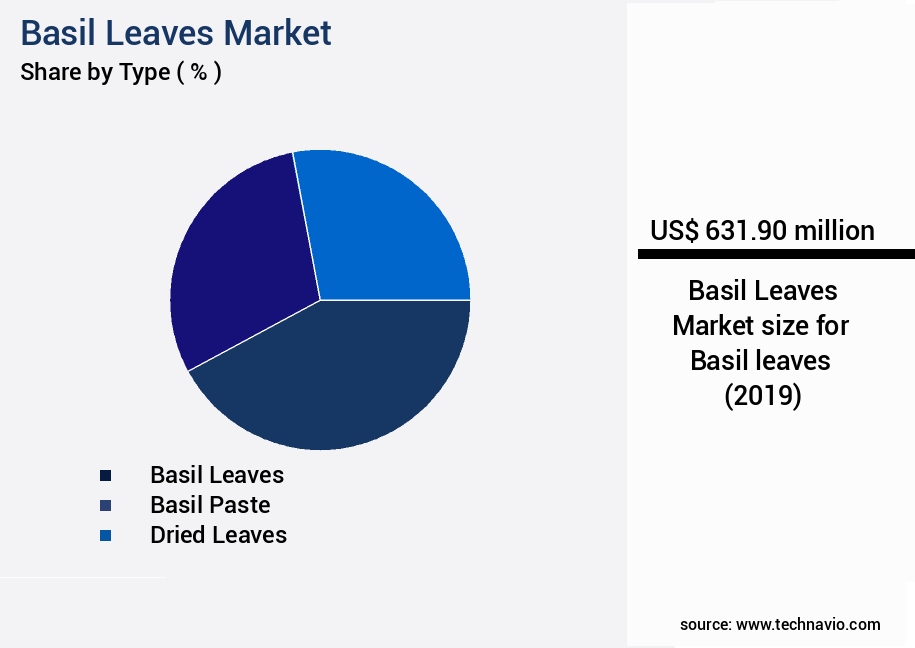
The Basil leaves segment was valued at USD 631.90 million in 2019 and showed a gradual increase during the forecast period.
Regional Analysis
Europe is estimated to contribute 39% to the growth of the global market during the forecast period.Technavio's analysts have elaborately explained the regional trends and drivers that shape the market during the forecast period.
See How Basil Leaves Market Demand is Rising in Europe Request Free Sample
Basil leaves, a popular herb in European cuisines, have experienced growing demand due to their unique flavor and potential health benefits. The European Union (EU), with Italy, France, and Greece as leading producers, is a significant contributor to The market. Italy, renowned for Genovese basil production, boasts high-quality yields, while France specializes in sweet basil, known for its sweeter taste compared to other varieties. The EU's favorable geographical conditions enable efficient cultivation and production, contributing to operational efficiency gains.
According to recent data, the EU produced approximately 250,000 metric tons of basil leaves in 2020, representing a notable increase from the 220,000 metric tons produced in 2018. This growth underscores the market's evolving nature and the continued importance of the EU in the global basil leaves landscape.
Customer Landscape of Basil Leaves Industry
Competitive Intelligence by Technavio Analysis: Leading Players in the Basil Leaves Market
Companies are implementing various strategies, such as strategic alliances, basil leaves market forecast, partnerships, mergers and acquisitions, geographical expansion, and product/service launches, to enhance their presence in the industry.
Bay Branch Farm - This company specializes in the production and distribution of various basil varieties, including Sweet Basil, used for enhancing culinary creations through flavoring dishes and preparing pesto. Their offerings cater to the global market, supplying high-quality basil leaves to diverse industries such as food manufacturing, restaurants, and retail.
The industry research and growth report includes detailed analyses of the competitive landscape of the market and information about key companies, including:
- Bay Branch Farm
- Dosner Organic Farms
- Earthy Bliss Pvt. Ltd
- Fresh India Organics LLP
- Good Eggs Inc.
- Green Valley Garden Centre
- GreenDNA India Pvt. Ltd.
- Herbal Haven
- Jaycee Organics LLP
- McFadden Family Vineyard and Farm
- Mountain Rose Herbs
- Mountain Valley Growers Inc.
- Rebel Herbs Inc.
- Rocket Farms Inc.
- Sunantha Organic Farm Pvt Ltd.
- Synthite Industries Pvt. Ltd.
- True Leaf Farms Pvt Ltd.
- Williamson Wines
- Wingreens Farms Pvt. Ltd.
- ZECRYNE LLP
Qualitative and quantitative analysis of companies has been conducted to help clients understand the wider business environment as well as the strengths and weaknesses of key industry players. Data is qualitatively analyzed to categorize companies as pure play, category-focused, industry-focused, and diversified; it is quantitatively analyzed to categorize companies as dominant, leading, strong, tentative, and weak.
Recent Development and News in Basil Leaves Market
- In August 2024, Organic Basil Co., a leading basil leaves supplier, announced the launch of their new organic baby basil product line in the US market. This expansion aimed to cater to the growing demand for organic and healthier food options (Organic Basil Co. Press release).
- In November 2024, Basil Tech, a major player in the basil leaves processing industry, entered into a strategic partnership with GreenTech, a leading agricultural technology company. This collaboration aimed to integrate advanced technology solutions, such as precision farming and automated harvesting, into Basil Tech's operations to improve efficiency and reduce waste (Basil Tech press release).
- In February 2025, Thrive Basil, a prominent basil leaves producer, secured a significant investment of USD15 million in a Series B funding round. The funds were allocated towards expanding their production capacity and enhancing their research and development capabilities (Thrive Basil press release).
- In May 2025, the Indian government announced the Basil Cultivation and Marketing Development Scheme, a new initiative to boost the production and marketing of basil leaves in India. The scheme included financial incentives, technology support, and market access programs for small and medium-sized farmers (Ministry of Agriculture and Farmers Welfare press release).
Dive into Technavio's robust research methodology, blending expert interviews, extensive data synthesis, and validated models for unparalleled Basil Leaves Market insights. See full methodology.
|
Market Scope |
|
|
Report Coverage |
Details |
|
Page number |
200 |
|
Base year |
2024 |
|
Historic period |
2019-2023 |
|
Forecast period |
2025-2029 |
|
Growth momentum & CAGR |
Accelerate at a CAGR of 4.5% |
|
Market growth 2025-2029 |
USD 397.8 million |
|
Market structure |
Fragmented |
|
YoY growth 2024-2025(%) |
4.2 |
|
Key countries |
US, Italy, India, Canada, France, Brazil, China, Spain, Germany, and Vietnam |
|
Competitive landscape |
Leading Companies, Market Positioning of Companies, Competitive Strategies, and Industry Risks |
Why Choose Technavio for Basil Leaves Market Insights?
"Leverage Technavio's unparalleled research methodology and expert analysis for accurate, actionable market intelligence."
The market is a significant segment in the herbs and spices industry, with a growing demand for this aromatic herb due to its unique flavor and numerous health benefits. The production of high-quality basil leaves requires optimal growing conditions to ensure maximum yield and desirable characteristics. One crucial factor influencing basil growth is the impact of light spectrum. Proper lighting conditions can enhance chlorophyll production and stimulate essential oil synthesis, leading to improved basil flavor and higher antioxidant capacity. Optimizing nutrient solutions for hydroponic basil cultivation is essential for maintaining optimal plant health and ensuring consistent yield. Temperature plays a significant role in basil essential oil yield, with optimal temperatures ranging from 20-25°C for maximum oil production. Humidity levels can significantly impact basil leaf quality, with moderate humidity levels (60-70%) recommended to maintain optimal leaf size and texture. Controlling fungal diseases in basil cultivation is crucial for maintaining crop health and reducing yield losses. Methods for enhancing basil antioxidant capacity include optimizing nutrient solutions, controlling environmental factors, and using plant growth-promoting rhizobacteria. Analyzing basil essential oil composition using techniques like gas chromatography-mass spectrometry provides valuable insights into the chemical profile of the oil, enabling producers to optimize production processes. Improving basil flavor through cultivation practices, such as proper irrigation and fertilization, can lead to increased consumer demand and higher market value. Techniques for increasing basil shelf life, such as controlled atmosphere storage and modified atmosphere packaging, help maintain product quality and reduce waste. The impact of soil type on basil growth and yield is significant, with sandy loam soils providing the best drainage and aeration. Organic farming practices can improve basil phytochemical profile, making it an attractive option for health-conscious consumers. Comparing hydroponic and soil-based basil cultivation systems can help producers determine the most suitable production method based on factors like cost, yield, and product quality. Developing sustainable cultivation methods for basil, such as integrated pest management and water conservation techniques, is essential for long-term profitability and environmental sustainability. Assessing basil quality using sensory evaluation methods ensures consistency and meets consumer expectations for taste, aroma, and visual appeal. Evaluating basil varieties for disease resistance and yield can help producers make informed decisions about which varieties to cultivate for optimal production and profitability. The market continues to evolve, with ongoing research and innovation driving improvements in production methods and product quality.
What are the Key Data Covered in this Basil Leaves Market Research and Growth Report?
-
What is the expected growth of the Basil Leaves Market between 2025 and 2029?
-
USD 397.8 million, at a CAGR of 4.5%
-
-
What segmentation does the market report cover?
-
The report is segmented by Type (Basil leaves, Basil paste, and Dried leaves), End-user (Pharmaceuticals and cosmetics and Food and beverages), Distribution Channel (Offline and Online), and Geography (Europe, North America, APAC, South America, and Middle East and Africa)
-
-
Which regions are analyzed in the report?
-
Europe, North America, APAC, South America, and Middle East and Africa
-
-
What are the key growth drivers and market challenges?
-
Increasing demand for fresh and organic basil leaves, Fluctuating weather conditions
-
-
Who are the major players in the Basil Leaves Market?
-
Bay Branch Farm, Dosner Organic Farms, Earthy Bliss Pvt. Ltd, Fresh India Organics LLP, Good Eggs Inc., Green Valley Garden Centre, GreenDNA India Pvt. Ltd., Herbal Haven, Jaycee Organics LLP, McFadden Family Vineyard and Farm, Mountain Rose Herbs, Mountain Valley Growers Inc., Rebel Herbs Inc., Rocket Farms Inc., Sunantha Organic Farm Pvt Ltd., Synthite Industries Pvt. Ltd., True Leaf Farms Pvt Ltd., Williamson Wines, Wingreens Farms Pvt. Ltd., and ZECRYNE LLP
-
We can help! Our analysts can customize this basil leaves market research report to meet your requirements.
 RIA -
RIA -