
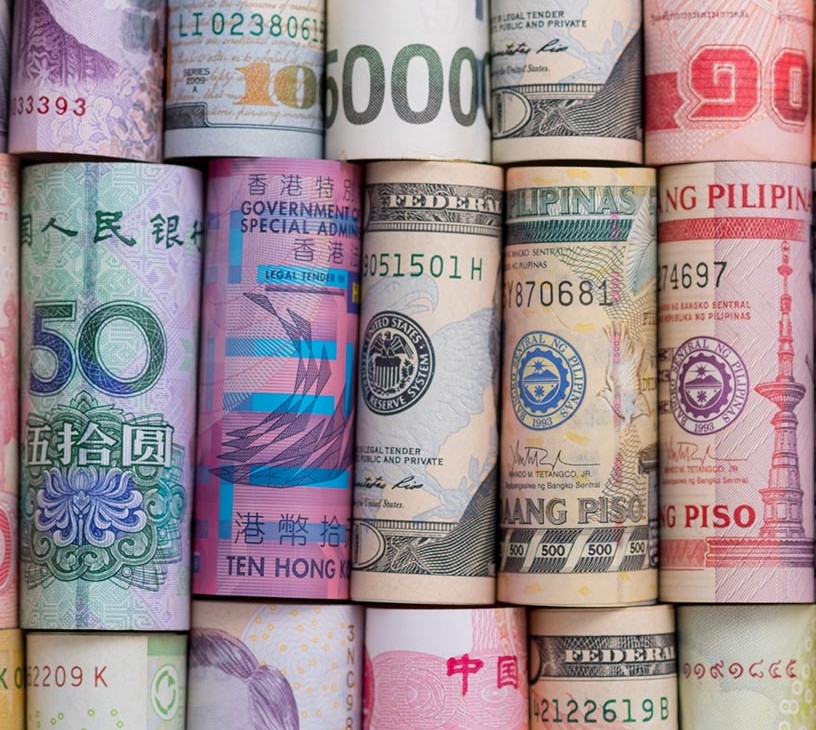


Banknote Market Size 2026-2030
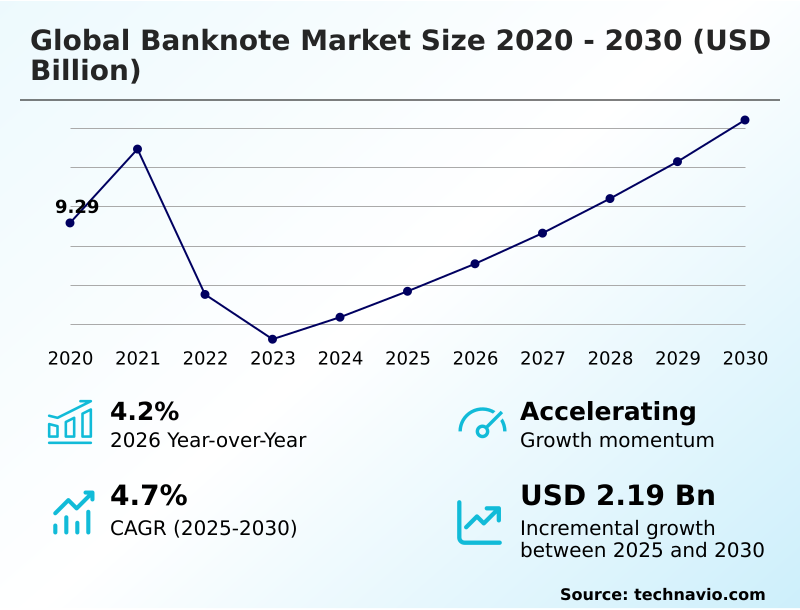
The banknote market size is valued to increase by USD 2.19 billion, at a CAGR of 4.7% from 2025 to 2030. Escalating demand for high-security features and counterfeit deterrence will drive the banknote market.
Major Market Trends & Insights
- APAC dominated the market and accounted for a 68.1% growth during the forecast period.
- By Type - State-owned segment was valued at USD 6.89 billion in 2024
- By Application - Intaglio printing segment accounted for the largest market revenue share in 2024
Market Size & Forecast
- Market Opportunities: USD 1.31 billion
- Market Future Opportunities: USD 2.19 billion
- CAGR from 2025 to 2030 : 4.7%
Market Summary
- The banknote market is defined by a continuous push for technological resilience and security innovation to maintain the relevance of physical currency. Central banks globally are focused on upgrading their currency with features that deter sophisticated counterfeiting, such as advanced holographic security threads and micro-optic features.
- This involves a strategic shift towards more durable substrates, including polymer and hybrid materials, which not only extend the circulation life of notes but also accommodate more complex security elements.
- For instance, a central monetary authority must balance the higher initial cost of polymer substrates, which offer superior durability and cleanliness, against the familiar tactility of banknote paper that the public trusts. This decision-making process is critical as cash remains vital for financial inclusion and as a resilient payment method during digital infrastructure outages.
- The industry is also contending with the rise of digital payment infrastructure and central bank digital currencies, forcing a re-evaluation of cash cycle management and the long-term role of physical legal tender as both a medium of exchange and a store of value.
- The strategic modernization of currency management systems, including secure printing and automated processing, is essential for operational efficiency.
What will be the Size of the Banknote Market during the forecast period?
Get Key Insights on Market Forecast (PDF) Request Free Sample
How is the Banknote Market Segmented?
The banknote industry research report provides comprehensive data (region-wise segment analysis), with forecasts and estimates in "USD million" for the period 2026-2030, as well as historical data from 2020-2024 for the following segments.
- Type
- State-owned
- Commercial
- Application
- Intaglio printing
- Offset printing
- Letterpress printing
- Material
- Paper
- Polymer
- Hybrid
- Geography
- APAC
- China
- India
- Japan
- Middle East and Africa
- South Africa
- Saudi Arabia
- UAE
- South America
- Brazil
- Argentina
- Colombia
- North America
- US
- Canada
- Mexico
- Europe
- Germany
- UK
- France
- Rest of World (ROW)
- APAC
By Type Insights
The state-owned segment is estimated to witness significant growth during the forecast period.
The global banknote market is segmented by type, application, material, and geography. By type, the market includes state-owned and commercial entities. Application-wise, it covers intaglio printing, offset printing, and letterpress printing. Material segmentation comprises paper, polymer, and hybrid substrates.
The market's geographical scope extends across APAC, the Middle East and Africa, South America, North America, and Europe. This segmentation reflects the diverse banknote production processes and material choices driven by varying security needs and operational priorities.
Advanced anti-counterfeit measures, such as holographic security threads and optically variable inks, are critical across segments, influencing decisions on substrate and printing techniques.
As digital payment infrastructure expands, the focus on durable and secure physical currency intensifies, shaping both state-owned and commercial banknote production strategies.
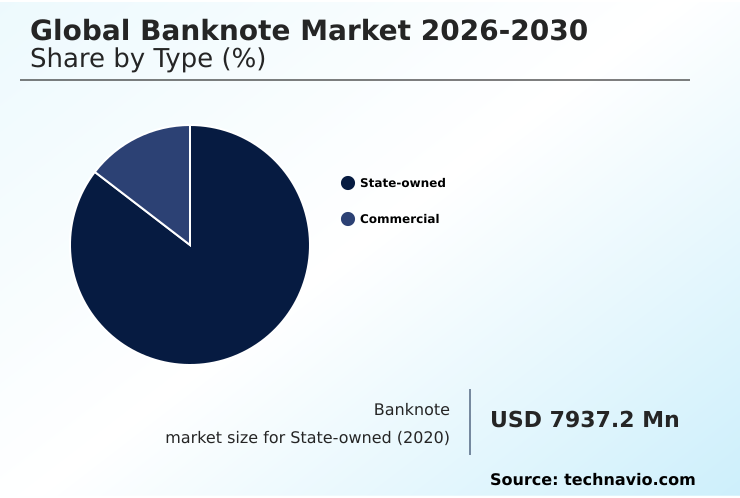
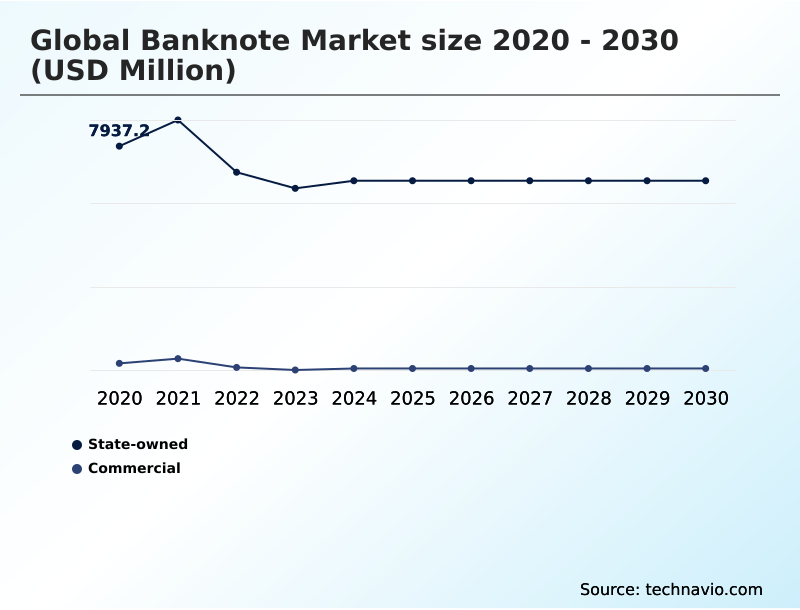
The State-owned segment was valued at USD 6.89 billion in 2024 and showed a gradual increase during the forecast period.
Regional Analysis
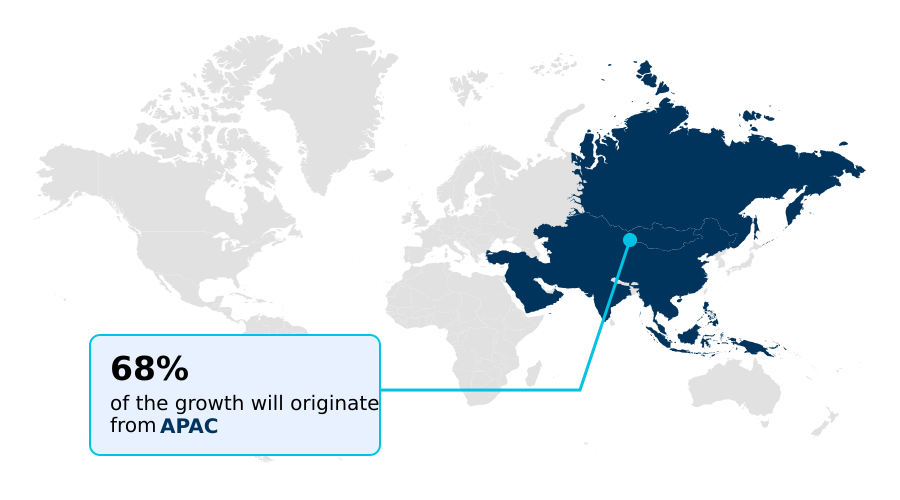
APAC is estimated to contribute 68.1% to the growth of the global market during the forecast period.Technavio’s analysts have elaborately explained the regional trends and drivers that shape the market during the forecast period.
See How Banknote Market Demand is Rising in APAC Request Free Sample
The geographic landscape of the banknote market is dominated by the APAC region, which is projected to contribute over 68% of the market's incremental growth, driven by high cash usage and currency modernization projects.
In contrast, North America and Europe collectively represent less than 8% of new growth opportunities, reflecting mature markets with high digital currency adoption.
Regional dynamics are increasingly influenced by the need for enhanced cash logistics and secure cash-in-transit operations, particularly in developing economies. Central banks are implementing measures like dye-staining technology to secure the currency supply chain.
Decisions regarding currency redesign and the selection of high-security paper versus polymer are often tied to regional economic factors and the need to ensure monetary stability.
The coexistence of physical legal tender with emerging tokenised bank liabilities is a key consideration shaping regional strategies.
Market Dynamics
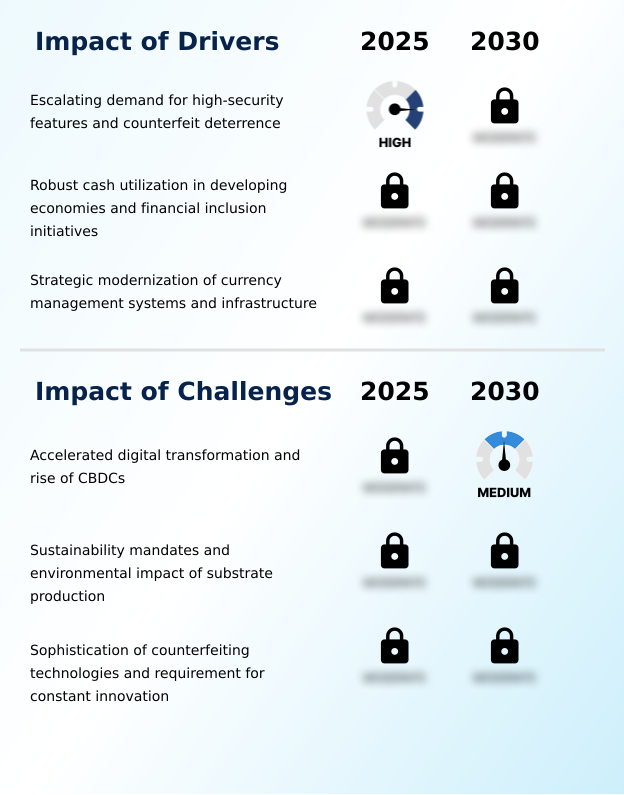
Our researchers analyzed the data with 2025 as the base year, along with the key drivers, trends, and challenges. A holistic analysis of drivers will help companies refine their marketing strategies to gain a competitive advantage.
- Strategic decisions within the global banknote market are increasingly shaped by the total cost of currency ownership, forcing a detailed comparison of polymer versus paper banknote durability. This analysis extends beyond initial production to encompass the entire banknote lifecycle management, where sustainability challenges are becoming a key factor.
- The environmental impact of banknote substrate production is under intense scrutiny, driving innovation in hybrid substrate technology for currency longevity and improved methods for recycling polymer banknotes. In parallel, the technological arms race in banknote counterfeiting continues, elevating the role of intaglio printing in counterfeit deterrence and spurring the development of micro-optic features for public banknote authentication.
- Central banks are adopting comprehensive currency redesign strategies that balance security features with banknote aesthetics to reinforce national identity. The integration of machine-readable features for automated cash processing is critical for managing cash cycles, especially in high-inflation economies where modernization of cash-in-transit security systems is also a priority.
- Some authorities have reported a drop in counterfeit incidents of over 50% in the years following a new series launch, underscoring the effectiveness of these comprehensive upgrades. Ultimately, central bank policies on clean note circulation and the integration of tactile features for the visually impaired are becoming standard, ensuring cash remains an inclusive and secure medium.
What are the key market drivers leading to the rise in the adoption of Banknote Industry?
- The escalating demand for high-security features to deter counterfeiting is a key driver for the market.
- Market growth is primarily driven by the continuous need for advanced security features to maintain public trust in physical currency. The integration of micro-optic features, complex watermark technology, and color-shifting inks serves as a primary defense against counterfeiting.
- These public authentication elements are designed for easy verification while remaining difficult to replicate. Innovations such as see-through registers and latent images, created through precision printing, further enhance security.
- The demand for robust monetary policy instruments is fueling investment in a resilient currency infrastructure. Automation is also a significant factor, with cash handling automation and high-speed sorting systems requiring standardized machine-readable features.
- This push for technological upgrades ensures banknotes can be processed with over 99.9% accuracy, strengthening the integrity of the cash ecosystem.
What are the market trends shaping the Banknote Industry?
- The integration of advanced holographics and micro-optic security features is an emergent trend. This development is enhancing the anti-counterfeiting capabilities of modern banknotes.
- Key market trends are centered on enhancing physical currency security and sustainability. The industry is witnessing a significant shift toward durable substrates and advanced banknote design to extend the currency lifecycle and improve banknote durability standards. These efforts are crucial for efficient cash management operations and securing the overall currency supply chain.
- For example, the adoption of advanced polymers has demonstrated an ability to reduce the carbon footprint of the cash cycle by up to 30% compared to traditional materials. Furthermore, the integration of sophisticated anti-counterfeiting technologies and complex tactile features not only bolsters secure legal tender but also supports financial inclusion initiatives by making currency more accessible.
- Effective cash cycle management is becoming a strategic priority, ensuring that physical cash remains a reliable component of the financial system.
What challenges does the Banknote Industry face during its growth?
- Accelerated digital transformation and the emergence of central bank digital currencies (CBDCs) present a key challenge to industry growth.
- The banknote market faces significant challenges from accelerating digital transformation and the imperative for sustainability. The rise of alternative payment systems and the exploration of central bank digital currencies are fundamentally altering the role of cash as a medium of exchange, although its function as a store of value remains resilient.
- Concurrently, there is growing pressure to innovate with sustainable substrate materials and adopt greener currency processing methods. Central banks must now balance the high costs of banknote modernization, including the development of hybrid substrates and secure security windows, with environmental mandates. This includes addressing complexities in banknote recycling and adhering to a clean note policy.
- Effective counterfeit detection methods and aesthetically pleasing currency aesthetics are essential to maintain public confidence amidst these transitions.
Exclusive Technavio Analysis on Customer Landscape
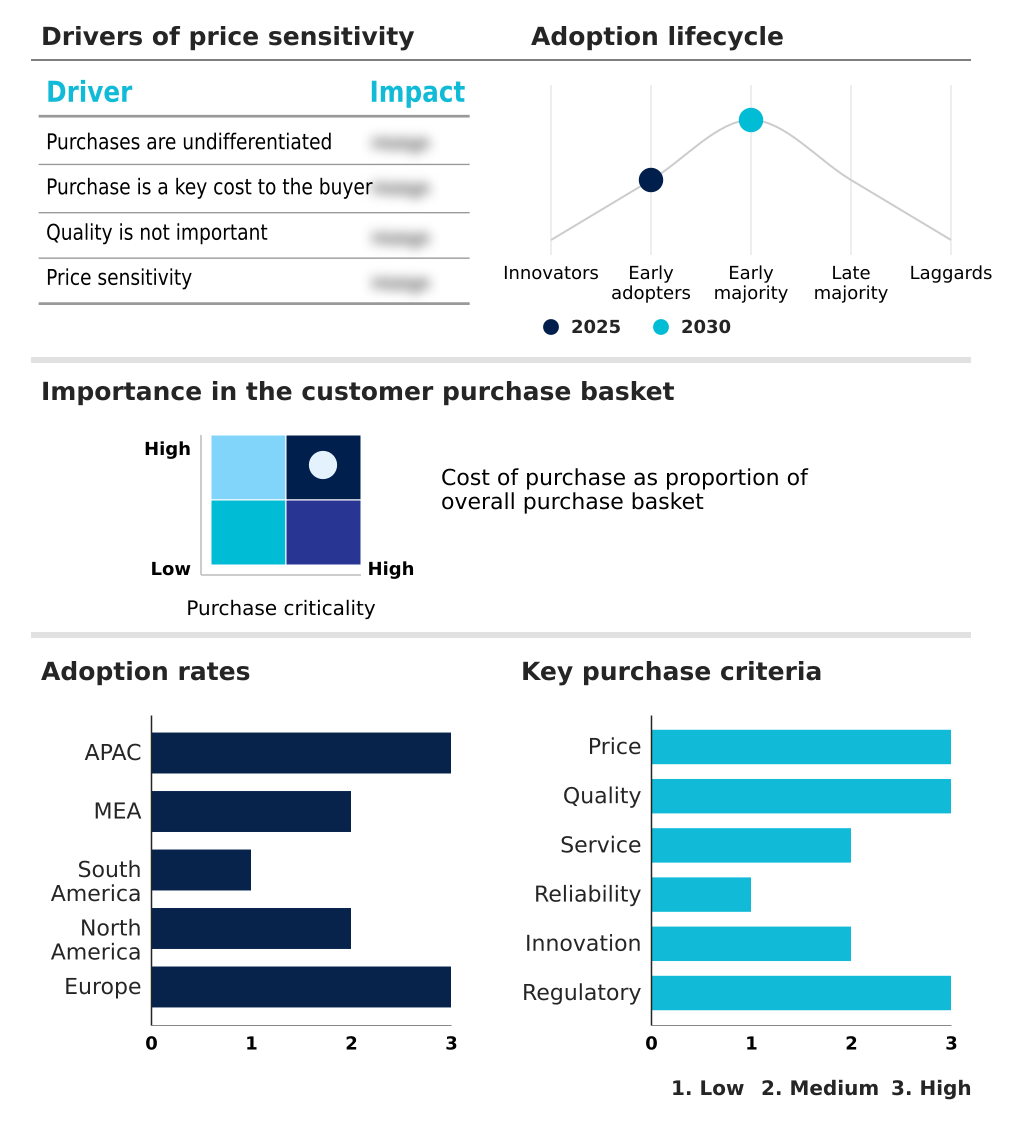
The banknote market forecasting report includes the adoption lifecycle of the market, covering from the innovator’s stage to the laggard’s stage. It focuses on adoption rates in different regions based on penetration. Furthermore, the banknote market report also includes key purchase criteria and drivers of price sensitivity to help companies evaluate and develop their market growth analysis strategies.
Customer Landscape of Banknote Industry
Competitive Landscape
Companies are implementing various strategies, such as strategic alliances, banknote market forecast, partnerships, mergers and acquisitions, geographical expansion, and product/service launches, to enhance their presence in the industry.
Banco de Portugal - Operations focus on producing secure legal tender through central-bank-grade printing, incorporating standardized security features to ensure currency integrity and public trust.
The industry research and growth report includes detailed analyses of the competitive landscape of the market and information about key companies, including:
- Banco de Portugal
- BEP
- BNB Printing House AD
- CCL Secure Ltd.
- Central Engraving and Printing
- China Banknote Group Co. Ltd.
- Crane and Co. Inc.
- De La Rue PLC
- FNMT RCM
- Giesecke Devrient GmbH
- Goznak
- Hong Kong Note Printing Ltd.
- National Printing Bureau
- Note Printing Australia Ltd.
- Orell Fussli AG
- Reserve Bank of India
- Security Papers Ltd.
- Security Printing and Minting
- SPS TechnoScreen GmbH
- The Security Printing Corp.
Qualitative and quantitative analysis of companies has been conducted to help clients understand the wider business environment as well as the strengths and weaknesses of key industry players. Data is qualitatively analyzed to categorize companies as pure play, category-focused, industry-focused, and diversified; it is quantitatively analyzed to categorize companies as dominant, leading, strong, tentative, and weak.
Recent Development and News in Banknote market
- In September 2024, the Reserve Bank of India reported that 97.96% of the withdrawn INR 2,000 banknotes had been returned to the banking system, marking a significant step in its currency management policy.
- In January 2025, the Governing Council of the European Central Bank selected the final motifs for the future euro banknotes, focusing on themes of European culture and nature, initiating the design phase for the new series.
- In March 2025, the Central Bank of the UAE announced the issuance of a new AED 100 banknote made from polymer, incorporating innovative designs and advanced security elements as part of its currency modernization project.
- In April 2025, the board of De La Rue recommended a takeover offer from Atlas Holdings, signaling a major strategic shift from public listing to private ownership for the prominent commercial currency printer.
Dive into Technavio’s robust research methodology, blending expert interviews, extensive data synthesis, and validated models for unparalleled Banknote Market insights. See full methodology.
| Market Scope | |
|---|---|
| Page number | 285 |
| Base year | 2025 |
| Historic period | 2020-2024 |
| Forecast period | 2026-2030 |
| Growth momentum & CAGR | Accelerate at a CAGR of 4.7% |
| Market growth 2026-2030 | USD 2187.0 million |
| Market structure | Fragmented |
| YoY growth 2025-2026(%) | 4.2% |
| Key countries | China, India, Japan, South Korea, Australia, Indonesia, South Africa, Saudi Arabia, Egypt, UAE, Nigeria, Brazil, Argentina, Colombia, US, Canada, Mexico, Germany, UK, France, Italy, Spain and The Netherlands |
| Competitive landscape | Leading Companies, Market Positioning of Companies, Competitive Strategies, and Industry Risks |
Research Analyst Overview
- The banknote market is undergoing a significant transformation driven by the need for advanced counterfeit deterrence and operational efficiency. Central banks are prioritizing the integration of complex security features, moving beyond traditional banknote paper to adopt polymer substrates and hybrid substrates.
- These materials support sophisticated elements like holographic security threads, optically variable inks, and tactile features, which are critical for both public verification and automated currency processing. The implementation of enhanced security printing techniques is essential in the face of rising threats, with a focus on durability and resilience throughout the currency lifecycle.
- A key boardroom-level consideration is aligning the high capital expenditure of banknote modernization programs with national ESG mandates and sustainability goals. For instance, the transition to durable substrates that reduce replacement frequency can lower the environmental footprint of the cash cycle.
- Advanced security threads have been shown to enhance verification speed by up to 40% in automated sorting machines, directly improving the efficiency of cash cycle management. This commitment to innovation ensures that central bank money remains a secure and trusted form of legal tender.
What are the Key Data Covered in this Banknote Market Research and Growth Report?
-
What is the expected growth of the Banknote Market between 2026 and 2030?
-
USD 2.19 billion, at a CAGR of 4.7%
-
-
What segmentation does the market report cover?
-
The report is segmented by Type (State-owned, and Commercial), Application (Intaglio printing, Offset printing, and Letterpress printing), Material (Paper, Polymer, and Hybrid) and Geography (APAC, Middle East and Africa, South America, North America, Europe)
-
-
Which regions are analyzed in the report?
-
APAC, Middle East and Africa, South America, North America and Europe
-
-
What are the key growth drivers and market challenges?
-
Escalating demand for high-security features and counterfeit deterrence, Accelerated digital transformation and rise of CBDCs
-
-
Who are the major players in the Banknote Market?
-
Banco de Portugal, BEP, BNB Printing House AD, CCL Secure Ltd., Central Engraving and Printing, China Banknote Group Co. Ltd., Crane and Co. Inc., De La Rue PLC, FNMT RCM, Giesecke Devrient GmbH, Goznak, Hong Kong Note Printing Ltd., National Printing Bureau, Note Printing Australia Ltd., Orell Fussli AG, Reserve Bank of India, Security Papers Ltd., Security Printing and Minting, SPS TechnoScreen GmbH and The Security Printing Corp.
-
Market Research Insights
- The banknote market's dynamics are shaped by the dual pressures of technological innovation and evolving payment ecosystems. While the adoption of digital currencies and mobile payments is accelerating, physical currency security remains a paramount concern for central banks, driving investment in advanced anti-counterfeit measures.
- For example, the use of polymer substrates has been shown to reduce replacement frequency by over 60% compared to traditional paper, significantly lowering long-term operational costs. Concurrently, the integration of machine-readable features into banknotes allows for high-speed sorting and verification, with some automated systems achieving authentication accuracy rates exceeding 99.9%.
- These advancements in currency security technologies are crucial for maintaining public trust in secure legal tender, especially in regions with ongoing financial inclusion initiatives where cash is the primary medium of exchange. The industry must navigate these shifts to ensure cash remains a resilient and viable component of the monetary system.
We can help! Our analysts can customize this banknote market research report to meet your requirements.
 RIA -
RIA -