



Architectural Engineering And Construction Solutions (AECS) Market Size 2025-2029
The architectural engineering and construction solutions (AECS) market size is forecast to increase by USD 11.96 billion at a CAGR of 14.9% between 2024 and 2029.
- The market is experiencing significant growth, driven by the increasing demand for large-scale project management in the construction industry. This trend is fueled by the need for more efficient and effective ways to manage complex projects, particularly those involving intricate designs and extensive budgets. Additionally, the popularity of cloud-based AECS is on the rise, enabling real-time collaboration and data accessibility from anywhere, leading to increased productivity and cost savings. However, the market faces challenges as well. Regulatory hurdles impact adoption, with stringent building codes and standards requiring solutions that adhere to specific regulations. Supply chain inconsistencies temper growth potential, as delays and disruptions in the supply of raw materials and components can significantly impact project timelines and budgets. Open-source companies offer a variety of business analytics tools and applications, which are freely available on the Internet. However, competition from open-source software poses a challenge to market players, requiring them to differentiate through additional features and services.
- Competition from open-source software also poses a threat, offering lower costs but potentially sacrificing advanced features and support. Companies seeking to capitalize on market opportunities must navigate these challenges effectively, focusing on regulatory compliance, supply chain management, and differentiation through value-added services and advanced features.
What will be the Size of the Architectural Engineering And Construction Solutions (AECS) Market during the forecast period?

- The Architectural Engineering and Construction Solutions (AECS) market is experiencing significant advancements, driven by the integration of technology and evolving regulatory requirements. Cloud-based solutions are transforming project delivery, enabling real-time collaboration and data access for stakeholders. Building energy codes are becoming more stringent, necessitating the adoption of energy efficiency measures and building science expertise. Construction materials are evolving to include sustainable options, contributing to green building standards and practices. Construction risk assessment is a critical component of project management, with safety training and equipment essential for mitigating risks. Project lifecycle management tools facilitate efficient building envelope design, construction logistics, and cost control.
- Heavy machinery and construction equipment are being optimized for performance and energy efficiency, while digital collaboration tools streamline communication and project schedule optimization. Construction innovations, such as BIM modeling software and construction simulation, enable more accurate project planning and execution. Renewable energy integration and waste management are key considerations for sustainable construction practices, with data analytics and environmental impact assessment playing essential roles in informed decision-making. Supply chain management and mobile applications further enhance project efficiency and productivity. Construction techniques are evolving to prioritize building performance optimization and project risk management, with a focus on the entire project lifecycle.
How is this Architectural Engineering And Construction Solutions (AECS) Industry segmented?
The architectural engineering and construction solutions (AECS) industry research report provides comprehensive data (region-wise segment analysis), with forecasts and estimates in "USD million" for the period 2025-2029, as well as historical data from 2019-2023 for the following segments.
- Product
- Software
- Services
- Deployment
- On-premises
- Cloud-based
- Sector
- Large enterprises
- SMEs
- End-user
- Construction and architecture
- Education
- Others
- Geography
- North America
- US
- Canada
- Mexico
- Europe
- France
- Germany
- UK
- APAC
- Australia
- China
- India
- Japan
- Rest of World (ROW)
- North America
By Product Insights
The software segment is estimated to witness significant growth during the forecast period.
The market has witnessed notable growth in recent years, driven by the expanding construction industry and the increasing adoption of advanced technologies. Laser scanning and drone technology have revolutionized quality control and site surveying, ensuring more accurate data and reducing errors. Historic preservation and environmental regulations have led to a greater focus on building performance analysis and energy modeling, with Net Zero Energy and LEED certification becoming industry standards. Mixed reality (MR), augmented reality (AR), and virtual reality (VR) technologies have transformed engineering design services, enabling collaboration among stakeholders. Risk management solutions, project delivery methods, and smart building technology have streamlined construction processes, increasing productivity and efficiency.
Industrial construction, healthcare construction, and infrastructure development have also seen significant growth, driven by the need for advanced engineering design and project management. The skilled labor shortage and workforce development have necessitated the adoption of off-site construction, modular construction, and digital twins. Schedule management, cost estimation, and facility management software have become essential tools for contractors, ensuring effective project administration. Geotechnical engineering, safety standards, and government construction have further expanded the scope of AECS, with civil engineering, structural engineering, and project management software playing a crucial role in optimizing construction processes. Therefore, the AECS market is poised for continued growth, with artificial intelligence (AI), machine learning, and building automation set to play increasingly significant roles in the future.
The integration of 3D printing, life cycle analysis, and passive house technologies will further enhance the efficiency and sustainability of construction projects.

The Software segment was valued at USD 6.38 billion in 2019 and showed a gradual increase during the forecast period.
Regional Analysis
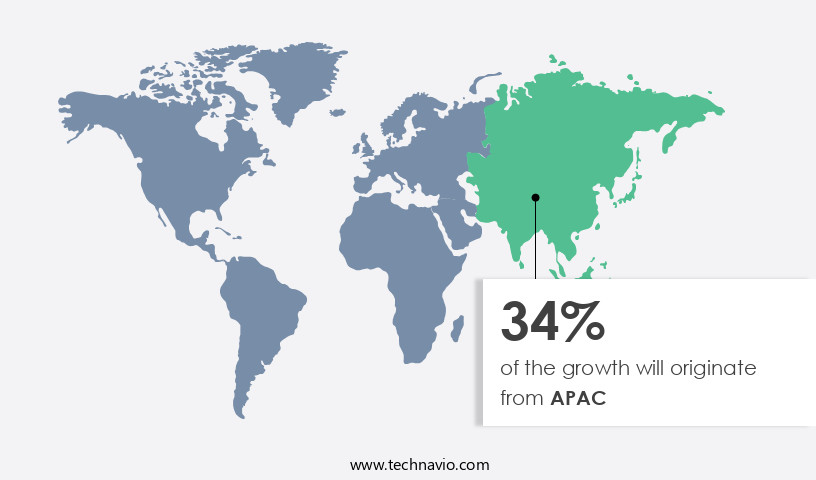
APAC is estimated to contribute 34% to the growth of the global market during the forecast period. Technavio's analysts have elaborately explained the regional trends and drivers that shape the market during the forecast period.
In North America, the market experiences significant growth due to the region's early adoption of advanced technologies across various end-user sectors, including oil and gas, manufacturing, building, and mining. The construction industry's technological maturity in North America stems from this early adoption, with leading companies driving market expansion. The presence of advanced and developing economies in the region accelerates infrastructure development. Moreover, cloud-based solutions and social integration are shaping a new intelligent economy, further boosting market growth. Technological innovations such as laser scanning, quality control, historic preservation, environmental regulations, mixed reality (MR), risk management, engineering design services, drone technology, education construction, construction safety, net zero energy, project delivery methods, augmented reality (AR), LEED certification, industrial construction, virtual reality (VR), artificial intelligence (AI), 3D printing, infrastructure development, healthcare construction, building performance analysis, off-site construction, modular construction, schedule management, skilled labor shortage, workforce development, building automation, geotechnical engineering, cost estimation, energy modeling, facility management, digital twins, construction management software, smart building technology, safety standards, government construction, construction planning, passive house, building codes, green building, machine learning, life cycle analysis, residential construction, architectural design services, construction productivity, contract administration, civil engineering, structural engineering, project management software, commercial real estate, and construction technology are transforming the AECS industry in North America.
The integration of these technologies enhances efficiency, improves safety, and reduces costs, making the construction process more productive and sustainable. For instance, laser scanning technology enables accurate measurements and data collection, reducing errors and rework. Quality control measures, such as MR and AR, ensure that projects meet the desired standards, while environmental regulations drive the adoption of net zero energy and green building practices. Additionally, 3D printing and modular construction offer cost savings and faster project delivery. The skilled labor shortage and workforce development are critical challenges for the AECS industry in North America. To address this issue, companies are investing in training programs and partnerships with educational institutions to develop a skilled workforce.
Building automation and smart building technology also help improve productivity and reduce the need for manual labor. The AECS market in North America is witnessing significant growth due to the region's technological maturity, economic progress, and the integration of advanced technologies. The adoption of these technologies enhances efficiency, improves safety, and reduces costs, making the construction process more productive and sustainable. Companies are addressing the skilled labor shortage by investing in training programs and partnerships with educational institutions. The future of the AECS industry in North America looks promising, with continued innovation and technological advancements driving growth.
Market Dynamics
Our researchers analyzed the data with 2024 as the base year, along with the key drivers, trends, and challenges. A holistic analysis of drivers will help companies refine their marketing strategies to gain a competitive advantage.
What are the Architectural Engineering And Construction Solutions (AECS) market drivers leading to the rise in the adoption of Industry?
- The escalating demands for effective large-scale project management serve as the primary market catalyst.
- Architectural Engineering and Construction Solutions (AECS) play a crucial role in large-scale project management, particularly in industries such as industrial construction, infrastructure development, healthcare construction, and off-site construction. The primary objective of AECS is to automate processes, ensuring maximum resource utilization and regular follow-up. This automation leads to increased connectivity, enabling organizations to manage project-related inquiries effectively and efficiently. Additionally, it decreases response time and increases productivity, contributing to streamlined process management. Furthermore, AECS offers benefits in projecting profitability through the calculation of conversion ratios and the generation of reports based on customer demand.
- Advanced technologies like LEED certification, virtual reality (VR), artificial intelligence (AI), 3D printing, building performance analysis, schedule management, and skilled labor shortage mitigation through workforce development are integral to AECS. These technologies enhance project management capabilities, ensuring the delivery of high-performing structures while maintaining cost-effectiveness.
What are the Architectural Engineering And Construction Solutions (AECS) market trends shaping the Industry?
- The rising preference for cloud-based Accounts Receivable and Cash Management Systems (AECS) represents a significant market trend. This shift towards cloud solutions is driven by their numerous benefits, including increased efficiency, scalability, and cost savings.
- The Architectural Engineering and Construction Solutions (AEC) market is experiencing significant advancements, driven by the adoption of cloud-based technologies. Traditional methods of storing project data on local hard drives result in limited storage capacity and restricted interaction among team members. In response, cloud-based AEC solutions have gained popularity, offering centralized access to project data from any location. These solutions operate on remote servers in AEC-enabled project clouds, accessible via local applications on various devices such as PCs, laptops, tablets, or smartphones. Cloud-based AEC solutions offer several advantages, including cross-platform compatibility with operating systems like Windows, Apple, and Android. The convenience of accessing project data from anywhere, at any time, enhances collaboration and productivity.
- Furthermore, these solutions integrate various aspects of AEC projects, including building automation, geotechnical engineering, cost estimation, energy modeling, facility management, digital twins, construction management software, and smart building technology. Compliance with safety standards and adherence to government construction regulations and building codes are also essential considerations, which cloud-based AEC solutions address effectively.
How does Architectural Engineering And Construction Solutions (AECS) market faces challenges face during its growth?
- Open-source software poses a significant challenge to the industry's growth by intensifying competition in the market.
- In the market, open-source software is gaining traction due to the increasing demand for digitalization. Open-source companies offer business analytics tools and applications, which are freely available on the Internet, making them an attractive option for small and emerging enterprises. While these software solutions may not have the same brand recognition as proprietary AECS, they provide essential features such as green building design, machine learning, life cycle analysis, and project management tools. These open-source solutions can be used across various applications, including architectural design services, construction productivity, contract administration, civil engineering, and structural engineering.
- Notable examples include free BIM viewers, standard office application-based BIM software, BIM toolkits, BIM as a bolt-on for CAD software, BuildTools, eSUB, and GenieBelt. Despite their free availability, open-source AECS solutions offer robust capabilities that can effectively compete with commercial Building Information Modeling (BIM) software.
Exclusive Customer Landscape
The architectural engineering and construction solutions (AECS) market forecasting report includes the adoption lifecycle of the market, covering from the innovator's stage to the laggard's stage. It focuses on adoption rates in different regions based on penetration. Furthermore, the architectural engineering and construction solutions (aecs) market report also includes key purchase criteria and drivers of price sensitivity to help companies evaluate and develop their market growth analysis strategies.

Customer Landscape
Key Companies & Market Insights
Companies are implementing various strategies, such as strategic alliances, architectural engineering and construction solutions (aecs) market forecast, partnerships, mergers and acquisitions, geographical expansion, and product/service launches, to enhance their presence in the industry.
4M SA Advanced Software Engineering Systems - This company specializes in architectural engineering and construction services, delivering innovative solutions through IDEA Architectural Design, 4MCAD Professional CAD, and FINE MEP Building Services.
The industry research and growth report includes detailed analyses of the competitive landscape of the market and information about key companies, including:
- 4M SA Advanced Software Engineering Systems
- ACCA software Spa
- ANSYS Inc.
- Autodesk Inc.
- Bentley Systems Inc.
- Carlson Software Inc.
- Chetu Inc.
- CYPE Ingenieros
- Dassault Systemes SE
- Esri Global Inc.
- Hexagon AB
- Innovaya LLC
- Nemetschek SE
- Newforma Inc.
- Oracle Corp.
- Procore Technologies Inc.
- Schneider Electric SE
- Solutions AEC
- Trimble Inc.
- Vee Technologies Pvt. Ltd.
Qualitative and quantitative analysis of companies has been conducted to help clients understand the wider business environment as well as the strengths and weaknesses of key industry players. Data is qualitatively analyzed to categorize companies as pure play, category-focused, industry-focused, and diversified; it is quantitatively analyzed to categorize companies as dominant, leading, strong, tentative, and weak.
Recent Development and News in Architectural Engineering And Construction Solutions (AECS) Market
- In February 2024, Autodesk, a leading software provider for the architecture, engineering, and construction (AEC) industry, launched BIM 360 Construct, an integrated construction management solution that connects project teams and data in real time (Autodesk Press Release, 2024). This new platform aims to streamline construction processes and improve collaboration between stakeholders.
- In May 2025, Skanska, a global construction firm, announced a strategic partnership with Microsoft to leverage Microsoft's Azure cloud platform and digital solutions for enhancing project delivery, design, and construction processes (Skanska Press Release, 2025). This collaboration is expected to enhance Skanska's digital capabilities and improve operational efficiency.
- In October 2024, Bentley Systems, a leading provider of software solutions for infrastructure design, construction, and operations, completed the acquisition of Acadia Software, a leading provider of construction modeling and scheduling solutions (Bentley Systems Press Release, 2024). This acquisition is expected to expand Bentley's offerings in the construction sector and strengthen its position in the AEC market.
- In January 2025, the U.S. Green Building Council (USGBC) and the International Living Future Institute (ILFI) announced a merger, creating a unified organization focused on advancing sustainable building practices (USGBC Press Release, 2025). This merger aims to accelerate the adoption of green building standards and certifications, driving growth in the sustainable AEC solutions market.
Research Analyst Overview
The Architectural Engineering and Construction Solutions (AEC) market continues to evolve, driven by advancements in technology and shifting industry dynamics. Building automation systems are increasingly integrated into structures, optimizing energy usage and enhancing occupant comfort. Geotechnical engineering plays a crucial role in ensuring structural integrity, while cost estimation and energy modeling help project teams make informed decisions. Digital twins, virtual and augmented reality, and drone technology are transforming design and construction processes, enabling more accurate and efficient project planning. Safety standards remain a top priority, with risk management and machine learning tools helping to mitigate potential hazards.
Government construction projects adhere to stringent regulations, requiring adherence to building codes and green building standards such as LEED certification. Healthcare and industrial construction sectors demand specialized engineering design services, with a focus on infrastructure development and schedule management. Net zero energy and passive house designs are gaining popularity, as the industry shifts towards more sustainable building practices. Off-site and modular construction methods are also on the rise, addressing the skilled labor shortage and improving construction productivity. Project delivery methods continue to evolve, with contract administration software and project management tools streamlining communication and collaboration. Civil and structural engineering remain foundational disciplines, while construction technology innovations such as 3D printing and artificial intelligence are shaping the future of the industry.
Building performance analysis and facility management software help optimize energy usage and maintain building systems, ensuring long-term sustainability and efficiency. The AEC market is a dynamic and ever-evolving landscape, with continuous innovation and adaptation shaping its future.
Dive into Technavio's robust research methodology, blending expert interviews, extensive data synthesis, and validated models for unparalleled Architectural Engineering And Construction Solutions (AECS) Market insights. See full methodology.
|
Market Scope |
|
|
Report Coverage |
Details |
|
Page number |
237 |
|
Base year |
2024 |
|
Historic period |
2019-2023 |
|
Forecast period |
2025-2029 |
|
Growth momentum & CAGR |
Accelerate at a CAGR of 14.9% |
|
Market growth 2025-2029 |
USD 11962.3 million |
|
Market structure |
Fragmented |
|
YoY growth 2024-2025(%) |
12.7 |
|
Key countries |
US, China, UK, France, Canada, Japan, India, Germany, Australia, and Mexico |
|
Competitive landscape |
Leading Companies, Market Positioning of Companies, Competitive Strategies, and Industry Risks |
What are the Key Data Covered in this Architectural Engineering And Construction Solutions (AECS) Market Research and Growth Report?
- CAGR of the Architectural Engineering And Construction Solutions (AECS) industry during the forecast period
- Detailed information on factors that will drive the growth and forecasting between 2025 and 2029
- Precise estimation of the size of the market and its contribution of the industry in focus to the parent market
- Accurate predictions about upcoming growth and trends and changes in consumer behaviour
- Growth of the market across North America, Europe, APAC, South America, and Middle East and Africa
- Thorough analysis of the market's competitive landscape and detailed information about companies
- Comprehensive analysis of factors that will challenge the architectural engineering and construction solutions (aecs) market growth of industry companies
We can help! Our analysts can customize this architectural engineering and construction solutions (aecs) market research report to meet your requirements.