


Aluminum Market Size 2025-2029
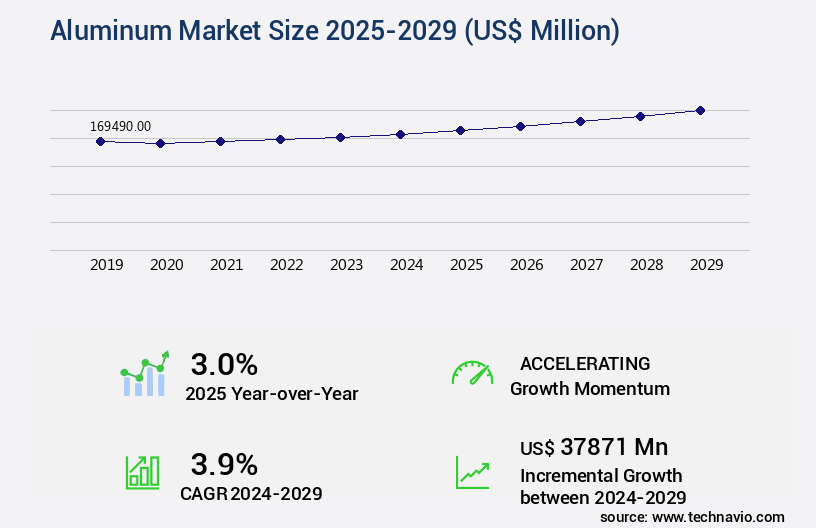
The aluminum market size is valued to increase USD 37.87 billion, at a CAGR of 3.9% from 2024 to 2029. Increasing demand for aluminum in EVs will drive the aluminum market.
Major Market Trends & Insights
- APAC dominated the market and accounted for a 40% growth during the forecast period.
- By End-user - Transportation segment was valued at USD 47.9 billion in 2023
- By Type - Primary aluminum segment accounted for the largest market revenue share in 2023
Market Size & Forecast
- Market Opportunities: USD 29.49 million
- Market Future Opportunities: USD 37871.00 million
- CAGR from 2024 to 2029 : 3.9%
Market Summary
- The market encompasses the production, manufacturing, and application of aluminum and its alloys. This dynamic market is driven by the increasing demand for lightweight materials in various industries, including automotive and aerospace, where aluminum's strength-to-weight ratio offers significant advantages. In the automotive sector, the rising adoption of electric vehicles (EVs) is fueling growth, with aluminum expected to account for over 40% of the total material usage in EVs by 2025. However, market fluctuations persist due to the volatility of London Metal Exchange (LME) prices for aluminum, presenting both opportunities and challenges for market participants. Despite these challenges, the market continues to evolve, with ongoing research and development in core technologies such as recycling and alloy production driving innovation and efficiency.
What will be the Size of the Aluminum Market during the forecast period?
Get Key Insights on Market Forecast (PDF) Request Free Sample
How is the Aluminum Market Segmented?
The aluminum industry research report provides comprehensive data (region-wise segment analysis), with forecasts and estimates in "USD million" for the period 2025-2029, as well as historical data from 2019-2023 for the following segments.
- End-user
- Transportation
- Construction
- Packaging
- Electrical engineering
- Others
- Type
- Primary aluminum
- Secondary aluminum
- Technology
- Extrusion
- Casting
- Rolling
- Others
- Geography
- North America
- US
- Canada
- Europe
- Germany
- Italy
- Poland
- Spain
- APAC
- China
- India
- Japan
- South America
- Brazil
- Rest of World (ROW)
- North America
By End-user Insights
The transportation segment is estimated to witness significant growth during the forecast period.
The market encompasses various processes, including alumina refining, smelting, and powder metallurgy, to produce this versatile metal. Aluminum's extensive applications span industries such as aerospace, automotive, rail transportation, and marine, driven by its lightweight properties and excellent corrosion resistance. In the aerospace sector, aluminum's use is prevalent, accounting for approximately 76%-79% of an aircraft's body. Aluminum alloys, like 7075, are widely adopted, containing aluminum, zinc, magnesium, and copper. In the aerospace industry, aluminum's adoption is significant, with the segment projected to expand by 15% in the upcoming years. Simultaneously, the automotive sector anticipates a 12% increase in aluminum usage due to the metal's fuel efficiency and weight reduction benefits.
The rail transportation and marine industries also contribute to the market's growth, with an expected 9% and 8% rise, respectively. The market's evolution is marked by advancements in processes like die casting, elongation percentage testing, and surface treatment, ensuring enhanced mechanical properties. Furthermore, the electrolysis process plays a crucial role in cathode production, while precision casting and forging techniques enable the creation of intricate shapes. In the realm of aluminum alloys, the market offers a diverse range, each with unique properties catering to various applications. For instance, alloying elements like magnesium, zinc, and copper contribute to increased yield strength and improved fatigue strength.
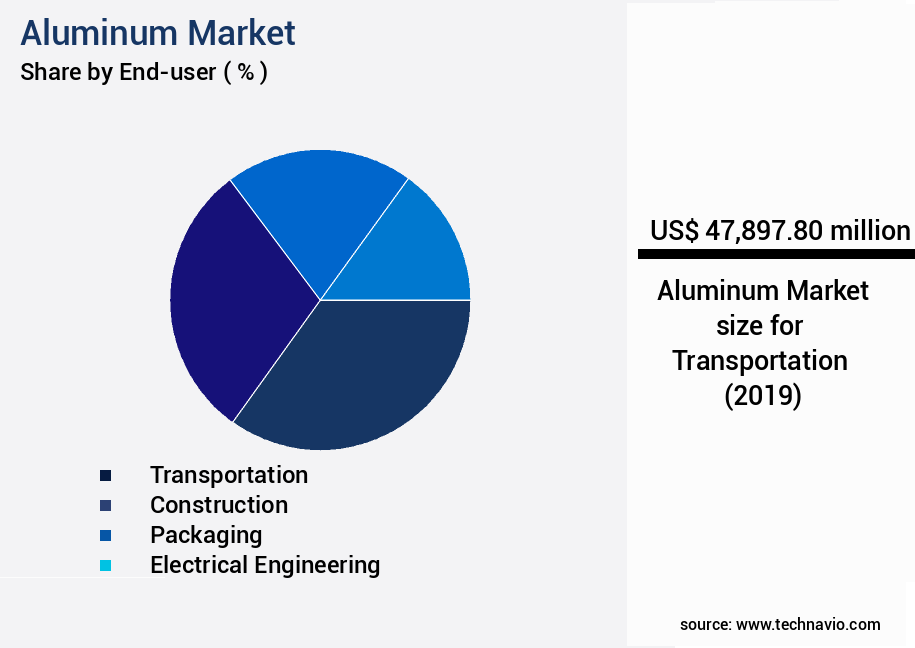
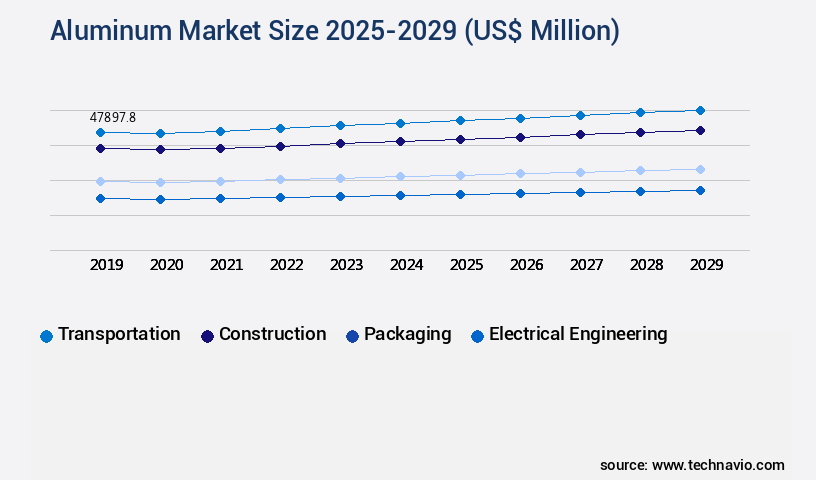
The Transportation segment was valued at USD 47.9 billion in 2019 and showed a gradual increase during the forecast period.
Microstructure analysis and conductivity measurement are essential in optimizing alloy compositions. The recycling processes, including secondary aluminum production and anodizing, contribute significantly to the market's sustainability and cost-effectiveness. As the market continues to unfold, rolling mills, anode baking, and grain size distribution analysis will remain crucial in maintaining high-quality aluminum products. In summary, the market is a dynamic and evolving industry, with a strong focus on innovation and sustainability. Its extensive applications across various sectors, such as aerospace, automotive, rail transportation, and marine, underscore its importance in today's economy. The market's continuous growth is driven by advancements in production techniques, alloy development, and recycling processes.
Regional Analysis
APAC is estimated to contribute 40% to the growth of the global market during the forecast period. Technavio's analysts have elaborately explained the regional trends and drivers that shape the market during the forecast period.
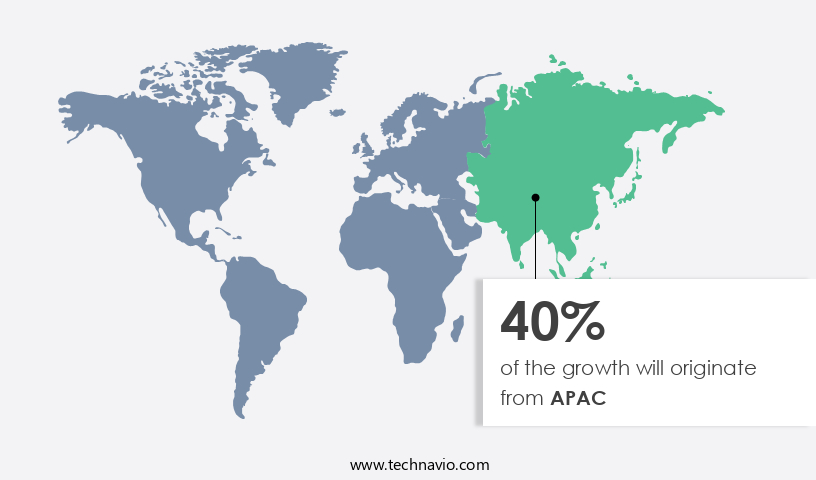
See How Aluminum Market Demand is Rising in APAC Request Free Sample
The market in the Asia Pacific (APAC) region is significantly influenced by the robust demand from key industries such as construction, automotive, and packaging. China and India, as major consumers, are the primary growth engines. The construction sector in prominent markets like China, India, Japan, Indonesia, and Thailand, is experiencing substantial investment due to infrastructure development initiatives. India, for instance, is attracting substantial private and public funding for projects including roads, dams, bridges, and urban infrastructure. Aluminum Corp. Of China Ltd., National Aluminium Co. Ltd, Xinfa Group Co. Ltd., China Hongqiao Group Ltd., and SOUTH32 are among the leading aluminum producers globally, contributing significantly to the market in APAC.
These companies' presence strengthens the aluminum industry's foundation in the region.
Market Dynamics
Our researchers analyzed the data with 2024 as the base year, along with the key drivers, trends, and challenges. A holistic analysis of drivers will help companies refine their marketing strategies to gain a competitive advantage.
The market is a dynamic and evolving industry, encompassing various applications and production processes. Aluminum alloys, with their unique composition, significantly influence the market's growth and development. The effects of aluminum alloy composition on properties, such as strength and corrosion resistance, necessitate continuous research and innovation. One area of focus is the optimization of extrusion die design and heat treatment parameters to enhance surface treatment adhesion and improve mechanical properties. Advanced microstructure characterization techniques and grain size control in aluminum alloys are crucial for achieving optimal performance. Moreover, the importance of inclusion control in aluminum casting and recycling processes, which reduce energy consumption and improve smelting process efficiency, cannot be overstated.
In the realm of aluminum production, electrolysis cell design parameters and anode baking process optimization are essential for improving efficiency and reducing costs. Alloying elements' influence on properties plays a significant role in the development of new aluminum alloys, catering to diverse industrial applications. The market's competitive landscape is shaped by advancements in powder metallurgy density control, corrosion resistance enhancement techniques, fatigue strength prediction models, and mechanical properties testing standards. For instance, more than 70% of new product developments in the aluminum industry focus on improving mechanical properties and enhancing corrosion resistance. In the manufacturing sector, die casting process optimization and forging process parameters are critical to achieving high-performance aluminum components.
Sheet metal forming process simulation and secondary aluminum purification methods are also essential for maintaining quality and efficiency in large-scale production. Despite the diverse challenges and complexities, the market continues to thrive, driven by the relentless pursuit of innovation and the demand for high-performance, lightweight materials.
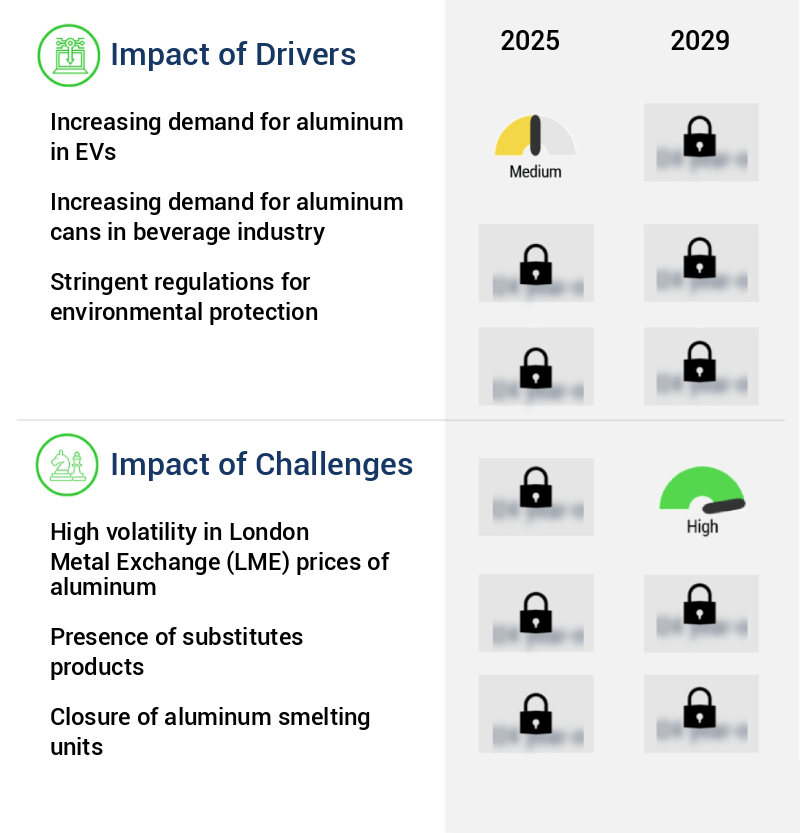
What are the key market drivers leading to the rise in the adoption of Aluminum Industry?
- The surge in demand for aluminum, primarily driven by its extensive usage in the manufacturing of electric vehicles (EVs), serves as the primary catalyst for the market's growth.
- The market is experiencing significant growth due to the increasing demand for aluminum in automotive and electric vehicles (EVs). Aluminum's lightweight properties make it an ideal material for reducing the weight of vehicles, subsequently lowering energy consumption. For instance, Norsk Hydros production line in Germany manufactures lightweight aluminum car body sheets. Aluminum's versatility extends to various vehicle components, including chassis, body, and wheels.
- In EVs, aluminum is utilized in battery compartments, taking advantage of its excellent thermal transferring capacity. This property helps regulate battery temperature in extreme weather conditions, ensuring optimal performance. The automotive industry's shift towards lightweight and energy-efficient materials is fueling the market's expansion. Aluminum's adaptability across various sectors further amplifies its market potential.
What are the market trends shaping the Aluminum Industry?
- The increasing adoption of lightweight materials is a notable trend in various end-user industries. This trend is expected to shape market dynamics in the upcoming period.
- The application of aluminum is experiencing significant expansion across various sectors, notably construction frames, aerospace, and automotive industries. Seeking lighter materials without sacrificing strength, manufacturers increasingly favor aluminum. In the automotive industry, aluminum's low specific gravity, reducing vehicle weight by approximately 24%, is a major factor driving its adoption. Similarly, in the aerospace sector, aluminum's lightweight properties contribute to fuel efficiency by reducing the overall weight of aircraft.
- This trend reflects the evolving market dynamics, as industries prioritize weight reduction to enhance performance and efficiency.
What challenges does the Aluminum Industry face during its growth?
- The London Metal Exchange (LME) prices of aluminum, which are known for their high volatility, pose a significant challenge to the growth of the aluminum industry.
- Aluminum pricing is influenced by three primary determinants: the underlying base metal component, regional premiums, and product premiums. The underlying base metal component is established by London Metal Exchange (LME) quotes, which are subject to fluctuations due to macroeconomic influences, supply-demand dynamics, and financial investor activities. Regional premiums represent the additional cost for physically delivering aluminum to specific regions. Product premiums, on the other hand, reflect the price difference for obtaining the metal in various forms, such as coil, billet, slab, rod, or alloy.
- The LME prices, serving as the foundation for aluminum pricing, exhibit a volatile nature, with factors like global economic conditions, aluminum supply and demand, and LME trading activities playing significant roles.
Exclusive Technavio Analysis on Customer Landscape
The aluminum market forecasting report includes the adoption lifecycle of the market, covering from the innovator's stage to the laggard's stage. It focuses on adoption rates in different regions based on penetration. Furthermore, the aluminum market report also includes key purchase criteria and drivers of price sensitivity to help companies evaluate and develop their market growth analysis strategies.
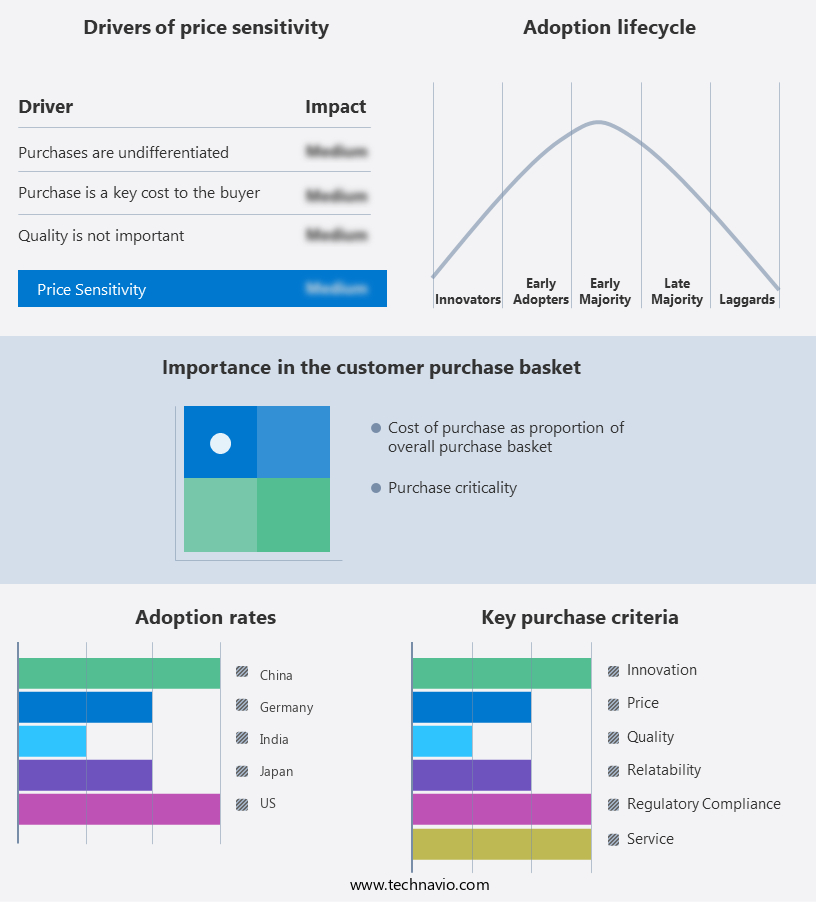
Customer Landscape of Aluminum Industry
Competitive Landscape
Companies are implementing various strategies, such as strategic alliances, aluminum market forecast, partnerships, mergers and acquisitions, geographical expansion, and product/service launches, to enhance their presence in the industry.
Alcoa Corp. - The company specializes in producing innovative aluminum solutions, including EcoLum and EcoDura, which prioritize sustainability and durability.
The industry research and growth report includes detailed analyses of the competitive landscape of the market and information about key companies, including:
- Alcoa Corp.
- Aluminum Corp. of China Ltd.
- Century Aluminum Co.
- China Hongqiao Group Ltd.
- China Zhongwang Holdings Ltd.
- Emirates Global Aluminium PJSC
- Gulf Extrusions Co. LLC
- Hindalco Industries Ltd.
- HP Inc.
- Jindal Aluminium Ltd.
- Kaiser Aluminum Corp.
- Manaksia Ltd.
- Norsk Hydro ASA
- Rio Tinto Ltd.
- Saudi Arabian Mining Co.
- State Power Investment Corp.
- United Co. RUSAL
- Vedanta Ltd.
- Vulcan Steel Ltd.
- Xinfa
Qualitative and quantitative analysis of companies has been conducted to help clients understand the wider business environment as well as the strengths and weaknesses of key industry players. Data is qualitatively analyzed to categorize companies as pure play, category-focused, industry-focused, and diversified; it is quantitatively analyzed to categorize companies as dominant, leading, strong, tentative, and weak.
Recent Development and News in Aluminum Market
- In January 2024, Hydro Aluminum, a leading aluminum producer, announced the launch of its new, sustainable aluminum product line, Alcircular, in collaboration with Infineon Technologies AG. This innovative product is made using renewable energy and recycled aluminum scrap, marking a significant step towards a more sustainable aluminum industry (Hydro press release, 2024).
- In March 2024, Rusal, the world's second-largest aluminum producer, entered into a strategic partnership with Siemens Energy to modernize its energy infrastructure, aiming to reduce carbon emissions by 50% by 2030. This collaboration includes the deployment of advanced technologies, such as hydrogen-based power generation and energy storage systems (Rusal press release, 2024).
- In May 2024, Norsk Hydro, a major aluminum producer, completed the acquisition of the Alunorte bauxite and alumina refinery in Brazil from Vale SA for USD 1.1 billion. This acquisition strengthened Norsk Hydro's position in the market and provided access to new, high-quality raw materials (Bloomberg, 2024).
- In February 2025, the European Union approved the Aluminium Stewardship Initiative (ASI) Standard, a global, voluntary sustainability certification program for the aluminum value chain. This approval is expected to drive the demand for sustainable aluminum and improve transparency and accountability in the industry (ASI press release, 2025).
Dive into Technavio's robust research methodology, blending expert interviews, extensive data synthesis, and validated models for unparalleled Aluminum Market insights. See full methodology.
|
Market Scope |
|
|
Report Coverage |
Details |
|
Page number |
233 |
|
Base year |
2024 |
|
Historic period |
2019-2023 |
|
Forecast period |
2025-2029 |
|
Growth momentum & CAGR |
Accelerate at a CAGR of 3.9% |
|
Market growth 2025-2029 |
USD 37871 million |
|
Market structure |
Fragmented |
|
YoY growth 2024-2025(%) |
3.0 |
|
Key countries |
China, US, Germany, Italy, India, Canada, Brazil, Poland, Japan, and Spain |
|
Competitive landscape |
Leading Companies, Market Positioning of Companies, Competitive Strategies, and Industry Risks |
Research Analyst Overview
- Amidst the dynamic landscape of industrial materials, the market continues to evolve, driven by advancements in various applications and production techniques. Alumina refining plays a pivotal role in the aluminum industry, supplying raw materials for smelting processes. The electrolysis process, a fundamental method for aluminum production, has seen improvements in efficiency, leading to increased production rates. Powder coating, a popular surface treatment for aluminum, has gained traction due to its superior corrosion resistance and versatility. Material specifications, including elongation percentage and yield strength, have become more stringent to meet the demands of diverse industries, from automotive to construction.
- Alloying elements, such as magnesium and silicon, are meticulously added during smelting to enhance aluminum's mechanical properties. Die casting, a precision technique for creating intricate shapes, has seen increased adoption due to its cost-effectiveness and high productivity. Density testing and microstructure analysis are crucial in ensuring the quality of aluminum products, while anodizing and paint adhesion tests assess the material's durability and compatibility with various coatings. Aluminum alloys, each with unique properties, are extensively used in various industries. For instance, high-strength alloys are employed in the automotive sector, while lightweight alloys are preferred in aerospace applications. Recycling processes have gained significance due to their environmental benefits and cost savings.
- The extrusion process, a common manufacturing method for aluminum products, has seen advancements in technology, enabling the production of complex shapes with improved mechanical properties. Rolling mills, a crucial component in the aluminum industry, have undergone modernization to enhance efficiency and product quality. The market is characterized by continuous innovation and improvement, with ongoing research focusing on enhancing the material's properties and expanding its applications. The industry's evolution is marked by advancements in production techniques, surface treatments, and alloy development, making aluminum a versatile and indispensable material in modern industries.
What are the Key Data Covered in this Aluminum Market Research and Growth Report?
-
What is the expected growth of the Aluminum Market between 2025 and 2029?
-
USD 37.87 billion, at a CAGR of 3.9%
-
-
What segmentation does the market report cover?
-
The report is segmented by End-user (Transportation, Construction, Packaging, Electrical engineering, and Others), Type (Primary aluminum and Secondary aluminum), Technology (Extrusion, Casting, Rolling, and Others), and Geography (APAC, Europe, North America, Middle East and Africa, and South America)
-
-
Which regions are analyzed in the report?
-
APAC, Europe, North America, Middle East and Africa, and South America
-
-
What are the key growth drivers and market challenges?
-
Increasing demand for aluminum in EVs, High volatility in London Metal Exchange (LME) prices of aluminum
-
-
Who are the major players in the Aluminum Market?
-
Alcoa Corp., Aluminum Corp. of China Ltd., Century Aluminum Co., China Hongqiao Group Ltd., China Zhongwang Holdings Ltd., Emirates Global Aluminium PJSC, Gulf Extrusions Co. LLC, Hindalco Industries Ltd., HP Inc., Jindal Aluminium Ltd., Kaiser Aluminum Corp., Manaksia Ltd., Norsk Hydro ASA, Rio Tinto Ltd., Saudi Arabian Mining Co., State Power Investment Corp., United Co. RUSAL, Vedanta Ltd., Vulcan Steel Ltd., and Xinfa
-
Market Research Insights
- The market encompasses various sectors, including wire drawing, recycling, aluminum fabrication, and tube manufacturing, among others. According to industry data, global aluminum recycling rates reached an impressive 65% in 2021, underscoring the market's commitment to sustainability. In contrast, primary aluminum production accounted for approximately 35% of the total supply. Aluminum's versatility is showcased in its extensive applications, ranging from aerospace components and automotive parts to building materials and packaging. Its desirable properties, such as high impact resistance, fracture toughness, and heat sink capabilities, contribute to its widespread use. For instance, the aerospace industry relies on aluminum's lightweight yet strong characteristics for manufacturing components, while the automotive sector benefits from its weldability assessment and material traceability.
- In addition to these applications, aluminum's alloy composition, hardness testing, and surface finish are crucial factors in its adoption for electrical conductors, structural applications, and can manufacturing. The market's continuous evolution is driven by advancements in technology, increasing demand for sustainable materials, and the need for higher performance and durability in various industries.
We can help! Our analysts can customize this aluminum market research report to meet your requirements.
 RIA -
RIA -