



AI In Telco Business Support Systems Market Size 2025-2029
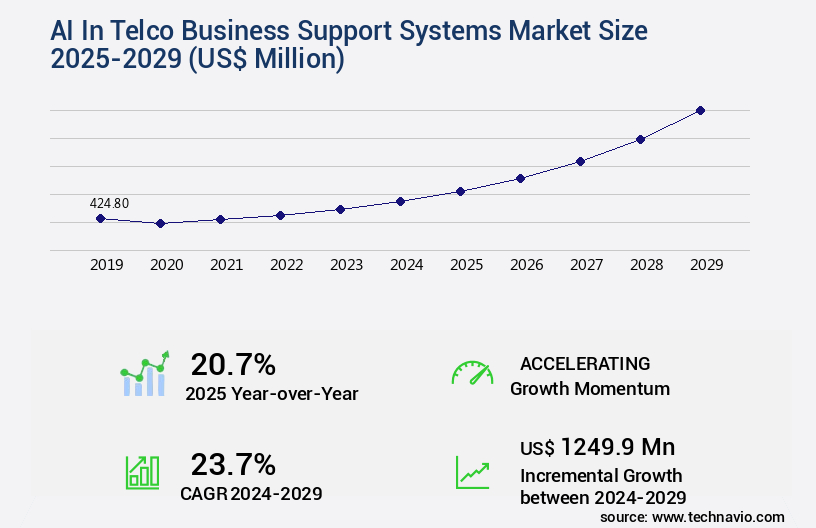
The ai in telco business support systems market size is valued to increase by USD 1.25 billion, at a CAGR of 23.7% from 2024 to 2029. Demand for real-time, low-latency intelligence via Edge AI will drive the ai in telco business support systems market.
Major Market Trends & Insights
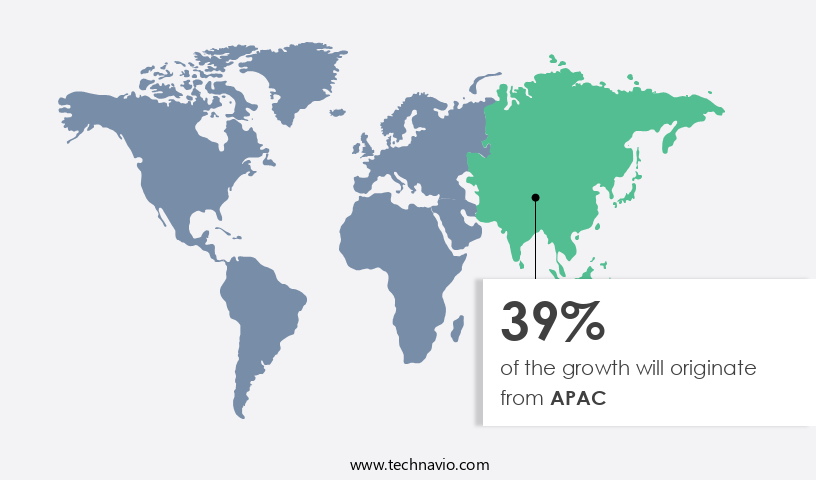
- APAC dominated the market and accounted for a 39% growth during the forecast period.
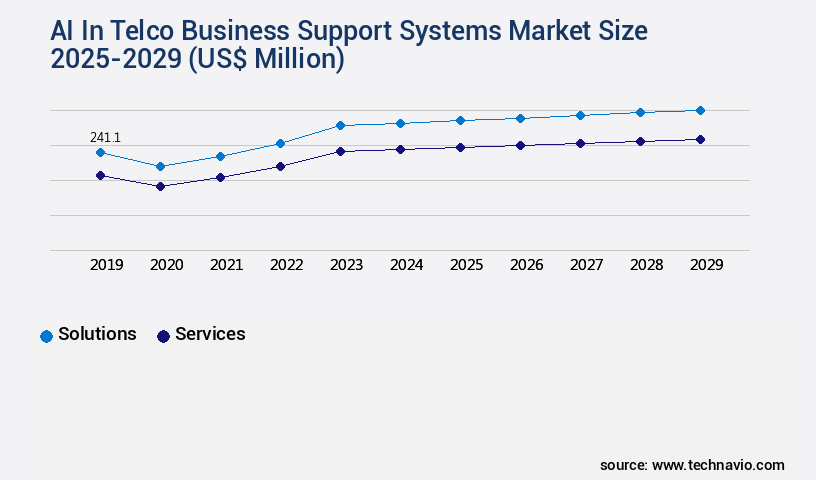
- By Component - Solutions segment was valued at USD 241.10 billion in 2023
- By Deployment - On-premises segment accounted for the largest market revenue share in 2023
Market Size & Forecast
- Market Opportunities: USD 349.86 million
- Market Future Opportunities: USD 1249.90 million
- CAGR from 2024 to 2029 : 23.7%
Market Summary
- In the dynamic telecommunications industry, Artificial Intelligence (AI) has emerged as a game-changer in Business Support Systems (BSS). According to a recent study, the global AI in Telco BSS market is projected to reach a value of USD12.6 billion by 2026, reflecting a significant growth trajectory. This surge in adoption is driven by the increasing demand for real-time, low-latency intelligence to enhance network performance and deliver superior customer experiences. Edge AI, a subset of AI, is accelerating this trend by enabling AI capabilities at the network edge. By processing data closer to the source, Edge AI reduces latency and ensures faster response times.
- Moreover, AI-driven customer experience solutions are increasingly popular, as they offer personalized interactions and improved issue resolution. However, the adoption of AI in Telco BSS is not without challenges. Data privacy and regulatory compliance remain major concerns, as telcos handle vast amounts of sensitive customer information. Balancing the benefits of AI with the need for data security is a complex task that requires a strategic approach. Despite these challenges, the future of AI in Telco BSS looks bright. The technology's ability to analyze vast amounts of data and provide actionable insights in real-time makes it an indispensable tool for telcos. As the industry continues to evolve, AI will play a pivotal role in optimizing network performance, enhancing customer experiences, and driving innovation.
What will be the Size of the AI In Telco Business Support Systems Market during the forecast period?
Get Key Insights on Market Forecast (PDF) Request Free Sample
How is the AI In Telco Business Support Systems Market Segmented ?
The ai in telco business support systems industry research report provides comprehensive data (region-wise segment analysis), with forecasts and estimates in "USD million" for the period 2025-2029, as well as historical data from 2019-2023 for the following segments.
- Component
- Solutions
- Services
- Deployment
- On-premises
- On-cloud
- Application
- Customer analytics
- Fraud detection and security
- Virtual assistance or chatbots
- Network optimization
- Automated billing and revenue management
- Geography
- North America
- US
- Canada
- Europe
- France
- Germany
- UK
- APAC
- Australia
- China
- India
- Japan
- South Korea
- Rest of World (ROW)
- North America
By Component Insights
The solutions segment is estimated to witness significant growth during the forecast period.
The market continues to evolve, with a focus on enhancing traditional business support systems (BSS) and operations support systems (OSS) through intelligent automation and data-driven insights. Ericsson's recent announcement in June 2025 showcases this trend, with the launch of over twenty cloud-native AI and generative AI applications. These tools, part of Ericsson's Telco IT AI Apps portfolio, include the Product Configuration Assistant and Network Insights Assistant. Powered by the Telco IT AI Engine, they offer capabilities like predictive maintenance models, natural language processing, and real-time data analytics. These applications are designed to optimize network performance, improve operational efficiency gains, and enhance customer experience metrics.
Key functions, such as revenue assurance systems, service assurance metrics, and regulatory compliance AI, are integrated into these platforms. Additionally, AI-driven customer service, automation of business processes, and AI-powered billing systems are becoming increasingly prevalent. The market also prioritizes data privacy compliance, network resource allocation, and telecom network security. A recent study indicates that AI implementation in telco networks can lead to a 15% reduction in operational costs. With the integration of sentiment analysis tools, call routing algorithms, telecom fraud detection, and customer churn prediction, telco businesses are poised to reap significant benefits from this digital transformation strategy.
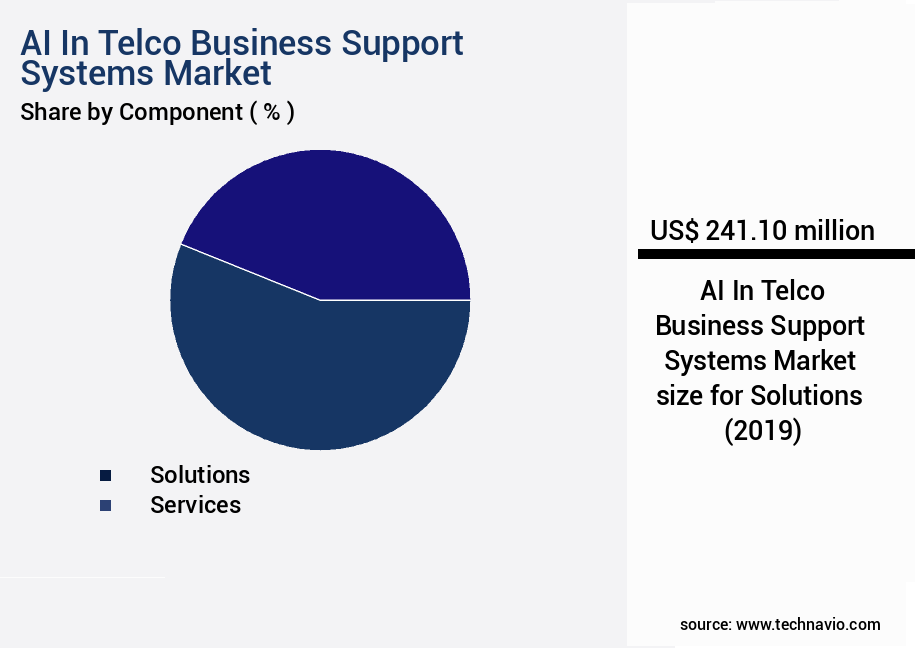
The Solutions segment was valued at USD 241.10 billion in 2019 and showed a gradual increase during the forecast period.
Regional Analysis
APAC is estimated to contribute 39% to the growth of the global market during the forecast period.Technavio's analysts have elaborately explained the regional trends and drivers that shape the market during the forecast period.
See How AI In Telco Business Support Systems Market Demand is Rising in APAC Request Free Sample
The APAC region is witnessing a dynamic and rapid evolution within the global AI in telco business support services market. Fueled by substantial investments in digital infrastructure and high mobile penetration rates, the region is at the forefront of adopting AI to address intricate telecom challenges. The rollout of 5G networks further underscores APAC's commitment to technological innovation. However, disparities in technological maturity and talent shortages in AI and data science pose challenges to uniform adoption. Despite these hurdles, government incentives and strategic partnerships continue to fuel the integration of AI in telco business support services across emerging and established industries within APAC.
Market Dynamics
Our researchers analyzed the data with 2024 as the base year, along with the key drivers, trends, and challenges. A holistic analysis of drivers will help companies refine their marketing strategies to gain a competitive advantage.
The market is experiencing significant growth as telecommunications companies seek to enhance customer experience, optimize network operations, and mitigate risks through advanced AI-powered solutions. One of the most notable applications of AI in this industry is the implementation of AI-powered customer support chatbots, which leverage natural language processing to understand and respond to customer queries in real-time. Another key area where AI is making a significant impact is in telecom churn prediction, using machine learning algorithms to analyze customer behavior and predict potential defections. AI-driven predictive maintenance strategies for telecom networks are also gaining traction, enabling real-time monitoring and identification of network issues, leading to faster resolution and improved network performance. Telecom fraud detection is another area where AI algorithms are proving invaluable, with advanced analytics and sentiment analysis of customer feedback helping to identify and prevent fraudulent activities. AI-based billing system optimization is another application, with real-time data analytics enabling telecom companies to offer personalized pricing and promotions to individual customers. Automation of business processes is a major focus of digital transformation strategies in the telecom industry, with AI-driven network optimization strategies and network resource allocation algorithms helping to streamline operations and reduce costs.
Advanced analytics of telecom networks are also crucial for ensuring network security, with AI-powered network security solutions providing real-time threat detection and response. Big data processing applications in the telecom sector are also driving the adoption of AI, with AI-driven service assurance metrics helping to improve network performance and customer satisfaction. Cloud-based infrastructure is becoming increasingly important in the telco industry, with AI systems ensuring data privacy compliance and enabling the deployment of AI-powered solutions at scale. In conclusion, The market is witnessing significant growth as telecom companies seek to leverage AI to enhance customer experience, optimize network operations, and mitigate risks. Applications of AI in this industry include AI-powered customer support chatbots, machine learning telecom churn prediction, predictive maintenance AI telecom network, natural language processing call centers, telecom fraud detection AI algorithms, AI-driven network optimization strategies, real-time data analytics telecom systems, customer experience improvement AI, AI-based billing system optimization, sentiment analysis customer feedback, automation business process telecom, big data processing telecom applications, network resource allocation algorithm, advanced analytics telecom network, AI-powered network security solutions, and cloud-based infrastructure telecom.
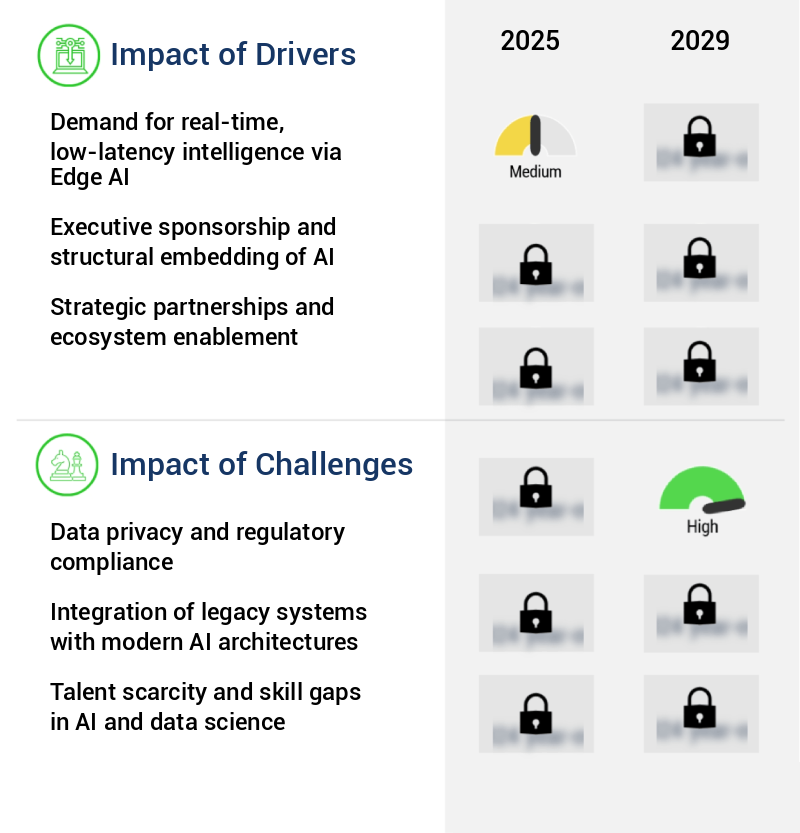
What are the key market drivers leading to the rise in the adoption of AI In Telco Business Support Systems Industry?
- The surge in demand for real-time, low-latency intelligence is primarily fueling the Edge AI market, as organizations seek to process data instantly and make quick decisions.
- The market is experiencing significant evolution, particularly in regions like Asia-Pacific (APAC), where the demand for real-time, low-latency decision-making capabilities is escalating. Telecommunications operators in APAC are grappling with increasing volumes of distributed data, fueled by the rapid rollout of 5G networks, the proliferation of massive IoT devices, and heightened consumer expectations. To address these challenges, telcos are increasingly adopting edge AI. According to recent reports, edge AI processing is expected to account for over 25% of the total AI in telco business support services market by 2027. By processing machine-learning inference close to the end user, telcos can enhance service delivery, optimize performance, and elevate digital experiences.
- In August 2025, The Economic Times reported that this shift towards edge AI is enabling telcos to minimize latency, reduce reliance on central infrastructure, and speed time to insight - all critical factors in dense and latency-sensitive urban environments.
What are the market trends shaping the AI In Telco Business Support Systems Industry?
- The accelerated adoption of AI-driven customer experience solutions is an emerging market trend. This technological advancement is transforming the way businesses engage with their customers.
- The integration of AI technology in telco business support systems is experiencing significant growth, with a particular focus on enhancing customer experience in North America. Telecommunications companies are increasingly adopting AI-driven solutions, such as virtual assistants, chatbots, and predictive analytics, to personalize interactions, streamline processes, and minimize operational costs. AI algorithms analyze extensive customer data to anticipate needs and proactively address service issues, leading to increased retention and market differentiation.
- Additionally, AI implementation in automated billing and revenue management systems is driving operational efficiencies by reducing errors and accelerating dispute resolution. This evolution in telco business support services represents a crucial shift towards more efficient, personalized, and proactive service delivery models.
What challenges does the AI In Telco Business Support Systems Industry face during its growth?
- Ensuring data privacy and regulatory compliance is a crucial challenge that significantly impacts industry growth. Companies must adhere to stringent regulations and protect sensitive information to maintain trust with customers and avoid potential legal consequences.
- The market is experiencing a transformative phase, shaped by stringent data privacy regulations, particularly the General Data Protection Regulation (GDPR) in Europe. Operators face increased scrutiny over how they use customer data for analytics, personalization, and fraud detection. This regulatory environment adds operational costs and prolongs AI project implementation timelines, necessitating continuous auditability and risk mitigation strategies. The European Union's proposed AI Act draft further intensifies the challenge by requiring telcos to ensure their AI-driven decisions are interpretable and fair.
- The evolving regulatory landscape underscores the importance of AI explainability and accountability in the telecommunications sector.
Exclusive Technavio Analysis on Customer Landscape
The ai in telco business support systems market forecasting report includes the adoption lifecycle of the market, covering from the innovator's stage to the laggard's stage. It focuses on adoption rates in different regions based on penetration. Furthermore, the ai in telco business support systems market report also includes key purchase criteria and drivers of price sensitivity to help companies evaluate and develop their market growth analysis strategies.
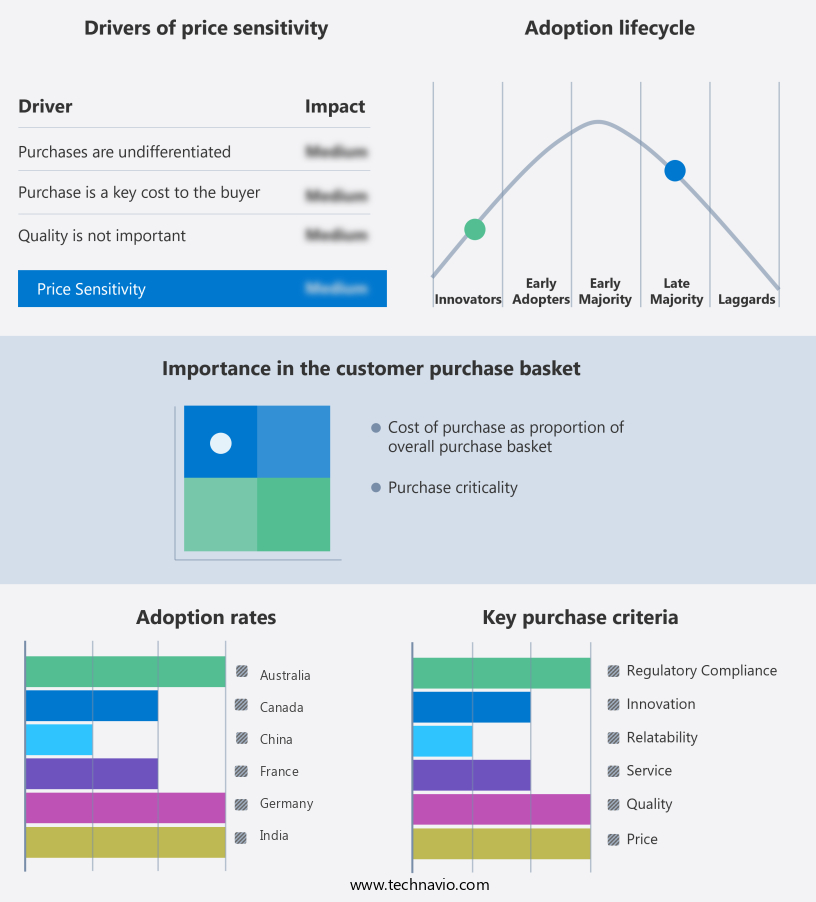
Customer Landscape of AI In Telco Business Support Systems Industry
Competitive Landscape
Companies are implementing various strategies, such as strategic alliances, ai in telco business support systems market forecast, partnerships, mergers and acquisitions, geographical expansion, and product/service launches, to enhance their presence in the industry.
Alepo - This company provides a Digital Business Support System Suite and Monetization Platform for telecommunications companies. Their solution enables personalized offers, automates revenue management, and improves digital customer experiences through real-time data analysis and AI-driven insights.
The industry research and growth report includes detailed analyses of the competitive landscape of the market and information about key companies, including:
- Alepo
- Amazon Web Services Inc.
- Amdocs Ltd.
- Avenga
- Cognizant Technology Solutions Corp.
- Comarch SA
- Fabrix.ai Inc.
- Huawei Technologies Co. Ltd.
- Infosys Ltd.
- International Business Machines Corp.
- Microsoft Corp.
- NetCracker Technology Corp.
- Nokia Corp.
- Oracle Corp.
- Salesforce Inc.
- SAP SE
- SUBEX Ltd.
- Tata Consultancy Services Ltd.
- Tech Mahindra Ltd.
- Telefonaktiebolaget LM Ericsson
Qualitative and quantitative analysis of companies has been conducted to help clients understand the wider business environment as well as the strengths and weaknesses of key industry players. Data is qualitatively analyzed to categorize companies as pure play, category-focused, industry-focused, and diversified; it is quantitatively analyzed to categorize companies as dominant, leading, strong, tentative, and weak.
Recent Development and News in AI In Telco Business Support Systems Market
- In January 2024, Nokia and IBM announced a strategic partnership to integrate IBM's AI and automation capabilities into Nokia's Business Support Systems (BSS) for communications service providers (CSPs) (Nokia Press Release, 2024). This collaboration aimed to enhance network operations and improve customer experience through AI-driven insights and automation.
- In March 2024, Huawei launched its new AI-driven BSS solution, called "AscendONE," which offers intelligent network management, service assurance, and customer care capabilities (Huawei Press Release, 2024). This solution was designed to help CSPs optimize their networks, reduce operational costs, and enhance customer satisfaction.
- In May 2024, Ericsson secured a significant contract with Vodafone to deploy its AI-driven BSS platform, called "Ericsson Digital Services Platform," across Vodafone's European networks (Ericsson Press Release, 2024). This deal represented a significant win for Ericsson and underscored the growing demand for AI-driven BSS solutions in the telecommunications industry.
- In April 2025, Cisco Systems announced the acquisition of Perspica, a machine learning and AI startup, for an undisclosed sum (Cisco Press Release, 2025). This acquisition was aimed at strengthening Cisco's AI capabilities and enhancing its BSS offerings for CSPs, enabling them to provide more personalized services and improve network performance.
Dive into Technavio's robust research methodology, blending expert interviews, extensive data synthesis, and validated models for unparalleled AI In Telco Business Support Systems Market insights. See full methodology.
|
Market Scope |
|
|
Report Coverage |
Details |
|
Page number |
238 |
|
Base year |
2024 |
|
Historic period |
2019-2023 |
|
Forecast period |
2025-2029 |
|
Growth momentum & CAGR |
Accelerate at a CAGR of 23.7% |
|
Market growth 2025-2029 |
USD 1249.9 million |
|
Market structure |
Fragmented |
|
YoY growth 2024-2025(%) |
20.7 |
|
Key countries |
US, China, Japan, India, Germany, South Korea, UK, France, Canada, and Australia |
|
Competitive landscape |
Leading Companies, Market Positioning of Companies, Competitive Strategies, and Industry Risks |
Research Analyst Overview
- The market continues to evolve, driven by the increasing adoption of advanced technologies such as revenue assurance systems, service assurance metrics, and virtual assistant deployment. These solutions leverage AI capabilities like natural language processing, predictive maintenance models, and network optimization AI to enhance operational efficiency gains and improve customer experience. For instance, a leading telecom company implemented an AI-driven customer service platform, resulting in a 20% increase in customer satisfaction ratings. Regulatory compliance AI and machine learning telecom are essential components of this market, ensuring data privacy compliance and facilitating data analytics platform performance on cloud-based infrastructure.
- Telecom network monitoring and security are further enhanced through AI-based fault management and sentiment analysis tools. Network resource allocation and call routing algorithms are optimized using AI, enabling telecom providers to deliver superior service level agreements and automate business processes. Additionally, AI-powered billing systems and knowledge base management systems contribute to increased automation and accuracy. The telecom industry anticipates a 15% CAGR growth in AI adoption over the next five years, fueled by the integration of AI-driven customer service, chatbot support, and telecom fraud detection. This continuous unfolding of market activities underscores the importance of a well-defined digital transformation strategy for telecom companies.
What are the Key Data Covered in this AI In Telco Business Support Systems Market Research and Growth Report?
-
What is the expected growth of the AI In Telco Business Support Systems Market between 2025 and 2029?
-
USD 1.25 billion, at a CAGR of 23.7%
-
-
What segmentation does the market report cover?
-
The report is segmented by Component (Solutions and Services), Deployment (On-premises and On-cloud), Application (Customer analytics, Fraud detection and security, Virtual assistance or chatbots, Network optimization, and Automated billing and revenue management), and Geography (APAC, North America, Europe, Middle East and Africa, and South America)
-
-
Which regions are analyzed in the report?
-
APAC, North America, Europe, Middle East and Africa, and South America
-
-
What are the key growth drivers and market challenges?
-
Demand for real-time, low-latency intelligence via Edge AI, Data privacy and regulatory compliance
-
-
Who are the major players in the AI In Telco Business Support Systems Market?
-
Alepo, Amazon Web Services Inc., Amdocs Ltd., Avenga, Cognizant Technology Solutions Corp., Comarch SA, Fabrix.ai Inc., Huawei Technologies Co. Ltd., Infosys Ltd., International Business Machines Corp., Microsoft Corp., NetCracker Technology Corp., Nokia Corp., Oracle Corp., Salesforce Inc., SAP SE, SUBEX Ltd., Tata Consultancy Services Ltd., Tech Mahindra Ltd., and Telefonaktiebolaget LM Ericsson
-
Market Research Insights
- The market for AI in telco business support systems is a continually evolving landscape. Two key areas of focus are the integration of AI for customer self-care options and risk management strategies. For instance, AI-powered chatbots and virtual assistants have become essential tools for telcos, enabling them to handle customer queries efficiently, reducing response times by up to 30%. Furthermore, the industry anticipates a growth rate of approximately 25% in the next five years, driven by the increasing adoption of AI for network performance optimization, IT service management, process automation, text analytics, and predictive modeling.
- These advancements not only enhance customer experience but also contribute to improved network capacity planning, security incident management, and anomaly detection. AI's integration into telco business support systems is revolutionizing the industry, offering significant benefits and setting the stage for further innovation.
We can help! Our analysts can customize this ai in telco business support systems market research report to meet your requirements.
 RIA -
RIA -