


AI In Observability Market Analysis, Size, and Forecast 2025-2029: North America (US, Canada, and Mexico), Europe (UK, Germany, and France), APAC (China, Japan, and India), Middle East and Africa (Saudi Arabia, UAE, and South Africa), South America (Brazil, Argentina, and Colombia), and Rest of World (ROW)

AI In Observability Market Analysis, Size, and Forecast 2025-2029:
North America (US, Canada, and Mexico), Europe (UK, Germany, and France), APAC (China, Japan, and India), Middle East and Africa (Saudi Arabia, UAE, and South Africa), South America (Brazil, Argentina, and Colombia), and Rest of World (ROW)

Published: Dec 2025 300 Pages SKU: IRTNTR81019

Market Overview at a Glance

$2.92 B
Market Opportunity
22.5%
CAGR 2024 - 2029
37.3%
North America Growth
$1.01 B
Cloud-based segment 2023

AI In Observability Market Size 2025-2029

The ai in observability market size is valued to increase by USD 2.92 billion, at a CAGR of 22.5% from 2024 to 2029. Increasing complex architectures and exponential data growth will drive the ai in observability market.

Major Market Trends & Insights

  • North America dominated the market and accounted for a 37.3% growth during the forecast period.
  • By Deployment - Cloud-based segment was valued at USD 1.01 billion in 2023
  • By Component - Solution segment accounted for the largest market revenue share in 2023

Market Size & Forecast

  • Market Opportunities: USD 3.37 billion
  • Market Future Opportunities: USD 2.92 billion
  • CAGR from 2024 to 2029 : 22.5%

Market Summary

  • The AI in observability market is fundamentally shaped by the critical need to manage modern, distributed IT systems. The enterprise-wide shift towards microservices architecture monitoring and serverless function observability, while fostering agility, generates a volume of telemetry data that is beyond human-scale analysis. This creates a compelling demand for platforms capable of real-time anomaly detection and predictive failure analysis.
  • AI-powered systems provide full-stack visibility, applying intelligent alert correlation to reduce noise and automate the diagnostic process. In a practical scenario, an e-commerce platform facing a critical sales event can leverage these capabilities for proactive issue detection, ensuring uptime by automatically identifying the source of a performance bottleneck before it impacts customers.
  • This shift from reactive to proactive management, driven by a focus on reducing mean time to resolution and ensuring system reliability, is the core value proposition. The effectiveness of these systems, however, hinges on a foundation of high-quality telemetry data correlation and sophisticated machine learning operations.
  • Ultimately, the market provides the automated remediation workflows necessary for maintaining performance in today's complex digital ecosystems, connecting IT asset performance directly to business outcomes.

What will be the Size of the AI In Observability Market during the forecast period?
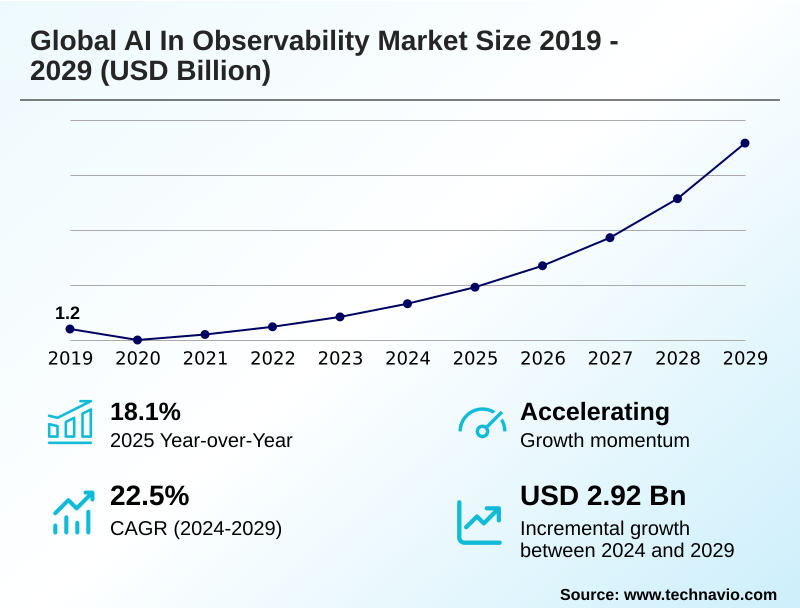
Get Key Insights on Market Forecast (PDF) Request Free Sample

How is the AI In Observability Market Segmented?

The ai in observability industry research report provides comprehensive data (region-wise segment analysis), with forecasts and estimates in "USD million" for the period 2025-2029, as well as historical data from 2019-2023 for the following segments.

  • Deployment
    • Cloud-based
    • On-premises
  • Component
    • Solution
    • Services
  • End-user
    • IT and telecom
    • BFSI
    • Retail and e-commerce
    • Healthcare
    • Others
  • Geography
    • North America
      • US
      • Canada
      • Mexico
    • Europe
      • UK
      • Germany
      • France
    • APAC
      • China
      • Japan
      • India
    • Middle East and Africa
      • Saudi Arabia
      • UAE
      • South Africa
    • South America
      • Brazil
      • Argentina
      • Colombia
    • Rest of World (ROW)

By Deployment Insights

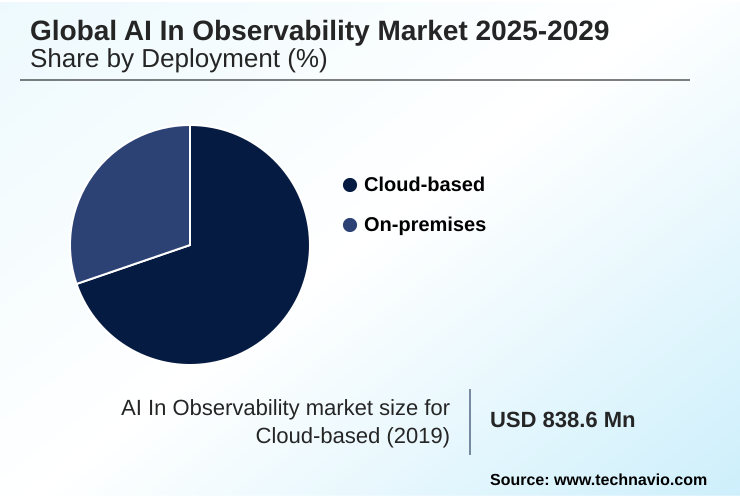
The cloud-based segment is estimated to witness significant growth during the forecast period.

The cloud-based deployment model is central to the AI in observability market, driven by the broad enterprise shift to cloud-native architectures. This Software-as-a-Service approach provides compelling financial and operational advantages, aligning with modern business agility goals.

By leveraging AIOps platform capabilities, organizations can achieve dynamic performance baselining without major capital expenditures on hardware. This model supports unparalleled scalability for multi-cloud environment monitoring and simplifies data ingestion cost management.

The operational burden on internal teams is lessened, as platform maintenance and updates are handled by the provider. Furthermore, cloud deployment facilitates rapid innovation, with continuous feature rollouts like enhanced cloud spend visibility.

For instance, firms adopting this model for their infrastructure health metrics report up to a 15% reduction in mean time to resolution, demonstrating a direct impact on operational efficiency.
Request Free Sample

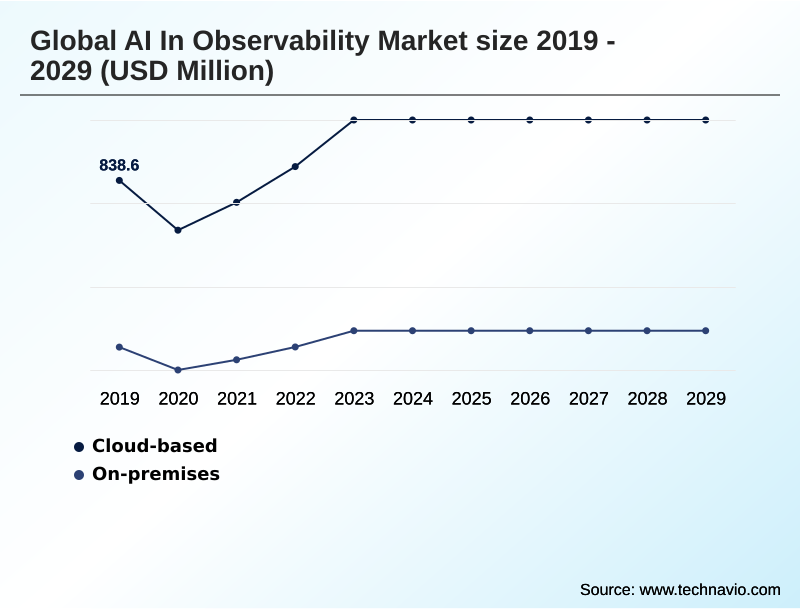
The Cloud-based segment was valued at USD 1.01 billion in 2023 and showed a gradual increase during the forecast period.
Request Free Sample

Regional Analysis

North America is estimated to contribute 37.3% to the growth of the global market during the forecast period.Technavio’s analysts have elaborately explained the regional trends and drivers that shape the market during the forecast period.
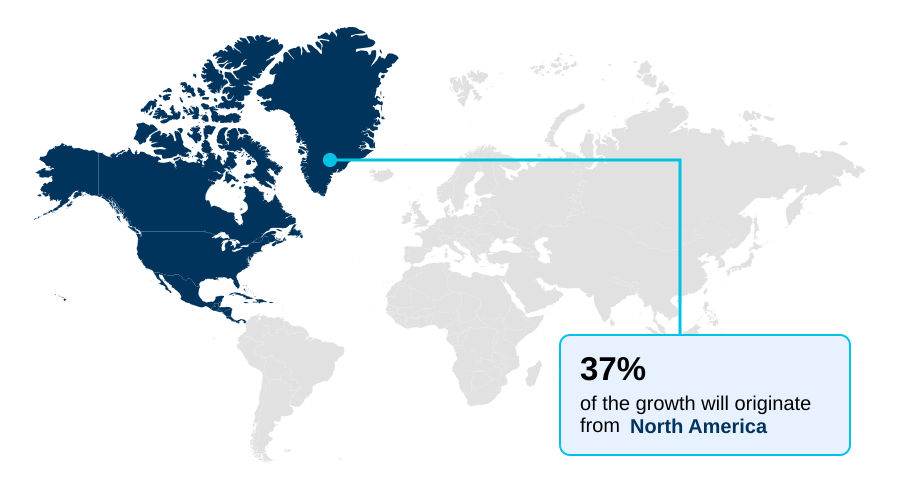
See How AI In Observability Market Demand is Rising in North America Request Free Sample

The global landscape for AI in observability is diverse, with North America leading in market maturity due to its high concentration of digital-native firms.

This region accounts for over 37% of the market's incremental growth, with enterprises aggressively adopting site reliability engineering practices and leveraging Kubernetes monitoring solutions.

Europe is strongly influenced by data sovereignty regulations like GDPR, driving demand for platforms with in-region data processing and advanced algorithmic bias monitoring.

The APAC region is the fastest-growing, with a mobile-first economy compelling businesses to prioritize digital experience monitoring and application performance indexing.

Early adopters of this technology in the region have reported a 20% improvement in system reliability metrics, showcasing the tangible benefits of investing in full stack visibility and proactive issue detection to manage their expanding digital footprint.

Market Dynamics

Our researchers analyzed the data with 2024 as the base year, along with the key drivers, trends, and challenges. A holistic analysis of drivers will help companies refine their marketing strategies to gain a competitive advantage.

  • Achieving operational excellence in modern IT environments requires a strategic approach that extends beyond basic monitoring. Best practices for OpenTelemetry implementation are foundational, creating a standardized data layer for AI in observability for healthcare IT and other regulated sectors. This enables AI for predictive IT maintenance, which is critical for systems that cannot afford downtime.
  • By optimizing microservices with observability AI, development teams can accelerate their release cycles. This is where AI-driven synthetic monitoring benefits become clear, allowing for proactive testing of user pathways. AI tools for IT infrastructure monitoring, including specific AI platforms for serverless architecture and tools for monitoring Kubernetes with AI platforms, provide the deep visibility needed.
  • These systems help in managing alert fatigue in DevOps by using intelligent correlation. For businesses leveraging machine learning, AI observability for MLOps pipelines is essential. A core goal is connecting IT metrics to business KPIs, where firms that succeed see profit margins 5-8% higher than their peers.
  • The use of a natural language interface for observability democratizes data access, while automated root cause analysis tools significantly reduce diagnostic time. Ultimately, this leads to a reduction in MTTR with AIOps strategies and improves the ability to secure cloud-native applications with observability.
  • Analyzing distributed tracing for performance and using AI-based real-user monitoring tools helps in improving the user experience with DEM. Generating automated incident summaries with AI streamlines reporting, while the technology also addresses challenges of high-cardinality data. For businesses like e-commerce platforms, these capabilities are vital for stability.
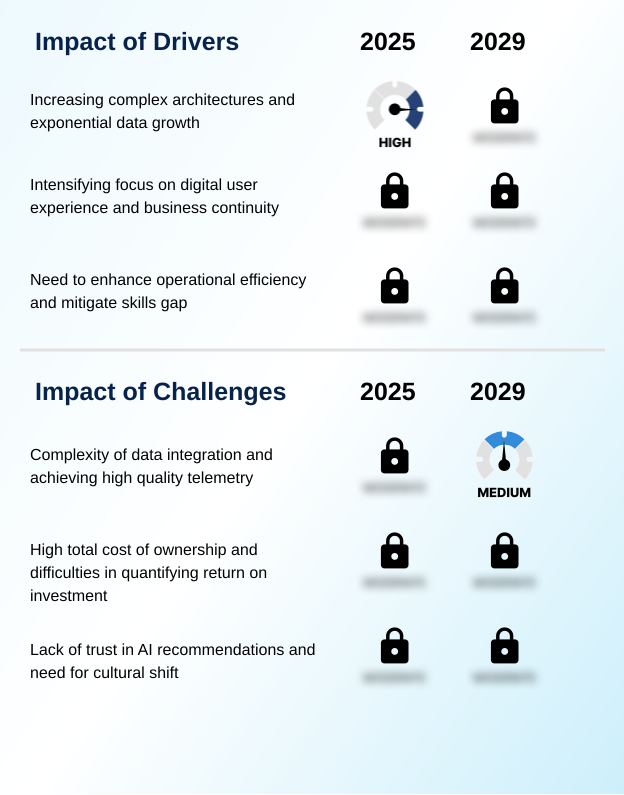
What are the key market drivers leading to the rise in the adoption of AI In Observability Industry?

  • Increasingly complex architectures and exponential data growth are the key drivers of the AI in observability market.

  • The primary market driver is the relentless increase in IT complexity, fueled by the adoption of distributed architectures and a corresponding explosion in data volume.
  • Modern systems generate over 10 times more telemetry data than their monolithic predecessors, rendering manual analysis impossible.
  • AI in observability directly addresses this by leveraging a powerful event correlation engine for log pattern recognition and real-time anomaly detection, which reduces alert noise by over 90%. This intelligent automation is essential for business transaction monitoring and managing microservices.
  • The strategic importance of delivering a flawless digital experience, where even minor latency can impact revenue, further propels demand.
  • This makes technologies for distributed tracing visualization and high-cardinality data ingestion critical for maintaining performance and achieving operational resilience in today's digital-first economy.

What are the market trends shaping the AI In Observability Industry?

  • The integration of generative AI and natural language interfaces is an upcoming market trend. It is transforming how users interact with and derive insights from complex system data.

  • A transformative trend is the integration of generative AI and natural language querying into observability platforms. This evolution moves far beyond traditional machine learning, embedding conversational AI assistants that democratize data analysis and enable proactive capacity planning.
  • Users can now investigate complex issues with simple commands, a shift that has been shown to reduce onboarding time for new engineers by over 50%. This approach enhances IT operations efficiency and empowers a wider range of personnel to perform sophisticated diagnostics.
  • Such advancements in user journey analysis and contextualized alert grouping are critical, with platforms improving diagnostic query accuracy by up to 40% compared to manual methods. This trend directly addresses the industry's skills gap by making deep system insights more accessible, accelerating troubleshooting and fostering a more data-driven operational culture.

What challenges does the AI In Observability Industry face during its growth?

  • The complexity of data integration and the challenge of achieving high-quality telemetry are key issues affecting industry growth.

  • A significant market challenge is the complexity of data integration and the high cost of achieving quality telemetry, which can consume up to 20% of an initial project's engineering budget. The effectiveness of any AI model for real user monitoring data depends on the completeness and consistency of the input from the observability data pipeline.
  • Inconsistent data formats from a hybrid IT infrastructure can severely hamper the ability of an AI engine to perform accurate automated root cause analysis, with poor data quality leading to an inaccuracy rate as high as 35%. While open-source telemetry standards help, achieving comprehensive instrumentation across an entire enterprise remains a daunting task.
  • Furthermore, the high total cost of ownership and difficulties in quantifying ROI present another hurdle, as the financial benefits of proactive incident prevention are often difficult to forecast for executive stakeholders.

Exclusive Technavio Analysis on Customer Landscape

The ai in observability market forecasting report includes the adoption lifecycle of the market, covering from the innovator’s stage to the laggard’s stage. It focuses on adoption rates in different regions based on penetration. Furthermore, the ai in observability market report also includes key purchase criteria and drivers of price sensitivity to help companies evaluate and develop their market growth analysis strategies.
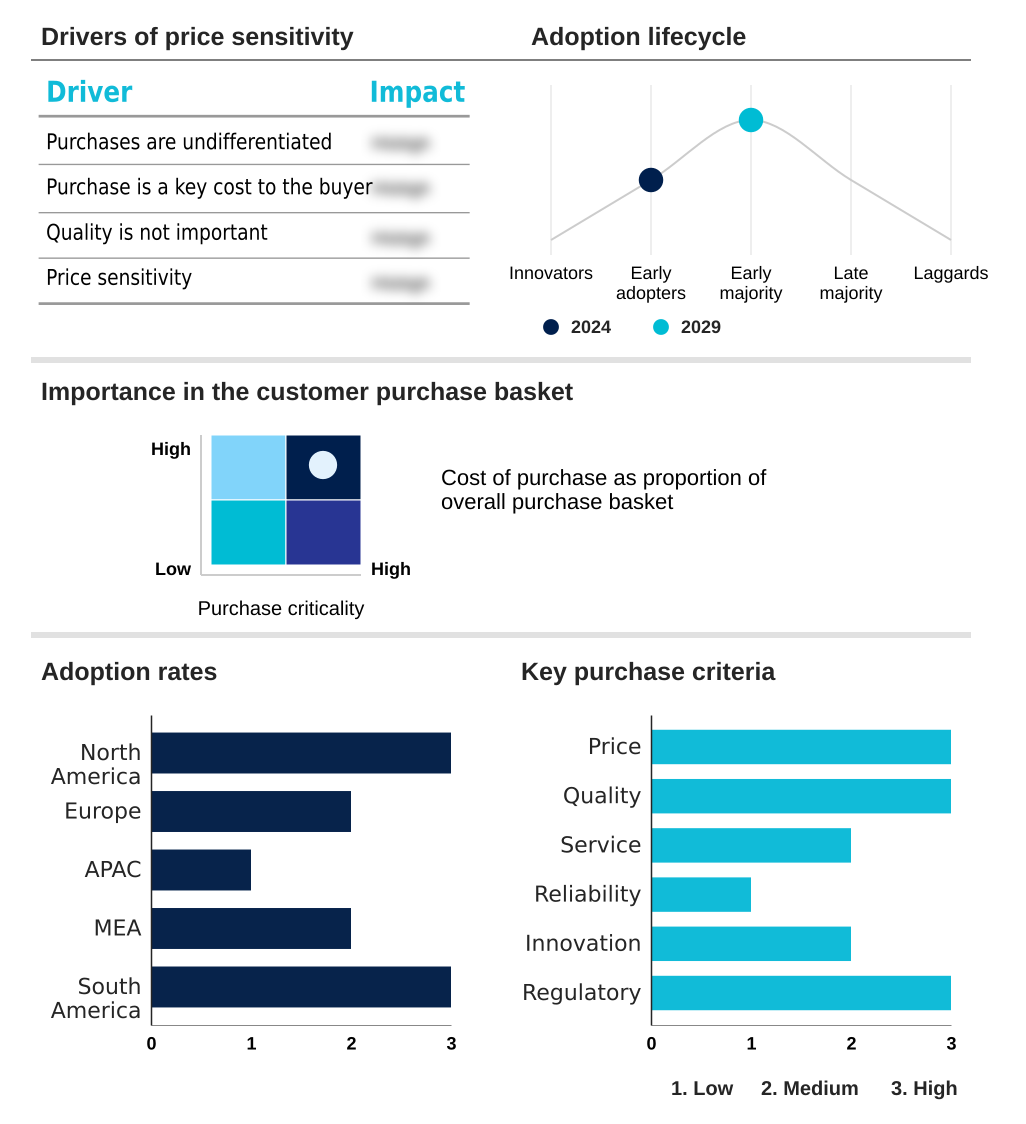
Customer Landscape of AI In Observability Industry

Competitive Landscape

Companies are implementing various strategies, such as strategic alliances, ai in observability market forecast, partnerships, mergers and acquisitions, geographical expansion, and product/service launches, to enhance their presence in the industry.

Arize AI Inc. - Provides specialized tools for end-to-end AI lifecycle monitoring, focusing on ML model performance, drift detection, and OpenTelemetry support for comprehensive LLM tracing.

The industry research and growth report includes detailed analyses of the competitive landscape of the market and information about key companies, including:

  • Arize AI Inc.
  • BigPanda Inc.
  • Broadcom Inc.
  • Cisco Systems Inc.
  • Datadog Inc.
  • Dell Technologies Inc.
  • Dynatrace Inc.
  • Elasticsearch B.V.
  • Fiddler Labs Inc.
  • Grafana Labs
  • IBM Corp.
  • LogicMonitor Inc.
  • Logshero Ltd.
  • Microsoft Corp.
  • Middleware Software, Inc.
  • New Relic Inc.
  • PagerDuty Inc.
  • ScienceLogic Inc.
  • Superwise

Qualitative and quantitative analysis of companies has been conducted to help clients understand the wider business environment as well as the strengths and weaknesses of key industry players. Data is qualitatively analyzed to categorize companies as pure play, category-focused, industry-focused, and diversified; it is quantitatively analyzed to categorize companies as dominant, leading, strong, tentative, and weak.

Recent Development and News in Ai in observability market

  • In October, 2024, Dynatrace Inc. announces the acquisition of a leading FinOps startup, integrating cloud cost management directly into its core observability platform to provide unified performance and spend visibility.
  • In January, 2025, Grafana Labs launches a new enterprise-grade MLOps monitoring stack, providing out-of-the-box dashboards and alerts for tracking ML model drift, data quality, and prediction accuracy in production environments.
  • In March, 2025, Datadog Inc. unveils its next-generation generative AI copilot, enabling fully automated incident remediation workflows and predictive resource allocation based on natural language commands.
  • In May, 2025, Broadcom Inc. announces a major strategic partnership with a leading cloud provider to deliver a deeply integrated, turnkey observability solution for hybrid cloud environments, simplifying large-scale enterprise adoption.

Dive into Technavio’s robust research methodology, blending expert interviews, extensive data synthesis, and validated models for unparalleled AI In Observability Market insights. See full methodology.

Market Scope
Page number 300
Base year 2024
Historic period 2019-2023
Forecast period 2025-2029
Growth momentum & CAGR Accelerate at a CAGR of 22.5%
Market growth 2025-2029 USD 2919.5 million
Market structure Fragmented
YoY growth 2024-2025(%) 18.1%
Key countries US, Canada, Mexico, UK, Germany, France, Italy, Spain, Russia, China, Japan, India, South Korea, Australia, Singapore, Saudi Arabia, UAE, South Africa, Israel, Turkey, Brazil, Argentina and Colombia
Competitive landscape Leading Companies, Market Positioning of Companies, Competitive Strategies, and Industry Risks

Request Free Sample

Research Analyst Overview

  • The AI in observability market is defined by a pivotal shift from reactive monitoring to predictive, automated operations, driven by advanced AIOps platform capabilities. This evolution is a direct response to the complexities of cloud-native monitoring, where enterprises now require full-stack visibility and dynamic performance baselining to manage distributed systems.
  • Key technologies such as real-time anomaly detection, intelligent alert correlation, and automated root cause analysis are becoming standard. For instance, enterprises adopting these automated tools have reported a 30% reduction in critical system downtime. The focus has expanded to include proactive issue detection and predictive failure analysis, which are crucial for maintaining business continuity.
  • In the boardroom, the adoption of specialized capabilities like ML model drift detection and algorithmic bias monitoring is now a core component of risk management for AI-driven businesses.
  • This is supported by end-to-end transaction tracing and telemetry data correlation, which provides the deep insights needed for effective digital experience monitoring and maintaining stringent service-level objective tracking across the entire technology stack. The market’s direction is toward creating self-healing systems through comprehensive operational data analytics and robust machine learning operations.

What are the Key Data Covered in this AI In Observability Market Research and Growth Report?

  • What is the expected growth of the AI In Observability Market between 2025 and 2029?

    • USD 2.92 billion, at a CAGR of 22.5%

  • What segmentation does the market report cover?

    • The report is segmented by Deployment (Cloud-based, On-premises), Component (Solution, Services), End-user (IT and telecom, BFSI, Retail and e-commerce, Healthcare, Others) and Geography (North America, Europe, APAC, Middle East and Africa, South America)

  • Which regions are analyzed in the report?

    • North America, Europe, APAC, Middle East and Africa and South America

  • What are the key growth drivers and market challenges?

    • Increasing complex architectures and exponential data growth , Complexity of data integration and achieving high quality telemetry

  • Who are the major players in the AI In Observability Market?

    • Arize AI Inc., BigPanda Inc., Broadcom Inc., Cisco Systems Inc., Datadog Inc., Dell Technologies Inc., Dynatrace Inc., Elasticsearch B.V., Fiddler Labs Inc., Grafana Labs, IBM Corp., LogicMonitor Inc., Logshero Ltd., Microsoft Corp., Middleware Software, Inc., New Relic Inc., PagerDuty Inc., ScienceLogic Inc. and Superwise

Market Research Insights

  • The market's dynamics are shaped by a strategic push toward greater automation and efficiency. Organizations adopting automated remediation workflows report up to a 40% reduction in manual intervention for common incidents. The convergence of security and observability is a pivotal force, with integrated platforms improving threat detection speeds by over 50% compared to siloed tools.
  • Furthermore, a focus on FinOps cost optimization through AI-driven insights is becoming standard, as effective data ingestion cost management can lower total observability spend by up to 25%.
  • This proactive capacity planning and emphasis on incident management automation are transforming IT operations from a cost center into a value driver, directly impacting system reliability metrics and enhancing overall business resilience in complex digital environments.

We can help! Our analysts can customize this ai in observability market research report to meet your requirements.

Get in touch

1. Executive Summary

1.1 Market overview

Executive Summary - Chart on Market Overview
Executive Summary - Data Table on Market Overview
Executive Summary - Chart on Global Market Characteristics
Executive Summary - Chart on Market by Geography
Executive Summary - Chart on Market Segmentation by Deployment
Executive Summary - Chart on Market Segmentation by Component
Executive Summary - Chart on Market Segmentation by End-user
Executive Summary - Chart on Incremental Growth
Executive Summary - Data Table on Incremental Growth
Executive Summary - Chart on Company Market Positioning

2. Technavio Analysis

2.1 Analysis of price sensitivity, lifecycle, customer purchase basket, adoption rates, and purchase criteria

2.2 Criticality of inputs and Factors of differentiation

Chart on Overview on criticality of inputs and factors of differentiation

2.3 Factors of disruption

Chart on Overview on factors of disruption

2.4 Impact of drivers and challenges

Chart on Impact of drivers and challenges in 2024 and 2029

3. Market Landscape

3.1 Market ecosystem

Chart on Parent Market
Data Table on - Parent Market

3.2 Market characteristics

Chart on Market characteristics analysis

3.3 Value chain analysis

Chart on Value chain analysis

4. Market Sizing

4.1 Market definition

Data Table on Offerings of companies included in the market definition

4.2 Market segment analysis

Market segments

4.3 Market size 2024

4.4 Market outlook: Forecast for 2024-2029

Chart on Global - Market size and forecast 2024-2029 ($ million)
Data Table on Global - Market size and forecast 2024-2029 ($ million)
Chart on Global Market: Year-over-year growth 2024-2029 (%)
Data Table on Global Market: Year-over-year growth 2024-2029 (%)

5. Historic Market Size

5.1 Global AI In Observability Market 2019 - 2023

Historic Market Size - Data Table on Global AI In Observability Market 2019 - 2023 ($ million)

5.2 Deployment segment analysis 2019 - 2023

Historic Market Size - Deployment Segment 2019 - 2023 ($ million)

5.3 Component segment analysis 2019 - 2023

Historic Market Size - Component Segment 2019 - 2023 ($ million)

5.4 End-user segment analysis 2019 - 2023

Historic Market Size - End-user Segment 2019 - 2023 ($ million)

5.5 Geography segment analysis 2019 - 2023

Historic Market Size - Geography Segment 2019 - 2023 ($ million)

5.6 Country segment analysis 2019 - 2023

Historic Market Size - Country Segment 2019 - 2023 ($ million)

6. Five Forces Analysis

6.1 Five forces summary

Five forces analysis - Comparison between 2024 and 2029

6.2 Bargaining power of buyers

Bargaining power of buyers - Impact of key factors 2024 and 2029

6.3 Bargaining power of suppliers

Bargaining power of suppliers - Impact of key factors in 2024 and 2029

6.4 Threat of new entrants

Threat of new entrants - Impact of key factors in 2024 and 2029

6.5 Threat of substitutes

Threat of substitutes - Impact of key factors in 2024 and 2029

6.6 Threat of rivalry

Threat of rivalry - Impact of key factors in 2024 and 2029

6.7 Market condition

Chart on Market condition - Five forces 2024 and 2029

7. Market Segmentation by Deployment

7.1 Market segments

Chart on Deployment - Market share 2024-2029 (%)
Data Table on Deployment - Market share 2024-2029 (%)

7.2 Comparison by Deployment

Chart on Comparison by Deployment
Data Table on Comparison by Deployment

7.3 Cloud-based - Market size and forecast 2024-2029

Chart on Cloud-based - Market size and forecast 2024-2029 ($ million)
Data Table on Cloud-based - Market size and forecast 2024-2029 ($ million)
Chart on Cloud-based - Year-over-year growth 2024-2029 (%)
Data Table on Cloud-based - Year-over-year growth 2024-2029 (%)

7.4 On-premises - Market size and forecast 2024-2029

Chart on On-premises - Market size and forecast 2024-2029 ($ million)
Data Table on On-premises - Market size and forecast 2024-2029 ($ million)
Chart on On-premises - Year-over-year growth 2024-2029 (%)
Data Table on On-premises - Year-over-year growth 2024-2029 (%)

7.5 Market opportunity by Deployment

Market opportunity by Deployment ($ million)
Data Table on Market opportunity by Deployment ($ million)

8. Market Segmentation by Component

8.1 Market segments

Chart on Component - Market share 2024-2029 (%)
Data Table on Component - Market share 2024-2029 (%)

8.2 Comparison by Component

Chart on Comparison by Component
Data Table on Comparison by Component

8.3 Solution - Market size and forecast 2024-2029

Chart on Solution - Market size and forecast 2024-2029 ($ million)
Data Table on Solution - Market size and forecast 2024-2029 ($ million)
Chart on Solution - Year-over-year growth 2024-2029 (%)
Data Table on Solution - Year-over-year growth 2024-2029 (%)

8.4 Services - Market size and forecast 2024-2029

Chart on Services - Market size and forecast 2024-2029 ($ million)
Data Table on Services - Market size and forecast 2024-2029 ($ million)
Chart on Services - Year-over-year growth 2024-2029 (%)
Data Table on Services - Year-over-year growth 2024-2029 (%)

8.5 Market opportunity by Component

Market opportunity by Component ($ million)
Data Table on Market opportunity by Component ($ million)

9. Market Segmentation by End-user

9.1 Market segments

Chart on End-user - Market share 2024-2029 (%)
Data Table on End-user - Market share 2024-2029 (%)

9.2 Comparison by End-user

Chart on Comparison by End-user
Data Table on Comparison by End-user

9.3 IT and telecom - Market size and forecast 2024-2029

Chart on IT and telecom - Market size and forecast 2024-2029 ($ million)
Data Table on IT and telecom - Market size and forecast 2024-2029 ($ million)
Chart on IT and telecom - Year-over-year growth 2024-2029 (%)
Data Table on IT and telecom - Year-over-year growth 2024-2029 (%)

9.4 BFSI - Market size and forecast 2024-2029

Chart on BFSI - Market size and forecast 2024-2029 ($ million)
Data Table on BFSI - Market size and forecast 2024-2029 ($ million)
Chart on BFSI - Year-over-year growth 2024-2029 (%)
Data Table on BFSI - Year-over-year growth 2024-2029 (%)

9.5 Retail and e-commerce - Market size and forecast 2024-2029

Chart on Retail and e-commerce - Market size and forecast 2024-2029 ($ million)
Data Table on Retail and e-commerce - Market size and forecast 2024-2029 ($ million)
Chart on Retail and e-commerce - Year-over-year growth 2024-2029 (%)
Data Table on Retail and e-commerce - Year-over-year growth 2024-2029 (%)

9.6 Healthcare - Market size and forecast 2024-2029

Chart on Healthcare - Market size and forecast 2024-2029 ($ million)
Data Table on Healthcare - Market size and forecast 2024-2029 ($ million)
Chart on Healthcare - Year-over-year growth 2024-2029 (%)
Data Table on Healthcare - Year-over-year growth 2024-2029 (%)

9.7 Others - Market size and forecast 2024-2029

Chart on Others - Market size and forecast 2024-2029 ($ million)
Data Table on Others - Market size and forecast 2024-2029 ($ million)
Chart on Others - Year-over-year growth 2024-2029 (%)
Data Table on Others - Year-over-year growth 2024-2029 (%)

9.8 Market opportunity by End-user

Market opportunity by End-user ($ million)
Data Table on Market opportunity by End-user ($ million)

10. Customer Landscape

10.1 Customer landscape overview

Analysis of price sensitivity, lifecycle, customer purchase basket, adoption rates, and purchase criteria

11. Geographic Landscape

11.1 Geographic segmentation

Chart on Market share by geography 2024-2029 (%)
Data Table on Market share by geography 2024-2029 (%)

11.2 Geographic comparison

Chart on Geographic comparison
Data Table on Geographic comparison

11.3 North America - Market size and forecast 2024-2029

Chart on North America - Market size and forecast 2024-2029 ($ million)
Data Table on North America - Market size and forecast 2024-2029 ($ million)
Chart on North America - Year-over-year growth 2024-2029 (%)
Data Table on North America - Year-over-year growth 2024-2029 (%)
Chart on Regional Comparison - North America
Data Table on Regional Comparison - North America

11.3.1 US - Market size and forecast 2024-2029

Chart on US - Market size and forecast 2024-2029 ($ million)
Data Table on US - Market size and forecast 2024-2029 ($ million)
Chart on US - Year-over-year growth 2024-2029 (%)
Data Table on US - Year-over-year growth 2024-2029 (%)

11.3.2 Canada - Market size and forecast 2024-2029

Chart on Canada - Market size and forecast 2024-2029 ($ million)
Data Table on Canada - Market size and forecast 2024-2029 ($ million)
Chart on Canada - Year-over-year growth 2024-2029 (%)
Data Table on Canada - Year-over-year growth 2024-2029 (%)

11.3.3 Mexico - Market size and forecast 2024-2029

Chart on Mexico - Market size and forecast 2024-2029 ($ million)
Data Table on Mexico - Market size and forecast 2024-2029 ($ million)
Chart on Mexico - Year-over-year growth 2024-2029 (%)
Data Table on Mexico - Year-over-year growth 2024-2029 (%)

11.4 Europe - Market size and forecast 2024-2029

Chart on Europe - Market size and forecast 2024-2029 ($ million)
Data Table on Europe - Market size and forecast 2024-2029 ($ million)
Chart on Europe - Year-over-year growth 2024-2029 (%)
Data Table on Europe - Year-over-year growth 2024-2029 (%)
Chart on Regional Comparison - Europe
Data Table on Regional Comparison - Europe

11.4.1 UK - Market size and forecast 2024-2029

Chart on UK - Market size and forecast 2024-2029 ($ million)
Data Table on UK - Market size and forecast 2024-2029 ($ million)
Chart on UK - Year-over-year growth 2024-2029 (%)
Data Table on UK - Year-over-year growth 2024-2029 (%)

11.4.2 Germany - Market size and forecast 2024-2029

Chart on Germany - Market size and forecast 2024-2029 ($ million)
Data Table on Germany - Market size and forecast 2024-2029 ($ million)
Chart on Germany - Year-over-year growth 2024-2029 (%)
Data Table on Germany - Year-over-year growth 2024-2029 (%)

11.4.3 France - Market size and forecast 2024-2029

Chart on France - Market size and forecast 2024-2029 ($ million)
Data Table on France - Market size and forecast 2024-2029 ($ million)
Chart on France - Year-over-year growth 2024-2029 (%)
Data Table on France - Year-over-year growth 2024-2029 (%)

11.4.4 Italy - Market size and forecast 2024-2029

Chart on Italy - Market size and forecast 2024-2029 ($ million)
Data Table on Italy - Market size and forecast 2024-2029 ($ million)
Chart on Italy - Year-over-year growth 2024-2029 (%)
Data Table on Italy - Year-over-year growth 2024-2029 (%)

11.4.5 Spain - Market size and forecast 2024-2029

Chart on Spain - Market size and forecast 2024-2029 ($ million)
Data Table on Spain - Market size and forecast 2024-2029 ($ million)
Chart on Spain - Year-over-year growth 2024-2029 (%)
Data Table on Spain - Year-over-year growth 2024-2029 (%)

11.4.6 Russia - Market size and forecast 2024-2029

Chart on Russia - Market size and forecast 2024-2029 ($ million)
Data Table on Russia - Market size and forecast 2024-2029 ($ million)
Chart on Russia - Year-over-year growth 2024-2029 (%)
Data Table on Russia - Year-over-year growth 2024-2029 (%)

11.5 APAC - Market size and forecast 2024-2029

Chart on APAC - Market size and forecast 2024-2029 ($ million)
Data Table on APAC - Market size and forecast 2024-2029 ($ million)
Chart on APAC - Year-over-year growth 2024-2029 (%)
Data Table on APAC - Year-over-year growth 2024-2029 (%)
Chart on Regional Comparison - APAC
Data Table on Regional Comparison - APAC

11.5.1 China - Market size and forecast 2024-2029

Chart on China - Market size and forecast 2024-2029 ($ million)
Data Table on China - Market size and forecast 2024-2029 ($ million)
Chart on China - Year-over-year growth 2024-2029 (%)
Data Table on China - Year-over-year growth 2024-2029 (%)

11.5.2 Japan - Market size and forecast 2024-2029

Chart on Japan - Market size and forecast 2024-2029 ($ million)
Data Table on Japan - Market size and forecast 2024-2029 ($ million)
Chart on Japan - Year-over-year growth 2024-2029 (%)
Data Table on Japan - Year-over-year growth 2024-2029 (%)

11.5.3 India - Market size and forecast 2024-2029

Chart on India - Market size and forecast 2024-2029 ($ million)
Data Table on India - Market size and forecast 2024-2029 ($ million)
Chart on India - Year-over-year growth 2024-2029 (%)
Data Table on India - Year-over-year growth 2024-2029 (%)

11.5.4 South Korea - Market size and forecast 2024-2029

Chart on South Korea - Market size and forecast 2024-2029 ($ million)
Data Table on South Korea - Market size and forecast 2024-2029 ($ million)
Chart on South Korea - Year-over-year growth 2024-2029 (%)
Data Table on South Korea - Year-over-year growth 2024-2029 (%)

11.5.5 Australia - Market size and forecast 2024-2029

Chart on Australia - Market size and forecast 2024-2029 ($ million)
Data Table on Australia - Market size and forecast 2024-2029 ($ million)
Chart on Australia - Year-over-year growth 2024-2029 (%)
Data Table on Australia - Year-over-year growth 2024-2029 (%)

11.5.6 Singapore - Market size and forecast 2024-2029

Chart on Singapore - Market size and forecast 2024-2029 ($ million)
Data Table on Singapore - Market size and forecast 2024-2029 ($ million)
Chart on Singapore - Year-over-year growth 2024-2029 (%)
Data Table on Singapore - Year-over-year growth 2024-2029 (%)

11.6 Middle East and Africa - Market size and forecast 2024-2029

Chart on Middle East and Africa - Market size and forecast 2024-2029 ($ million)
Data Table on Middle East and Africa - Market size and forecast 2024-2029 ($ million)
Chart on Middle East and Africa - Year-over-year growth 2024-2029 (%)
Data Table on Middle East and Africa - Year-over-year growth 2024-2029 (%)
Chart on Regional Comparison - Middle East and Africa
Data Table on Regional Comparison - Middle East and Africa

11.6.1 Saudi Arabia - Market size and forecast 2024-2029

Chart on Saudi Arabia - Market size and forecast 2024-2029 ($ million)
Data Table on Saudi Arabia - Market size and forecast 2024-2029 ($ million)
Chart on Saudi Arabia - Year-over-year growth 2024-2029 (%)
Data Table on Saudi Arabia - Year-over-year growth 2024-2029 (%)

11.6.2 UAE - Market size and forecast 2024-2029

Chart on UAE - Market size and forecast 2024-2029 ($ million)
Data Table on UAE - Market size and forecast 2024-2029 ($ million)
Chart on UAE - Year-over-year growth 2024-2029 (%)
Data Table on UAE - Year-over-year growth 2024-2029 (%)

11.6.3 South Africa - Market size and forecast 2024-2029

Chart on South Africa - Market size and forecast 2024-2029 ($ million)
Data Table on South Africa - Market size and forecast 2024-2029 ($ million)
Chart on South Africa - Year-over-year growth 2024-2029 (%)
Data Table on South Africa - Year-over-year growth 2024-2029 (%)

11.6.4 Israel - Market size and forecast 2024-2029

Chart on Israel - Market size and forecast 2024-2029 ($ million)
Data Table on Israel - Market size and forecast 2024-2029 ($ million)
Chart on Israel - Year-over-year growth 2024-2029 (%)
Data Table on Israel - Year-over-year growth 2024-2029 (%)

11.6.5 Turkey - Market size and forecast 2024-2029

Chart on Turkey - Market size and forecast 2024-2029 ($ million)
Data Table on Turkey - Market size and forecast 2024-2029 ($ million)
Chart on Turkey - Year-over-year growth 2024-2029 (%)
Data Table on Turkey - Year-over-year growth 2024-2029 (%)

11.7 South America - Market size and forecast 2024-2029

Chart on South America - Market size and forecast 2024-2029 ($ million)
Data Table on South America - Market size and forecast 2024-2029 ($ million)
Chart on South America - Year-over-year growth 2024-2029 (%)
Data Table on South America - Year-over-year growth 2024-2029 (%)
Chart on Regional Comparison - South America
Data Table on Regional Comparison - South America

11.7.1 Brazil - Market size and forecast 2024-2029

Chart on Brazil - Market size and forecast 2024-2029 ($ million)
Data Table on Brazil - Market size and forecast 2024-2029 ($ million)
Chart on Brazil - Year-over-year growth 2024-2029 (%)
Data Table on Brazil - Year-over-year growth 2024-2029 (%)

11.7.2 Argentina - Market size and forecast 2024-2029

Chart on Argentina - Market size and forecast 2024-2029 ($ million)
Data Table on Argentina - Market size and forecast 2024-2029 ($ million)
Chart on Argentina - Year-over-year growth 2024-2029 (%)
Data Table on Argentina - Year-over-year growth 2024-2029 (%)

11.7.3 Colombia - Market size and forecast 2024-2029

Chart on Colombia - Market size and forecast 2024-2029 ($ million)
Data Table on Colombia - Market size and forecast 2024-2029 ($ million)
Chart on Colombia - Year-over-year growth 2024-2029 (%)
Data Table on Colombia - Year-over-year growth 2024-2029 (%)

11.8 Market opportunity by geography

Market opportunity by geography ($ million)
Data Tables on Market opportunity by geography ($ million)

12. Drivers, Challenges, and Opportunity

12.1 Market drivers

Increasing complex architectures and exponential data growth
Intensifying focus on digital user experience and business continuity
Need to enhance operational efficiency and mitigate skills gap

12.2 Market challenges

Complexity of data integration and achieving high quality telemetry
High total cost of ownership and difficulties in quantifying return on investment
Lack of trust in AI recommendations and need for cultural shift

12.3 Impact of drivers and challenges

Impact of drivers and challenges in 2024 and 2029

12.4 Market opportunities

Integration of generative AI and natural language interfaces
Platform consolidation and ascendancy of OpenTelemetry
Expansion into specialized observability for MLOps and FinOps

13. Competitive Landscape

13.1 Overview

13.2

Overview on criticality of inputs and factors of differentiation

13.3 Landscape disruption

Overview on factors of disruption

13.4 Industry risks

Impact of key risks on business

14. Competitive Analysis

14.1 Companies profiled

Companies covered

14.2 Company ranking index

14.3 Market positioning of companies

Matrix on companies position and classification

14.4 Arize AI Inc.

Arize AI Inc. - Overview
Arize AI Inc. - Product / Service
Arize AI Inc. - Key offerings
SWOT

14.5 Broadcom Inc.

Broadcom Inc. - Overview
Broadcom Inc. - Business segments
Broadcom Inc. - Key news
Broadcom Inc. - Key offerings
Broadcom Inc. - Segment focus
SWOT

14.6 Cisco Systems Inc.

Cisco Systems Inc. - Overview
Cisco Systems Inc. - Business segments
Cisco Systems Inc. - Key news
Cisco Systems Inc. - Key offerings
Cisco Systems Inc. - Segment focus
SWOT

14.7 Datadog Inc.

Datadog Inc. - Overview
Datadog Inc. - Product / Service
Datadog Inc. - Key offerings
SWOT

14.8 Dell Technologies Inc.

Dell Technologies Inc. - Overview
Dell Technologies Inc. - Business segments
Dell Technologies Inc. - Key news
Dell Technologies Inc. - Key offerings
Dell Technologies Inc. - Segment focus
SWOT

14.9 Dynatrace Inc.

Dynatrace Inc. - Overview
Dynatrace Inc. - Product / Service
Dynatrace Inc. - Key news
Dynatrace Inc. - Key offerings
SWOT

14.10 Fiddler Labs Inc.

Fiddler Labs Inc. - Overview
Fiddler Labs Inc. - Product / Service
Fiddler Labs Inc. - Key offerings
SWOT

14.11 Grafana Labs

Grafana Labs - Overview
Grafana Labs - Product / Service
Grafana Labs - Key offerings
SWOT

14.12 IBM Corp.

IBM Corp. - Overview
IBM Corp. - Business segments
IBM Corp. - Key news
IBM Corp. - Key offerings
IBM Corp. - Segment focus
SWOT

14.13 LogicMonitor Inc.

LogicMonitor Inc. - Overview
LogicMonitor Inc. - Product / Service
LogicMonitor Inc. - Key offerings
SWOT

14.14 Logshero Ltd.

Logshero Ltd. - Overview
Logshero Ltd. - Product / Service
Logshero Ltd. - Key offerings
SWOT

14.15 Microsoft Corp.

Microsoft Corp. - Overview
Microsoft Corp. - Business segments
Microsoft Corp. - Key news
Microsoft Corp. - Key offerings
Microsoft Corp. - Segment focus
SWOT

14.16 Middleware Software, Inc.

Middleware Software, Inc. - Overview
Middleware Software, Inc. - Product / Service
Middleware Software, Inc. - Key offerings
SWOT

14.17 New Relic Inc.

New Relic Inc. - Overview
New Relic Inc. - Product / Service
New Relic Inc. - Key offerings
SWOT

14.18 Superwise

Superwise - Overview
Superwise - Product / Service
Superwise - Key offerings
SWOT

15. Appendix

15.1 Scope of the report

Market definition
Objectives
Notes and caveats

15.2 Inclusions and exclusions checklist

Inclusions checklist
Exclusions checklist

15.3 Currency conversion rates for US$

15.4 Research methodology

15.5 Data procurement

Information sources

15.6 Data validation

15.7 Validation techniques employed for market sizing

15.8 Data synthesis

15.9 360 degree market analysis

15.10 List of abbreviations

Research Methodology

Technavio presents a detailed picture of the market by way of study, synthesis, and summation of data from multiple sources. The analysts have presented the various facets of the market with a particular focus on identifying the key industry influencers. The data thus presented is comprehensive, reliable, and the result of extensive research, both primary and secondary.

INFORMATION SOURCES

Primary sources

  • Manufacturers and suppliers
  • Channel partners
  • Industry experts
  • Strategic decision makers

Secondary sources

  • Industry journals and periodicals
  • Government data
  • Financial reports of key industry players
  • Historical data
  • Press releases

DATA ANALYSIS

Data Synthesis

  • Collation of data
  • Estimation of key figures
  • Analysis of derived insights

Data Validation

  • Triangulation with data models
  • Reference against proprietary databases
  • Corroboration with industry experts

REPORT WRITING

Qualitative

  • Market drivers
  • Market challenges
  • Market trends
  • Five forces analysis

Quantitative

  • Market size and forecast
  • Market segmentation
  • Geographical insights
  • Competitive landscape

Interested in this report?

Get your sample now to see our research methodology and insights!

Download Now

Frequently Asked Questions

AI In Observability market growth will increase by USD 2919.5 million during 2025-2029.

The AI In Observability market is expected to grow at a CAGR of 22.5% during 2025-2029.

AI In Observability market is segmented by Deployment (Cloud-based, On-premises) Component (Solution, Services) End-user (IT and telecom, BFSI, Retail and e-commerce, Healthcare, Others)

Arize AI Inc., BigPanda Inc., Broadcom Inc., Cisco Systems Inc., Datadog Inc., Dell Technologies Inc., Dynatrace Inc., Elasticsearch B.V., Fiddler Labs Inc., Grafana Labs, IBM Corp., LogicMonitor Inc., Logshero Ltd., Microsoft Corp., Middleware Software, Inc., New Relic Inc., PagerDuty Inc., ScienceLogic Inc., Superwise are a few of the key vendors in the AI In Observability market.

North America will register the highest growth rate of 37.3% among the other regions. Therefore, the AI In Observability market in North America is expected to garner significant business opportunities for the vendors during the forecast period.

US, Canada, Mexico, UK, Germany, France, Italy, Spain, Russia, China, Japan, India, South Korea, Australia, Singapore, Saudi Arabia, UAE, South Africa, Israel, Turkey, Brazil, Argentina, Colombia

  • Increasing complex architectures and exponential data growth is the driving factor this market.

The AI In Observability market vendors should focus on grabbing business opportunities from the Deployment segment as it accounted for the largest market share in the base year.