



AI In ESG And Sustainability Market Size 2025-2029
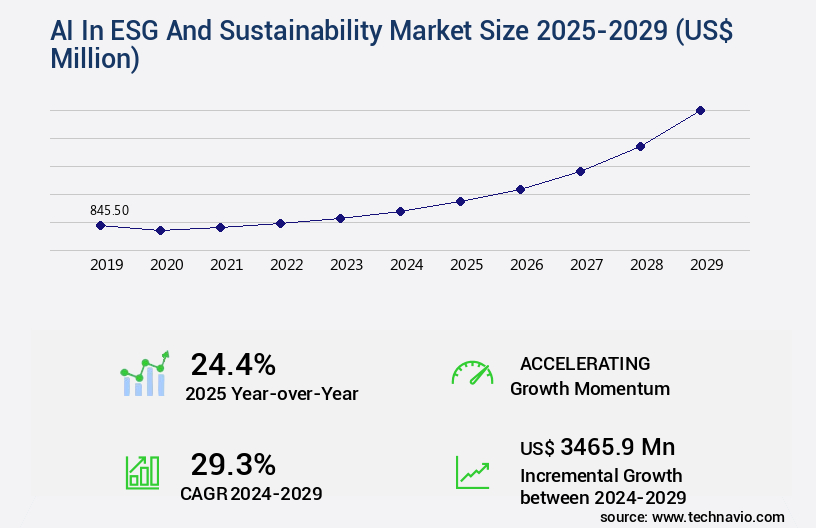
The ai in esg and sustainability market size is valued to increase by USD 3.47 billion, at a CAGR of 29.3% from 2024 to 2029. Intensifying regulatory scrutiny and mandatory disclosure frameworks will drive the ai in esg and sustainability market.
Major Market Trends & Insights
- APAC dominated the market and accounted for a 34% growth during the forecast period.
- By Deployment - Cloud segment was valued at USD 473.50 billion in 2023
- By End-user - Building and construction segment accounted for the largest market revenue share in 2023
Market Size & Forecast
- Market Opportunities: USD 466.61 million
- Market Future Opportunities: USD 3465.90 million
- CAGR from 2024 to 2029 : 29.3%
Market Summary
- In the realm of Environmental, Social, and Governance (ESG) and sustainability initiatives, Artificial Intelligence (AI) is increasingly becoming a game-changer. According to recent estimates, The market is projected to reach USD12.6 billion by 2027, growing at a steady pace. This expansion is fueled by intensifying regulatory scrutiny and mandatory disclosure frameworks that necessitate more efficient and accurate ESG data management. Hyper-automation of ESG data collection, assurance, and reporting is another significant driver. AI algorithms can process vast amounts of data from various sources, identify patterns, and generate insights, enabling organizations to make informed decisions and demonstrate transparency.
- However, the pervasive issue of data quality, accessibility, and standardization poses a challenge. AI systems require high-quality, reliable data to function effectively, and ensuring this data's accuracy and accessibility remains a complex task. As AI continues to evolve, it will likely address these challenges by improving data quality through advanced data cleansing techniques and enhancing accessibility through cloud-based platforms. Moreover, AI will contribute to the standardization of ESG data by providing a common language and framework for understanding and comparing data across organizations. In the future, AI's role in ESG and sustainability will expand beyond data management to include predictive analytics, risk assessment, and continuous improvement strategies.
- This will enable businesses to not only meet regulatory requirements but also enhance their overall sustainability performance and reputation.
What will be the Size of the AI In ESG And Sustainability Market during the forecast period?
Get Key Insights on Market Forecast (PDF) Request Free Sample
How is the AI In ESG And Sustainability Market Segmented ?
The ai in esg and sustainability industry research report provides comprehensive data (region-wise segment analysis), with forecasts and estimates in "USD million" for the period 2025-2029, as well as historical data from 2019-2023 for the following segments.
- Deployment
- Cloud
- On-premises
- End-user
- Building and construction
- Oil and gas
- Agriculture
- Food and beverage
- Others
- Technology
- Machine learning
- Generative AI
- Deep learning
- Natural language processing (NLP)
- Predictive analysis
- Geography
- North America
- US
- Europe
- France
- Germany
- UK
- APAC
- Australia
- China
- India
- Japan
- South Korea
- South America
- Brazil
- Rest of World (ROW)
- North America
By Deployment Insights
The cloud segment is estimated to witness significant growth during the forecast period.
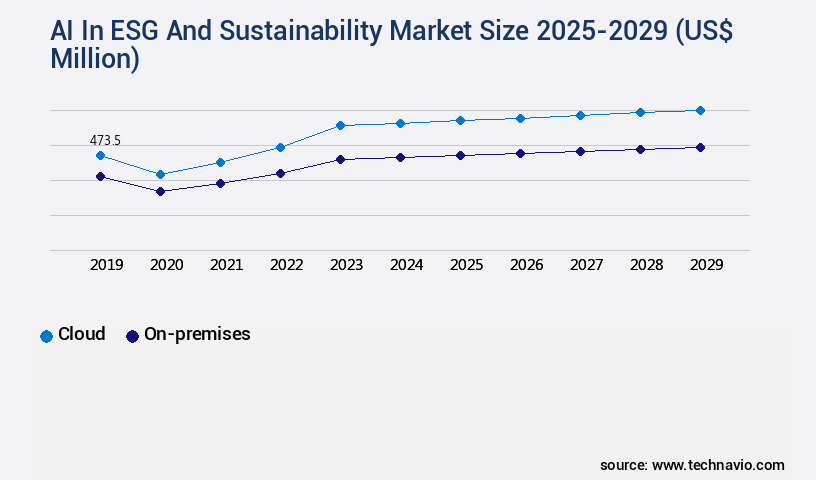
The market continues to evolve, with the cloud segment leading the charge. This sector's growth is driven by its ability to offer scalability, agility, cost efficiency, and unmatched data processing power. In contrast to traditional IT infrastructure, cloud-based solutions provide a flexible, pay-as-you-go model, making them increasingly popular for ESG analytics. These analyses require handling large, heterogeneous datasets, such as satellite imagery for environmental monitoring or text from news articles for stakeholder sentiment analysis. For instance, machine learning and deep learning algorithms are used for carbon footprint modeling, waste management, and energy efficiency, while predictive modeling and data visualization tools support ESG reporting automation and performance metrics.
Moreover, AI is also employed for risk management, impact investing, and materiality assessment, contributing to the circular economy, renewable energy, ethical sourcing, and water footprint assessment. According to recent estimates, The market is projected to grow at a compound annual growth rate of 22.5% between 2021 and 2028, reaching a value of USD11.1 billion by 2028.
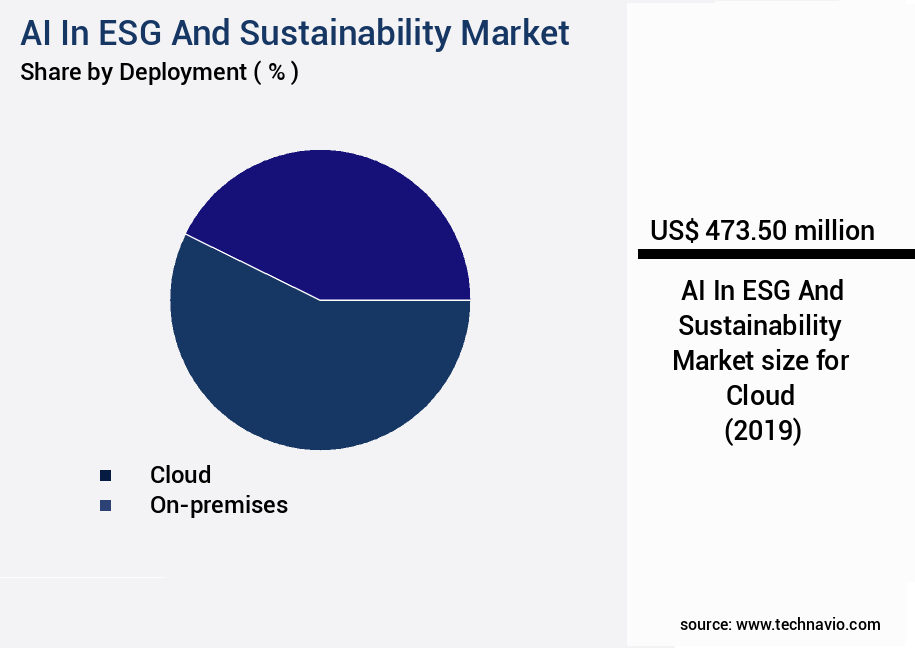
The Cloud segment was valued at USD 473.50 billion in 2019 and showed a gradual increase during the forecast period.
Regional Analysis
APAC is estimated to contribute 34% to the growth of the global market during the forecast period.Technavio's analysts have elaborately explained the regional trends and drivers that shape the market during the forecast period.
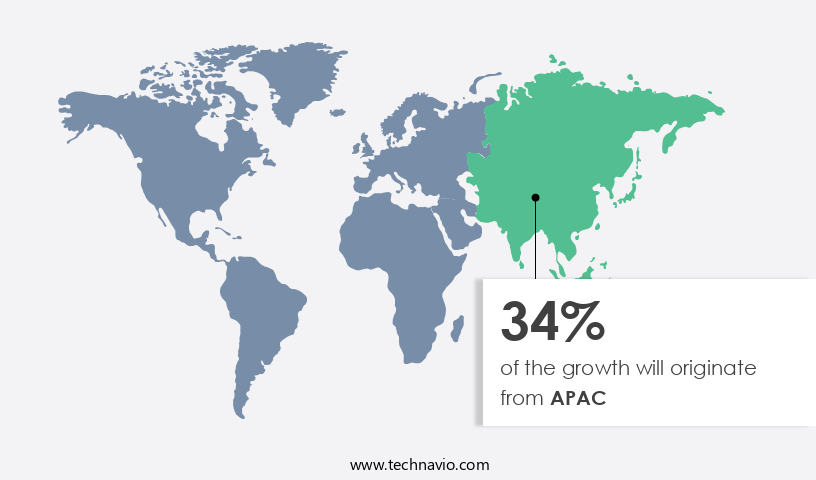
See How AI In ESG And Sustainability Market Demand is Rising in APAC Request Free Sample
The APAC region showcases a diverse and evolving market for Artificial Intelligence (AI) in Environmental, Social, and Governance (ESG) and sustainability. With a growing emphasis on addressing environmental challenges and harnessing the potential of green technology, the market's dynamics vary significantly from more homogenous regions like North America and Europe. Government-led initiatives are a primary driver in APAC, with countries such as Japan, Singapore, and Australia implementing sophisticated ESG frameworks. Simultaneously, developing nations are witnessing an accelerating adoption of AI in ESG and sustainability. This heterogeneity offers a rich landscape of opportunities and challenges. Environmental concerns, including air and water pollution, fuel the market's growth.
Market Dynamics
Our researchers analyzed the data with 2024 as the base year, along with the key drivers, trends, and challenges. A holistic analysis of drivers will help companies refine their marketing strategies to gain a competitive advantage.
The market is experiencing significant growth as businesses seek to enhance their environmental, social, and governance (ESG) performance through advanced technological solutions. AI-powered ESG performance tracking enables companies to monitor and analyze their ESG metrics in real-time, while machine learning for ESG risk management helps identify potential risks and opportunities. Natural language processing (NLP) is used to extract insights from ESG reports, making data more accessible and actionable for decision-makers. Predictive analytics for sustainable supply chains allows businesses to anticipate disruptions and optimize their operations, while AI-driven solutions for corporate social responsibility help companies demonstrate their commitment to ethical business practices. ESG data visualization and reporting tools powered by AI provide stakeholders with clear and insightful data, while AI algorithms for environmental impact assessment offer accurate and detailed assessments of carbon footprints and other environmental metrics.
Deep learning models for carbon footprint reduction enable companies to identify areas for improvement and optimize their energy usage. Responsible AI in ESG decision-making is essential to ensure ethical considerations are integrated into AI systems. AI-based stakeholder engagement strategies enable companies to build stronger relationships with stakeholders, while data-driven insights for sustainable investing provide valuable information for investors. AI-enabled sustainability reporting frameworks offer advanced analytics for ESG performance improvement, while AI solutions for environmental compliance help businesses meet regulatory requirements. AI-driven monitoring of greenhouse gas emissions and big data analytics for ESG risk identification offer valuable insights for risk management. Furthermore, AI and blockchain are being used to enhance supply chain sustainability by providing transparency and traceability. Machine learning models for waste reduction and AI-powered solutions for water resource management offer opportunities for significant cost savings and environmental benefits. Overall, the market is transforming the way businesses approach sustainability, offering valuable insights and solutions for improving ESG performance and reducing environmental impact.
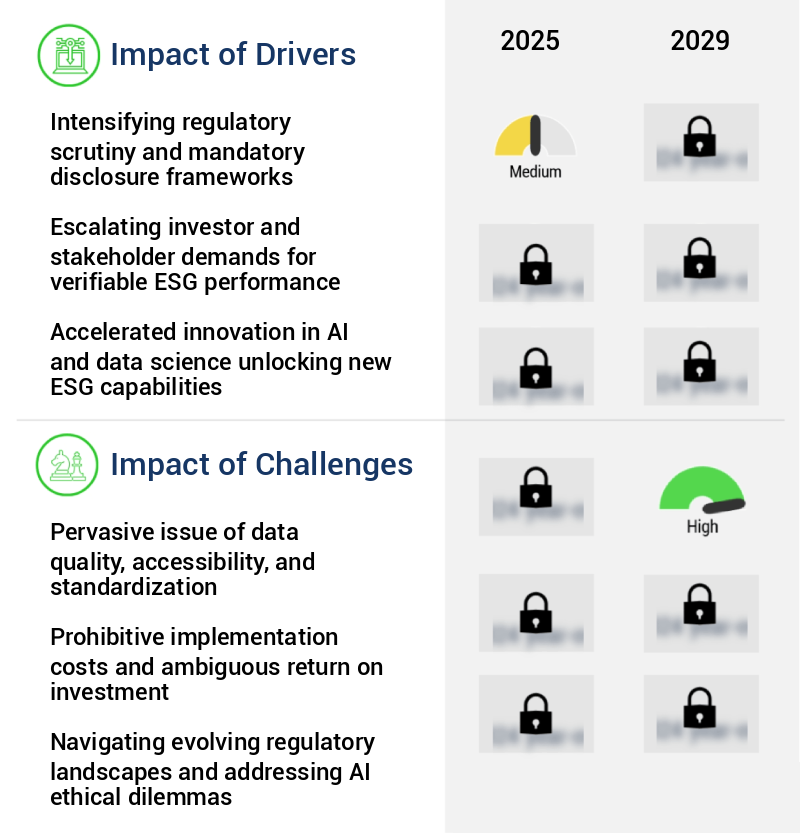
What are the key market drivers leading to the rise in the adoption of AI In ESG And Sustainability Industry?
- Mandatory disclosure frameworks and intensified regulatory scrutiny serve as primary catalysts for market compliance and transparency.
- The global AI application in Environmental, Social, and Governance (ESG) and sustainability markets is undergoing a transformative evolution, moving from voluntary reporting to mandatory disclosure frameworks. This shift significantly alters the corporate compliance landscape, elevating ESG data management from a peripheral public relations activity to a core business requirement, akin in importance to financial accounting. The escalating demand for stringent data handling stems from the sheer volume, intricacy, and granularity of data required under these new regulations. Traditional, manual methods of data collection and reporting are no longer viable, necessitating the implementation of advanced AI-driven solutions.
- These platforms automate data aggregation from disparate sources, ensure data accuracy, facilitate adherence to multiple regulatory frameworks, and offer the analytical depth needed for comprehensive, auditable disclosures.
What are the market trends shaping the AI In ESG And Sustainability Industry?
- The trend in the market is toward the hyper-automation of Environmental, Social, and Governance (ESG) data collection, assurance, and reporting. This process ensures efficiency, accuracy, and compliance in managing ESG information.
- The global AI in Environmental, Social, and Governance (ESG) and sustainability market is witnessing a significant shift towards hyper-automation in data management. This evolution signifies a progression from basic data collection to a comprehensive, AI-driven ecosystem for managing ESG metrics. The primary catalyst for this trend is the increasing intricacy and expansiveness of regulatory mandates worldwide. In Europe, the Corporate Sustainability Reporting Directive (CSRD) necessitates robust, auditable data trails, compelling thousands of companies to disclose extensive sustainability information. Similarly, in North America, the Securities and Exchange Commission's proposed climate disclosure rules, despite facing legal challenges, underscore a clear intention towards mandatory reporting.
- This surge in regulatory requirements underscores the importance of AI technologies in streamlining and enhancing ESG data management processes.
What challenges does the AI In ESG And Sustainability Industry face during its growth?
- The pervasive challenge of ensuring data quality, accessibility, and standardization is a critical issue impeding industry growth. This complex problem necessitates the implementation of robust solutions to address data inconsistencies, enhance data accessibility, and establish industry-wide data standardization. Failure to effectively tackle these concerns may hinder business expansion and competitiveness.
- The integration of artificial intelligence (AI) in the Environmental, Social, and Governance (ESG) and sustainability market is a response to the fragmented and inconsistent nature of relevant data. AI models, specifically machine learning and deep learning algorithms, require large volumes of high-quality, structured, and labeled data for training and validation. However, the ESG domain is marked by a nascent and complex data ecosystem, with a significant portion of critical sustainability information residing in unstructured formats such as annual reports, press releases, NGO analyses, and news articles. Extracting and standardizing this data is a labor-intensive and technologically complex process, leading to potential errors and interpretation bias.
- Despite these challenges, the potential benefits of AI in ESG and sustainability are substantial, with recent studies estimating that The market will reach USDXX billion by 20XX, growing at a robust rate. This growth is driven by the need for accurate and timely insights to inform business decisions, enhance transparency, and improve overall sustainability performance.
Exclusive Technavio Analysis on Customer Landscape
The ai in esg and sustainability market forecasting report includes the adoption lifecycle of the market, covering from the innovator's stage to the laggard's stage. It focuses on adoption rates in different regions based on penetration. Furthermore, the ai in esg and sustainability market report also includes key purchase criteria and drivers of price sensitivity to help companies evaluate and develop their market growth analysis strategies.
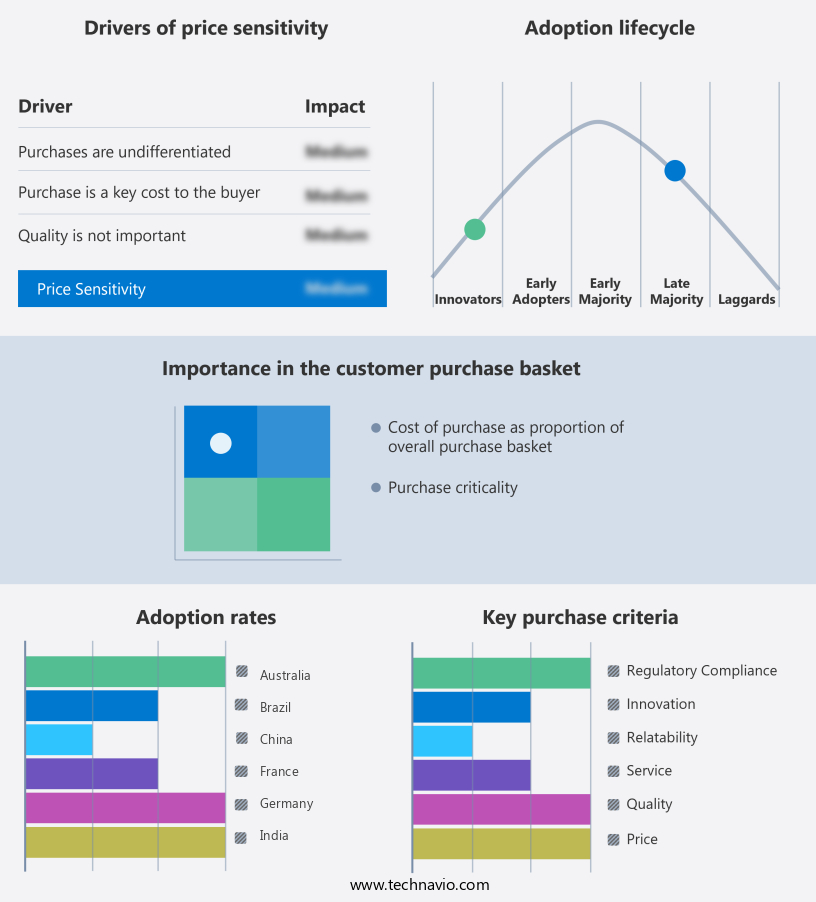
Customer Landscape of AI In ESG And Sustainability Industry
Competitive Landscape
Companies are implementing various strategies, such as strategic alliances, ai in esg and sustainability market forecast, partnerships, mergers and acquisitions, geographical expansion, and product/service launches, to enhance their presence in the industry.
Briink Intelligence GmbH - The company's ESG AI Toolbox leverages advanced artificial intelligence to streamline disclosures, due diligence, and policy screening in environmental, social, and governance (ESG) analysis. Fine-tuned language models automate this process, ensuring comprehensive and accurate ESG evaluations.
The industry research and growth report includes detailed analyses of the competitive landscape of the market and information about key companies, including:
- Briink Intelligence GmbH
- Clarity AI Inc.
- Dcycle
- Exowatt Inc.
- FactSet Research Systems Inc.
- GaiaLens Ltd.
- GLYNT.AI Inc.
- Google LLC
- International Business Machines Corp.
- KANINI Software Solutions
- Microsoft Corp.
- Persefoni AI Inc.
- Salesforce Inc.
- SAP SE
- Sunairio
- Sweep.io Ltd.
- Watershed Technology Inc.
- Workiva Inc.
Qualitative and quantitative analysis of companies has been conducted to help clients understand the wider business environment as well as the strengths and weaknesses of key industry players. Data is qualitatively analyzed to categorize companies as pure play, category-focused, industry-focused, and diversified; it is quantitatively analyzed to categorize companies as dominant, leading, strong, tentative, and weak.
Recent Development and News in AI In ESG And Sustainability Market
- In January 2024, Sustainalytics, a leading ESG research, data, and analytics firm, announced the launch of its new AI-powered ESG Risk Rating platform (Sustainalytics.Com). This advanced solution utilizes machine learning algorithms to analyze vast amounts of data and assess the ESG risks for companies worldwide.
- In March 2024, IBM and Microsoft, two technology giants, formed a strategic partnership to accelerate their AI and sustainability initiatives (IBM.Com). They pledged to collaborate on AI projects in areas such as climate modeling, renewable energy, and circular economy.
- In July 2024, BlackRock, the world's largest asset manager, invested USD1 billion in a new sustainability-focused technology fund (BlackRock.Com). This fund, which utilizes AI to identify and invest in companies with strong ESG performance, is a significant step forward in the integration of AI and ESG.
- In May 2025, the European Union's Sustainable Finance Disclosure Regulation (SFDR) came into effect (EU Commission). This regulation mandates financial market participants to disclose the extent to which they consider ESG risks in their investment decision-making processes. Several AI-powered ESG solutions, such as those from MSCI and Bloomberg, were instrumental in helping firms comply with this regulation.
Dive into Technavio's robust research methodology, blending expert interviews, extensive data synthesis, and validated models for unparalleled AI In ESG And Sustainability Market insights. See full methodology.
|
Market Scope |
|
|
Report Coverage |
Details |
|
Page number |
247 |
|
Base year |
2024 |
|
Historic period |
2019-2023 |
|
Forecast period |
2025-2029 |
|
Growth momentum & CAGR |
Accelerate at a CAGR of 29.3% |
|
Market growth 2025-2029 |
USD 3465.9 million |
|
Market structure |
Fragmented |
|
YoY growth 2024-2025(%) |
24.4 |
|
Key countries |
US, China, Japan, India, Germany, UK, France, Brazil, South Korea, and Australia |
|
Competitive landscape |
Leading Companies, Market Positioning of Companies, Competitive Strategies, and Industry Risks |
Research Analyst Overview
- The Environmental, Social, and Governance (ESG) market continues to evolve, with Artificial Intelligence (AI) playing an increasingly significant role. AI applications in ESG span various sectors, including environmental monitoring, waste management, carbon footprint modeling, and ESG reporting automation. For instance, a leading waste management company leverages AI to optimize waste sorting and reduce landfill usage by up to 30%. Environmental Impact AI is another burgeoning application, enabling accurate assessment and prediction of a company's carbon footprint. Impact Investing AI streamlines the investment decision-making process by analyzing ESG data and identifying potential investments aligned with sustainability goals. Materiality Assessment AI and ESG Performance Metrics help organizations prioritize ESG initiatives based on their impact on business performance and stakeholder expectations.
- Compliance Automation AI ensures adherence to ESG regulations, reducing the risk of non-compliance. Deep Learning and Machine Learning ESG models enhance data visualization and analysis, providing valuable insights for risk management and stakeholder engagement. AI-driven sustainability solutions also encompass Social Impact Measurement, Governance Risk AI, Circular Economy AI, Renewable Energy AI, Ethical Sourcing AI, Water Footprint Assessment, and Environmental Risk Scoring. According to recent market research, the global ESG market is expected to grow by over 15% annually, underscoring the increasing importance of AI in ESG and sustainability initiatives.
What are the Key Data Covered in this AI In ESG And Sustainability Market Research and Growth Report?
-
What is the expected growth of the AI In ESG And Sustainability Market between 2025 and 2029?
-
USD 3.47 billion, at a CAGR of 29.3%
-
-
What segmentation does the market report cover?
-
The report is segmented by Deployment (Cloud and On-premises), End-user (Building and construction, Oil and gas, Agriculture, Food and beverage, and Others), Technology (Machine learning, Generative AI, Deep learning, Natural language processing (NLP), and Predictive analysis), and Geography (APAC, North America, Europe, Middle East and Africa, and South America)
-
-
Which regions are analyzed in the report?
-
APAC, North America, Europe, Middle East and Africa, and South America
-
-
What are the key growth drivers and market challenges?
-
Intensifying regulatory scrutiny and mandatory disclosure frameworks, Pervasive issue of data quality, accessibility, and standardization
-
-
Who are the major players in the AI In ESG And Sustainability Market?
-
Briink Intelligence GmbH, Clarity AI Inc., Dcycle, Exowatt Inc., FactSet Research Systems Inc., GaiaLens Ltd., GLYNT.AI Inc., Google LLC, International Business Machines Corp., KANINI Software Solutions, Microsoft Corp., Persefoni AI Inc., Salesforce Inc., SAP SE, Sunairio, Sweep.io Ltd., Watershed Technology Inc., and Workiva Inc.
-
Market Research Insights
- The market for AI in Environmental, Social, and Governance (ESG) and sustainability continues to evolve, integrating advanced technologies to streamline processes and enhance decision-making. Two notable developments include the adoption of Explainable AI (XAI) for ESG due diligence and the implementation of Ethical AI algorithms for carbon accounting. XAI ESG solutions enable organizations to understand the reasoning behind AI-driven ESG assessments, ensuring transparency and accountability. For instance, these systems can analyze a company's supply chain and identify potential ESG risks, providing clear explanations for their findings. Moreover, the market anticipates significant growth, with industry experts projecting a 20% compound annual growth rate (CAGR) in the next five years.
- This expansion is driven by the increasing importance of ESG factors in business strategies and the need for more efficient and accurate sustainability reporting. By integrating AI technologies into their ESG and sustainability efforts, organizations can improve their ESG risk assessments, stakeholder mapping, governance effectiveness, and communication strategies, ultimately contributing to better sustainability outcomes.
We can help! Our analysts can customize this ai in esg and sustainability market research report to meet your requirements.
 RIA -
RIA -