



AI For Customer Service Market Size 2025-2029
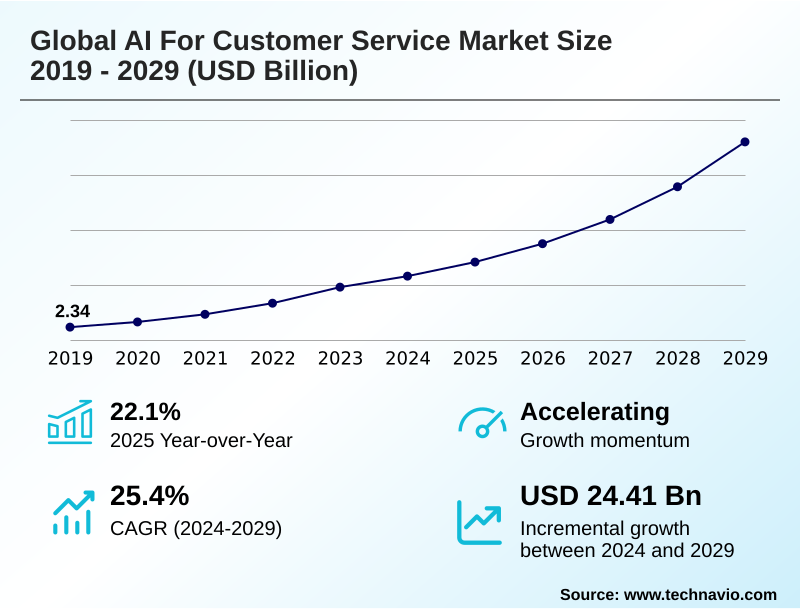
The ai for customer service market size is valued to increase by USD 24.41 billion, at a CAGR of 25.4% from 2024 to 2029. Pervasive data security and privacy concerns will drive the ai for customer service market.
Major Market Trends & Insights
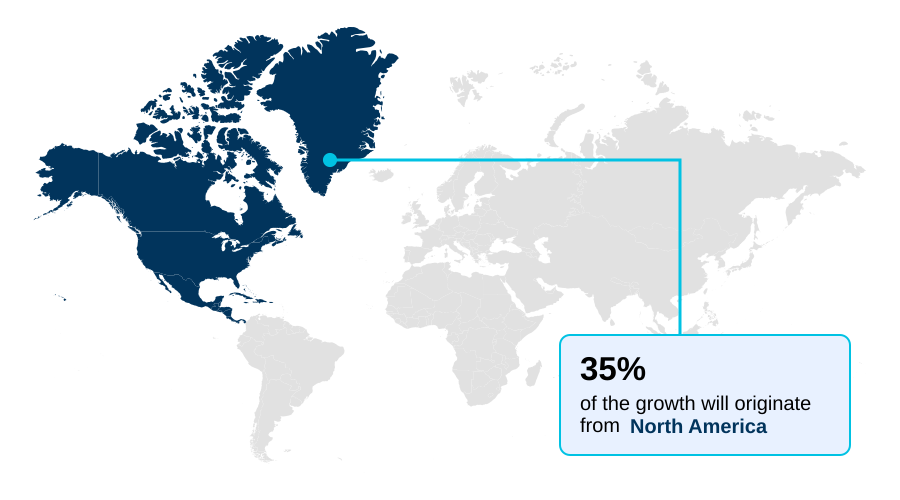
- North America dominated the market and accounted for a 35.1% growth during the forecast period.
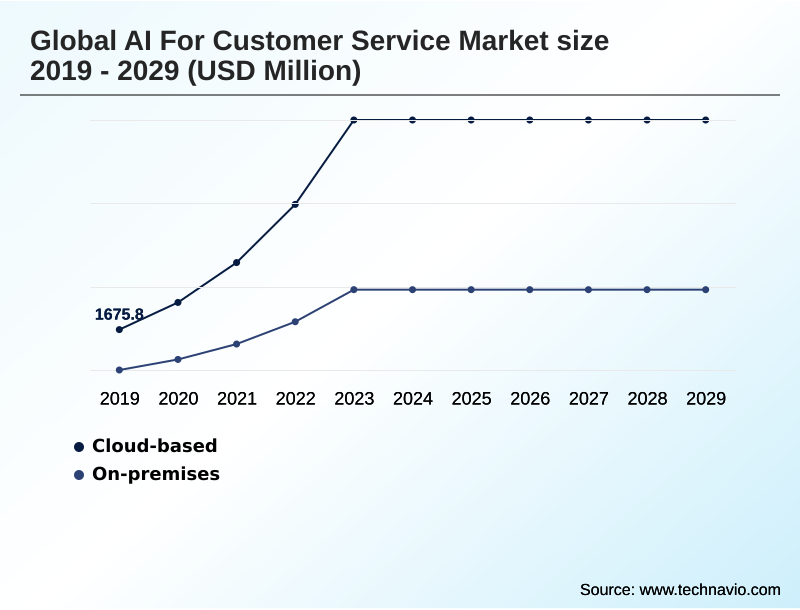
- By Deployment - Cloud-based segment was valued at USD 6.93 billion in 2023
- By Application - Chatbot and virtual assistance segment accounted for the largest market revenue share in 2023
Market Size & Forecast
- Market Opportunities: USD 33.68 billion
- Market Future Opportunities: USD 24.41 billion
- CAGR from 2024 to 2029 : 25.4%
Market Summary
- The AI for customer service market is undergoing a significant transformation, moving beyond basic automation to become a cornerstone of strategic customer engagement. Key drivers include the relentless demand for 24/7, personalized omnichannel support and the pressing need for operational efficiency.
- This evolution is accelerated by the pervasive integration of generative AI, which elevates chatbots to fluent conversationalists and empowers human agents with intelligent copilots. The market is witnessing a clear trajectory from simple query deflection toward autonomous resolution, where AI agents handle complex, end-to-end workflows.
- For instance, a retail enterprise can leverage AI to manage a surge in holiday season inquiries, using sentiment analysis to prioritize urgent issues and predictive analytics to identify at-risk customers, thereby improving first-contact resolution rates and safeguarding revenue.
- However, this progress is met with challenges related to data security, the high cost of integration with legacy systems, and the risk of delivering a poor customer experience, which collectively shape the adoption landscape.
What will be the Size of the AI For Customer Service Market during the forecast period?
Get Key Insights on Market Forecast (PDF) Request Free Sample
How is the AI For Customer Service Market Segmented?
The ai for customer service industry research report provides comprehensive data (region-wise segment analysis), with forecasts and estimates in "USD million" for the period 2025-2029, as well as historical data from 2019-2023 for the following segments.
- Deployment
- Cloud-based
- On-premises
- Application
- Chatbot and virtual assistance
- AI agent
- Personalized recommendation
- AI driven ticketing system
- Others
- End-user
- Retail and e-commerce
- BFSI
- Telecommunication
- Healthcare and life sciences
- Others
- Geography
- North America
- US
- Canada
- Mexico
- Europe
- Germany
- UK
- France
- APAC
- China
- Japan
- India
- Middle East and Africa
- Saudi Arabia
- UAE
- South Africa
- South America
- Brazil
- Argentina
- Colombia
- Rest of World (ROW)
- North America
By Deployment Insights
The cloud-based segment is estimated to witness significant growth during the forecast period.
The global AI for customer service market is segmented by deployment, application, end-user, and geography, including regions like North America and APAC.
Cloud-based deployment is the predominant model, driven by its inherent scalability and cost-effectiveness, which allows businesses to leverage powerful technologies like large language models (LLMs) and generative AI integration without significant upfront capital expenditure.
This software-as-a-service (SaaS) approach facilitates rapid innovation, with platforms enabling customer journey orchestration and omnichannel support automation.
Implementations utilizing cloud-native AI reasoning engines have shown the capability to reduce deployment times for new service features by over 30%, a critical advantage in a competitive landscape.
The on-premises segment, while smaller, remains vital for organizations with stringent data security and regulatory compliance needs requiring full control over their infrastructure.
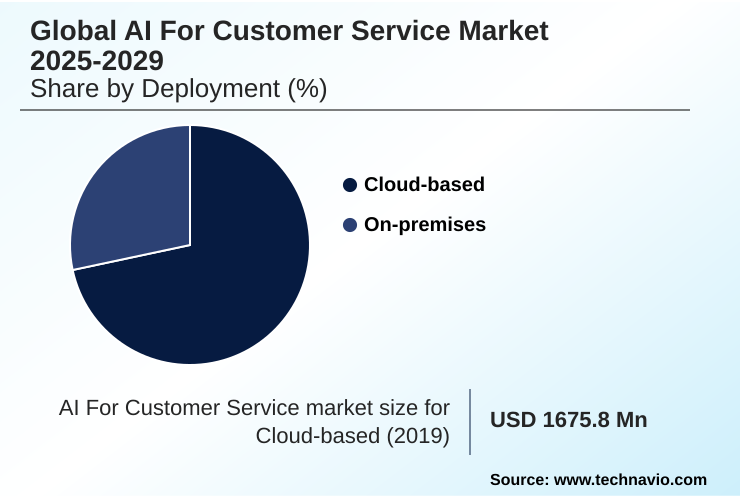
The Cloud-based segment was valued at USD 6.93 billion in 2023 and showed a gradual increase during the forecast period.
Regional Analysis
North America is estimated to contribute 35.1% to the growth of the global market during the forecast period.Technavio’s analysts have elaborately explained the regional trends and drivers that shape the market during the forecast period.
See How AI For Customer Service Market Demand is Rising in North America Request Free Sample
The geographic landscape of the global AI for customer service market 2025-2029 is led by North America, which accounts for over 35% of the incremental growth due to its high concentration of technology vendors and early adopters focused on advanced applications like AI for proactive issue resolution.
Europe follows, with a strong emphasis on data security in AI customer service and regulatory compliance, shaping demand for transparent AI models.
The APAC region is the fastest-growing market, driven by mobile-first economies where conversational AI for e-commerce on messaging apps has led to a 30% improvement in handling high-volume inquiries.
In this diverse region, implementing a unified customer profile and achieving AI-powered knowledge management systems are key priorities for businesses looking to scale operations efficiently.
Market Dynamics
Our researchers analyzed the data with 2024 as the base year, along with the key drivers, trends, and challenges. A holistic analysis of drivers will help companies refine their marketing strategies to gain a competitive advantage.
- Understanding the impact of generative AI on customer support is critical for modern enterprises. The technology's primary contribution is seen in the role of AI in omnichannel personalization, where it enables tailored interactions at scale. This capability is fundamental to automating complex customer service workflows, which has sparked an ongoing AI agent vs human agent comparison regarding efficiency and empathy.
- As organizations deploy these systems, they must navigate significant data privacy challenges in AI customer service. However, the benefits of AI-powered ticketing systems, such as improved efficiency and accuracy, are compelling. Adopting AI for proactive customer engagement strategies helps prevent issues before they arise, further enhancing customer satisfaction.
- For successful implementation, a robust real-time agent assist implementation guide is essential for improving first contact resolution with AI and reducing operational costs with AI support. One of the most significant technical hurdles remains integrating AI with legacy CRM systems. Organizations that successfully bridge this gap report service-level compliance rates that are twice as effective as those with siloed data.
- Ultimately, the ability in measuring ROI of AI in customer service accurately will determine long-term investment and strategic direction.
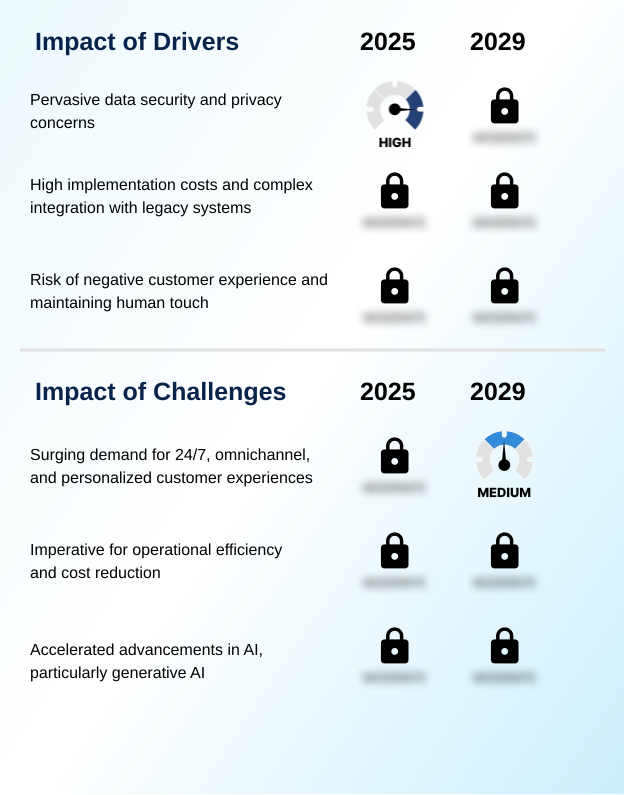
What are the key market drivers leading to the rise in the adoption of AI For Customer Service Industry?
- A primary driver for the market is the surging demand for 24/7, omnichannel, and personalized customer experiences, which can only be met at scale through AI-powered solutions.
- The market is propelled by the dual imperatives of meeting consumer expectations and achieving operational efficiency.
- The demand for 24/7, personalized support is a primary driver, with AI-powered self-service portals now handling a significant portion of routine inquiries, with some large-scale deployments managing workloads equivalent to hundreds of human agents.
- This drive for efficiency is further addressed by AI-driven ticketing systems, which can reduce manual triage times by 30%.
- The rapid advancement in underlying technologies, particularly large language models (LLMs), has dramatically increased the efficacy of these solutions, with customer satisfaction scores for automated interactions now on par with human-led support for many query types.
- The use of low-code AI platforms is also democratizing access, enabling faster deployment across enterprises and accelerating adoption of customer service workflow automation.
What are the market trends shaping the AI For Customer Service Industry?
- The pervasive integration of generative AI into customer service platforms is a defining market trend. This shift moves beyond simple automation to transform customer support into a sophisticated communication and content creation ecosystem.
- Key market trends are centered on the evolution from simple automation to intelligent, autonomous systems. The pervasive generative AI integration is elevating customer interactions, with advanced natural language understanding enabling more fluid, human-like conversations.
- This has spurred the development of the AI reasoning engines, which allows autonomous AI agent deployment to handle complex, multi-step issues from end to end, with some platforms reporting the ability to resolve over 50% of such inquiries without human intervention.
- Concurrently, hyper-personalization engines are leveraging customer data to deliver proactive customer engagement, resulting in a reported 10% uplift in retention for early adopters. AI for proactive issue resolution is becoming a key differentiator, transforming support from a reactive function to a strategic one. These advancements in customer support ticket automation are redefining operational efficiency.
What challenges does the AI For Customer Service Industry face during its growth?
- A paramount challenge affecting the market is the pervasive concern surrounding data security and privacy, which influences adoption rates and deployment strategies.
- Significant challenges temper market growth, primarily concerning security, complexity, and maintaining service quality. Navigating data privacy compliance in AI is a critical hurdle, as organizations must invest in secure deployments to avoid substantial regulatory penalties. The technical difficulty of integrating AI with legacy CRM systems is another major barrier, often doubling project timelines and requiring specialized expertise.
- Furthermore, the risk of reputational damage from poor performance is high, with the need for AI hallucination mitigation being paramount. A single incident of providing incorrect information through an AI chatbot can cause a measurable drop in customer trust scores by over 15%.
- Balancing automation with the human touch requires careful design of customer journey orchestration to ensure a positive experience and improve the first-contact resolution rate.
Exclusive Technavio Analysis on Customer Landscape
The ai for customer service market forecasting report includes the adoption lifecycle of the market, covering from the innovator’s stage to the laggard’s stage. It focuses on adoption rates in different regions based on penetration. Furthermore, the ai for customer service market report also includes key purchase criteria and drivers of price sensitivity to help companies evaluate and develop their market growth analysis strategies.
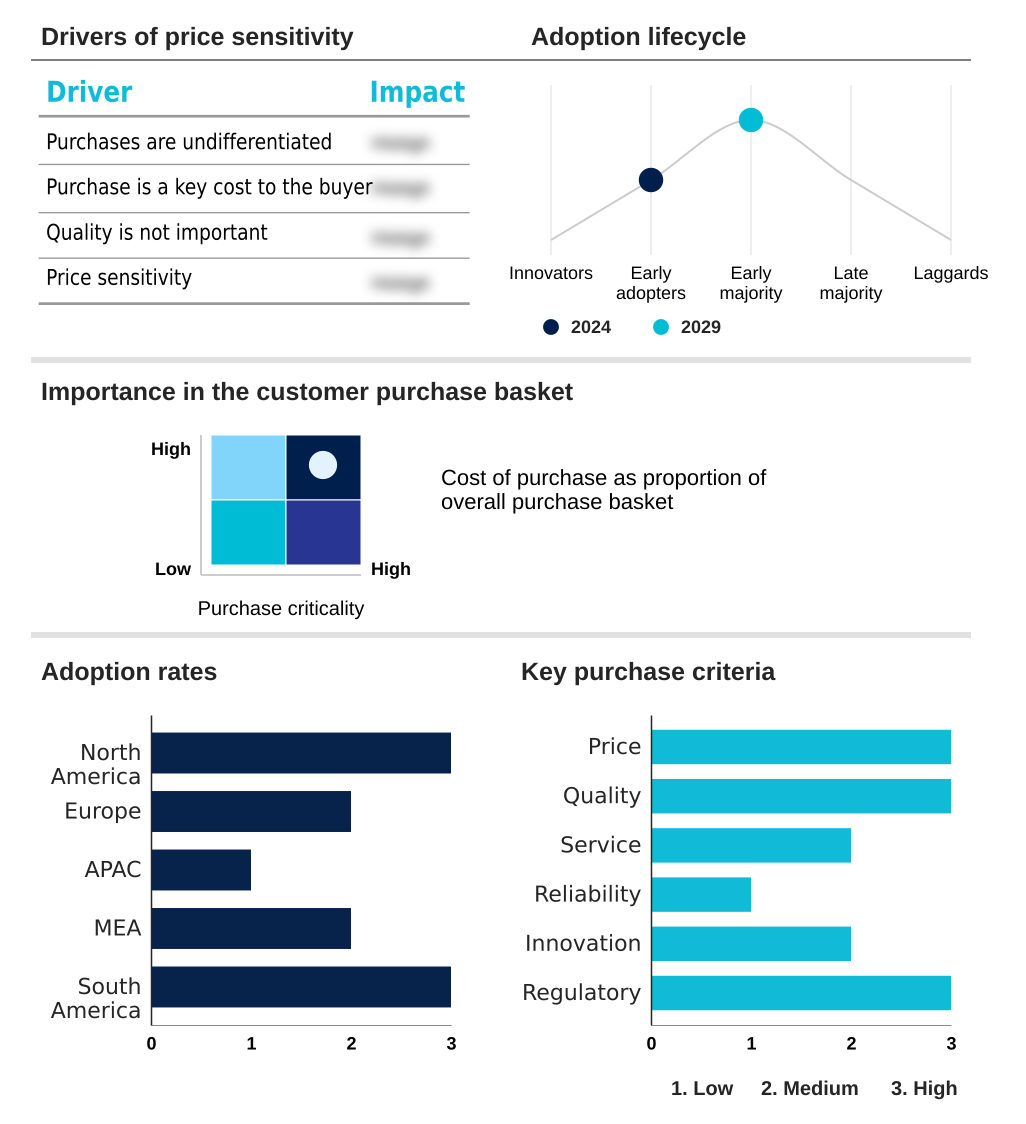
Customer Landscape of AI For Customer Service Industry
Competitive Landscape
Companies are implementing various strategies, such as strategic alliances, ai for customer service market forecast, partnerships, mergers and acquisitions, geographical expansion, and product/service launches, to enhance their presence in the industry.
Ada Support Inc. - Offers autonomous AI agents delivering personalized, omnichannel support that resolves a high percentage of issues, ensuring compliance and scalability for modern brand interactions.
The industry research and growth report includes detailed analyses of the competitive landscape of the market and information about key companies, including:
- Ada Support Inc.
- Amazon Web Services Inc.
- Bitonic Technology Labs Inc.
- Chatfuel.
- Cognigy GmbH
- Drift.com Inc.
- Forethought
- Freshworks Inc.
- Google LLC
- HubSpot Inc.
- Intercom Inc.
- IBM Corp.
- Kustomer
- Microsoft Corp.
- OpenAI
- Replicant Inc.
- Salesforce Inc.
- Sprinklr Inc.
- Tidio LLC
- Zendesk Inc.
Qualitative and quantitative analysis of companies has been conducted to help clients understand the wider business environment as well as the strengths and weaknesses of key industry players. Data is qualitatively analyzed to categorize companies as pure play, category-focused, industry-focused, and diversified; it is quantitatively analyzed to categorize companies as dominant, leading, strong, tentative, and weak.
Recent Development and News in Ai for customer service market
- In September, 2024, Salesforce announced the public beta of Agentforce in Service Cloud, offering autonomous AI agents that handle self-service, case management, and personalized responses to accelerate resolutions.
- In November, 2024, Microsoft expanded its Dynamics 365 Customer Service with an enhanced Copilot, featuring proactive generative AI for intent detection and advanced omnichannel automation to boost agent productivity.
- In February, 2025, Google LLC enhanced its Customer Engagement Suite with new Gemini-powered conversational agents designed for advanced omnichannel self-service and real-time quality evaluation.
- In April, 2025, Zendesk Inc. launched its next-generation Zendesk AI agents and Copilot, focused on intelligent triage and auto-assist features that are designed to deflect a significant percentage of contacts and increase agent productivity.
Dive into Technavio’s robust research methodology, blending expert interviews, extensive data synthesis, and validated models for unparalleled AI For Customer Service Market insights. See full methodology.
| Market Scope | |
|---|---|
| Page number | 307 |
| Base year | 2024 |
| Historic period | 2019-2023 |
| Forecast period | 2025-2029 |
| Growth momentum & CAGR | Accelerate at a CAGR of 25.4% |
| Market growth 2025-2029 | USD 24413.4 million |
| Market structure | Fragmented |
| YoY growth 2024-2025(%) | 22.1% |
| Key countries | US, Canada, Mexico, Germany, UK, France, Italy, Spain, The Netherlands, China, Japan, India, South Korea, Australia, Indonesia, Saudi Arabia, UAE, South Africa, Israel, Turkey, Brazil, Argentina and Colombia |
| Competitive landscape | Leading Companies, Market Positioning of Companies, Competitive Strategies, and Industry Risks |
Research Analyst Overview
- The global AI for customer service market 2025-2029 is defined by a rapid evolution from task automation to strategic, autonomous resolution. This shift is powered by advancements in natural language processing and large language models (LLMs), enabling sophisticated conversational AI and real-time sentiment analysis.
- The emergence of the agent copilot, providing real-time agent assistance, is becoming a standard feature, directly addressing the need for higher agent productivity. A key trend is the move towards complete autonomous resolution, which has profound implications for boardroom decisions regarding workforce planning and operational budgeting.
- The integration of a hyper-personalization engine allows for proactive customer engagement and customer journey orchestration. Deployments leveraging AI-driven ticketing and intelligent routing have demonstrated the ability to reduce average handling times by up to 20%.
- As the technology matures, addressing AI hallucination mitigation and ensuring data privacy compliance in AI will be critical for maintaining customer trust and unlocking the full potential of these intelligent systems.
What are the Key Data Covered in this AI For Customer Service Market Research and Growth Report?
-
What is the expected growth of the AI For Customer Service Market between 2025 and 2029?
-
USD 24.41 billion, at a CAGR of 25.4%
-
-
What segmentation does the market report cover?
-
The report is segmented by Deployment (Cloud-based, and On-premises), Application (Chatbot and virtual assistance, AI agent, Personalized recommendation, AI driven ticketing system, and Others), End-user (Retail and e-commerce, BFSI, Telecommunication, Healthcare and life sciences, and Others) and Geography (North America, Europe, APAC, Middle East and Africa, South America)
-
-
Which regions are analyzed in the report?
-
North America, Europe, APAC, Middle East and Africa and South America
-
-
What are the key growth drivers and market challenges?
-
Pervasive data security and privacy concerns, Surging demand for 24/7, omnichannel, and personalized customer experiences
-
-
Who are the major players in the AI For Customer Service Market?
-
Ada Support Inc., Amazon Web Services Inc., Bitonic Technology Labs Inc., Chatfuel., Cognigy GmbH, Drift.com Inc., Forethought, Freshworks Inc., Google LLC, HubSpot Inc., Intercom Inc., IBM Corp., Kustomer, Microsoft Corp., OpenAI, Replicant Inc., Salesforce Inc., Sprinklr Inc., Tidio LLC and Zendesk Inc.
-
Market Research Insights
- Market dynamics are shaped by a strategic shift toward intelligent automation to meet heightened consumer expectations. The deployment of AI for omnichannel customer experience is now standard, with businesses leveraging AI-powered self-service portals to deflect up to 40% of routine inquiries.
- This focus on efficiency is coupled with a drive for retention, as organizations using AI for proactive issue resolution report a 15% reduction in customer churn compared to peers with reactive models.
- Furthermore, the adoption of tools for AI-assisted agent productivity directly correlates with enhanced operational capacity, enabling teams to handle a 20% higher volume of complex cases without increasing headcount. These measurable outcomes underscore the technology's tangible return on investment.
We can help! Our analysts can customize this ai for customer service market research report to meet your requirements.
 RIA -
RIA -