


Agribusiness Market Size 2025-2029
The agribusiness market size is forecast to increase by USD 843.4 million, at a CAGR of 4.6% between 2024 and 2029.
- The market is experiencing significant shifts driven by population growth, which is leading to an increased demand for food production. This trend is placing immense pressure on the industry to find innovative solutions to meet the rising demand, particularly in the context of a shrinking amount of arable land. One response to this challenge is the adoption of automation in agriculture, with technologies such as precision farming, drones, and robotics gaining traction. These solutions aim to optimize resource usage and increase efficiency, enabling farmers to produce more with less land. However, the implementation of automation also presents challenges, including high upfront costs and the need for significant investment in technology and infrastructure.
- Additionally, regulatory compliance and data security concerns add complexity to the adoption process. To capitalize on the market opportunities presented by population growth and the need for more efficient agriculture, companies must navigate these challenges and invest in technologies that can help them stay competitive while addressing the sustainability and productivity demands of the industry.
What will be the Size of the Agribusiness Market during the forecast period?
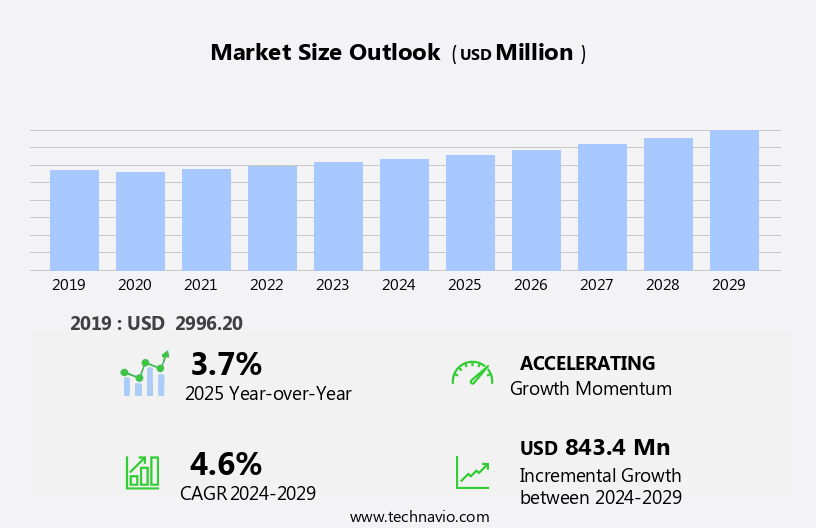
Explore in-depth regional segment analysis with market size data - historical 2019-2023 and forecasts 2025-2029 - in the full report.
Request Free Sample
The market continues to evolve, shaped by various dynamics that impact different sectors. Land use patterns are shifting, with an increasing focus on carbon sequestration and sustainable farming practices. Precision agriculture is revolutionizing yield optimization, while food processing and packaging technologies advance to ensure food safety and traceability. Seed production and agricultural biotechnology are driving innovation in crop production, and harvesting equipment is becoming more efficient and eco-friendly. Food security remains a critical concern, leading to the adoption of irrigation systems, biodiversity conservation, and sustainable farming practices. Livestock feed and breeding are undergoing transformations, with a focus on disease prevention and environmental sustainability.
Pest control methods are evolving, with a shift towards more natural and less harmful alternatives. Supply chain management is becoming more complex, with the integration of farm management software and crop rotation techniques. Water conservation is a priority, with new technologies and practices emerging to address this challenge. Agribusiness investment is on the rise, driven by market volatility and price fluctuations due to climate change adaptation and commodity trading. Direct marketing and consumer dietary trends are influencing food distribution, with a growing demand for locally sourced and organic produce. Vertical farming and agricultural finance are gaining traction, offering solutions to land tenure issues and providing access to capital for small-scale farmers.
The ongoing unfolding of these market activities and evolving patterns underscores the continuous nature of the agribusiness landscape.
How is this Agribusiness Industry segmented?
The agribusiness industry research report provides comprehensive data (region-wise segment analysis), with forecasts and estimates in "USD million" for the period 2025-2029, as well as historical data from 2019-2023 for the following segments.
- Product
- Grains and cereals
- Dairy
- Oilseeds
- Livestock
- Others
- Application
- Agrichemicals
- Seed business
- Breeding
- Machinery and equipment
- Technology
- Traditional agriculture
- Mechanized farming
- Precision agriculture and smart farming
- Organic and sustainable Farming
- Distribution Channel
- Retail chains and supermarkets
- Wholesale distribution
- Direct-to-consumer
- Food processing and manufacturing companies
- Farm Size
- Small-Scale Farms
- Medium-Scale Farms
- Large-Scale Farms
- Geography
- North America
- US
- Canada
- Europe
- France
- Germany
- UK
- Middle East and Africa
- UAE
- APAC
- China
- India
- Japan
- South Korea
- South America
- Argentina
- Brazil
- Rest of World (ROW)
- North America
.
By Product Insights
The grains and cereals segment is estimated to witness significant growth during the forecast period.
The market encompasses various sectors, including grains and cereals, dairy production, land use, carbon sequestration, agricultural machinery, organic farming, yield optimization, food security, irrigation systems, biodiversity conservation, supply chain management, livestock feed, livestock breeding, pest control, poultry farming, government subsidies, farm management software, crop rotation, water conservation, sustainable farming practices, food distribution, vertical farming, agricultural finance, price fluctuations, climate change adaptation, market volatility, commodity trading, direct marketing, environmental sustainability, dietary trends, disease prevention, rural development, soil management, land tenure, precision agriculture, food processing, food packaging, seed production, agricultural biotechnology, harvesting equipment, food traceability, food safety, and agribusiness investment.
Grains and cereals, a significant portion of the market, consist of complex carbohydrates, fiber, and protein. These essential food sources are often fortified with various vitamins and minerals, making them a staple in many diets worldwide. The demand for grains and cereals remains high due to their nutritional value and role in food security. Dairy production contributes to the market, with the increasing global population leading to an increased demand for milk and dairy products. Sustainable farming practices, such as carbon sequestration and water conservation, are gaining popularity, driving the market's growth. The agricultural machinery sector continues to innovate, with precision agriculture and automation technologies improving yield optimization and reducing resource consumption.
Organic farming and biodiversity conservation are essential components of sustainable farming practices, ensuring long-term food security and environmental sustainability. Livestock breeding and feed production are crucial aspects of the market, with advancements in technology leading to improved animal health and welfare. Pest control and disease prevention are essential to maintaining crop yields and food safety, with research focusing on sustainable and environmentally friendly solutions. Government subsidies and farm management software support farmers in managing their land and operations efficiently, while crop rotation and soil management practices contribute to long-term sustainability. Food distribution and processing technologies ensure food safety and traceability, with vertical farming and hydroponics providing alternative solutions for food production in resource-limited areas.
Agribusiness investment and commodity trading play a significant role in market dynamics, with price fluctuations and climate change adaptation essential considerations for farmers and investors alike. Overall, the market continues to evolve, driven by advancements in technology, changing consumer preferences, and the need for sustainable and efficient food production.
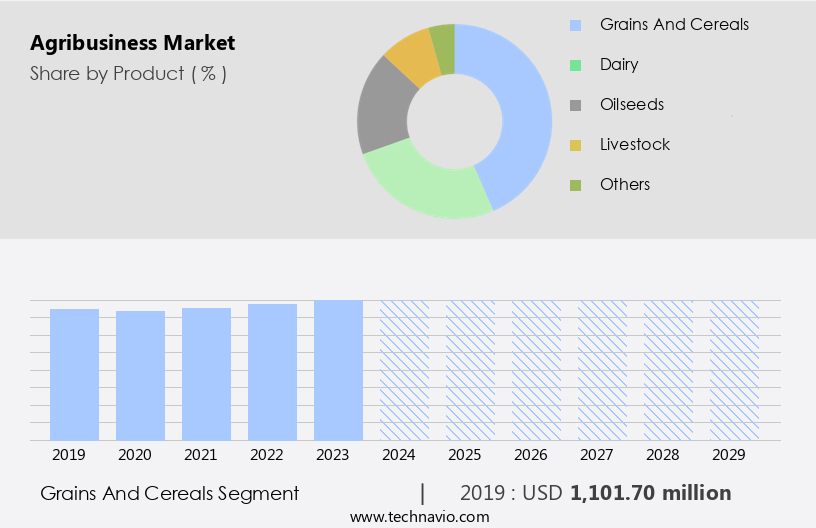
The Grains and cereals segment was valued at USD 1101.70 million in 2019 and showed a gradual increase during the forecast period.
Regional Analysis
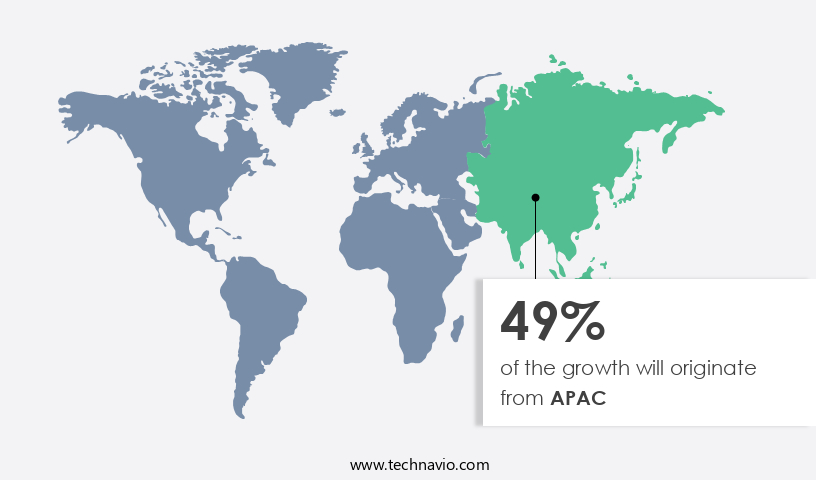
APAC is estimated to contribute 49% to the growth of the global market during the forecast period.Technavio's analysts have elaborately explained the regional trends and drivers that shape the market during the forecast period.
The market in Asia Pacific (APAC) is experiencing substantial growth in the global market, driven by several factors. The region's limited arable land necessitates the adoption of advanced farming practices and technological innovations, including agricultural machinery, precision agriculture, and farm management software. These advancements aim to optimize yield and improve sustainability through practices like crop rotation, water conservation, and biodiversity conservation. Moreover, the region's population growth, projected to reach approximately 4.44 billion by 2024, fuels the demand for food products. This surge in demand drives the need for livestock feed, livestock breeding, and poultry farming. To ensure food security, governments in APAC implement subsidies and policies that support farmers, enabling them to invest in irrigation systems, agricultural finance, and agricultural biotechnology.
Price fluctuations and market volatility due to climate change adaptation and commodity trading necessitate effective supply chain management. Direct marketing and food traceability systems are becoming increasingly important to maintain food safety and consumer trust. Additionally, environmental sustainability, disease prevention, and rural development are essential concerns for the agribusiness sector. Soil management and land tenure are critical aspects of sustainable farming practices, which are gaining popularity due to dietary trends and consumer preferences. Overall, the market in APAC is evolving to meet the demands of a growing population while ensuring food security, environmental sustainability, and economic growth.
Market Dynamics
Our researchers analyzed the data with 2024 as the base year, along with the key drivers, trends, and challenges. A holistic analysis of drivers will help companies refine their marketing strategies to gain a competitive advantage.
What are the key market drivers leading to the rise in the adoption of Agribusiness Industry?
- The primary factor fueling market growth is the escalating demand for food as a result of global population expansion.
- The market experiences constant growth due to the increasing worldwide population, which necessitates an expanded food supply. According to the United Nations Department of Economic and Social Affairs, the global population is projected to reach approximately 8.1 billion in 2024, with an anticipated increase to 8.5 billion by 2030. This population expansion significantly impacts the demand for agricultural products. The market dynamics are influenced by various factors, including price fluctuations, climate change adaptation, market volatility, commodity trading, direct marketing, environmental sustainability, dietary trends, disease prevention, rural development, and soil management. Price fluctuations can significantly impact farmers and food producers, necessitating the need for agricultural finance and risk management strategies.
- Climate change poses a significant challenge to the agribusiness sector, requiring adaptation strategies to ensure food security and productivity. Market volatility, driven by various factors such as weather conditions, political instability, and economic factors, can impact commodity prices and the overall market. Commodity trading plays a crucial role in the market, enabling price risk management and ensuring a stable supply of food products. Direct marketing, which allows farmers to sell their produce directly to consumers, can help mitigate the impact of market volatility and ensure better pricing for farmers. Environmental sustainability, dietary trends, and disease prevention are increasingly important considerations in the agribusiness sector.
- Consumers are increasingly conscious of the environmental impact of their food choices and are seeking out sustainable agricultural practices. Similarly, dietary trends, such as the growing demand for organic and non-GMO foods, are influencing the market. Rural development and soil management are essential components of a sustainable and productive agribusiness sector. Governments and international organizations are investing in rural development initiatives to improve infrastructure, access to markets, and support for small farmers. Soil management practices, such as sustainable farming methods and the use of fertilizers and pesticides, are crucial to maintaining productivity and ensuring long-term sustainability.
What are the market trends shaping the Agribusiness Industry?
- Automation is increasingly becoming a significant trend in the agriculture sector. This technological advancement offers numerous benefits, including increased efficiency, reduced labor costs, and improved crop yields.
- Agribusiness is undergoing a significant transformation through automation and advanced technologies. Automation streamlines agricultural production processes, from land preparation to harvesting, enabling real-time data capturing and remote monitoring of crop health. Precision agriculture, seed production, food processing, and food packaging industries benefit from this trend. Artificial Intelligence (AI) is a key driver, analyzing data from various sources to optimize yields and reduce production issues and supply chain inefficiencies. Agricultural biotechnology and harvesting equipment are also essential components, contributing to increased productivity, financial sustainability, and food safety.
- Food traceability and safety are crucial aspects of the agribusiness sector, and automation and technology enhance these areas through accurate record-keeping and real-time monitoring. Agribusiness investment continues to grow as these advancements improve the industry's efficiency and competitiveness.
What challenges does the Agribusiness Industry face during its growth?
- The decline in agricultural land usage represents a significant challenge to the industry's growth trajectory.
- Agribusiness is a critical sector that interlinks economic development and agriculture. The expansion of industries creates jobs but often requires agricultural land, leading to a decrease in land used for farming. This trend, exacerbated by urbanization, poses challenges to food security and agricultural productivity. However, there are opportunities for innovation in areas like agricultural machinery, irrigation systems, and organic farming to optimize yield and promote carbon sequestration and biodiversity conservation. Furthermore, agricultural insurance can help mitigate risks associated with crop failure and climate change. Effective supply chain management is crucial to ensure food security and maintain market stability.
- Key market drivers include population growth, increasing demand for organic and sustainable farming practices, and the potential for carbon credits from agricultural activities. In conclusion, addressing the challenges of land use and urbanization while embracing technological advancements and sustainable practices is essential for the continued growth and success of the agribusiness sector. Recent research emphasizes the importance of these factors in ensuring food security and promoting economic development.
Exclusive Customer Landscape
The agribusiness market forecasting report includes the adoption lifecycle of the market, covering from the innovator's stage to the laggard's stage. It focuses on adoption rates in different regions based on penetration. Furthermore, the agribusiness market report also includes key purchase criteria and drivers of price sensitivity to help companies evaluate and develop their market growth analysis strategies.
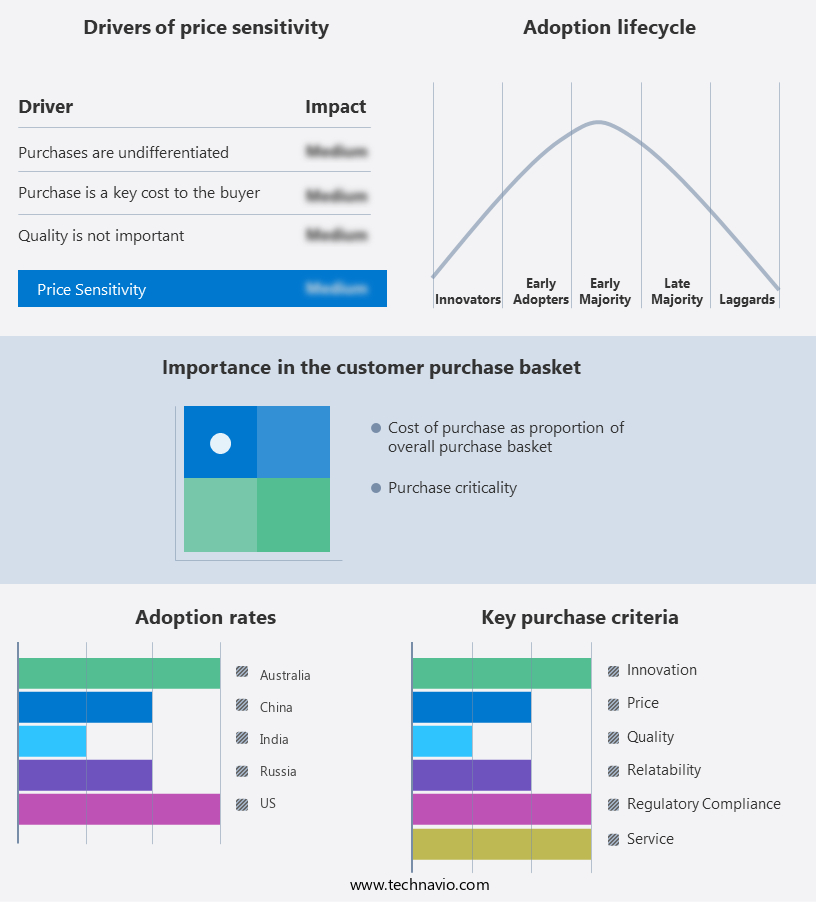
Customer Landscape
Key Companies & Market Insights
Companies are implementing various strategies, such as strategic alliances, agribusiness market forecast, partnerships, mergers and acquisitions, geographical expansion, and product/service launches, to enhance their presence in the industry.
Associated British Foods Plc - Agribusiness firm specializes in delivering farm performance services, animal feed solutions, and specialty ingredients to clients in the agricultural sector.
The industry research and growth report includes detailed analyses of the competitive landscape of the market and information about key companies, including:
- Associated British Foods Plc
- Bayer AG
- BrasilAgro
- Bunge Ltd.
- Cairo Poultry Co.
- Cargill Inc.
- Charoen Pokphand Foods PCL
- CHS Inc
- Dairy Farmers of America Inc.
- DuPont de Nemours Inc.
- Godrej Agrovet Ltd
- Indian Farmers Fertiliser Cooperative Ltd.
- Land O Lakes Inc.
- LT Foods
- Nestle SA
- Olam Group Ltd.
- Syngenta Crop Protection AG
- WH Group Ltd.
- Wilmar International Ltd.
Qualitative and quantitative analysis of companies has been conducted to help clients understand the wider business environment as well as the strengths and weaknesses of key industry players. Data is qualitatively analyzed to categorize companies as pure play, category-focused, industry-focused, and diversified; it is quantitatively analyzed to categorize companies as dominant, leading, strong, tentative, and weak.
Recent Development and News in Agribusiness Market
- In February 2024, Cargill, a leading global agribusiness company, announced the launch of its new plant-based protein production facility in North America. This strategic move is expected to significantly expand the company's presence in the growing alternative protein market, catering to the increasing consumer demand for sustainable and ethical food sources (Cargill Press Release, 2024).
- In May 2024, Syngenta and Microsoft Corporation entered into a strategic partnership to develop digital farming solutions. This collaboration aims to integrate Microsoft's Azure cloud platform with Syngenta's agronomic expertise, providing farmers with advanced data analytics and precision farming tools (Microsoft News Center, 2024).
- In October 2024, Bayer AG completed the acquisition of Advanced Agricultural Solutions (AAS), a leading U.S. Distributor of crop protection and seed solutions. This acquisition strengthens Bayer's position in the North American the market, expanding its reach and enhancing its product offerings (Bayer AG Press Release, 2024).
- In January 2025, the European Union approved the use of genetically modified organisms (GMOs) in animal feed, marking a significant policy change for the European agribusiness sector. This decision is expected to boost the production and adoption of GMO crops in Europe, addressing the growing demand for sustainable and efficient farming practices (European Commission Press Release, 2025).
Research Analyst Overview
- Agribusiness is a critical sector facing numerous challenges and opportunities. Water pollution, a significant concern, is being addressed through innovative solutions such as gene editing for drought-resistant crops and water management systems. Food innovation is driving the market with alternatives to traditional proteins and advancements in precision farming technologies. Furthermore, food waste reduction is a priority, with sustainable food systems and regenerative agriculture gaining traction. Climate change mitigation is essential, and climate-smart agriculture, carbon offsets, and livestock welfare are key areas of focus. Urban agriculture and biodiversity enhancement are emerging trends, while conservation agriculture and circular economy principles are essential for long-term resilience building.
- Agricultural robotics, including drones and autonomous farm vehicles, streamline operations and improve efficiency. Moreover, regenerative agriculture and climate-smart practices contribute to soil health monitoring and land degradation prevention. Gene editing and precision farming technologies enable farmers to optimize crop yields while reducing the use of synthetic fertilizers and pesticides. Water management solutions, such as irrigation systems and rainwater harvesting, are crucial for sustainable agriculture. Drone technology and autonomous farm vehicles enhance operational efficiency and reduce labor costs. In conclusion, the market is dynamic, with various trends and challenges shaping its future. Innovations in gene editing, food waste reduction, sustainable food systems, and climate change mitigation are crucial for long-term growth and success.
Dive into Technavio's robust research methodology, blending expert interviews, extensive data synthesis, and validated models for unparalleled Agribusiness Market insights. See full methodology.
|
Market Scope |
|
|
Report Coverage |
Details |
|
Page number |
237 |
|
Base year |
2024 |
|
Historic period |
2019-2023 |
|
Forecast period |
2025-2029 |
|
Growth momentum & CAGR |
Accelerate at a CAGR of 4.6% |
|
Market growth 2025-2029 |
USD 843.4 million |
|
Market structure |
Fragmented |
|
YoY growth 2024-2025(%) |
3.7 |
|
Key countries |
US, China, Japan, India, South Korea, Germany, UK, Brazil, Canada, France, Argentina, and UAE |
|
Competitive landscape |
Leading Companies, Market Positioning of Companies, Competitive Strategies, and Industry Risks |
What are the Key Data Covered in this Agribusiness Market Research and Growth Report?
- CAGR of the Agribusiness industry during the forecast period
- Detailed information on factors that will drive the growth and forecasting between 2025 and 2029
- Precise estimation of the size of the market and its contribution of the industry in focus to the parent market
- Accurate predictions about upcoming growth and trends and changes in consumer behaviour
- Growth of the market across APAC, North America, Europe, South America, and Middle East and Africa
- Thorough analysis of the market's competitive landscape and detailed information about companies
- Comprehensive analysis of factors that will challenge the agribusiness market growth of industry companies
We can help! Our analysts can customize this agribusiness market research report to meet your requirements.
 RIA -
RIA -