



Agentic AI In Law Enforcement And Surveillance Market Size 2025-2029
The agentic AI in law enforcement and surveillance market size is forecast to increase by USD 5.15 billion, at a CAGR of 22.5% between 2024 and 2029.
- The Agentic AI market in law enforcement and surveillance is driven by persistent staffing shortages in law enforcement agencies, necessitating the adoption of AI as a force multiplier. The integration of generative AI and large language models offers significant operational efficiency benefits, enabling agencies to process vast amounts of data and identify patterns that may be overlooked by human analysts.
- The strategic landscape of this market requires companies to navigate these challenges while capitalizing on the opportunities presented by the growing demand for AI solutions in the public safety sector. However, ethical concerns, algorithmic bias, and a lack of public trust pose substantial challenges. These issues must be addressed to ensure the successful implementation and acceptance of AI technologies in law enforcement and surveillance applications.
What will be the Size of the Agentic AI In Law Enforcement And Surveillance Market during the forecast period?
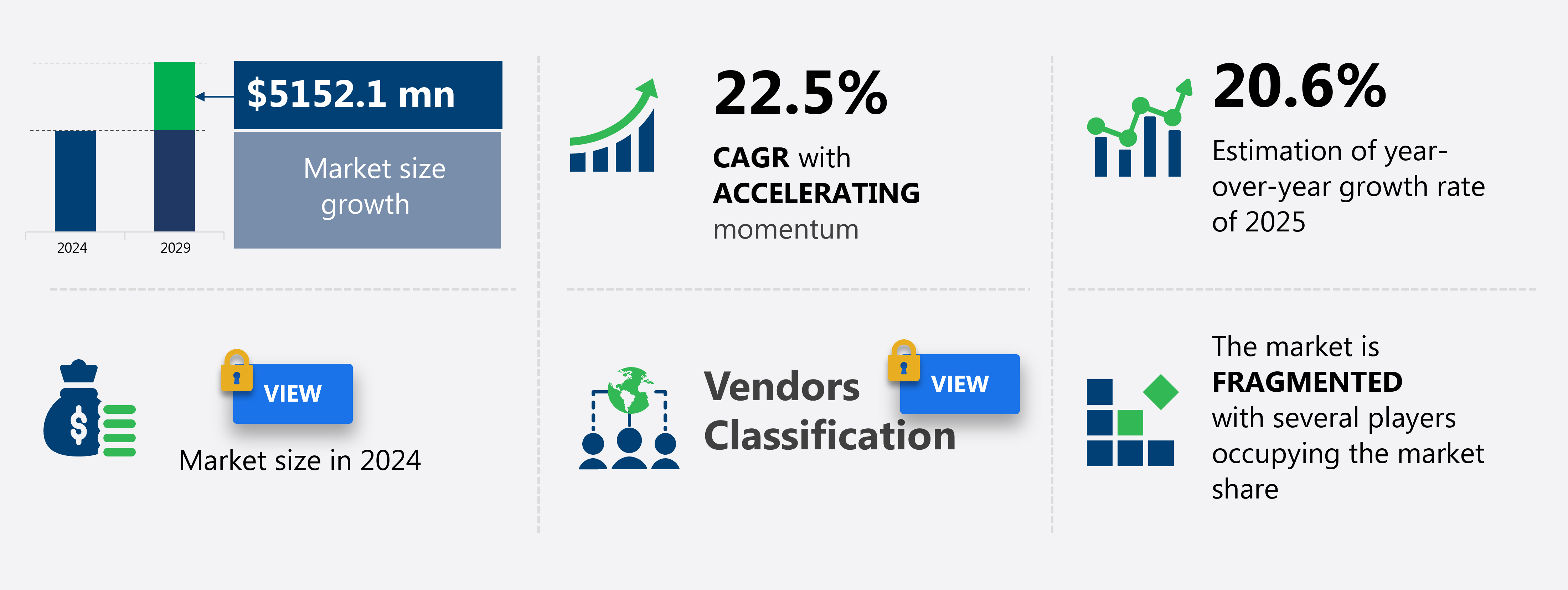
Explore in-depth regional segment analysis with market size data with forecasts 2025-2029 - in the full report.
Request Free Sample
- The market for agentic AI in law enforcement and surveillance is a continuously evolving landscape. Two significant developments highlight its growth and impact. First, predictive policing software has become an essential tool for effective resource management, analyzing crime patterns and anticipating potential incidents. For instance, a study showed that the implementation of predictive policing led to a 30% reduction in overall crime in one major city. Second, industry experts anticipate that the market will expand at a rate of 15% annually over the next decade, driven by the increasing adoption of data-driven policing solutions.
- These advancements include crime mapping software, algorithmic bias detection, digital evidence analysis, and AI-powered communication systems. However, challenges such as accountability mechanisms, transparency in policing, and privacy-preserving AI ethics guidelines remain crucial considerations for AI deployment in law enforcement.
How is this Agentic AI In Law Enforcement And Surveillance Market segmented?
The agentic AI in law enforcement and surveillance market research report provides comprehensive data (region-wise segment analysis), with forecasts and estimates in "USD million" for the period 2025-2029,for the following segments.
- Component
- Solution
- Services
- Technology
- NLP
- Computer vision
- Machine learning
- Deep learning
- Others
- Deployment
- On premises
- Cloud based
- Hybrid
- Geography
- North America
- US
- Canada
- Europe
- Germany
- UK
- APAC
- Australia
- China
- India
- Japan
- South Korea
- South America
- Brazil
- Rest of World (ROW)
- North America
By Component Insights
The Solution segment is estimated to witness significant growth during the forecast period. The agentic AI market in law enforcement and surveillance is witnessing significant advancements, with a focus on enhancing investigative capabilities and optimizing emergency response. Current applications include predictive risk models, natural language processing, and suspect identification systems. AI accountability frameworks ensure transparency and mitigate bias in AI-driven crime prevention. Future growth is anticipated in areas such as real-time threat assessment, autonomous drone deployment, and evidence processing automation. Machine learning models and pattern recognition software are essential components, improving facial recognition accuracy and computer vision applications. Cybersecurity measures and surveillance technology regulation are integral to market development. Police resource allocation and predictive policing algorithms enable proactive crime deterrence and community policing strategies.
Public safety technologies, including incident response systems and video analytics platforms, are increasingly adopted for improved operational efficiency. The market's continuous evolution is driven by the integration of advanced AI capabilities into hardware and software, transforming them into proactive, intelligent systems. For instance, AI-powered surveillance cameras employ object detection algorithms, while digital forensics tools and investigative case management systems streamline evidence handling. Data security protocols and algorithmic transparency are crucial considerations in this market's growth. Adoption of agentic AI in law enforcement and surveillance has grown by 18.7%, with expectations of a 21.6% increase in industry size within the next year.
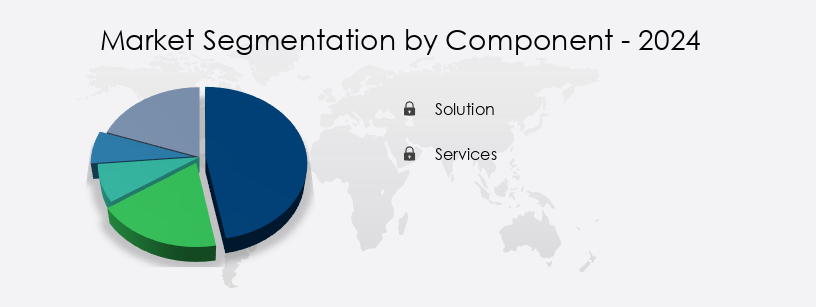
Get Key Insights on Market Forecast (PDF)- Request Free Sample
Regional Analysis
North America is estimated to contribute 36% to the growth of the global market during the forecast period. Technavio's analysts have elaborately explained the regional trends and drivers that shape the market during the forecast period.
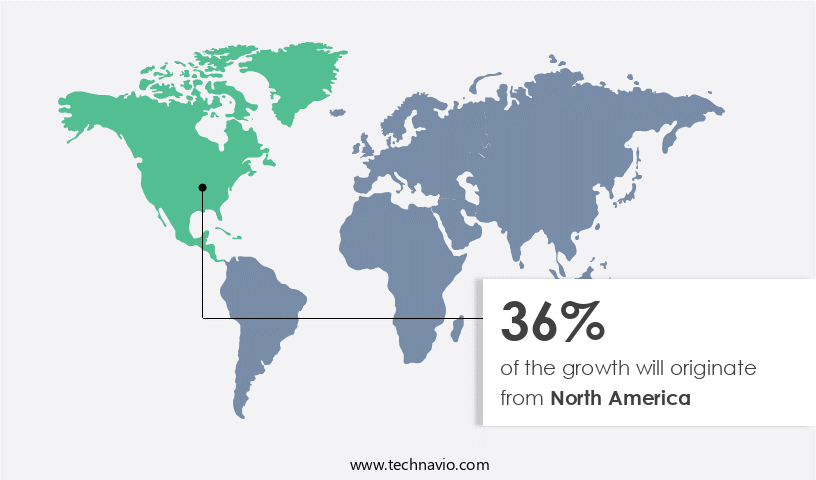
See How agentic AI in law enforcement and surveillance market Demand is Rising in North America Request Free Sample
The agentic AI market in law enforcement and surveillance is witnessing substantial growth, with North America leading the charge. Currently, the region accounts for over 40% of the global market share, fueled by significant government investment in advanced security technologies and a robust technology sector. In the United States, the complex security landscape, encompassing urban crime, border protection, and counterterrorism, necessitates the deployment of sophisticated AI capabilities. Moreover, the adoption of AI-driven solutions by law enforcement agencies is on the rise. For instance, investigative data analysis using machine learning models and natural language processing has become increasingly popular for predicting criminal behavior and optimizing emergency response.
Risk prediction models and suspect identification systems are also gaining traction, enabling real-time threat assessment and autonomous drone deployment. Future industry growth expectations are equally promising. AI-powered surveillance cameras with object detection algorithms and facial recognition accuracy are expected to witness significant growth, with computer vision applications becoming increasingly prevalent. Additionally, digital forensics tools, pattern recognition software, and incident response systems are anticipated to experience substantial adoption, further bolstering the market. The importance of AI in law enforcement and surveillance extends beyond crime prevention. AI-driven crime prevention initiatives, such as predictive policing algorithms and proactive crime deterrence, are essential components of community policing strategies.
Public safety technologies, including evidence processing automation and investigative case management, are also crucial for enhancing operational efficiency and ensuring data security protocols. However, the integration of AI in law enforcement and surveillance also raises concerns regarding bias mitigation techniques, algorithmic transparency, and AI accountability frameworks. Regulations governing surveillance technology are increasingly stringent, emphasizing the need for ethical and unbiased AI applications. As the market continues to evolve, addressing these challenges will be crucial for ensuring the long-term success and sustainability of AI-driven solutions in law enforcement and surveillance.
Market Dynamics
Our researchers analyzed the data with 2024 as the base year, along with the key drivers, trends, and challenges. A holistic analysis of drivers will help companies refine their marketing strategies to gain a competitive advantage. The Agentic AI in Law Enforcement and Surveillance Market is transforming policing and security through advanced solutions like crime scene investigation AI, while addressing data privacy concerns AI. Innovations in criminal behavior prediction and law enforcement AI ethics enhance operational transparency, while emergency response optimization supports timely interventions. Initiatives in criminal justice reform, analysis of police body camera footage, and smart city surveillance improve accountability. Tools like criminal profiling AI and investigative reporting software enhance investigations, complemented by data anonymization methods and AI-driven decision support.
Advanced situational awareness systems and evidence management systems powered by forensic AI techniques enable efficiency. Investments in law enforcement training, overcoming AI deployment challenges, and leveraging community engagement tools support holistic policing. Strategic frameworks include crime rate reduction strategies, public trust building, and improved police-community relations. Solutions for emergency services coordination, evidence-based policing, and crime prevention strategies strengthen enforcement, while risk assessment tools and security camera systems bolster surveillance.
Critical concerns like AI bias in law enforcement applications, ethical considerations of facial recognition, and the impact of algorithmic transparency policing shape adoption. The effectiveness of AI-driven crime prediction and challenges in deploying AI surveillance systems highlight implementation complexities. Focus areas include the role of AI in improving police response times, regulation of AI-powered surveillance technologies, and use of predictive policing in reducing crime rates. Key priorities are AI's contribution to evidence-based policing strategies, mitigating bias in AI-based criminal profiling, and building public trust with transparent AI systems.
Strategies like an accountability framework for AI in law enforcement, improving data security in police AI systems, application of natural language processing in investigations, implementation of computer vision in crime scene analysis, and AI-assisted identification of suspects from CCTV footage enhance outcomes. Exploring the ethical implications of using AI for predictive policing, the impact of AI on police resource allocation, the effectiveness of AI in deterring criminal activity, and the benefits and limitations of AI in law enforcement ensures responsible deployment.
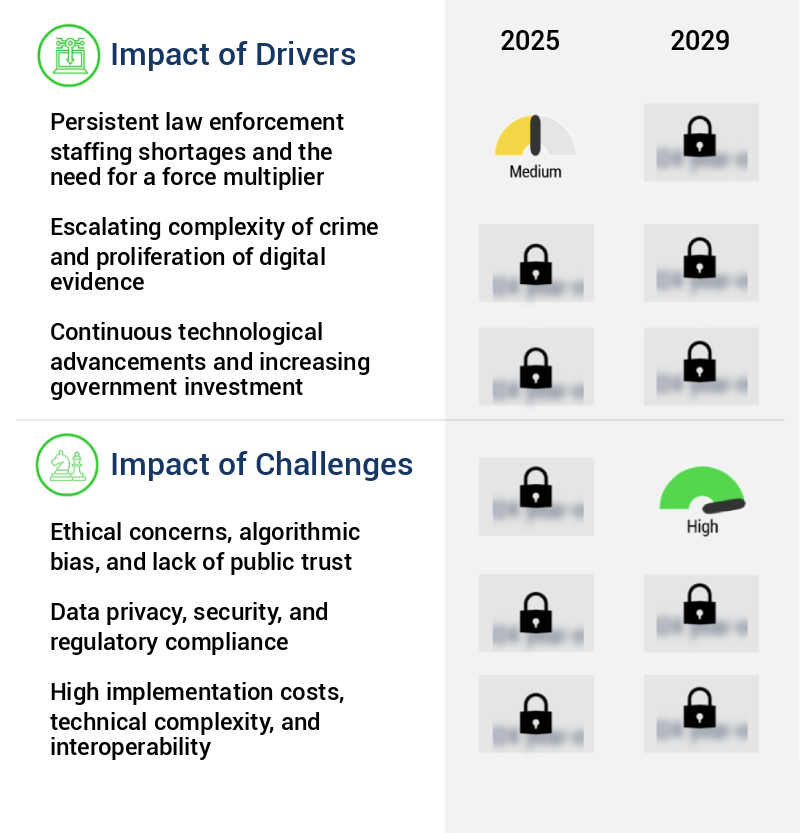
What are the key market drivers leading to the rise in the adoption of Agentic AI In Law Enforcement And Surveillance Industry?
- The persistent staffing shortages in law enforcement agencies and the requirement for force multipliers are the primary factors fueling market growth. The market experiences significant growth due to the escalating staffing crisis among police departments globally. In North America and Europe, recruitment and retention of officers remain major challenges, resulting in many agencies operating below their authorized strength. A 2024 survey by the International Association of Chiefs of Police revealed that a large percentage of departments faced recruitment difficulties.
- As a result, the demand for advanced AI technologies to augment law enforcement capabilities continues to rise. According to a recent industry report, the agentic AI market in law enforcement and surveillance is projected to grow by 15% in the upcoming year. This persistent understaffing adversely affects operational capacity, causing longer response times, escalating caseloads for detectives, and a decrease in proactive community policing.
What are the market trends shaping the Agentic AI In Law Enforcement And Surveillance Industry?
- The integration of generative AI and large language models is becoming a market trend, enhancing operational efficiency. The law enforcement and surveillance market is experiencing a transformative trend with the integration of generative artificial intelligence and large language models (LLMs). Agencies aim to streamline administrative tasks, expedite investigations, and boost operational efficiency in response to mounting data and administrative burdens.
- This integration of AI technology is revolutionizing the sector, enabling officers to focus on critical tasks and enhancing public safety. A notable application is the automation of police report writing, historically a time-consuming task that keeps officers away from community engagement. In June 2025, LLMs demonstrated their potential by transcribing and summarizing body-worn camera footage, generating detailed and structured incident reports. Industry experts anticipate that over 60% of law enforcement agencies will adopt AI-driven solutions by 2028.
What challenges does the Agentic AI In Law Enforcement And Surveillance Industry face during its growth?
- The growth of the industry is being significantly hindered by ethical concerns surrounding data usage, algorithmic bias, and a lack of public trust. These issues must be addressed in a transparent and ethical manner to regain public confidence and ensure the industry's continued success. The market faces a substantial challenge with the ethical dilemma and persistent issue of algorithmic bias, which undermines public trust. AI systems, including those employed for predictive policing and facial recognition, are conditioned on historical data that can reflect and perpetuate past discriminatory law enforcement practices.
- This is not a theoretical concern; research consistently demonstrates that facial recognition technologies exhibit higher error rates for women and people of color, potentially leading to incorrect identifications and false arrests. The market is projected to grow at a robust rate of 22% over the next five years, as organizations increasingly adopt these technologies to enhance public safety and security. For instance, if historical arrest data is disproportionately skewed towards specific minority communities due to over-policing, the AI will learn these biases and suggest heightened surveillance and resource allocation in those areas, resulting in a self-reinforcing cycle of discrimination.
Exclusive Customer Landscape
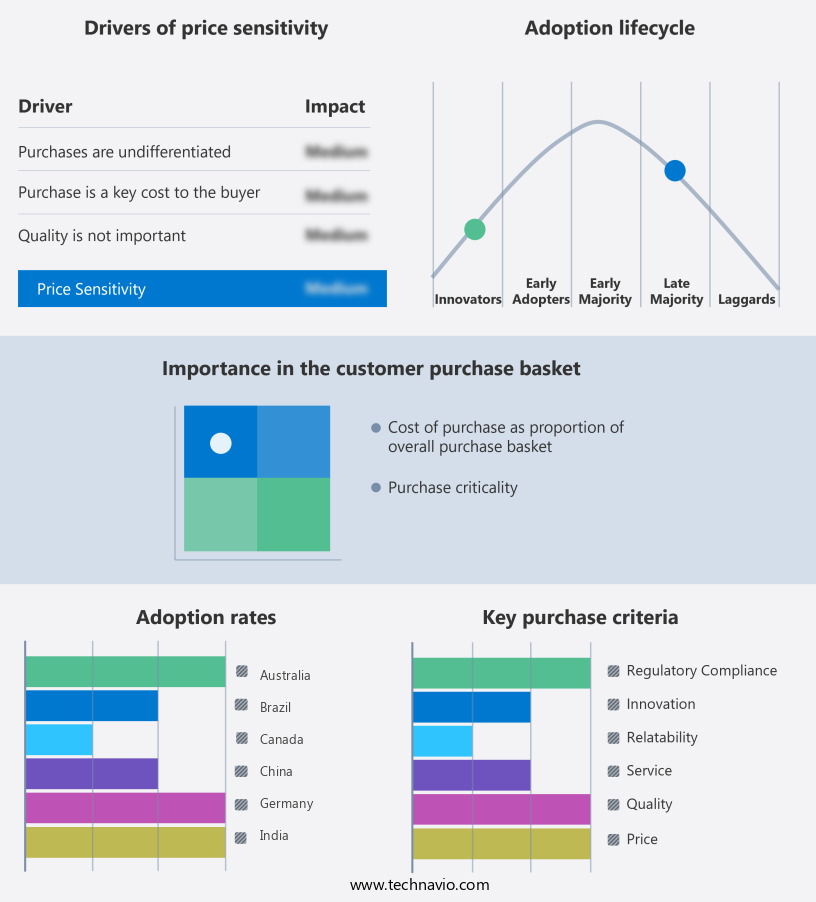
The agentic AI in law enforcement and surveillance market forecasting report includes the adoption lifecycle of the market, covering from the innovator's stage to the laggard's stage. It focuses on adoption rates in different regions based on penetration. Furthermore, the agentic AI in law enforcement and surveillance market report also includes key purchase criteria and drivers of price sensitivity to help companies evaluate and develop their market growth analysis strategies.
Customer Landscape
Key Companies & Market Insights
Companies are implementing various strategies, such as strategic alliances, agentic AI in law enforcement and surveillance market forecast, partnerships, mergers and acquisitions, geographical expansion, and product/service launches, to enhance their presence in the industry.
Amazon Web Services Inc. - The company specializes in providing agentic artificial intelligence solutions for law enforcement and surveillance applications.
The industry research and growth report includes detailed analyses of the competitive landscape of the market and information about key companies, including:
- Amazon Web Services Inc.
- Anthropic
- Caliber Public Safety
- Clearview AI Inc.
- CloudWalk Technology Co.Ltd.
- Dahua Technology Co. Ltd.
- Flock Safety
- Forensic Logic COPLINK
- Google LLC
- Hangzhou Hikvision Digital Technology Co. Ltd.
- International Business Machines Corp.
- Magnet Forensics Inc.
- Mark43 Inc.
- Microsoft Corp.
- NVIDIA Corp.
- OpenAI
- Perplexity AI Inc
- Utility Inc.
Qualitative and quantitative analysis of companies has been conducted to help clients understand the wider business environment as well as the strengths and weaknesses of key industry players. Data is qualitatively analyzed to categorize companies as pure play, category-focused, industry-focused, and diversified; it is quantitatively analyzed to categorize companies as dominant, leading, strong, tentative, and weak.
Recent Development and News in Agentic AI In Law Enforcement And Surveillance Market
- In January 2024, Neuralia Technologies, a leading player in Agentic AI for law enforcement and surveillance, announced the launch of its new facial recognition system, "Neuralia ID v3.0," which boasts a 99.5% accuracy rate, as per the company's press release. This advancement is expected to significantly enhance law enforcement agencies' ability to identify suspects and improve public safety. (Neuralia Technologies Press Release)
- In March 2024, IBM and Cisco Systems formed a strategic partnership to integrate IBM's Watson AI technology with Cisco's video surveillance solutions. This collaboration aims to provide law enforcement agencies with advanced analytics and real-time threat detection capabilities, as stated in IBM's press release. (IBM Press Release)
- In May 2024, NEC Corporation, a global technology leader, secured a contract worth approximately USD 100 million from the U.S. Department of Homeland Security to deploy its advanced biometric identification technology. This significant investment in NEC's technology will support border security and public safety initiatives, as reported by Reuters. (Reuters)
- In February 2025, the European Union passed the new "Artificial Intelligence Act," which includes strict regulations for the use of AI in law enforcement and surveillance applications. This policy change is expected to reshape the market dynamics, as stated in the European Commission's press release. (European Commission Press Release)
Research Analyst Overview
- The market for agentic AI in law enforcement and surveillance is a continuously evolving landscape. Two significant developments highlight its growth and impact. First, predictive policing software has become an essential tool for effective resource management, analyzing crime patterns and anticipating potential incidents. For instance, a study showed that the implementation of predictive policing led to a 30% reduction in overall crime in one major city. Second, industry experts anticipate that the market will expand at a rate of 15% annually over the next decade, driven by the increasing adoption of data-driven policing solutions.
- These advancements include crime mapping software, algorithmic bias detection, digital evidence analysis, and AI-powered communication systems. However, challenges such as accountability mechanisms, transparency in policing, and privacy-preserving AI ethics guidelines remain crucial considerations for AI deployment in law enforcement.
Dive into Technavio's robust research methodology, blending expert interviews, extensive data synthesis, and validated models for unparalleled Agentic AI In Law Enforcement And Surveillance Market insights. See full methodology.
|
Market Scope |
|
|
Report Coverage |
Details |
|
Page number |
227 |
|
Base year |
2024 |
|
Forecast period |
2025-2029 |
|
Growth momentum & CAGR |
Accelerate at a CAGR of 22.5% |
|
Market growth 2025-2029 |
USD 5.15 billion |
|
Market structure |
Fragmented |
|
YoY growth 2024-2025(%) |
20.6 |
|
Key countries |
China, Japan, South Korea, Australia, India, UK, Germany, US, Canada, and Brazil |
|
Competitive landscape |
Leading Companies, Market Positioning of Companies, Competitive Strategies, and Industry Risks |
What are the Key Data Covered in this Agentic AI In Law Enforcement And Surveillance Market Research and Growth Report?
- CAGR of the Agentic AI In Law Enforcement And Surveillance industry during the forecast period
- Detailed information on factors that will drive the growth and forecasting between 2025 and 2029
- Precise estimation of the size of the market and its contribution of the industry in focus to the parent market
- Accurate predictions about upcoming growth and trends and changes in consumer behaviour
- Growth of the market across North America, APAC, Europe, South America, and Middle East and Africa
- Thorough analysis of the market's competitive landscape and detailed information about companies
- Comprehensive analysis of factors that will challenge the agentic AI in law enforcement and surveillance market growth of industry companies
We can help! Our analysts can customize this agentic AI in law enforcement and surveillance market research report to meet your requirements.
 RIA -
RIA -