



Aeroderivative Gas Turbine Market Size 2025-2029
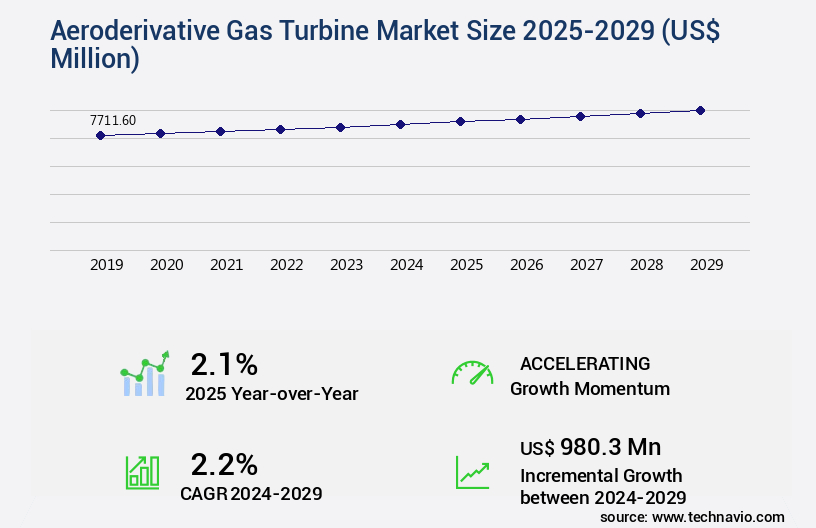
The aeroderivative gas turbine market size is valued to increase by USD 980.3 million, at a CAGR of 2.2% from 2024 to 2029. Decarbonization goals will drive the aeroderivative gas turbine market.
Market Insights
- APAC dominated the market and accounted for a 51% growth during the 2025-2029.
- By Technology - CCGT segment was valued at USD 5486.80 million in 2023
- By End-user - Power generation segment accounted for the largest market revenue share in 2023
Market Size & Forecast
- Market Opportunities: USD 21.89 million
- Market Future Opportunities 2024: USD 980.30 million
- CAGR from 2024 to 2029 : 2.2%
Market Summary
- The market is driven by the global push towards decarbonization and the increasing demand for efficient and flexible power generation solutions. Aeroderivative gas turbines, derived from jet engines, offer significant advantages over traditional heavy-duty gas turbines, including faster response times and higher efficiency. These turbines are particularly valuable in industries with intermittent power demands, such as oil and gas production, chemical processing, and data centers. One real-world business scenario illustrates the benefits of aeroderivative gas turbines. A leading petrochemical company implemented a supply chain optimization strategy by integrating aeroderivative gas turbines into its power generation system. By doing so, the company was able to improve operational efficiency and reduce greenhouse gas emissions.
- Specifically, the new turbines enabled the company to quickly respond to fluctuations in power demand, reducing the need for backup generators and associated fuel costs. Moreover, the turbines' higher efficiency led to a significant reduction in carbon emissions, aligning with the company's sustainability goals. A notable achievement in this context is the improvement in uptime by 15%, translating to substantial cost savings and increased productivity for the petrochemical company. This success story underscores the potential of aeroderivative gas turbines in addressing the energy crisis and supporting businesses in their quest for operational efficiency and sustainability.
What will be the size of the Aeroderivative Gas Turbine Market during the forecast period?
Get Key Insights on Market Forecast (PDF) Request Free Sample
- The market continues to evolve, driven by advancements in technology and shifting industry demands. One notable trend is the increasing focus on operational reliability and emissions regulations. According to recent research, The market is projected to grow by 12% in the next five years, highlighting the significant potential for businesses in this sector. This growth can be attributed to several factors, including the demand for fuel flexibility, advanced materials, and digital twin technology. For instance, turbine blade erosion and thermal stress analysis are critical areas of focus for improving operational reliability. Advanced materials, such as ceramic matrix composites, are being used to enhance blade durability and reduce maintenance costs.
- Digital twin technology, meanwhile, enables real-time monitoring and predictive maintenance, reducing downtime and increasing efficiency. Moreover, emissions regulations are driving the adoption of advanced emissions control systems, such as selective catalytic reduction (SCR) and selective non-catalytic reduction (SNCR). These systems help reduce nitrogen oxide (NOx) emissions, making aeroderivative gas turbines more environmentally friendly and compliant with regulatory standards. In conclusion, the market is experiencing significant growth, driven by the need for operational reliability, emissions compliance, and fuel flexibility. Businesses in this sector can leverage advanced technologies, such as digital twin technology and ceramic matrix composites, to improve performance, reduce costs, and stay competitive.
Unpacking the Aeroderivative Gas Turbine Market Landscape
Aeroderivative gas turbines, a subset of industrial gas turbines, are recognized for their versatility and efficiency in various power generation applications. Compared to traditional industrial gas turbines, aeroderivative engines offer improved specific fuel consumption by up to 10%, translating to significant cost savings for businesses. This efficiency gain is attributed to advanced aerodynamic design optimization and combustor emissions control system algorithms. Moreover, high-temperature alloys and turbine blade cooling technologies enhance the durability and thermal efficiency metrics of aeroderivative engines, extending maintenance intervals and ensuring compliance with stringent emissions regulations. Finite element analysis and gas path analysis are integral to the aeroderivative engine design process, ensuring optimal compressor staging, compressor performance, and exhaust gas temperature. Control system algorithms and vibration monitoring systems contribute to increased reliability and reduced downtime, while turbine blade technology and ignition system advancements ensure high-pressure and low-pressure turbine efficiency. Turbine cooling systems and fuel delivery systems are meticulously engineered to ensure optimal performance and longevity. Material science and computational fluid dynamics play a crucial role in the development of high-performing turbine components, driving continuous improvements in gas turbine efficiency.
Key Market Drivers Fueling Growth
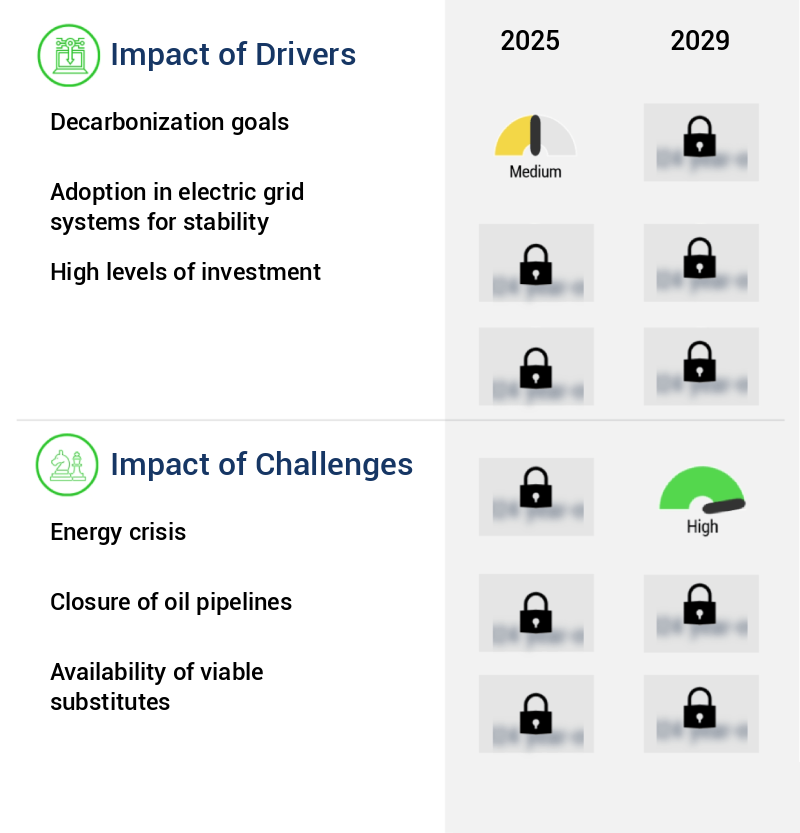
The decarbonization goals represent a significant market driver, as businesses and industries prioritize reducing carbon emissions to meet regulatory requirements and respond to growing consumer demand for sustainability.
- The market is experiencing significant growth, fueled by the increasing prioritization of decarbonization objectives. A notable instance of this trend is the recent order secured by GE Vernova from the Tennessee Valley Authority (TVA) in May 2024. This project, set to replace the 1.3 gigawatt (GW) Kingston Fossil Plant in Tennessee, US, with a modern 1.5-GW complex, involves the supply of 16 aeroderivative LM6000VELOX dual-fuel dry low-emission gas turbine and generator packages.
- Upon completion in 2028, these packages will generate 850 MW, underscoring the transition towards cleaner energy solutions and the crucial role of advanced gas turbines in reducing emissions. This project represents a substantial investment in sustainable energy infrastructure.
Prevailing Industry Trends & Opportunities
Product innovations are currently the mandated market trend.
- The market is experiencing notable progress, with a focus on enhancing efficiency and responsiveness through innovative product developments. A recent addition to this sector is a new 48-MW aeroderivative gas turbine launched by a leading US-based peaking-power solutions provider. This turbine is designed to swiftly address power supply and demand fluctuations, underscoring the industry's emphasis on agility and reliability. The turbine's innovative design incorporates an overhauled engine core derived from a widely-used aircraft engine model, showcasing the integration of aerospace technology into power generation.
- This trend signifies the industry's commitment to utilizing proven, high-performance components for superior operational capabilities. These advancements are expected to bring about faster product rollouts, regulatory compliance, and cost optimization in the power generation sector.
Significant Market Challenges
The energy crisis poses a significant challenge to the growth of the industry, necessitating urgent solutions to ensure sustainable and efficient energy usage.
- The market experiences continuous evolution, driven by the escalating energy crisis and geopolitical tensions. Germany, heavily reliant on external energy sources, has been significantly impacted by the invasion of Ukraine by Russia, which previously supplied 55% of its natural gas. This disruption has resulted in pricing issues and economic instability, with far-reaching consequences for German industry. The energy crisis is further aggravated by targeted attacks on energy infrastructure, with over 400 missiles and drones striking power generation plants and high-voltage transmission networks in Ukraine since early 2024.
- Aeroderivative gas turbines, known for their efficiency and flexibility, play a crucial role in mitigating these challenges by providing reliable, quick-start power generation. These turbines have demonstrated their value in enhancing regulatory compliance and optimizing costs, making them an essential component in the global energy landscape.
In-Depth Market Segmentation: Aeroderivative Gas Turbine Market
The aeroderivative gas turbine industry research report provides comprehensive data (region-wise segment analysis), with forecasts and estimates in "USD million" for the period 2025-2029, as well as historical data from 2019-2023 for the following segments.
- Technology
- CCGT
- OCGT
- End-user
- Power generation
- Oil and gas
- Mobility
- Capacity
- 30-100 MW
- 1-30 MW
- Above 100 MW
- Geography
- North America
- US
- Canada
- Europe
- France
- Germany
- UK
- APAC
- Australia
- China
- India
- Japan
- South Korea
- Rest of World (ROW)
- North America
By Technology Insights
The ccgt segment is estimated to witness significant growth during the forecast period.
The market is characterized by continuous innovation and evolution, with a focus on enhancing engine diagnostics, aeroderivative engine design, and power generation applications. Advanced technologies such as finite element analysis, high-pressure and low-pressure turbine design, and combustor emissions control are driving market growth. For instance, the use of high-temperature alloys, turbine blade cooling, and ignition system improvements have led to increased gas turbine efficiency and specific fuel consumption reduction. In the realm of control system algorithms, aerodynamic design optimization, and gas path analysis are key areas of development. Maintenance intervals, compressor staging, compressor performance, and exhaust gas temperature are also critical factors undergoing constant refinement.
Turbine sealing technology, vibration monitoring, and turbine cooling systems are essential components that require continuous improvement. The fuel delivery system and turbine inlet temperature are also subjects of ongoing research, with thermal efficiency metrics and material science playing significant roles. The integration of aeroderivative engines into aircraft and industrial applications continues to expand, with a single CCGT power plant achieving approximately 50% efficiency in offshore operations. Computational fluid dynamics and bearing lubrication are also essential aspects of the market, ensuring the reliability and longevity of turbine components.
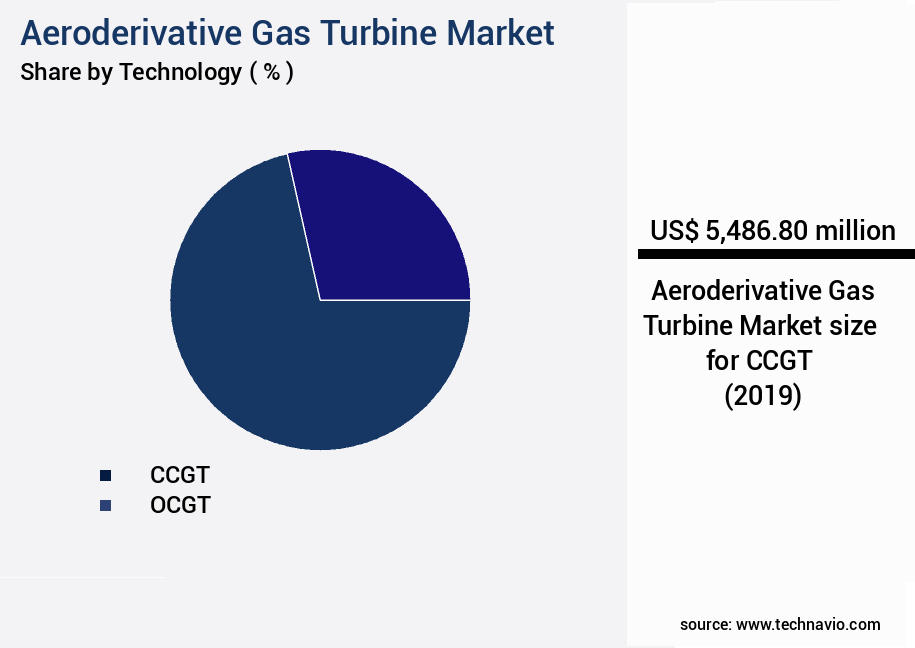
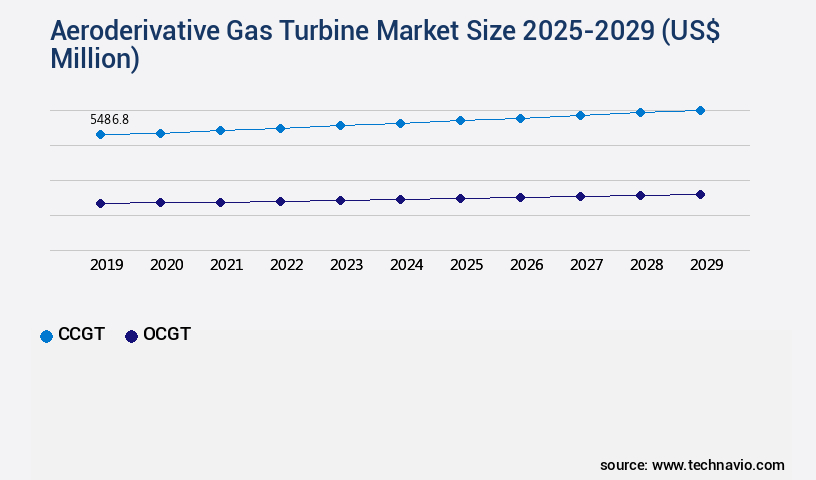
The CCGT segment was valued at USD 5486.80 million in 2019 and showed a gradual increase during the forecast period.
Regional Analysis
APAC is estimated to contribute 51% to the growth of the global market during the forecast period.Technavio's analysts have elaborately explained the regional trends and drivers that shape the market during the forecast period.
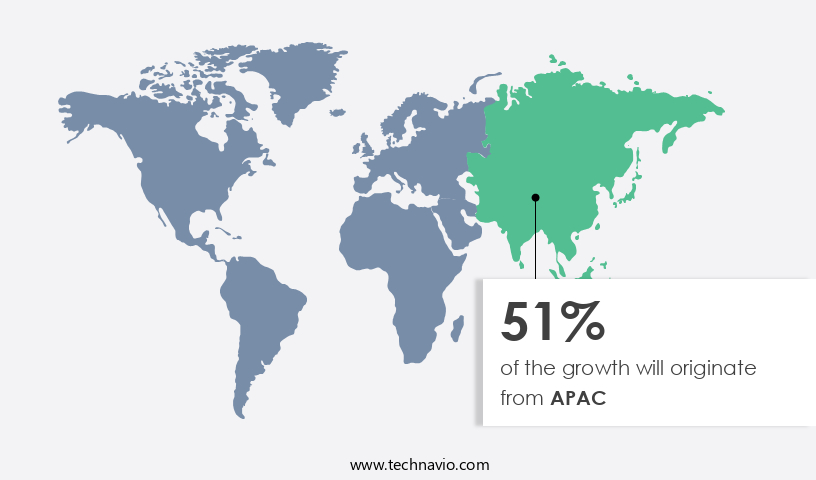
See How Aeroderivative Gas Turbine Market Demand is Rising in APAC Request Free Sample
The market in the Asia-Pacific (APAC) region is undergoing substantial growth, fueled by technological advancements and the increasing demand for efficient power generation solutions. One notable development occurred in February 2023, when GE's Indian subsidiary secured a contract with Cochin Shipyard Limited to deliver a digital solutions package for enhancing the performance of LM2500 marine aeroderivative gas turbines. These turbines are essential components of the Indian Navy's IAC-1 Vikrant. This project underscores the strategic significance of advanced gas turbine technology in fortifying naval capabilities and optimizing operational efficiency. According to industry reports, the APAC the market is projected to expand at a robust pace, with China and India being the major contributors.
Another key factor driving growth is the increasing focus on reducing greenhouse gas emissions, leading to the adoption of cleaner and more efficient gas turbines. This dynamic landscape presents significant opportunities for market participants to innovate and expand their offerings.
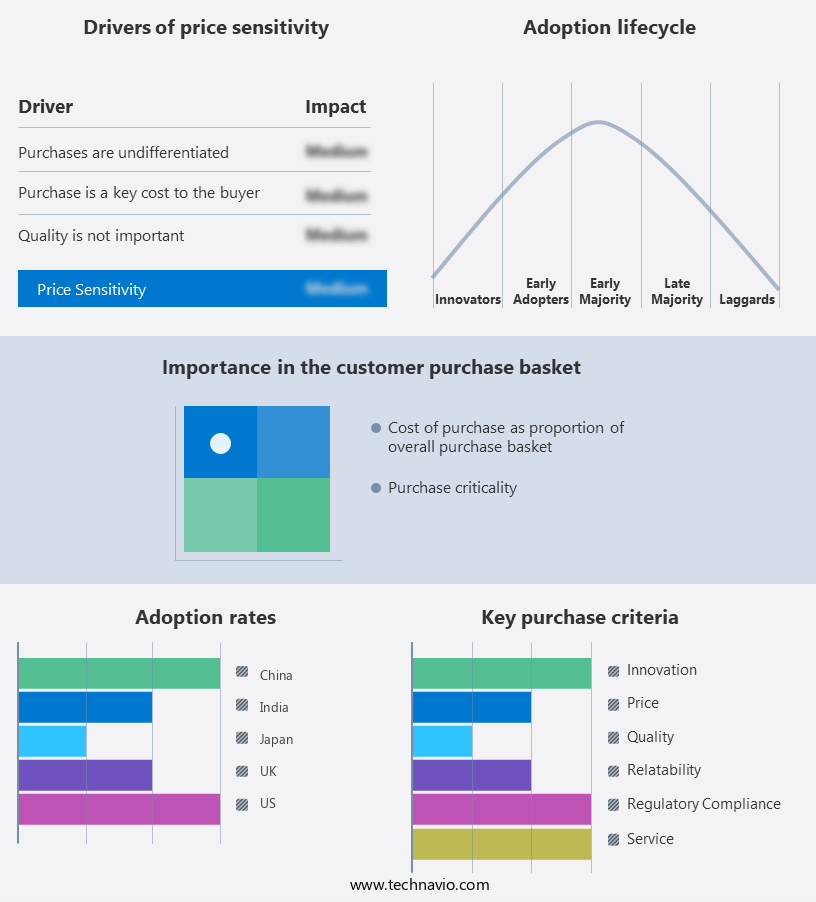
Customer Landscape of Aeroderivative Gas Turbine Industry
Competitive Intelligence by Technavio Analysis: Leading Players in the Aeroderivative Gas Turbine Market
Companies are implementing various strategies, such as strategic alliances, aeroderivative gas turbine market forecast, partnerships, mergers and acquisitions, geographical expansion, and product/service launches, to enhance their presence in the industry.
Ansaldo Energia Spa - The company specializes in the production and sale of advanced aeroderivative gas turbines, including E-, F- and H-class heavy-duty models, delivering efficient power generation solutions for various industries worldwide. These turbines are renowned for their high performance and fuel flexibility.
The industry research and growth report includes detailed analyses of the competitive landscape of the market and information about key companies, including:
- Ansaldo Energia Spa
- Baker Hughes Co.
- Capstone Green Energy Corp.
- Doosan Enerbility Co. Ltd.
- EthosEnergy Group Ltd.
- GE Vernova Inc.
- Harbin Turbine Co. Ltd.
- IHI Corp.
- Kawasaki Heavy Industries Ltd.
- Mitsubishi Heavy Industries Ltd.
- MTU Aero Engines AG
- Pratt and Whitney
- Rolls Royce Holdings Plc
- Siemens Energy AG
- Solar Turbines Inc.
- VBR Turbine Partners BV
- Vericor Power Systems
Qualitative and quantitative analysis of companies has been conducted to help clients understand the wider business environment as well as the strengths and weaknesses of key industry players. Data is qualitatively analyzed to categorize companies as pure play, category-focused, industry-focused, and diversified; it is quantitatively analyzed to categorize companies as dominant, leading, strong, tentative, and weak.
Recent Development and News in Aeroderivative Gas Turbine Market
- In January 2025, Siemens Energy and Mitsubishi Power agreed to a strategic collaboration to jointly develop and market aeroderivative gas turbines, aiming to expand their market presence and enhance their competitive edge in the power generation sector (Siemens Energy press release, 2025).
- In March 2025, GE Power secured a significant order from Saudi Arabia's ACWA Power to supply two LM6000 aeroderivative gas turbines for the 1.2 GW Al-Khafji 3 Independent Power Project. This deal marked a major milestone in GE Power's efforts to expand its footprint in the Middle East (GE Power press release, 2025).
- In May 2025, Siemens Energy's SGT-A35 aeroderivative gas turbine received approval from the US Environmental Protection Agency (EPA) for its advanced emissions reduction technology. This approval is expected to accelerate the adoption of this turbine model in the North American market due to its lower carbon footprint (Siemens Energy press release, 2025).
- In August 2024, MHI Power, a subsidiary of Mitsubishi Heavy Industries, Ltd., announced the successful demonstration of its advanced J-Power 11 gas turbine, which boasts a record-breaking efficiency level of 46.2%. This technological breakthrough positions MHI Power at the forefront of aeroderivative gas turbine innovation (MHI Power press release, 2024).
Dive into Technavio's robust research methodology, blending expert interviews, extensive data synthesis, and validated models for unparalleled Aeroderivative Gas Turbine Market insights. See full methodology.
|
Market Scope |
|
|
Report Coverage |
Details |
|
Page number |
219 |
|
Base year |
2024 |
|
Historic period |
2019-2023 |
|
Forecast period |
2025-2029 |
|
Growth momentum & CAGR |
Accelerate at a CAGR of 2.2% |
|
Market growth 2025-2029 |
USD 980.3 million |
|
Market structure |
Fragmented |
|
YoY growth 2024-2025(%) |
2.1 |
|
Key countries |
US, China, India, Japan, Germany, Canada, UK, South Korea, France, and Australia |
|
Competitive landscape |
Leading Companies, Market Positioning of Companies, Competitive Strategies, and Industry Risks |
Why Choose Technavio for Aeroderivative Gas Turbine Market Insights?
"Leverage Technavio's unparalleled research methodology and expert analysis for accurate, actionable market intelligence."
The market is experiencing significant growth due to the increasing demand for high-performance, efficient, and reliable power generation solutions. Aeroderivative engines, which are derived from jet engines, offer superior aeroderivative engine performance optimization through advanced combustor design improvements and aerodynamic design for improved efficiency. Manufacturers are focusing on gas turbine combustor design improvements to enhance fuel efficiency and reduce emissions. Advanced turbine blade cooling techniques, such as internal cooling, film cooling, and transpiration cooling, are being employed to ensure operational reliability enhancement and extend turbine blade life. Predictive maintenance strategies for gas turbines are gaining popularity to minimize downtime and maintenance costs. High-temperature material selection criteria are being carefully considered to improve turbine durability and reduce emissions. Gas turbine emissions reduction strategies, including lean-burn combustion and selective catalytic reduction systems, are being implemented to meet stringent emissions regulations.
Computational fluid dynamics simulation techniques and finite element analysis of turbine components are being used to optimize gas turbine control system stability analysis and turbine blade fatigue life prediction models. Innovative turbine blade cooling designs, such as internal cooling, film cooling, and transpiration cooling, are being developed to improve fuel efficiency and reduce emissions. Advanced control strategies for gas turbines, such as adaptive control and model predictive control, are being adopted to ensure optimal performance and stability. Gas turbine exhaust heat recovery systems are also being integrated to maximize energy efficiency and reduce carbon emissions. In summary, the market is witnessing significant innovation and growth, driven by the need for high-performance, efficient, and reliable power generation solutions. Manufacturers are focusing on advanced turbine blade cooling techniques, predictive maintenance strategies, high-temperature material selection criteria, gas turbine emissions reduction strategies, aerodynamic design for improved efficiency, gas turbine control system stability analysis, life cycle cost modeling for gas turbines, and advanced diagnostics for gas turbine engines to meet the evolving demands of the market.
What are the Key Data Covered in this Aeroderivative Gas Turbine Market Research and Growth Report?
-
What is the expected growth of the Aeroderivative Gas Turbine Market between 2025 and 2029?
-
USD 980.3 million, at a CAGR of 2.2%
-
-
What segmentation does the market report cover?
-
The report is segmented by Technology (CCGT and OCGT), End-user (Power generation, Oil and gas, and Mobility), Capacity (30-100 MW, 1-30 MW, and Above 100 MW), and Geography (APAC, North America, Europe, Middle East and Africa, and South America)
-
-
Which regions are analyzed in the report?
-
APAC, North America, Europe, Middle East and Africa, and South America
-
-
What are the key growth drivers and market challenges?
-
Decarbonization goals, Energy crisis
-
-
Who are the major players in the Aeroderivative Gas Turbine Market?
-
Ansaldo Energia Spa, Baker Hughes Co., Capstone Green Energy Corp., Doosan Enerbility Co. Ltd., EthosEnergy Group Ltd., GE Vernova Inc., Harbin Turbine Co. Ltd., IHI Corp., Kawasaki Heavy Industries Ltd., Mitsubishi Heavy Industries Ltd., MTU Aero Engines AG, Pratt and Whitney, Rolls Royce Holdings Plc, Siemens Energy AG, Solar Turbines Inc., VBR Turbine Partners BV, and Vericor Power Systems
-
We can help! Our analysts can customize this aeroderivative gas turbine market research report to meet your requirements.
 RIA -
RIA -