



4K2K TV Market Size 2026-2030
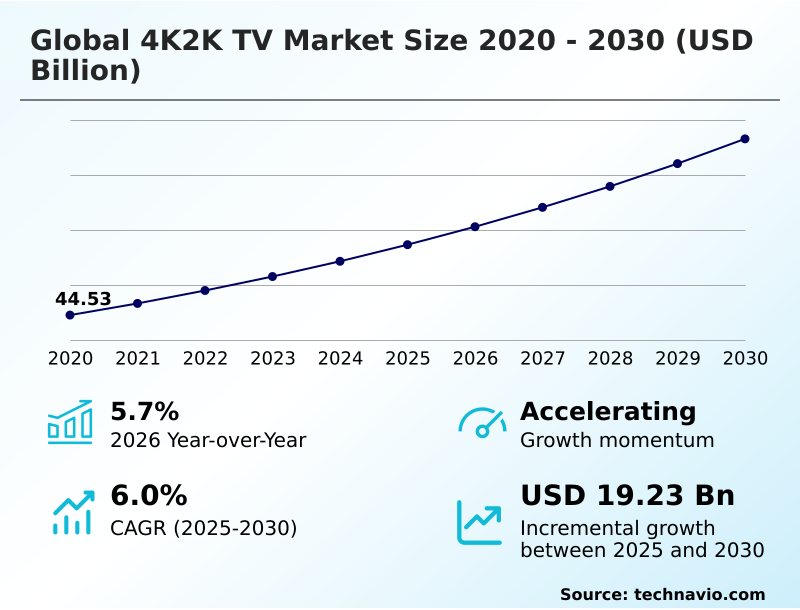
The 4k2k tv market size is valued to increase by USD 19.23 billion, at a CAGR of 6% from 2025 to 2030. Structural expansion of gaming sector and demand for high-refresh displays will drive the 4k2k tv market.
Major Market Trends & Insights
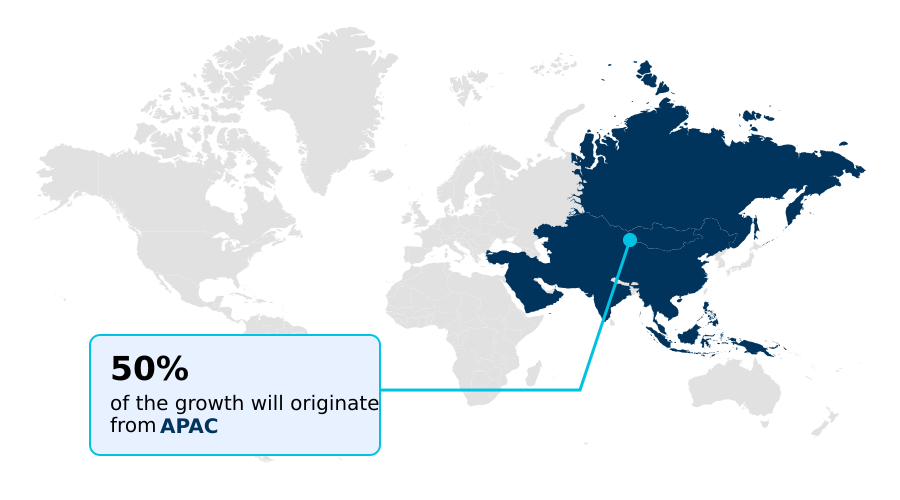
- APAC dominated the market and accounted for a 49.8% growth during the forecast period.
- By Display Size - 60 to 69 inches segment was valued at USD 21.85 billion in 2024
- By Distribution Channel - Offline segment accounted for the largest market revenue share in 2024
Market Size & Forecast
- Market Opportunities: USD 32.04 billion
- Market Future Opportunities: USD 19.23 billion
- CAGR from 2025 to 2030 : 6%
Market Summary
- The 4K2K TV market is undergoing a significant transformation, moving beyond resolution benchmarks to focus on intelligent performance and ecosystem integration. This evolution is driven by the demand for superior visual fidelity, fueled by the expansion of high-bandwidth streaming services and the technical requirements of modern gaming consoles.
- Key advancements include the mainstreaming of AI-enhanced upscaling, where neural processing units use deep-learning algorithms to refine lower-resolution content in real-time. For instance, a manufacturer can leverage these on-device machine learning capabilities to ensure a consistent ultra-high-definition experience, regardless of the source, effectively extending the value of the hardware and addressing content availability gaps.
- This pivot towards software-defined value is critical. Simultaneously, the industry is navigating challenges related to rapid hardware obsolescence cycles and the high capital expenditure for next-generation panel technologies like RGB tandem OLED and micro RGB displays.
- The market's trajectory is increasingly defined by how effectively brands can balance cutting-edge innovation, such as high nit output and variable refresh rate, with consumer-facing challenges like energy efficiency standards and content parity, ensuring sustained relevance in a competitive landscape focused on delivering an interactive immersion experience.
What will be the Size of the 4K2K TV Market during the forecast period?
Get Key Insights on Market Forecast (PDF) Request Free Sample
How is the 4K2K TV Market Segmented?
The 4k2k tv industry research report provides comprehensive data (region-wise segment analysis), with forecasts and estimates in "USD million" for the period 2026-2030, as well as historical data from 2020-2024 for the following segments.
- Display size
- 60 to 69 inches
- 50 to 59 inches
- Less than 49 inches
- 70 to 79 inches
- 80 and above
- Distribution channel
- Offline
- Online
- Application
- Household
- Commercial
- Geography
- APAC
- China
- India
- Japan
- North America
- US
- Canada
- Mexico
- Europe
- Germany
- UK
- France
- South America
- Brazil
- Argentina
- Middle East and Africa
- Saudi Arabia
- UAE
- South Africa
- Rest of World (ROW)
- APAC
By Display Size Insights
The 60 to 69 inches segment is estimated to witness significant growth during the forecast period.
The 60 to 69 inches segment is a high-growth tier, favored by consumers seeking a cinematic experience in standard living spaces.
This category benefits from improved manufacturing yields, which have facilitated more aggressive pricing, with the price gap between premium panel types narrowing to within 10% in some cases.
The integration of advanced AI-enhanced upscaling and intelligent content processing ensures that legacy high-definition content is rendered with near-native 4K clarity.
As streaming platforms expand their ultra-high-definition libraries, these models, featuring technologies like variable refresh rate and auto low latency mode, are becoming the default choice for households upgrading from smaller units.
This balance of size, performance with object-based sharpening, and affordability, supported by on-device machine learning, ensures the segment captures a substantial portion of the replacement market in developed regions, driven by the need for high-fidelity gaming applications.
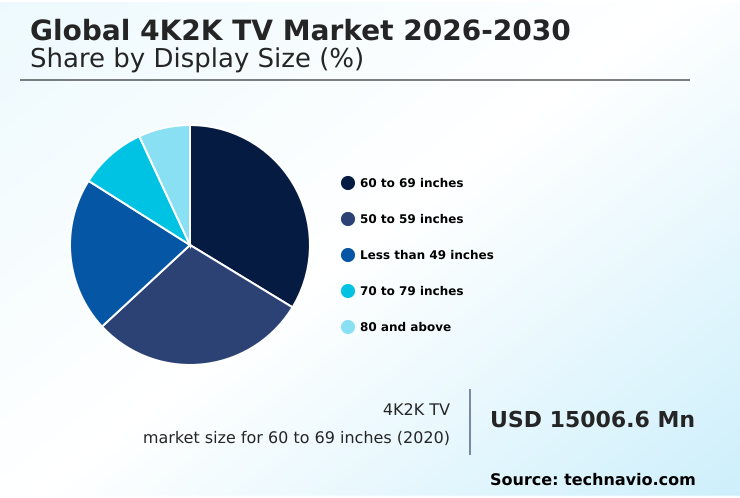
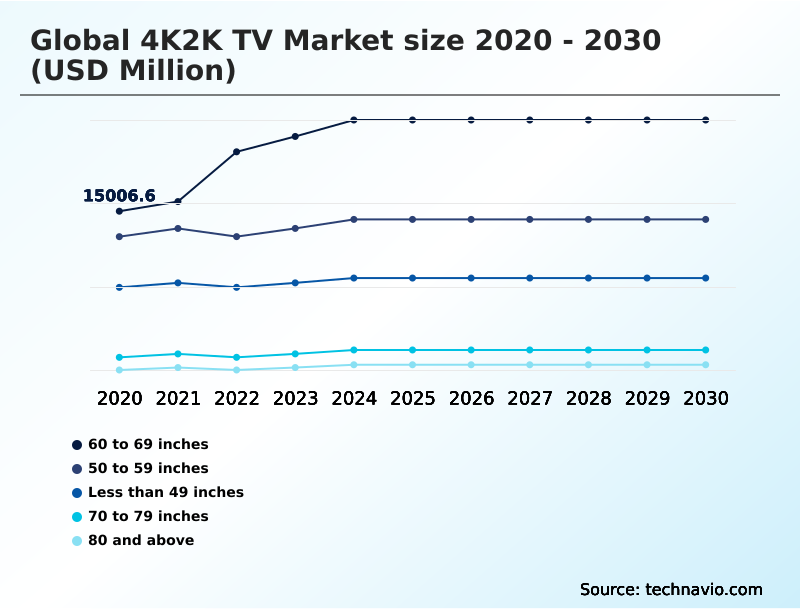
The 60 to 69 inches segment was valued at USD 21.85 billion in 2024 and showed a gradual increase during the forecast period.
Regional Analysis
APAC is estimated to contribute 49.8% to the growth of the global market during the forecast period.Technavio’s analysts have elaborately explained the regional trends and drivers that shape the market during the forecast period.
See How 4K2K TV Market Demand is Rising in APAC Request Free Sample
The geographic landscape is characterized by a dual-growth narrative, with mature markets focusing on premiumization and emerging regions driving volume. North America, with a market expansion rate of 6.6%, emphasizes ultra-thin aesthetics and advanced smart features like conversational interaction.
In contrast, APAC, which is set to contribute nearly 49.8% of the market's incremental growth, prioritizes accessible 4K technology and local manufacturing incentives.
Europe remains a key region, though its growth of 5.6% is tempered by stringent regulations such as power consumption mandates. This regulatory environment pushes for innovation in technologies like blue phosphorescent oled.
The success in these varied regions depends on tailoring product strategies, from deploying wallpaper form factors and high nit output displays in developed economies to managing semiconductor component volatility and fabrications line depreciation in high-growth areas, all while addressing state-level sustainability requirements.
Market Dynamics
Our researchers analyzed the data with 2025 as the base year, along with the key drivers, trends, and challenges. A holistic analysis of drivers will help companies refine their marketing strategies to gain a competitive advantage.
- The market's evolution is defined by a complex interplay of hardware capabilities and software intelligence, directly influencing strategic decision-making. Key performance indicators like ai picture upscaling performance are becoming more critical than raw pixel counts, as they address the persistent challenge of 4k content availability vs hardware.
- The mini-led vs oled brightness comparison continues to drive innovation, with both technologies vying for dominance in premium home cinema setups. For interactive entertainment, features such as high refresh rate console gaming, esports monitor input lag reduction, and broad support for hdmi 2.1 gaming features are now standard requirements.
- The rise of minimalist interior design has accelerated demand for wireless connectivity minimalist tv setups, further advanced by innovations like the zero connect box for tvs.
- On the content delivery side, the adoption of the av1 codec for 4k streaming is essential for efficiency; its implementation can reduce bandwidth needs by over 25% compared to older standards, a crucial operational advantage for service providers. This efficiency is vital as the industry navigates 8k content adoption challenges and the associated hardware costs.
- Meanwhile, the tandem oled panel lifespan benefits and the capabilities of the nq4 gen3 processor features are extending product viability. The high cost of large-format oled panel costs remains a barrier, but ongoing smart tv os platform integration and the sophistication of the ai content recommendation engine are creating new value streams.
- Beyond entertainment, specialized applications such as medical imaging 4k display accuracy highlight the technology's expanding utility, even as ultra-short-throw projector alternatives present a growing competitive threat.
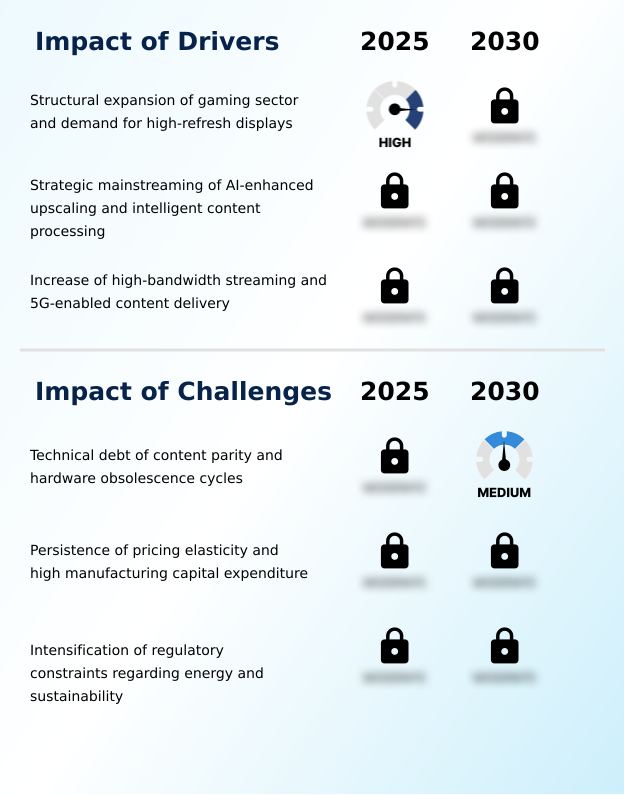
What are the key market drivers leading to the rise in the adoption of 4K2K TV Industry?
- The market's growth is primarily driven by the structural expansion of the gaming sector, which fuels demand for high-refresh displays.
- Market growth is significantly propelled by the convergence of high-performance gaming and advanced content delivery.
- The demand for console gaming displays with 120Hz native refresh rates and HDMI 2.1 connectivity has become a primary driver, with such features now standard on mid-to-high-tier models.
- This has led to a more than 50% increase in the adoption of large-format TVs for gaming setups over the last two years.
- Concurrently, the expansion of cloud gaming platforms and the availability of data-intensive 4K content are pushing the need for robust connectivity solutions like Wi-Fi 7 modules and low-latency ethernet ports.
- This synergy between interactive media and content infrastructure, supported by technologies like 144hz refresh rates and intelligent picture calibration, ensures sustained demand for sophisticated 4K2K hardware.
What are the market trends shaping the 4K2K TV Industry?
- The market is increasingly shaped by the inclusion of generative artificial intelligence. This is coupled with the integration of cognitive vision processing to enhance user experiences.
- Key market trends are centered on the integration of advanced display architectures and intelligent processing. The proliferation of RGB mini-LED and dual-layer tandem designs is enabling unprecedented peak brightness and contrast, with some high-end models achieving a high nit output that improves performance in well-lit environments by over 40%. This addresses a critical consumer demand for versatile, high-performance displays.
- The adoption of vision AI platforms with contextual content surfacing capabilities is transforming passive screens into interactive hubs. This trend toward interactive immersion is further enhanced by the use of external connect boxes and zero-gap wall mounts, which support minimalist aesthetics.
- These developments, including innovations like VVC video codec support and advanced local dimming zones, signify a move toward a more holistic and user-centric entertainment experience.
What challenges does the 4K2K TV Industry face during its growth?
- A key challenge affecting industry growth is the technical debt arising from a lack of content parity, which is exacerbated by rapid hardware obsolescence cycles.
- The market faces considerable challenges from rapid technological churn and evolving regulatory landscapes. Hardware obsolescence cycles are accelerating, placing pressure on manufacturers to innovate while managing consumer expectations for longevity. The introduction of features like 180hz native refresh rates can render premium models outdated quickly.
- Simultaneously, new energy efficiency standards are forcing design revisions, with some regulations mandating up to a 20% reduction in standby power consumption. This requires investment in more efficient components and power management systems.
- These pressures, combined with high-volume sales cycles in a commoditizing market and the need to offer a compelling personalized viewing experience, create a complex operational environment for all industry participants.
Exclusive Technavio Analysis on Customer Landscape
The 4k2k tv market forecasting report includes the adoption lifecycle of the market, covering from the innovator’s stage to the laggard’s stage. It focuses on adoption rates in different regions based on penetration. Furthermore, the 4k2k tv market report also includes key purchase criteria and drivers of price sensitivity to help companies evaluate and develop their market growth analysis strategies.
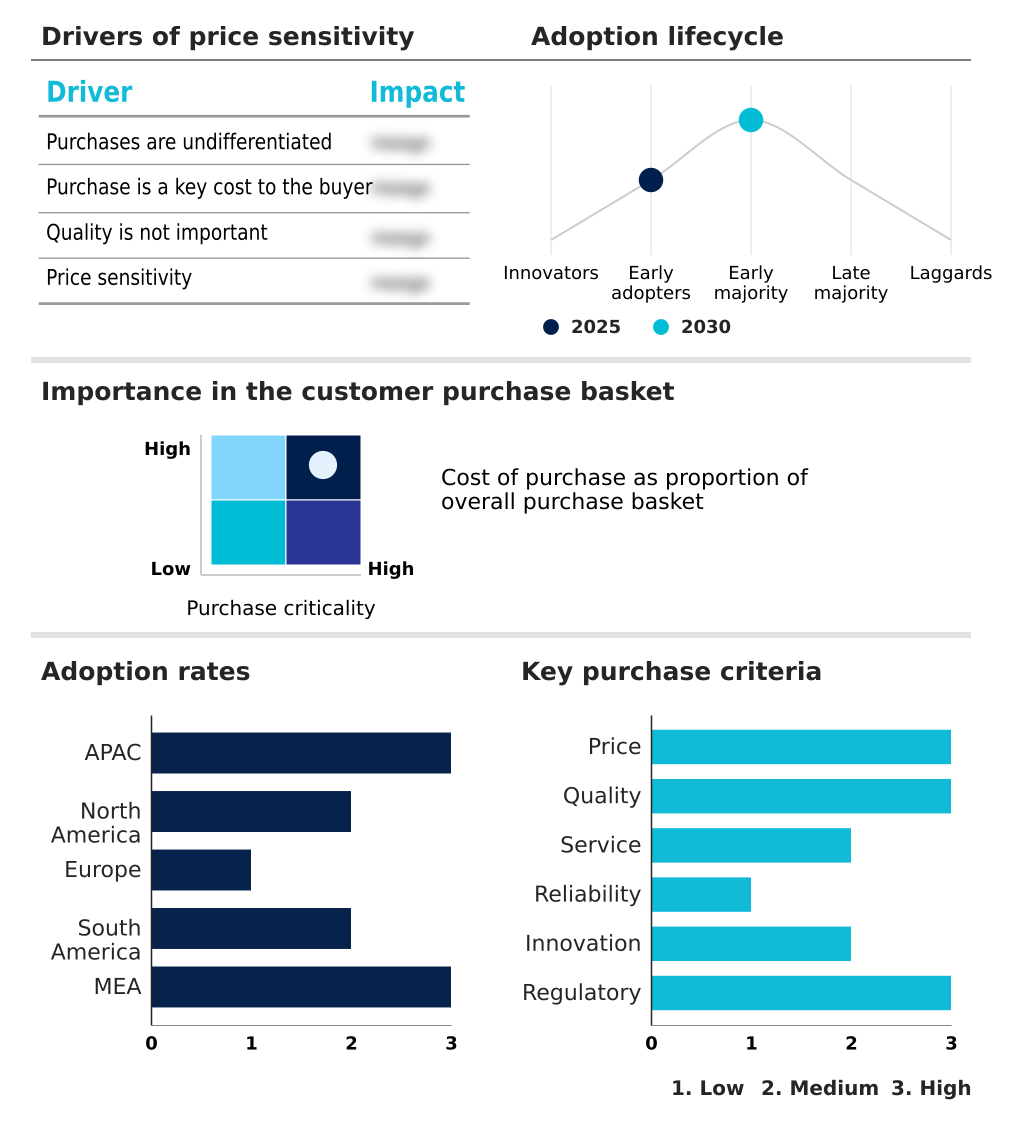
Customer Landscape of 4K2K TV Industry
Competitive Landscape
Companies are implementing various strategies, such as strategic alliances, 4k2k tv market forecast, partnerships, mergers and acquisitions, geographical expansion, and product/service launches, to enhance their presence in the industry.
Element Electronics Holdings LLC - Offers accessible consumer technology, including smart televisions and monitors, with a strategic focus on domestic assembly operations.
The industry research and growth report includes detailed analyses of the competitive landscape of the market and information about key companies, including:
- Element Electronics Holdings LLC
- Funai Electric Co. Ltd.
- Grundig Intermedia GmbH
- Haier Smart Home Co. Ltd.
- Hisense International Co. Ltd.
- Koninklijke Philips NV
- LG Electronics Inc.
- OnePlus Technology Co. Ltd.
- Panasonic Holdings Corp.
- Realme Chongqing Mobile Corp.
- Samsung Electronics Co. Ltd.
- Sharp Corp.
- Skyworth Group Ltd.
- Sony Group Corp.
- TCL Industries Holdings Ltd.
- Toshiba Corp.
- TPV Technology Co. Ltd.
- VIZIO Holding Corp.
- Vu Technologies Pvt. Ltd.
- Xiaomi Corp.
Qualitative and quantitative analysis of companies has been conducted to help clients understand the wider business environment as well as the strengths and weaknesses of key industry players. Data is qualitatively analyzed to categorize companies as pure play, category-focused, industry-focused, and diversified; it is quantitatively analyzed to categorize companies as dominant, leading, strong, tentative, and weak.
Recent Development and News in 4k2k tv market
- In January 2025, Samsung Electronics Co. Ltd. unveiled its flagship 130-inch Micro RGB television, debuting the Vision AI Companion platform designed to transform the television into an interactive smart home hub.
- In February 2025, The European Commission's updated energy efficiency regulation, (EU) 2023/826, took full effect, enforcing stricter power consumption limits for all electronic household equipment, including high-resolution 4K2K TVs.
- In March 2025, LG Electronics Inc. launched its latest OLED evo series, incorporating the Alpha 11 AI Processor Gen3 and hyper radiant color technology to deliver substantially higher luminance levels and improved color volume.
- In April 2025, Skyworth Group Ltd. completed the acquisition of Panasonic Holdings Corp.'s television business operations in Europe and the United States, significantly expanding its regional market footprint and brand portfolio.
Dive into Technavio’s robust research methodology, blending expert interviews, extensive data synthesis, and validated models for unparalleled 4K2K TV Market insights. See full methodology.
| Market Scope | |
|---|---|
| Page number | 300 |
| Base year | 2025 |
| Historic period | 2020-2024 |
| Forecast period | 2026-2030 |
| Growth momentum & CAGR | Accelerate at a CAGR of 6% |
| Market growth 2026-2030 | USD 19234.6 million |
| Market structure | Fragmented |
| YoY growth 2025-2026(%) | 5.7% |
| Key countries | China, India, Japan, South Korea, Indonesia, Australia, US, Canada, Mexico, Germany, UK, France, Italy, Spain, The Netherlands, Brazil, Argentina, Chile, Saudi Arabia, UAE, South Africa, Turkey and Israel |
| Competitive landscape | Leading Companies, Market Positioning of Companies, Competitive Strategies, and Industry Risks |
Research Analyst Overview
- The 4K2K TV market has pivoted from a hardware-centric model to one defined by software-driven intelligence and ecosystem integration. The strategic focus is now on advanced processing and user experience, where the deployment of neural processing units for generative artificial intelligence and cognitive vision processing has become a key differentiator.
- This shift is a direct response to the boardroom-level decision to invest in ai-enhanced upscaling to bridge the content gap rather than solely competing on panel technology.
- The integration of high-bandwidth streaming services, now comprising over 66% of content delivery revenue on major platforms, has solidified the demand for devices capable of handling sophisticated video codecs and delivering high dynamic range imaging. Innovations in panel architecture, such as rgb tandem oled, mini-led backlighting, and quantum dot enhancement, are crucial for delivering the visual fidelity consumers expect.
- Features like variable refresh rate and auto low latency mode, once niche, are now standard expectations, driven by the gaming sector. The market's future hinges on balancing these technological advancements, including vision ai platforms and oled evo technology, with the practicalities of 5g-enabled content delivery and consumer demand.
What are the Key Data Covered in this 4K2K TV Market Research and Growth Report?
-
What is the expected growth of the 4K2K TV Market between 2026 and 2030?
-
USD 19.23 billion, at a CAGR of 6%
-
-
What segmentation does the market report cover?
-
The report is segmented by Display Size (60 to 69 inches, 50 to 59 inches, Less than 49 inches, 70 to 79 inches, and 80 and above), Distribution Channel (Offline, and Online), Application (Household, and Commercial) and Geography (APAC, North America, Europe, South America, Middle East and Africa)
-
-
Which regions are analyzed in the report?
-
APAC, North America, Europe, South America and Middle East and Africa
-
-
What are the key growth drivers and market challenges?
-
Structural expansion of gaming sector and demand for high-refresh displays, Technical debt of content parity and hardware obsolescence cycles
-
-
Who are the major players in the 4K2K TV Market?
-
Element Electronics Holdings LLC, Funai Electric Co. Ltd., Grundig Intermedia GmbH, Haier Smart Home Co. Ltd., Hisense International Co. Ltd., Koninklijke Philips NV, LG Electronics Inc., OnePlus Technology Co. Ltd., Panasonic Holdings Corp., Realme Chongqing Mobile Corp., Samsung Electronics Co. Ltd., Sharp Corp., Skyworth Group Ltd., Sony Group Corp., TCL Industries Holdings Ltd., Toshiba Corp., TPV Technology Co. Ltd., VIZIO Holding Corp., Vu Technologies Pvt. Ltd. and Xiaomi Corp.
-
Market Research Insights
- Market dynamics are increasingly shaped by the institutionalization of advanced display technologies and intelligent software. The adoption of high-performance panels is accelerating, with the price differential between leading technologies narrowing to within 10% for popular screen sizes, fostering democratized premiumization. This shift enables broader access to features previously reserved for flagship models.
- Concurrently, the content ecosystem has matured, with 4K streaming now accounting for over 66% of revenue for major platforms, mandating hardware that supports data-intensive 4K content and HDR content delivery. This creates a strong pull for devices with sophisticated vision AI companions and support for competitive esports monitors.
- Manufacturers are responding by embedding features that facilitate a personalized viewing experience and buffer-free playback, ensuring products align with the high expectations of a digitally native consumer base.
We can help! Our analysts can customize this 4k2k tv market research report to meet your requirements.
 RIA -
RIA -