
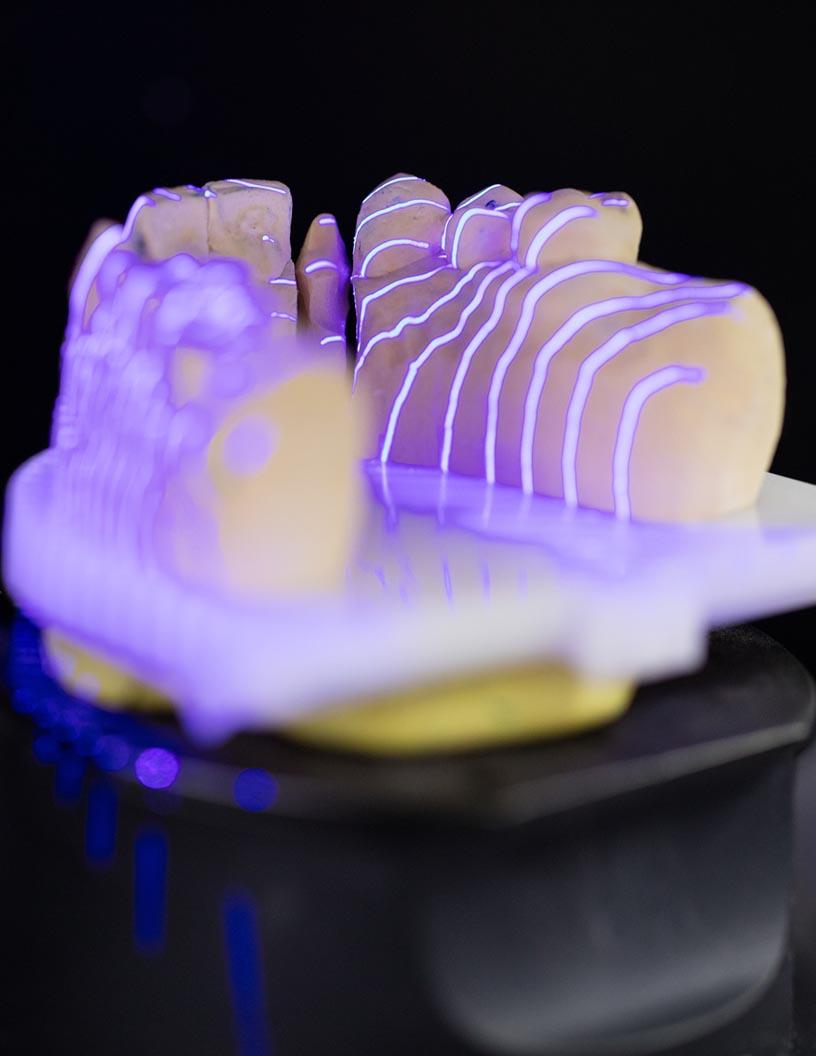


3D Scanner Market Size 2025-2029
The 3D scanner market size is forecast to increase by USD 5.65 billion at a CAGR of 12.6% between 2024 and 2029.
- The market is experiencing significant growth, driven primarily by the increasing adoption of portable handheld scanners. These devices offer enhanced flexibility and convenience, making them increasingly popular across various industries, including manufacturing, construction, and healthcare. However, the high cost of 3D scanners remains a notable challenge, limiting their widespread adoption.
- Navigating the high cost barrier will be crucial for market success, as the integration of AI technology presents a significant opportunity to streamline processes and improve efficiency. Despite this obstacle, the integration of artificial intelligence (AI) technology into handheld 3D scanners is expected to drive innovation and potentially reduce costs. Companies seeking to capitalize on this market's potential should focus on developing affordable, AI-enabled handheld 3D scanners to cater to the evolving demands of businesses.
What will be the Size of the 3D Scanner Market during the forecast period?
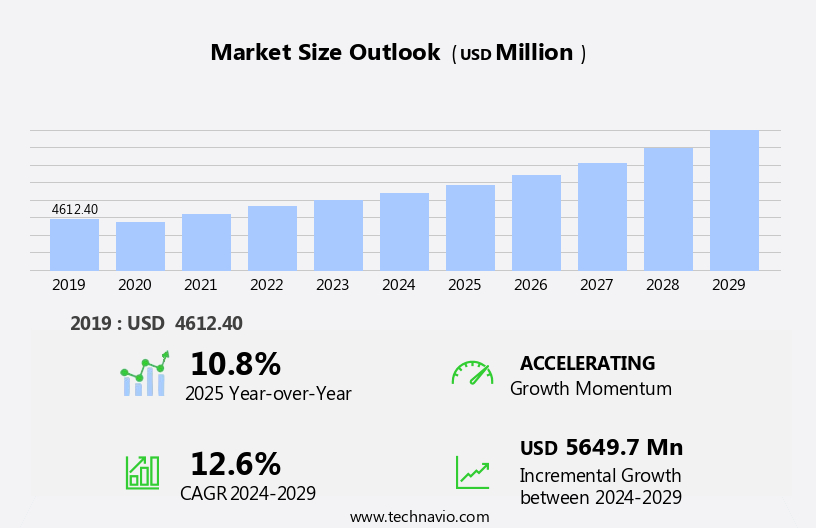
Explore in-depth regional segment analysis with market size data - historical 2019-2023 and forecasts 2025-2029 - in the full report.
Request Free Sample
The market is witnessing significant advancements in various areas, including pose estimation, system integration, and model simplification. Pose estimation enables accurate tracking of objects in real-time, enhancing the functionality of 3D scanning systems. System integration is crucial for seamless data flow between hardware and software components, ensuring efficient 3D animation pipelines and virtual reality applications. Model simplification techniques improve 3D model fidelity by reducing the complexity of scanned data, making it easier to process and manipulate. Hardware troubleshooting and calibration procedures are essential for maintaining the performance of 3D scanning systems, particularly when using depth sensor technology and dealing with scanning speed limits.
Computer vision, machine learning, and pattern recognition algorithms play a vital role in enhancing the accuracy assessment of 3D scanning data. Image segmentation and texture synthesis are essential for creating high-quality 3D models, while feature extraction and object tracking enable advanced applications in augmented reality and spatial resolution. Data acquisition rate and data compression are critical factors in optimizing 3D scanning workflows, ensuring efficient data visualization and 3D scene reconstruction. Precision engineering applications require high spatial resolution and temporal resolution, making them a growing market segment for 3D scanning technology.
Software debugging and sensor alignment are ongoing challenges in the 3D scanning industry, requiring continuous innovation to overcome scanning accuracy issues and improve overall system performance. Overall, the market is evolving rapidly, driven by advancements in hardware, software, and applications. Additionally, the use of oral care and dental practice management software is streamlining operations and enhancing patient care.
How is this 3D Scanner Industry segmented?
The 3D scanner industry research report provides comprehensive data (region-wise segment analysis), with forecasts and estimates in "USD million" for the period 2025-2029, as well as historical data from 2019-2023 for the following segments.
- Technology
- Laser triangulation
- Structured light
- End-user
- Industrial manufacturing
- Healthcare
- Architecture and engineering
- Aerospace and defense
- Others
- Product Type
- Short-range
- Medium-range
- Long-range
- Geography
- North America
- US
- Canada
- Europe
- France
- Germany
- Italy
- UK
- APAC
- China
- India
- Japan
- South Korea
- Rest of World (ROW)
- North America
By Technology Insights
The Laser triangulation segment is estimated to witness significant growth during the forecast period. The 3D scanning market is experiencing significant growth, driven by the increasing adoption of advanced technologies such as laser triangulation, non-contact measurement, and real-time 3D scanning. These technologies offer numerous benefits, including high-resolution imaging, geometric accuracy, and surface texture mapping. Motion compensation and registration algorithms enable seamless scanning of complex objects, while multi-sensor fusion and point cloud processing enhance data quality. Laser triangulation technology, in particular, is gaining popularity due to its high-accuracy measurements and wide application in industries such as industrial metrology, reverse engineering, and virtual prototyping.
The market is also witnessing the development of software development kits (SDKs) and mesh generation algorithms for easy integration with various applications. The 3D scanning market is witnessing a rise in demand due to its numerous applications in various industries and the continuous advancements in technology. The integration of advanced features like motion compensation, depth map generation, and real-time 3D scanning is expected to further propel the market's growth. From dental implants and orthotic solutions to full body scanning for medical diagnosis, 3D scanning offers numerous benefits in the healthcare industry.
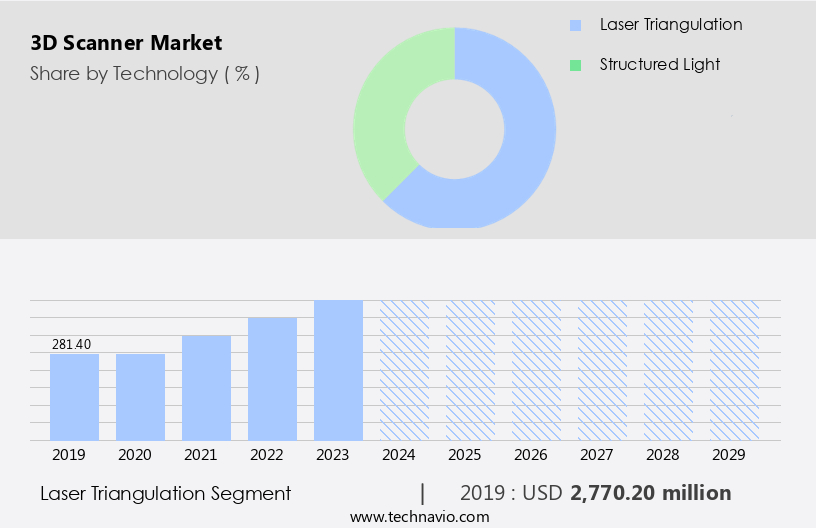
The Laser triangulation segment was valued at USD 2.77 billion in 2019 and showed a gradual increase during the forecast period.
The automotive and aerospace industries are major contributors to the market's growth due to their reliance on precise measurements for product development and maintenance. Furthermore, 3D scanning technology is being integrated with various software solutions such as CAD software, photogrammetry techniques, and 3D image rendering for digital asset creation and virtual prototyping. Time-of-flight 3D scanning and structured light scanning are other emerging technologies that offer advantages like long-range scanning and high-speed data acquisition.
Additionally, color data acquisition and noise reduction filters improve the overall quality of the scanned data. Moreover, the 3D scanning market is witnessing the integration of advanced technologies like optical coherence tomography, which offers high-resolution, non-contact measurements, and 3D model accuracy. This integration offers numerous benefits, including enhanced data security, improved accessibility, and increased efficiency.
Regional Analysis
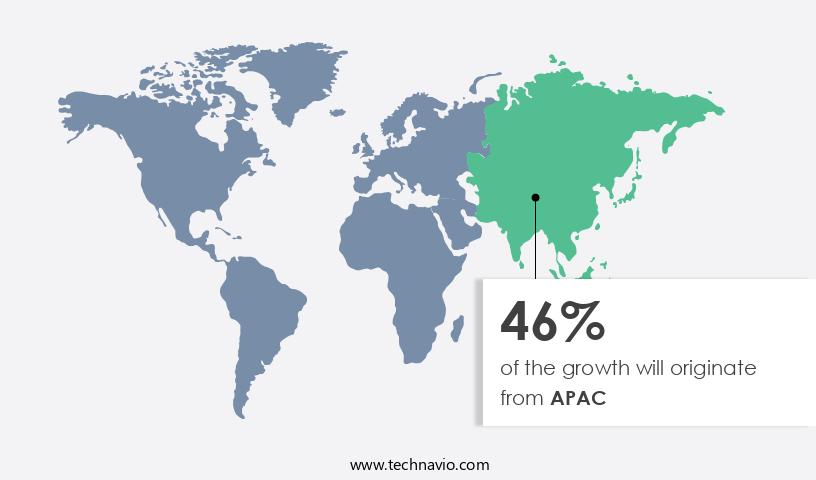
APAC is estimated to contribute 46% to the growth of the global market during the forecast period. Technavio's analysts have elaborately explained the regional trends and drivers that shape the market during the forecast period.
The market in North America is experiencing significant growth, particularly in the aerospace and defense, and healthcare industries. Advanced 3D technologies, such as laser triangulation and structured light, are driving the deployment of 3D scanners in these sectors. The aerospace industry, with its strong presence in the US, is highly competitive and continually incorporates new technologies to gain an edge. In the healthcare industry, 3D scanning is revolutionizing medical procedures and diagnostics, leading to increased demand for high-resolution, non-contact measurement solutions. 3D scanning technology enables depth map generation, real-time 3D rendering, and data post-processing for various applications. Cloud-based document management systems are gaining popularity due to their flexibility, affordability, and accessibility.
Motion compensation and multi-sensor fusion ensure accurate and consistent scanning results. Point cloud processing and mesh generation algorithms facilitate the creation of digital assets for 3D printing workflows and virtual prototyping. Object recognition and texture analysis enhance the functionality of 3D scanners, while color data acquisition and noise reduction filters improve image quality. Industrial metrology applications require high geometric accuracy, which is achieved through advanced registration algorithms and calibration techniques. Optical coherence tomography and photogrammetry techniques are also gaining popularity for their unique capabilities in various industries. The integration of 3D scanning technology with CAD software and real-time 3D image rendering further expands its applications.
Reverse engineering and surface texture mapping are essential in various industries, including automotive and manufacturing, where high-precision measurements are crucial. Overall, the evolving the market is transforming industries by providing accurate, non-contact measurement solutions for various applications. In healthcare, these scanners are used for clinical applications like dental and thoracic chest scanning, as well as for simulating body measurements for prosthetics, orthotics, and body implants.
Market Dynamics
Our researchers analyzed the data with 2024 as the base year, along with the key drivers, trends, and challenges. A holistic analysis of drivers will help companies refine their marketing strategies to gain a competitive advantage.
What are the 3D Scanner market drivers leading to the rise in the adoption of Industry?
- The significant rise in the adoption of portable handheld scanners serves as the primary catalyst for market growth. The market is witnessing substantial expansion due to the rising utilization of portable handheld scanners across numerous industries. These devices offer significant advantages, including non-contact measurement, geometric accuracy, and object recognition, making them increasingly popular. The adoption of portable scanners is driven by their flexibility and mobility, enabling users to capture 3D data in various settings, even in hard-to-reach areas. Industries such as manufacturing and healthcare are leveraging handheld scanners for precise measurements and quality control, as well as for streamlining processes and reducing costs.
- Time-of-flight 3D scanning technology and software SDKs are further fueling the market growth by enabling seamless integration with 3D printing workflows. Overall, the market is poised for continued growth, driven by technological advancements and the increasing demand for precise, efficient, and flexible measurement solutions. Technological advancements have led to improvements in 3D scanner resolution, registration algorithms, and multi-sensor fusion, enhancing the overall performance and ease of use. These advancements have made 3D scanning more accessible and cost-effective, expanding its application base.
What are the 3D Scanner market trends shaping the Industry?
- The use of AI-based handheld 3D scanners is gaining significant traction in the market. This advanced technology allows for precise and efficient 3D scanning, making it a must-have tool for professionals in various industries. The integration of artificial intelligence (AI) in 3D scanning technology is revolutionizing the industry, streamlining the process of creating 3D images and digital assets. AI enables the scanner to process large volumes of data on a single device, reducing user workload and enhancing efficiency. Furthermore, the integration of AI with CAD software allows for seamless digital asset creation and virtual prototyping.
- Artec Europe Sarl's Artec Leo, a portable 3D scanner, showcases this innovation with its AI-based feature in Artec Studio 11 software, enabling fast data capture at up to 80 frames per second (FPS). This technology is transforming various industries, from manufacturing to healthcare, by facilitating rapid and accurate 3D image rendering and digital asset creation. With AI, 3D scanners can generate full-color 3D models using advanced techniques such as optical coherence tomography, photogrammetry, and color data acquisition. These models offer high 3D model accuracy and come with noise reduction filters for improved image quality.
How does 3D Scanner market face challenges during its growth?
- The high cost of 3D scanners poses a significant challenge to the growth of the industry, as this advanced technology remains a financial barrier for many businesses and organizations seeking to adopt it. 3D scanners are essential tools for measurement and metrology, quality inspection, and reverse engineering, with pricing influenced by factors such as accuracy, resolution, speed, size, scanning environment, and integrated solutions. The end-user's application requirements determine the price range.
- Incorporating 3D scanners into production processes, as in the automotive or aerospace industries, necessitates high robustness, ensuring consistent results and minimal errors. Calibration and texture analysis are additional features that enhance scanner performance, further contributing to the cost. Accuracy is the most significant factor, with high-priced scanners offering superior precision through advanced technologies like high-resolution imaging, structured light scanning, and mesh generation algorithms.
Exclusive Customer Landscape
The 3D scanner market forecasting report includes the adoption lifecycle of the market, covering from the innovator's stage to the laggard's stage. It focuses on adoption rates in different regions based on penetration. Furthermore, the 3D scanner market report also includes key purchase criteria and drivers of price sensitivity to help companies evaluate and develop their market growth analysis strategies.
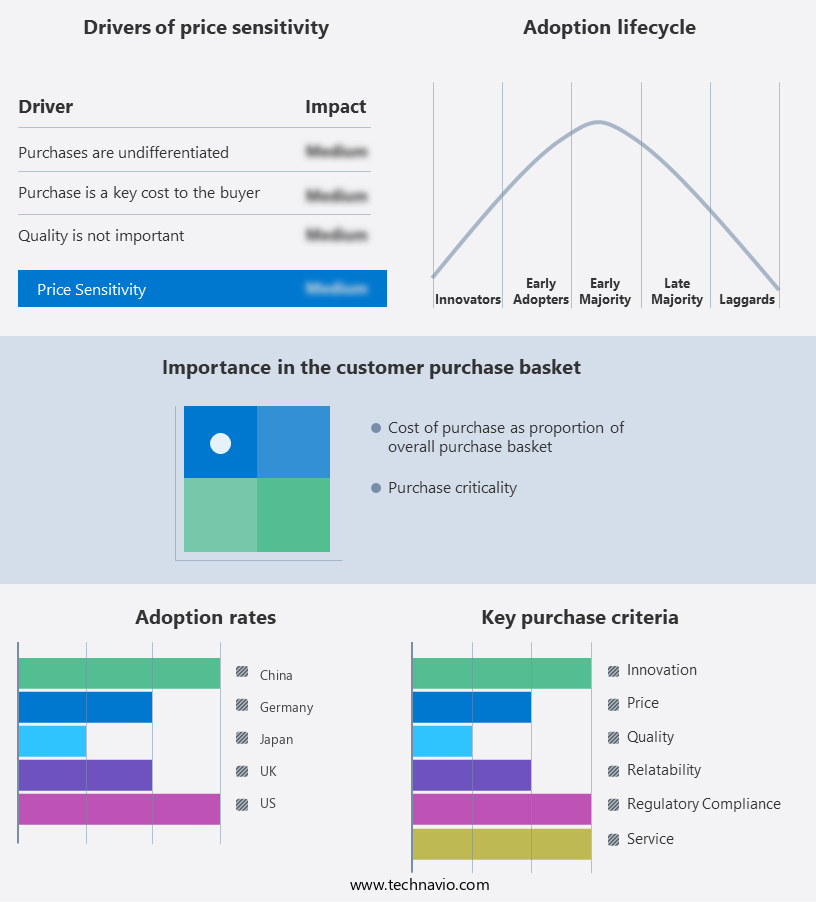
Customer Landscape
Key Companies & Market Insights
Companies are implementing various strategies, such as strategic alliances, 3D scanner market forecast, partnerships, mergers and acquisitions, geographical expansion, and product/service launches, to enhance their presence in the industry.
3D Systems Corp. - The company specializes in 3D scanning technology, catering to various industries such as jewelry, motorsports, semiconductors, medical devices, and bio printing.
The industry research and growth report includes detailed analyses of the competitive landscape of the market and information about key companies, including:
- 3D Systems Corp.
- AMETEK Inc.
- Artec Europe Sarl
- Atlas Copco AB
- Capture 3D Inc.
- Carl Zeiss AG
- FARO Technologies Inc.
- Fuel3D Technologies Ltd.
- Hexagon AB
- Kreon Technologies
- Metrologic Group SAS
- NextEngine Inc.
- Nikon Corp.
- Quality Vision lnternational lnc
- RIEGL Laser Measurement Systems GmbH
- Shining 3D Tech Co. Ltd.
- SMARTTECH 3D
- TOPCON Corp.
- Trimble Inc.
- Zoller and Frohlich GmbH
Qualitative and quantitative analysis of companies has been conducted to help clients understand the wider business environment as well as the strengths and weaknesses of key industry players. Data is qualitatively analyzed to categorize companies as pure play, category-focused, industry-focused, and diversified; it is quantitatively analyzed to categorize companies as dominant, leading, strong, tentative, and weak.
Recent Development and News in 3D Scanner Market
- In January 2024, Stratasys Ltd., a leading 3D printing and scanning solutions provider, announced the launch of its new handheld 3D scanner, the J735, designed for industrial metrology applications (Stratasys Press Release, 2024). This new product expansion aimed to cater to the growing demand for portable and high-precision 3D scanning solutions.
- In March 2024, HP Inc. and Microsoft Corporation announced a strategic partnership to integrate Microsoft's Azure AI and IoT services with HP's 3D scanning and printing solutions. This collaboration aimed to enhance the capabilities of HP's 3D scanning offerings and enable more advanced data processing and analysis (HP Press Release, 2024).
- In May 2024, 3D Systems, a leading 3D printing and scanning company, completed the acquisition of DP Technology, a provider of industrial-grade 3D scanning and inspection systems. This acquisition strengthened 3D Systems' position in the industrial metrology market and expanded its product portfolio (3D Systems Press Release, 2024).
- In January 2025, the European Union Agency for Cybersecurity granted a European Certification for the 3D scanning solution, Geomagic Design X, from 3D Systems. This certification confirmed the software's compliance with the EU's cybersecurity requirements, making it suitable for use in regulated industries (3D Systems Press Release, 2025).
Research Analyst Overview
The market continues to evolve, driven by advancements in technology and expanding applications across various sectors. Entities involved in this dynamic industry are constantly pushing the boundaries of 3D image rendering, digital asset creation, and optical coherence tomography. Real-time 3D scanning and data post-processing are increasingly important, with hardware specifications, such as motion compensation and scanning range limits, continually improving to meet evolving market demands. Optical coherence tomography and virtual prototyping are gaining traction, as 3D model accuracy and color data acquisition become more crucial. Noise reduction filters and CAD software integration are essential components, ensuring seamless workflows and high-quality outputs.
Photogrammetry techniques, reverse engineering, and high-resolution imaging are also integral parts of the 3D scanning landscape. Industrial metrology, time-of-flight 3D, and object recognition are key applications, with ongoing advancements in point cloud processing, surface texture mapping, and 3D printer workflows. The integration of software SDKs and mesh generation algorithms, along with 3D scanner calibration and texture analysis, further enhance the capabilities of these systems. Continuous innovation and the fusion of multiple sensors are shaping the future of the market. The ongoing evolution of registration algorithms, laser triangulation, and geometric accuracy, among other technologies, are ensuring that 3D scanning remains a vital tool for industries seeking to optimize their processes and create more accurate, efficient, and innovative solutions.
Dive into Technavio's robust research methodology, blending expert interviews, extensive data synthesis, and validated models for unparalleled 3D Scanner Market insights. See full methodology.
|
Market Scope |
|
|
Report Coverage |
Details |
|
Page number |
223 |
|
Base year |
2024 |
|
Historic period |
2019-2023 |
|
Forecast period |
2025-2029 |
|
Growth momentum & CAGR |
Accelerate at a CAGR of 12.6% |
|
Market growth 2025-2029 |
USD 5.65 billion |
|
Market structure |
Fragmented |
|
YoY growth 2024-2025(%) |
10.8 |
|
Key countries |
US, China, Germany, UK, Canada, France, India, Japan, Italy, and South Korea |
|
Competitive landscape |
Leading Companies, Market Positioning of Companies, Competitive Strategies, and Industry Risks |
What are the Key Data Covered in this 3D Scanner Market Research and Growth Report?
- CAGR of the 3D Scanner industry during the forecast period
- Detailed information on factors that will drive the growth and forecasting between 2025 and 2029
- Precise estimation of the size of the market and its contribution of the industry in focus to the parent market
- Accurate predictions about upcoming growth and trends and changes in consumer behaviour
- Growth of the market across North America, APAC, Europe, South America, and Middle East and Africa
- Thorough analysis of the market's competitive landscape and detailed information about companies
- Comprehensive analysis of factors that will challenge the 3D scanner market growth of industry companies
We can help! Our analysts can customize this 3D scanner market research report to meet your requirements.
 RIA -
RIA -